

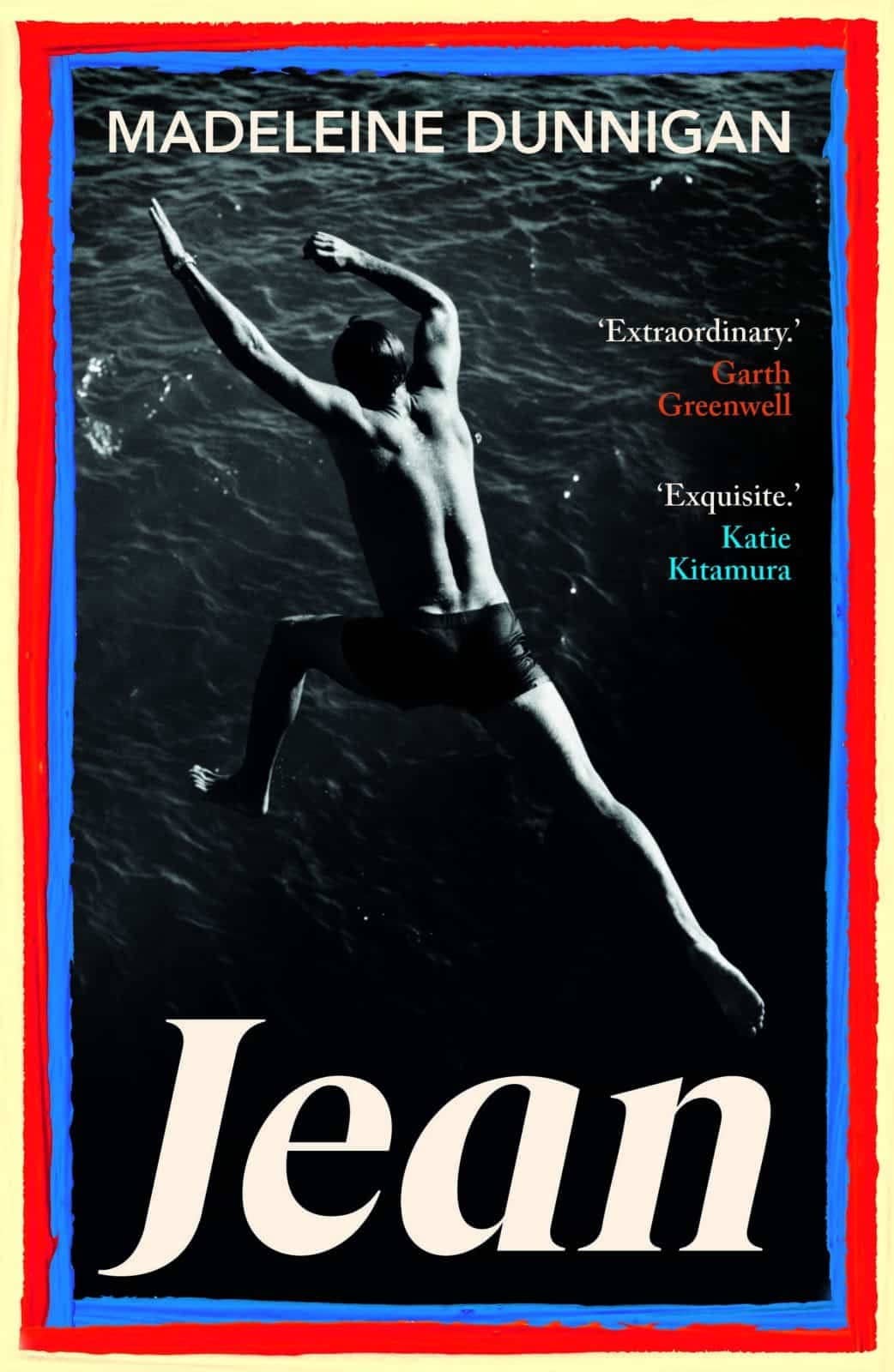
It’s rare that a debut novel reads like a timeless classic, but in its taut, naturalistic prose, seamless exploration of Jean’s memories and psyche, and – in the words of Garth Greenwell, “passages that give the shock of the genuinely great” – Madeleine Dunnigan’s novel manages it. You get the sense you’re witnessing the early work of one of Britain’s next great career novelists.
Jean is, in the words of its author, a novel about “alienation, told from the inside out”. Set at a reform school over the sweltering summer of 1976, the heat rises as Jean fights (and fucks) the other boys, conflict and desire coalescing until the novel reaches its conclusion: his decision to walk out of his life for good. Dunnigan explores the ethics of early sexual experiences, British class dynamics and the crushing weight of – particularly masculine – conformity.
If Jean’s experience at the all-boys’ school is full of angst as he grapples with who he is, the writing process wasn’t so different. It took seven years and several versions to bring him to life. The secret, in the end, was capturing the truth that selfhood is painfully unknowable, especially when you’re 17.
Here, Madeleine Dunnigan explains the writing process, where her character’s stories came from and how the rise of literary events can take the pressure off aspiring writers.

Amelia Abraham: You’ve talked about how Jean is lightly based on the story of a family member who disappeared. What information did you have and how much of it did you use?
Madeleine Dunnigan: I grew up with stories about this family member, so I had an “impression” of this person. The mythology was that they chose to walk out of their life. I was obsessed with why someone would do that – what forces coalesce to create the pressure vacuum that pushes someone out.
I was going off anecdotes, but I couldn’t get to the meat of the story. It was only when I took a fictional leap that the book took shape. There are still similarities to my family background: my grandmother was a German Jewish refugee, artist and single mother, but very different in character to Rosa. I think when I tried to become someone I’d never met – and therefore had to become someone new – it really became a novel.
AA: You lead up to Jean walking out of his life, but do you know what happened to the real Jean after that?
MD: Not really, because this person never came back. Part of why I found it hard to write a slightly noir narrative of someone looking for him is that it’s a misrepresentation. When someone chooses to disappear in the UK, that’s their right; even if they’re found, the police can’t tell the family unless they want them to. You can see the benefits of that in a domestic violence situation. The family member who disappeared was in their twenties, rather than their teens, as in the book, which complicates things more in terms of ‘if someone doesn’t want to be found, should you look for them?’
But I really didn’t want the book to be about who is to blame for Jean leaving; it’s about the different ways love can inadvertently cause harm. There’s a sense at the end that this is the only thing Jean can do, given the incompatibilities around him.
AA: It’s less about what happened to Jean and more about what led him to go.
MD: When you talk about someone in abstract and in absentia, with the knowledge of how the story ends, everything builds to that one point. But to think about who Jean might be as a character is more open. Jean was antisocial and violent; I’ve accentuated aspects of that. I wanted to write about someone who felt alienated and didn’t fit into society, who from the outside, seemed a certain way. But I don’t believe people go around thinking, “I’m a monster” or “I’m antisocial.” So there’s a friction between how others perceive us and how we perceive ourselves. It was only when I focused on the school, rather than sections in London or abroad, that the parameters were tighter and I could explore it.
“I really didn’t want the book to be about who is to blame for Jean leaving; it’s about the different ways love can inadvertently cause harm” – Madeleine Dunnigan
AA: There are many factors at play: sexual abuse, his difficult relationship with his mother, the gay storyline. Yet there’s no sense Jean is a victim or any one person is to blame. Elements coalesce, which feels truer to life. We’ve become accustomed to the trauma plot; therapy encourages us to find the trigger event that leads to a fallout.
MD: Life is often more chaotic than that: each event accrues, like a ball rolling downhill, picking up speed. Therapy has given us language to narrativise our lives, which can be helpful – we’re telling stories, making connections, rewriting what happened. What I wanted to capture is the slipperiness of experience, that it’s not one thing that leads us to act as we do.
AA: Jean is gay, or queer, yet the book is not “about that”. Terms like ‘coming out’ or ‘coming of age’ could be applied – how comfortable are you with those terms?
MD: I appreciate you saying it engages with Jean’s queerness, but it isn’t about Jean being gay. Not that there’s anything wrong with those books, but it’s just that his relationship with Tom and his sexuality is very personal; it relates to how he perceives love, danger or harm. The book is set in the 70s, a complicated time in queer history: it was no longer fully illegal, but not welcomed into the social or cultural consciousness. In the boys’ boarding school setting, things happen behind closed doors but no one’s ever gay; it’s a meeting of needs. I don’t see it as a coming-out story, but maybe a coming-of-age story: a watershed moment. I wanted to set it at that cusp, before he’s left school, held in a halcyon bubble yet with potential danger at every corner.
AA: That queerness is not thought of so much as a fixed identity label feels true of what things might have been like in the 70s. There’s also no arc of acceptance, and his queerness does not overshadow other parts of him. He’s Jewish, from a different class background to the other boys, and possibly neurodivergent.
MD: A person contains multitudes. Pick the thing you want to tease Jean about and you’ll be able to if you’re an English heterosexual boy in a boarding school. But even at the end, I wanted to complicate that and show it’s partly about how Jean sees himself – as so “other” he can’t assimilate – until he realises some of the other boys aren’t that different: some come from hippy families, some don’t have fathers. But Jean has been trapped in a space where difference is a fatal flaw.
AA: You have several events coming up, including an event with Soho Reading Series on 25 March. Why do you think reading nights have become so popular?
MD: People are excited by the idea of literary community. The narrative – and reality – of being a writer is being alone a lot: on your laptop, or romantically writing by hand and getting carpal tunnel. Writing is hard enough, unlikely to be your full-time job, so one advantage is feeling connected through it. The antidote is being with people interested in what you’re interested in. Maybe you’re nervous about the work; then you read and the nerves go because you’ve done it, and you think, ‘OK, it’s got legs’. Or you’re seeing possibilities through others, meeting people in publishing, understanding how publications form and look for submissions. It democratises things a bit. You can go and meet … I don’t know, the editor of The Paris Review … I think these nights are popular because they bring the social into something otherwise atomised or commercial.
Jean by Madeleine Dunnigan is published by Daunt Books and is out now.
