

A captivating new book features Sultan’s never-before-seen journals, notebooks, short stories, annotated manuscripts, postcards, and more
American photographer Larry Sultan always wanted to be a writer, and so he wrote, using words as a means rather than an end. As an artist, author and educator, Sultan revolutionised photography with a series of works that questioned, subverted, and reimagined the very possibilities of the medium itself. Though his groundbreaking books Evidence (with Mike Mandel), Pictures from Home and The Valley have become canon, his writing has largely gone unpublished until now.
Water Over Thunder: Select Writings (published by Mack) is a captivating look inside the enigmatic mind of Larry Sultan, tracing his journey through a wealth of never-before-seen journals, notebooks, handmade maquettes, shoot notes, short stories, annotated manuscripts, postcards, and rare personal ephemera including a 1969 letter to the Selective Service System Local Board 82, making a compelling case against being drafted into the US military at the height of the Vietnam War.

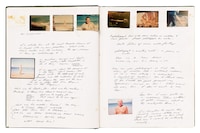
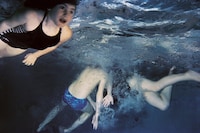
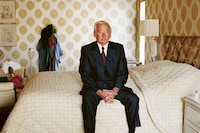

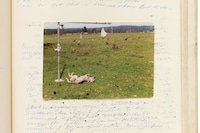
Born in Brooklyn, New York, Larry was the middle child of three sons born to Jean and Irving Sultan, the consummate mid-century, middle class family living the American Dream after relocating to Los Angeles in 1949. But amid sunny scenes of suburban bliss, young Sultan became attuned to the inherent tensions lurking beneath the placid surface of modern life. As pop culture became the lingua franca of Baby Boomers, Sultan was intuitively drawn to the billboards on Sunset Strip, rather than the pretensions of museums and the academy, who were affixed on elevating photography to the realm of fine art.
In 1973, Sultan and fellow Los Angeleno Mike Mandel linked up at the San Francisco Art Institute, bound together by what he described in the book as “a particular brand of comic defence against that environment, and even against the established bohemian tradition that seemed to permeate graduate school.” While their contemporaries sought acceptance in the art world, they were decidedly nonplussed, embracing photography in its most vernacular state. Postcards, baseball cards, and billboards became their medium of choice, until they hit the jackpot with Evidence.
Self-published in 1977 after two years of research through the archives of 77 government agencies, educational institutions, and corporations, Sultan and Mandel carefully sequenced 59 pictures without captions to upend commonly held notions of documentary photography, fine art, and illustrated publishing without saying a word. “This book, to me, was really pivotal,” Sultan wrote. “Not because it’s a good book, but because it really started a whole inquiry on our part about what other kinds of imagery we could take from their context, and create a new context for.”
)
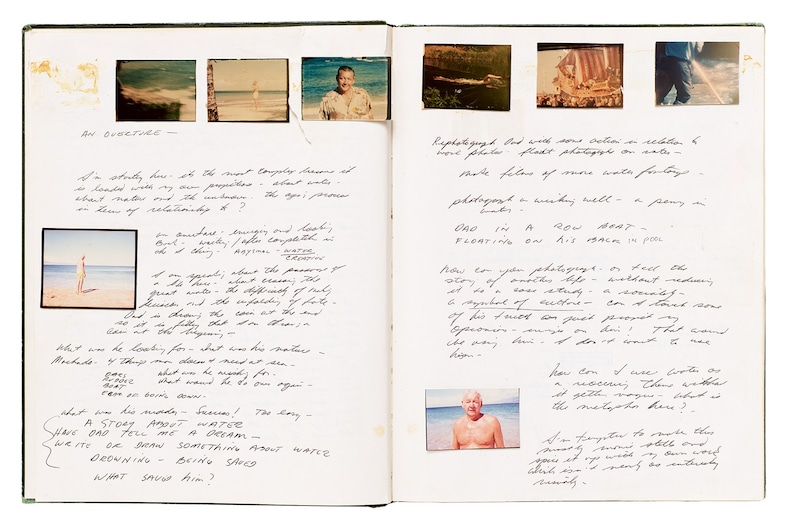
Sultan’s widow, Kelly, manager of the Larry Sultan Estate, tells AnOther that the artist was an intuitive thinker driven by boundless curiosity. “He probably would have pursued writing if he lived longer,” she says. “His writing, like his photography, would have been an open-ended inquiry into something that interested him, and that is such a broad palette I don’t think he would even be able to say what that was. I don’t think he set out to illustrate an inquiry. For Larry, the image didn’t really hold the information; the viewer brought the information to the image and it was completed when they interacted with it.”
Kelly points to a passage where Sultan articulated his philosophy with exquisite flair that would leave lesser writers gasping for air: “Taking pictures is a way of thinking. And, even stranger than that, I do believe in chance, that things fall through and then something else happens that is much closer to the bone. Jung called it synchronicity. Whatever it’s called, something gets revealed. Photography is a way of hanging out, loitering, thinking, looking at pictures, getting frustrated, and then clarifying.”
As Water Over Thunder reveals, Sultan’s epistemology was a cosmology unto itself, a vast universe of questions, ideas, observations, and investigations seemingly independent but inextricably interconnected by an insatiable search for understanding life itself. Both deep and expansive, the book deftly weaves a wealth of brief passages containing layers of experience and reflection wed to a fervent desire to bridge his artmaking practice with the world from which it drew inspiration. In vulnerability, Sultan drew strength. In a journal entry from the early 1980s, he ended a deliciously detailed “list of images” for Pictures From Home with a single thought: “I could write a book, but who would be interested?”
)
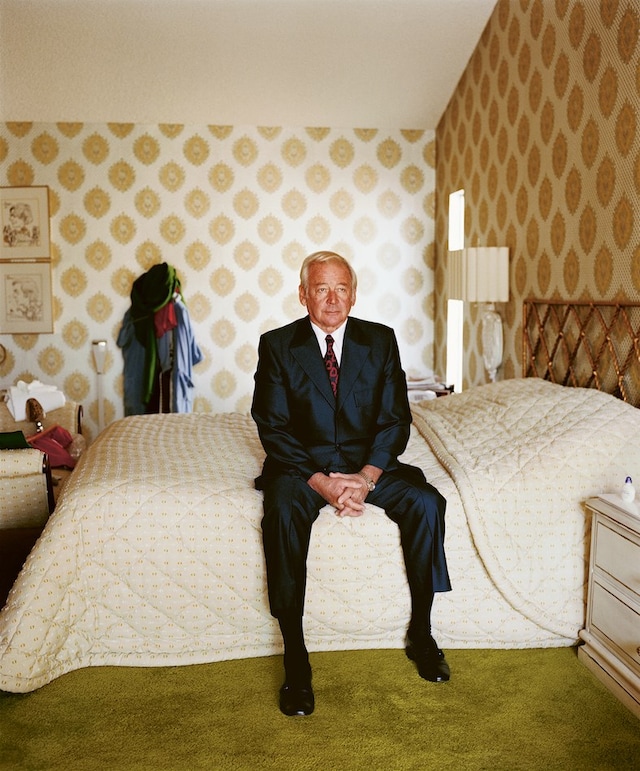
It’s a question that did not stop Sultan from creating photo books. Instinctively following the writer’s dictum, “show, don’t tell,” he embraced what Kelly described as “a lostness” to make the work, preferring the collaborative process of discovery over a pedant’s compulsion to build an argument. “He’s not coming in with this idea of what it is, but was asking, what is this?” she says. “That ambiguity was critical to his working process, and failure can be generative. You’re actually not looking necessarily for answers, but just for more and more intriguing questions.”
Likewise, writing was a medium that could engage these same curiosities by activating the linguistic part of his brain. While the image is pre-verbal, we traffic in words, hoping to articulate the ineffable, if only for a moment. As Water Over Thunder shows, Sultan wrote informally, journaling when and where he could. The result of a lifetime’s search speaks to a shared need that artists and writers possess: serve the muse, not knowing the hows, whys, or whens, but simply because if you don’t, it won’t be done.
Water Over Thunder: Selected Writings by Larry Sultan is published by Mack and is out now.
