
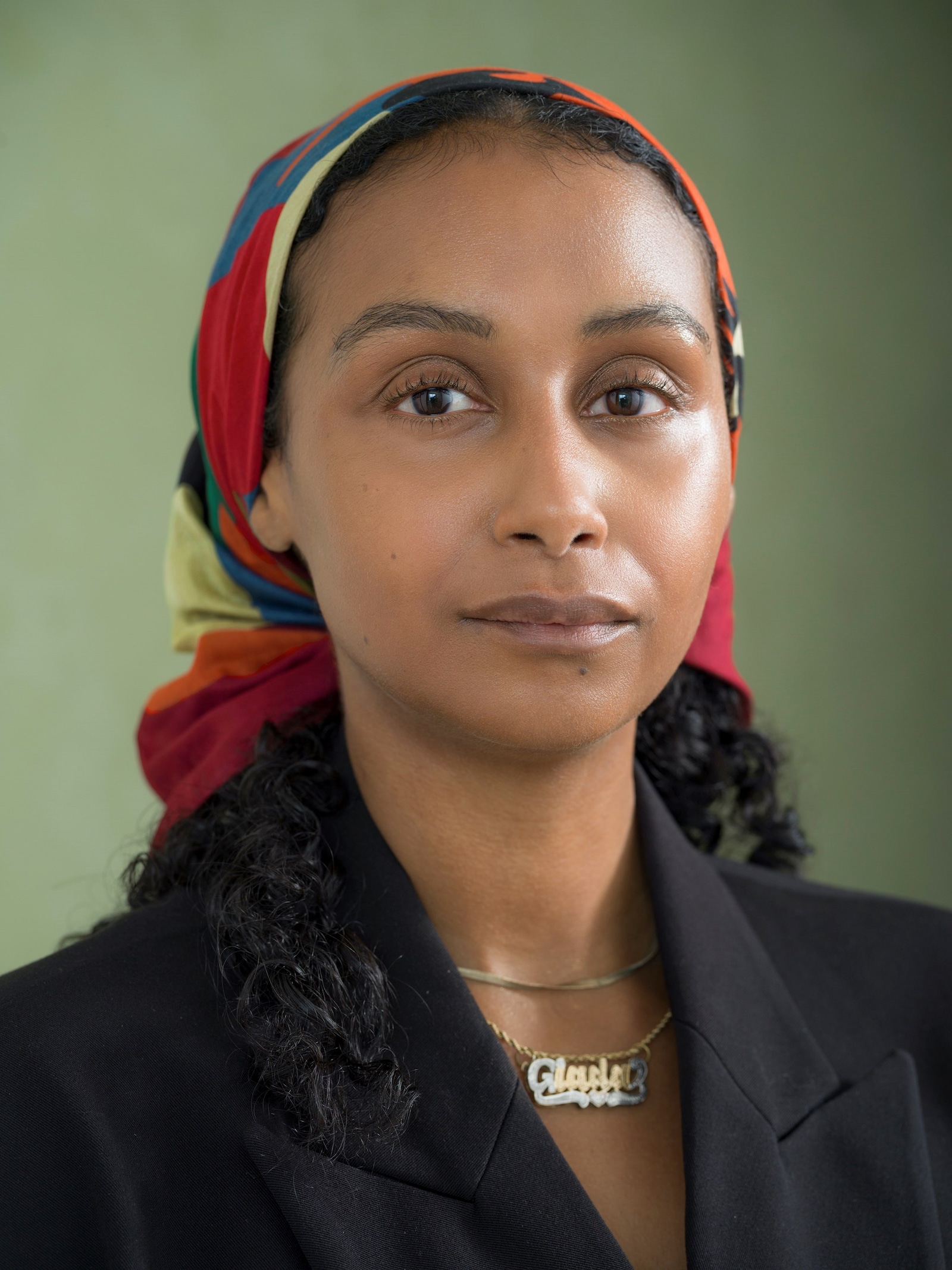
The writing in Giada Scodellaro’s debut novel Ruins, Child is difficult to define and grasp onto. Like the comma in its title, the novel is constantly spliced, refracted: a group of people are crowding around to watch the same film they always watch, a film of themselves and their elders; now the beauty of crumbling buildings is being assessed by a floating, undefined voice; now we’re hearing about Stevie Wonder’s The Secret Life of Plants.
With a book as free-flowing and unpredictable as a river, the experience of reading Ruins, Child is that of sitting on the banks and watching the water flow. Ruins, Child won Scodellaro the 2024 Fitzcarraldo Novel Prize, though it hardly fits the category of ‘novel’; Scodellaro evades all the trappings of novel writing by writing something that borrows as much from music and improvisation as it does from experimental film or even literary greats like The Waves by Virginia Woolf.
In Ruins, Child, no word is frivolous; everything is exact and exactly as Scodellaro wants it to be, even if on first read it’s baffling or oblique. That’s not to say that the reading experience is difficult; rather, it’s refreshing to read something that refuses to unfurl itself upon first touch. Below, Scodellaro discusses her multiple reference points and influences for the book, as well as the integration of film into the narrative and the responsibility of the archive.

Jemima Skala: How did you approach the writing and plotting of this? Reading it feels like moving in concentric circles; were there images that kept returning to you as you were writing, or did you know you wanted to keep coming back to particular words and phrases, and sometimes even whole passages?
Giada Scodellaro: The early thing was a consideration of landscape, in this case, the salt marshes of the Hutchinson River. Long passages about topography, plants, and architecture. Then the collective movement came, small physical observations, hands turning over, bed sores, a chorus, clapping, a leg unfolding. An old leg, centring an old woman. The structure was established from there, this three-part uncovering of community (through film, text, sound) and yes, inevitably also these concentric circles – the repetition reflecting the friction of oral tradition, things passed down, the ongoing violence of institutions, gossip. That is to say, what I wanted was a granular examination of the expanse but also the corner, dust.
JS: Tell me more about the framing device of the film. Are we both reader and audience? What can film offer for you that reading and books can’t?
GS: It’s interesting to think about the reader as audience or witness, and perhaps even as member of the community itself. The film, as an entry point and central framing, imagines these women at a distance, or otherwise offers an examination of their proximity, intimacy, and discomfort. The film presents the women as duplicated, repeated, 168 hours of them. As a form, it allows for a sort of endlessness, the film within the film, a layering of scenes, things recurring. Therefore, a framework of inevitability begins to take shape, for example, the movements of a man dying repeatedly, multiple fires being set, the ongoing tying of a shoelace. The idea of the women re-watching this footage, memorising themselves, outliving themselves – a yearly ritual set within these public and domestic spaces – is vital. Among other things, it offers an opportunity to play with observation, perspective, but also with performance. I ask myself, ‘Who are these individuals when they are not being filmed? What do they hope to outlive?’ The film is also an archive, an object, a thing passed down or inherited; it is an active record of an evolving self or evidence of a collective existence and history.
I have always been drawn to film for its composition, its immediacy, its choreography, and also for the way it imitates language, or the way it reflects my own ideas and aspirations for language – allowing for stillness, quiet, hesitation.
JS: Who are some of the literary and filmic influences that you drew from for the book? I’m thinking particularly about the creation of the collective voice, but also more broadly in terms of style and texture.
GS: Thinking about the collective/communal/social infrastructure and choreographic sensibility of Black film, writing, visual art, sound – especially that of On the Sound, Hoop Dreams, Killer of Sheep, Love Jones, Paris is Burning, Louie Bluie, Drylongso, Mahogany, Fannie’s Film. The still images of Charles Chamblis, early work of Carrie Mae Weems in Family Pictures and Stories. Wadada Leo Smith on trumpet. Wadada Leo Smith’s drawn scores. Renee Gladman’s Charts. Lorna Simpson’s Everrrything and the mixed media of Loïs Mailou Jones. A duo, Sun Ra on piano and Walt Dickerson on vibraphone (Visions 1979). Returning to and folding/employing the words of Lucille Clifton, June Jordan, Dionne Brand, Sonia Sanchez, Zora Neale Hurston, Toni Cade Bambara, August Wilson, Alice Walker, Ama Codjoe, Nikki Giovanni, M NourbeSe Philip.
“I have always been drawn to film for its composition, its immediacy, its choreography, and also for the way it imitates language” – Giada Scodellaro
JS: The book is haunted by various aspects of African American culture and cultural icons. How did you decide what would survive in a crumbling near-future?
GS: Haunted, yes, but also sustained by these cultural elements. The archive as form, creating a record of place, a study of mundanity, grief, intimacy, or the excavation of what can inform a life – this is endlessly interesting to me. And then, also thinking about the movement of this information, how it is collected, preserved, or alternatively, omitted, altered. Diana Ross as Black canon. A detailed recitation of the MOVE bombing in 1985 Philadelphia. It all endures or survives, everything is and must be recoverable, even when diminished, bent, turned to the point of breaking. I understand this lineage of historical and cultural knowing/resistance as an innate thing, unnameable and involuntary, and bestowed.
JS: Though I don’t think it's ever explicitly mentioned, I couldn’t help but think about the impending effects of climate collapse. Is this something that you wanted to put at the edges of the narrative? And what role do you think literature has to play in waking us up to this reality?
GS: We fail our communities and ourselves to not acknowledge – at least – the very obvious thing. And June Jordan writing ‘... and what/in the hell is everyone being so reasonable about’ in Poem about My Rights. It is unreasonable to omit collapse as it occurs, for example, the environmental racism and colonial violence of climate change. I think again of Sasha Wortzel’s documentary, River of Grass – a stunning depiction of the dying Everglades, Indigenous existence and resistance, the control of water, and the burning of pre-harvest sugar cane permitted by local government only if and when the winds blow their smoke toward Black neighbourhoods.
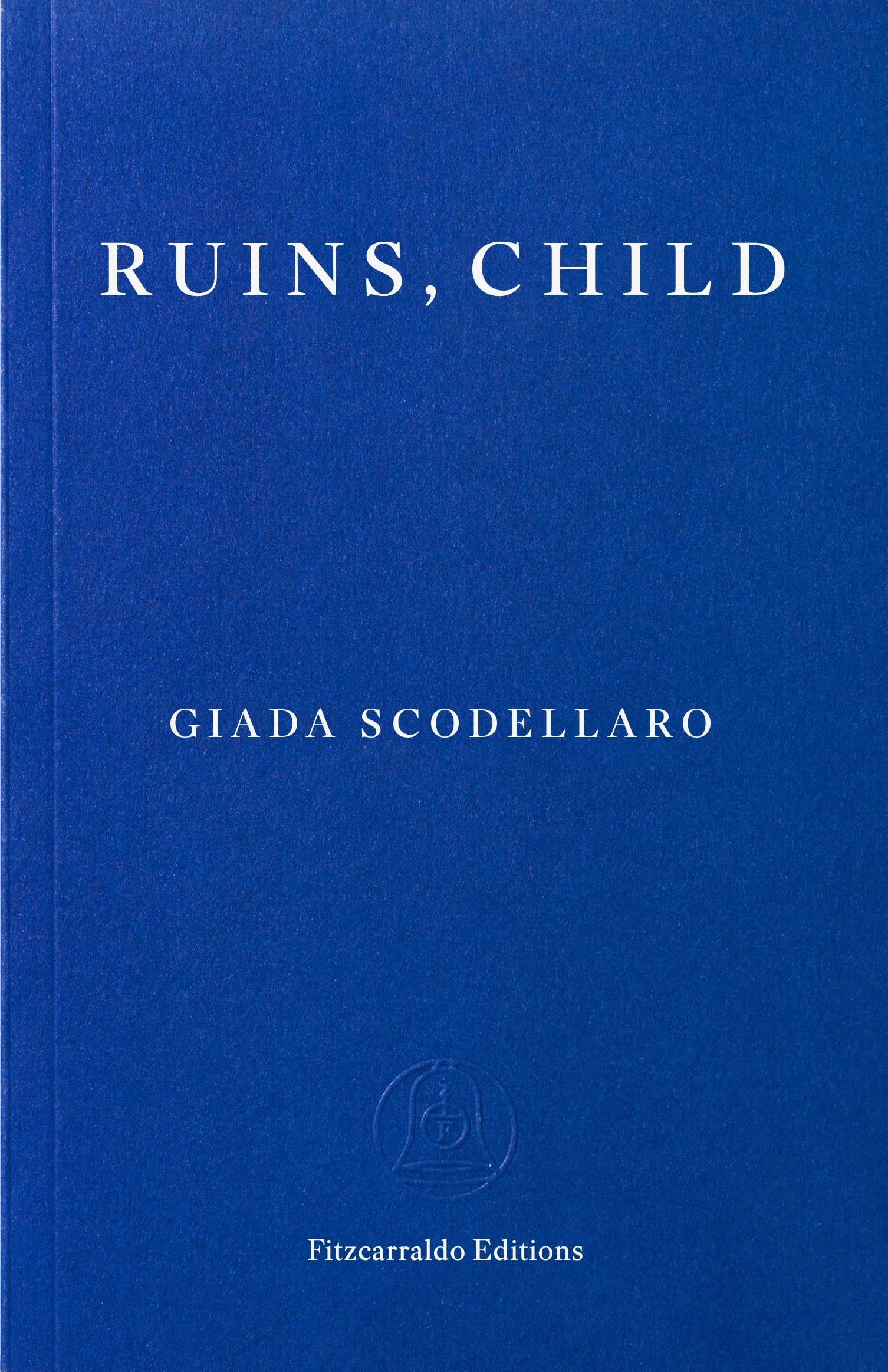
Ruins, Child by Giada Scodellaro is published by Fitzcarraldo Editions and is out now.
