
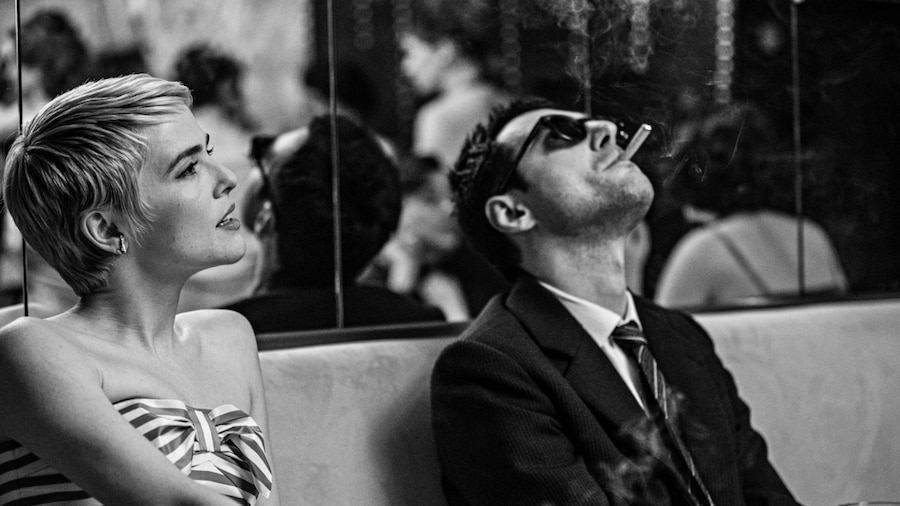
As he returns to screens with Nouvelle Vague, we take a closer look at the irascible and searching filmography of Richard Linklater
It’s been 40 years since Richard Linklater founded the Austin Film Society, beginning his crusade to make scrappy, personal, romantic and boisterous cinema. It’s fitting for a director who first broke out in the 1990s “Indiewood” boom that his latest film, Nouvelle Vague, is an origin story of cinema’s enfant terrible par excellence, Jean-Luc Godard, mounting his iconic debut film Breathless. As Linklater’s first non-English film, Nouvelle Vague feels like a film fanatic has staged and animated decades’ worth of behind-the-scenes anecdotes – genuine and apocryphal alike – to show a turning point for cinema as the Texan director imagines it: lively and collaborative, tetchy and confounding, an amusing slew of rules broken and manifesto points declared.
“I’ve always had that French New Wave notion that a film should just be an extension of your life,” he said in 2024, six months before his love letter to impish and rule-breaking artistry debuted at Cannes. In this light, Nouvelle Vague is about an old pro returning to the halcyon days of being an indie amateur with a lot to prove and a cult status badge to earn.
You can’t suggest which Linklater films are the most essential without the gnawing fear that you’re leaving tons of inventive and surprising work in the dust, and about a dozen of Linklater’s films about slackers, yearners, and loudmouths have firmly established their place in the popular canon of great films. (We have not forgotten Slacker, Tape, or School of Rock). Still, the joint release of Nouvelle Vague and the recent announcement of Ethan Hawke’s Oscar nomination for Blue Moon demands a guide of absolute highlights to the irascible and searching work of Richard Linklater, the Gen X extraordinaire.

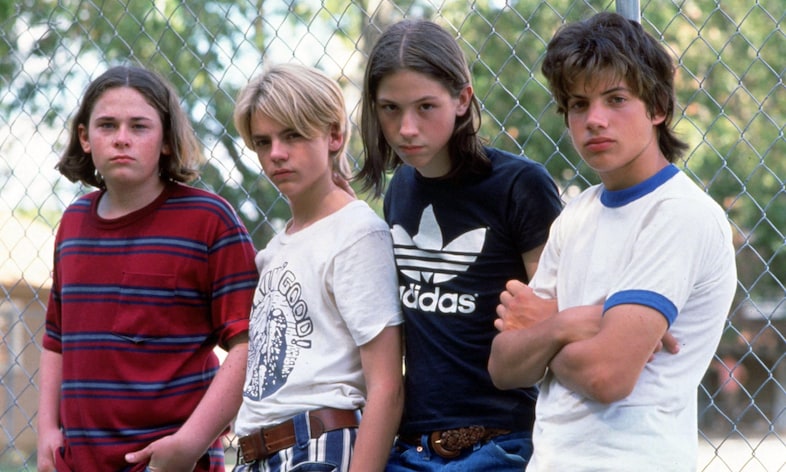
Dazed and Confused (1993)
Perhaps the defining “hang out” movie of the 1990s, Dazed and Confused marked Linklater’s leap from independent film to studio budgets, although he was not destined to stay there. It’s the last day of school somewhere in Texas, 1976, and an ensemble of blowhards, potheads and partiers fumble through a night of thwarted revelry and transient connections. Named after the ZZ Top song and boasting an incredible range of costly-to-license 70s tracks, Dazed and Confused honours Linklater’s teenage nostalgia with a cinematic patchwork of youthful indecision and aspiration. Featuring an energetic cast of future A-listers and Oscar winners (including Matthew McConaughey, Ben Affleck, Renée Zellweger …), Dazed and Confused’s imagined glimpse of yesterday’s adolescence feels even more nostalgic when revisited today. Its depiction of a now-50-year-old cusp of adulthood does not promise greatness for its characters, but brims with excitement that anything could happen next.


Waking Life (2001)
Released ten years after Slacker, Linklater’s winning, weird portrait of Austin, the director made another free-flowing, vignette-heavy drama about oddballs and philosophers trying to interpret the contradictions and illusions that define life on earth. Shot on Mini DV cameras and then animated via rotoscoping, the film follows a nameless, average young man stuck in a perpetual dreamstate, often being lectured about metaphysics or becoming a disembodied witness to other people’s deep, meaningful chats (his diminished participation in his many interactions feels pointed and relevant). Some scenes feel like skits, but Waking Life is fuelled by snapshots of quotidian, tactile relationships and encounters, which generate searching, hungry questions about what’s outside our grasp and understanding. Curious and moving, the film uses surrealism to freeze American life in a surreal, morphing instant, where meaning is abstract and the boundaries become thin and fluid.

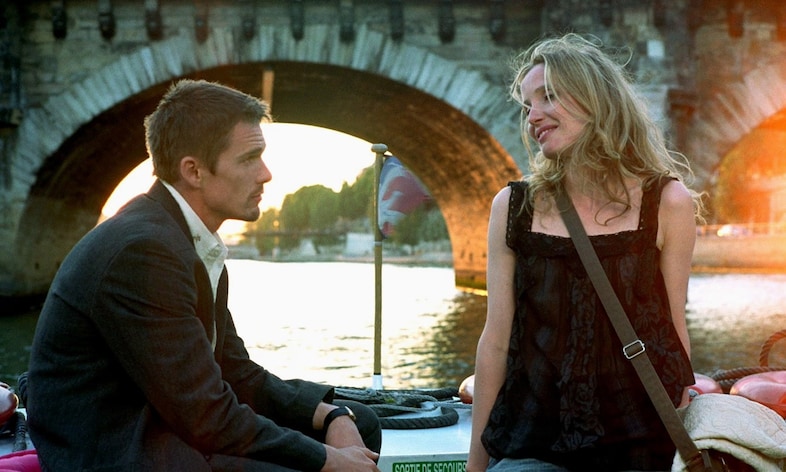
Before Sunset (2004)
Jesse (Ethan Hawke) and Céline (Julie Delpy) spent one night together in Vienna nine years prior (depicted in 1995’s Before Sunrise), but even though they breathlessly acknowledged the precious, powerful significance of their brief encounter, they haven’t seen each other since. A book tour to Paris brings them back together for a couple of hours – older, wiser, still romantic and cynical, and perhaps just as reckless and skittish. The immensely collaborative Before trilogy, with nearly every beat planned and designed with the two lead actors, is Linklater’s thesis on how beguiling and fraught loving someone across time can be, but Before Sunset is the crown jewel, positioned between Before Sunrise’s energised, youthful abandon and the rising tide of middle-aged regret lapping at them throughout Before Midnight.

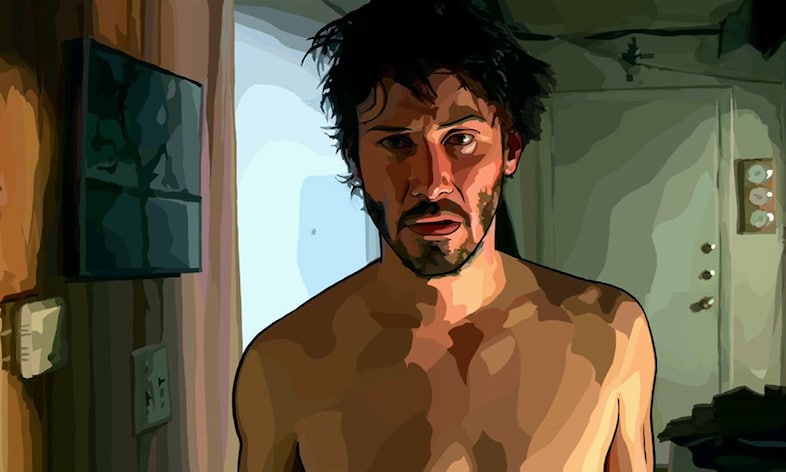
A Scanner Darkly (2006)
This isn’t the first instance of Richard Linklater homaging the existential and frequently hallucinogenic writing of Philip K Dick in a rotoscoped animation film – in the last vignette of Waking Life, Linklater cameos as a lucid dreamer to explain Dick’s 1974 spiritual epiphany. A Scanner Darkly is Dick’s most sobering novel, detailing the physical and mental deterioration of a narcotics agent undercover in a group of users of Substance D, an addiction to which has America in its grip. Fine-tuning the animation technique used for Waking Life (which Linklater would return to in the underrated Apollo 10½), the film balances rambling stoner paranoia with unnerving, invasive surveillance technology, enhancing its journey towards complete loss of selfhood with Keanu Reeves’ trademark deep, clumsy and confused voice.

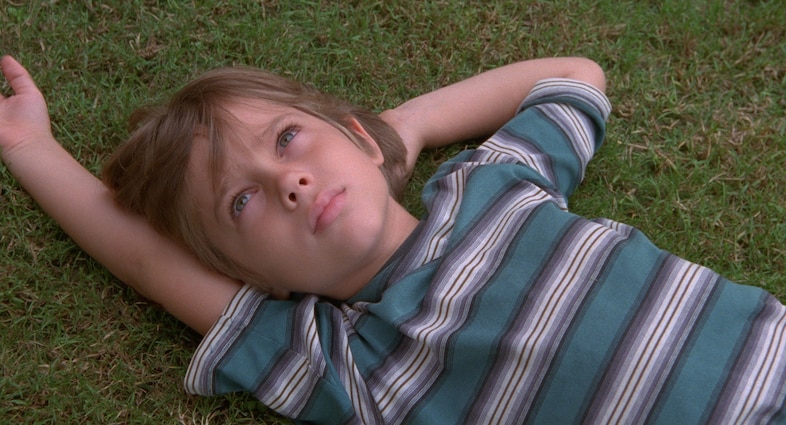
Boyhood (2014)
Boyhood’s structural conceit – that Linklater would shoot scenes with the same, small group of actors over 12 years – was enough to call the film “remarkable” upon release in 2014, regardless of its dramatic content. That the story of Mason (Ellar Coltrane) is so unremarkable – a series of boyish scrapes, parental frustrations, and crummy stepdads – underlines how compelling Linklater’s long-game approach to drama actually is. Boyhood is rich and affecting not because of the merit of any individual chapter, but because collapsing years of life into two-and-a-half hours triggers a reckoning with how time defines our lives more than anything else. “I just thought there would be more,” Mason’s mother (Patricia Arquette) says mournfully, just as Linklater cuts to Mason’s truck driving down a Texan road to college, cementing another closed chapter and the hopeful, confused arrival of another.

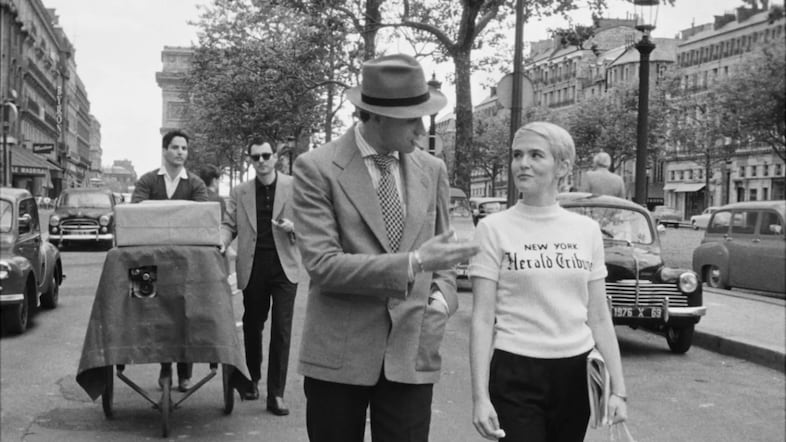
Nouvelle Vague (2025)
Linklater often depicts people on the cusp of something bigger than them; he’s uniquely gifted at honing in on an extended moment of tension and anticipation before characters venture past a significant threshold, even if he leaves the eventful next steps off-screen in our imagination. With his playful dramatisation of Jean-Luc Godard making his first film, A Bout de Souffle (translated as Breathless), not only do we know what happens next, but Godard’s unorthodox, counter-intuitive shoot is already the stuff of cinephilic legend. But the effervescent pithiness energy with which Linklater honours Godard’s filmmaking is the film’s greatest weapon, painting a disarmingly fun portrait of a filmmaker who would evolve and regenerate his style countless times before his death – here, he is characterised as less rebellious and more impish, committed to showing up his Cahiers du Cinema contemporaries and use American genre cinema as a malleable clay to establish his voice. If Nouvelle Vague doesn’t rise above the thesis, “Isn’t this cool?”, then it’s as well-argued and convincing as any love letter to cinema this decade.
