
As a new box set of The Disintegration Loops drops, the ambient artist reflects on its extraordinary realisation against the backdrop of 9/11, and its status as a transcendent masterpiece
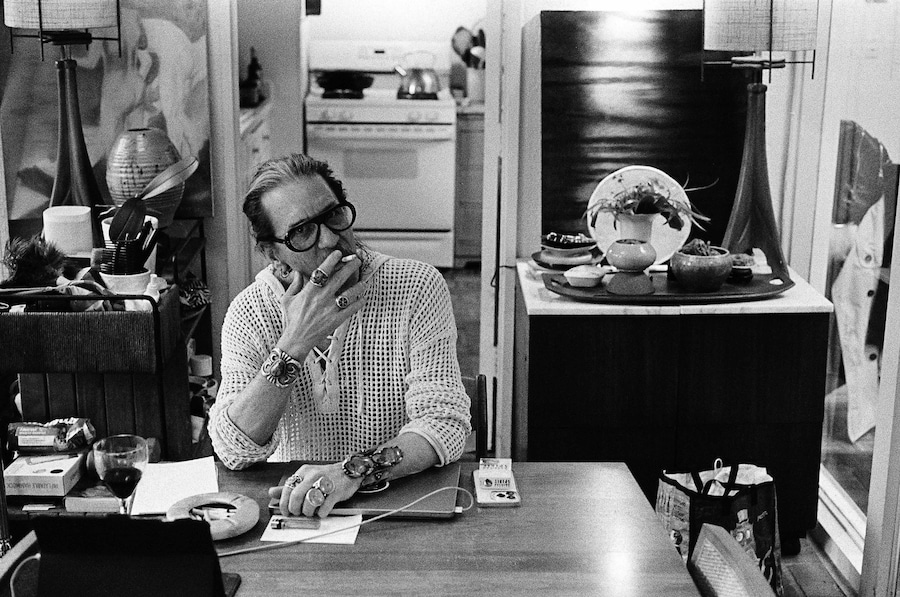
William Basinski is not your typical ambient artist. For a genre of music that is often deemed cerebral and serious, he is a rare character. Growing up in Texas, he realised he was gay from a young age, once describing himself as a “flamboyant little hot mess of a kid” who wanted to be David Bowie. At nearly 70, he sits across from me on Zoom sipping a beer at noon, chain smoking cigarettes, with his shirt unbuttoned wide, his long shoulder-length hair now flecked with silver, and his arms and fingers wrapped in turquoise amazonite jewellery. Fabulous is not a word that comes to mind very often when speaking about experimental music but Basinski merits it.
When people talk about the quintessential music of early 2000s New York, it’s often scuzzy new rock bands like The Strokes and Yeah Yeah Yeahs, the burgeoning dance-punk scene led by LCD Soundsystem, or the city’s ever-booming hip hop movement. But there’s arguably one album that in its own quietly revolutionary way, may just be the most significant work of that city’s fertile period: Basinski’s The Disintegration Loops.
In 2001, the musician was living in a vast industrial loft space in pre-gentrified Williamsburg that was home to music and art studios, parties and DIY shows. It was something of a creative den that had been elegantly kitted out and nicknamed Arcadia. “It was like granny’s house and everyone would come over,” Basinski says today from his home in LA, reeling off the names of painters, artists and musicians who would swing by, including his old friend and collaborator Anohni.

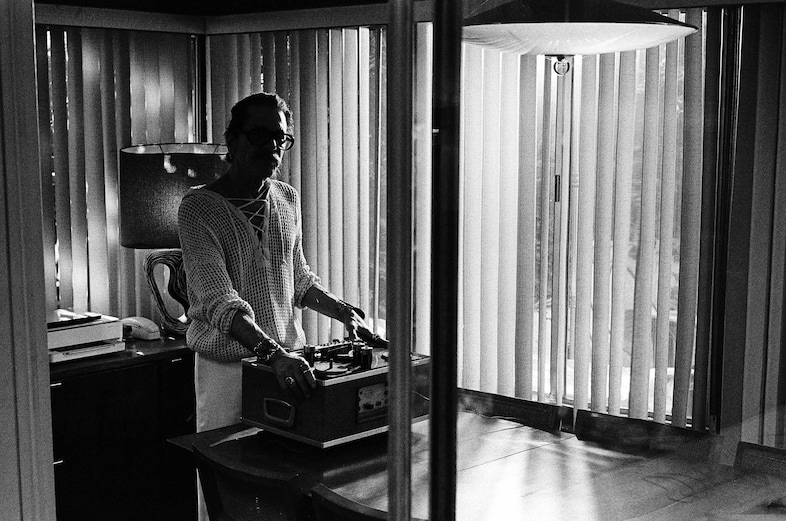
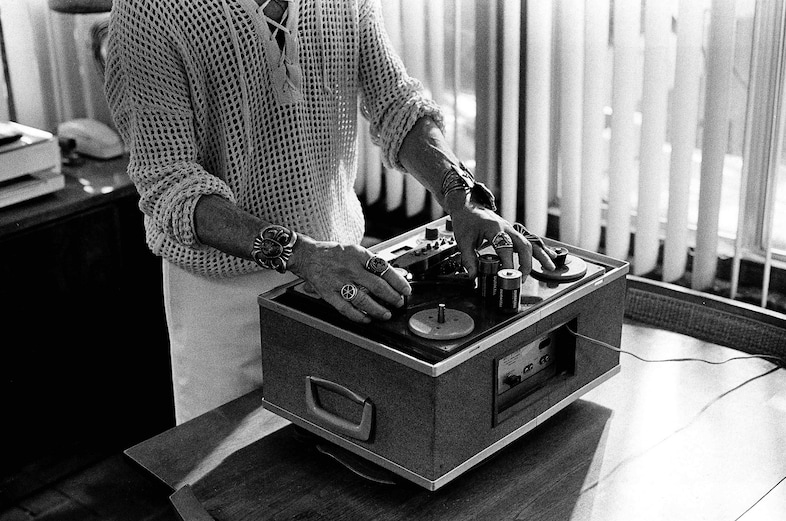
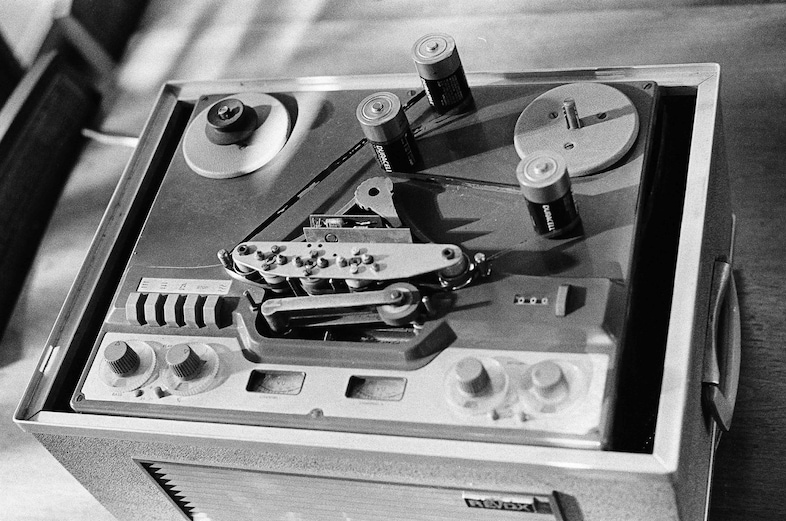
But it was a tough time for him. At 43, Basinski considered himself a failed musician, he was poor, facing eviction, and the vintage clothes shop he ran had just closed down. Rather than give up, he decided to throw himself into the studio, digging out some old tape loop recordings he’d made back in the 1980s of found sounds and muzak plucked from easy listening stations on shortwave radio. He began to transfer them digitally from tape but as he did so, realised the old tape was crumbling and decaying. It was literally eroding in real time, adding a woozy, crackling, fragile and haunting quality to music that was literally being lost and born anew at the same time.
“I knew something was happening,” he says. “Magic happened. It was just remarkable. It was such a profoundly extraordinary experience during those two-day sessions with the loops. I phoned everybody and said, ‘Get over here, you won’t believe what’s happened’. We were sitting flopped around the house, smoking a joint, listening to it for hours, and my friend Howard Schwartzberg was like, ‘Bill, this is it’.”
The music alone would have been astonishing – an immersive document of music, memory, time and loss that is both celestially beautiful and sorrowful – but Basinski was finishing them on the morning of the 9/11 terrorist attacks. He watched the towers fall from his loft and the recordings he’d been making suddenly took on a new feeling and purpose. He later reflected in 2011: “I’m recording the life and death of a melody … [and] it just made me think of human beings, and how we die.”

Basinski put a tripod on the roof and filmed as the sun set that day, the sky still thick with ash, as Manhattan smouldered away in eerie silence. The photos and footage would make up the artwork for the releases and soon music and images became inseparable, with the music functioning as both eulogy for the city and a place of solace from the fear that hovered over it. “There was just all this babbling of people on TV not knowing anything,” he recalls of that day. “We had to turn that shit off. So we listened to The Disintegration Loops and sat in lawn chairs on the roof just looking at it all.”
The result is a record – whether you associate it with the events of 9/11 or not – of intense poignancy, melancholy and tenderness. The collected loops total five hours and are transportive and immersive, a truly landmark bit of work. It is now getting a lavish box-set release, with remastered versions from the original Arcadia recordings, complete with liner notes from Laurie Anderson, who reflects “this music has created another world, a world to be carried away in.”
The Disintegration Loops were originally released separately, over four records, in 2002 and 2003. “I knew what it was [that I had made] but I was also broke and way in debt,” Basinski recalls. “Nobody knew who I was, so I couldn’t do a box set and it would have been too expensive. So I decided to do them one at a time.” Fans began to obsess over them. “People that are into my work can’t get enough,” he says. “It’s like I’m a heroin dealer or something.”

The Disintegration Loops is a record that continues to live on in near immortal fashion. What were once albums rooted in the 80s and completed in the 00s – existing as a life and death transition between decades and a reflection of changing sounds and environments between them – now exists for many as a document of a forgotten period. “Those days are long over,” Basinski reflects, of his affordable loft years in New York. “Arcadia, we left in 2008. The fucking landlords, man, they kicked everybody out and the rent skyrocketed. But it sat abandoned for 15 or so years and they destroyed all the work we did to restore this beautiful building. Think of what happened to the East Wing of the White House, that’s pretty much what they did to our gorgeous loft we lovingly restored.”
The passing of time also means a changing of meaning for the album. Once a eulogy for New York and a mournful soundtrack to a harrowing period – it’s so ingrained into the city that it was performed with an orchestra at the Metropolitan Museum of Art to mark the 10th anniversary of 9/11, as well as being inducted into the National September 11 Memorial & Museum – it’s now transformed and evolved. “I get texts and emails from people all the time talking about how moving it is to them for various personal reasons,” he says. “It’s mind-boggling, really. But it’s a transcendent work. It’s a 21st-century … let’s face it … masterpiece. I can’t ever top it.”
The Disintegration Loops (Arcadia Archive Edition) by William Basinski is out now via Temporary Residence.
