
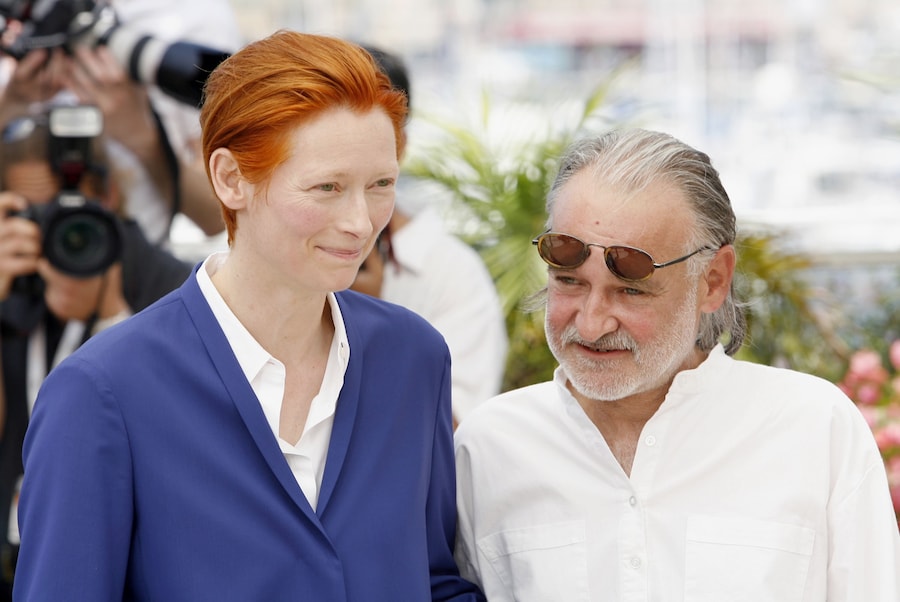
As the Hungarian auteur passes away, we present a five-point guide to the philosophically challenging films of Béla Tarr, and discover why Gus Van Sant is a fan
Béla Tarr is the kind of name you might expect to see thrown around in the most hardcore of cinephile circles. The Hungarian auteur, known for philosophically challenging films shot in stark monochrome, has a filmography that’s difficult to find at the best of times. Even the Criterion Collection, so often seen as the home for challenging artefacts of film history that more commercial distributors might baulk at, have only released one of his films, Werckmeister Harmonies (2000). But in late 2024, Curzon released a collection of Tarr’s full filmography – including his only television film, an adaptation of Shakespeare’s Macbeth.
With a career that moved from stark neorealism to the long takes that would turn him into one of the key figures of “slow cinema”, Tarr is a singular director who leaves behind a formidable artistic legacy. If you’ve never seen a Tarr film, or don’t even recognise his name, there’s a chance you’ll be familiar with the many filmmakers and artists that he’s inspired. Here’s what you need to know before diving in.


1. Tarr cut his teeth making social-realist cinema
Tarr began shooting his first feature film, Family Nest, when he was just 22-years-old. It’s faithful to the “Budapest school” of filmmaking, which, with a minimal budget and a cast of non-professional actors, aimed to offer something close to total realism on screen. His early films also carry a sharp political edge; the director himself described his 1981 feature The Outsider as a reaction to communist Hungary’s censorious political and cultural climate. “There were a lot of shit things in the cinema, a lot of lies … We just wanted to show the reality – anti-movies.”
2. He was critical of government censorship throughout his life and career
In a 2007 interview, Tarr described the impact that his 1984 film Autumn Almanac had on his career. “I really had no chance in Hungary after [that film],” said the director, whose studio Társulás, co-founded with his contemporaries in experimental film, was shut down by the state in 1985. Tarr’s 1988 feature, Damnation, is considered to be the first Hungarian independent film.
Throughout his career, Tarr explored the allure of near-mythical, powerful figures – his sprawling epic Sátántangó is about a village whose inhabitants abandon their lives to follow a charismatic man who has apparently risen from the dead. Even at the end of his life, Tarr was critical of his country’s right-wing government, and of the populist movements gripping countries in Europe and beyond.

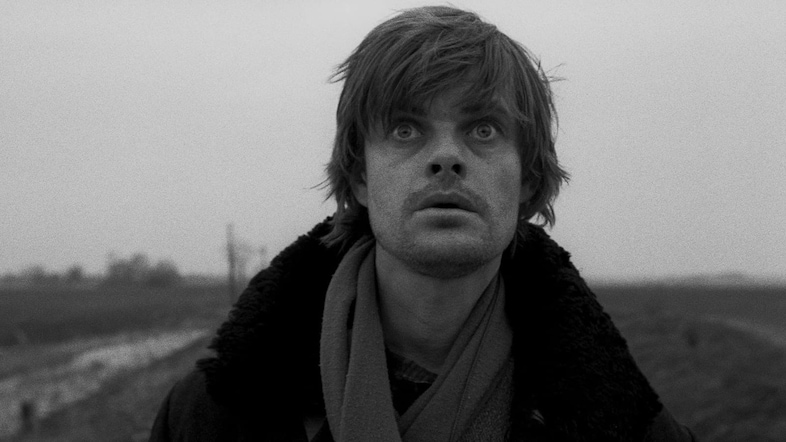
3. Damnation is one of the defining films of “slow cinema”
Slow cinema is, to put it mildly, a tough sell for an audience. Defined by its glacial pace, long takes and plot-light approach to storytelling, it seems to challenge everything we have come to expect from modern, narrative film. And Tarr is central to the way in which we might understand it.
Damnation presented Tarr in what we might call his final form. His frequent collaborators emerged – the novelist László Krasznahorkai, who adapted the film from his own book with the director, and the editor Ágnes Hranitzky, later to become Tarr’s co-director and partner in both art and life. And so, too, did his aesthetic style, which foregrounded the landscape and the passage of time as much as it did characters and their storylines.
4. He founded an experimental film school
Tarr retired as a filmmaker after the release of The Turin Horse (2011), feeling like he’d said everything he needed to with the medium. In 2013, he founded Film.Factory, an experimental film school with an avowedly practical slant – critic Jonathan Rosenbaum, who taught a class on the history of independent cinema, said that Tarr considered the school “a workshop or, as the name suggests, a factory that produces films in which [Tarr] serves as a producer.”
The rollcall for staff at Film.Factory shows the reach and influence of Tarr as a filmmaker. While there are, of course, slow cinema contemporaries like Apichatpong Weerasethakul, there are also stalwarts of American independent cinema like Jim Jarmusch and Gus Van Sant, the latter of whom described Tarr’s long takes as an influence on films like Gerry and Elephant.

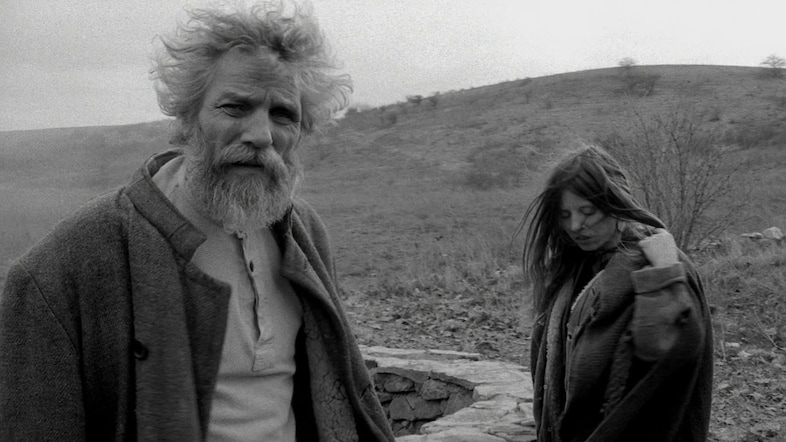
5. Tarr was always pushing up against the boundaries of film
After retirement, Tarr made no more feature films, but he did create a new short, Till the End of the World, which became a central thread for a 2017 retrospective of Tarr’s work at Amsterdam’s Eye Filmmuseum. The piece is made up of fragments of Tarr’s other films, alongside sound installations and objects from across his career. With features including a barbed wire fence with the promise of a new landscape locked away on the other side, Till the End of the World reveals Tarr at his most apocalyptic and political.
These experiments would continue later into his career; 2019’s Missing People was a site-specific work bringing together film, installation and performance for the Wiener Festwochen in Vienna. After censorship, artistic transformation, and even retirement, Tarr consistently challenged himself and his audience. And with his films now more available than they’ve ever been, there couldn’t be a better time to try and meet that challenge.
