
Swapping seasonal platitudes for intimate drama, we present the soul-baring films to see you through the cold months ahead
Nearly every Christmas film hinges on a seasonal, often kitschy surge of sentimentality in the final act. But for all the reunions, reconciliations and promises of renewal that occur at the end of the year, there is something to be said for the filmmakers who tap the rest of the winter months’ potential as a backdrop for introspective, humanist storytelling.
Winter is a deceptively intimate time of year. It brings a heightened awareness of nature’s harshness and the contrast of warm, manmade hearths, and holiday reunions that bring buried emotions to the fore. There’s something life-affirming in wintertide dramas about lost love, bereavement, loneliness, unexpected connections and breathless, long overdue confessions – the humanity displayed feels defiant in the face of bitter cold conditions.
If you’re looking for an alternative seasonal watch to hold close over the dark months ahead, here are ten films to add to your winter watchlist.


Le Notti Bianche (1957)
Set in the dilapidated streets of an Italian port city, Luchino Visconti’s romance is about a lonely man (Marcello Mastroianni) who encounters a heartbroken young woman (Maria Schell) lingering by a bridge one night. Eager for company, he starts falling for her as she comes to terms with being abandoned by a lover who left a year prior. Inspired by a Dostoevsky story, the studio sets turn the city into a finite, repetitive terrain that the wounded romantics continuously circle and revisit. Their willingness to stay by the other’s side in the cold, wintry streets doesn’t stop the devastating ending that’s approaching.

Chilly Scenes of Winter (1979)
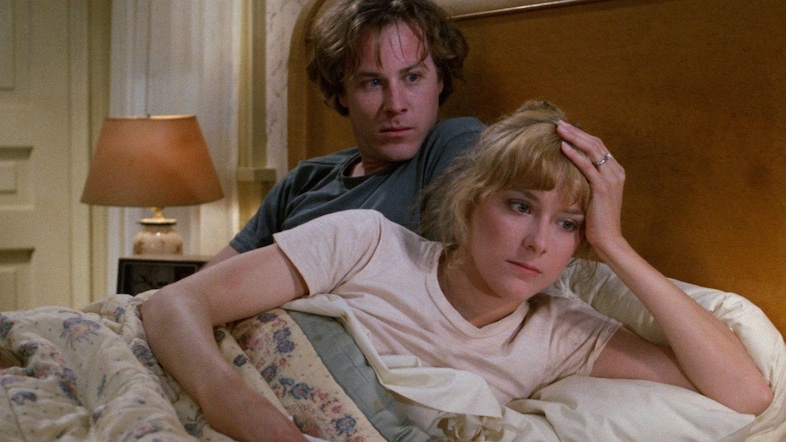
Definitely the most acerbic and uncomfortable film on this list, but Joan Micklin Silver’s story of wintry obsession is as frank an insight into the masculine urge to self-sabotage that we’ve seen in an American romantic comedy. Charles (John Heard, never better) is a civil servant whose intense nature ruins an affair with his beautiful coworker, Laura (Mary Beth Hurt). As the hostile Utah winter worsens, so too does Charles’ romantic anguish, and the contrast between the freezing exteriors and warm, inviting interiors becomes pronounced and bitterly ironic – with a snow-dusted A-frame house emerging as a particular site of envy.

The Dead (1987)
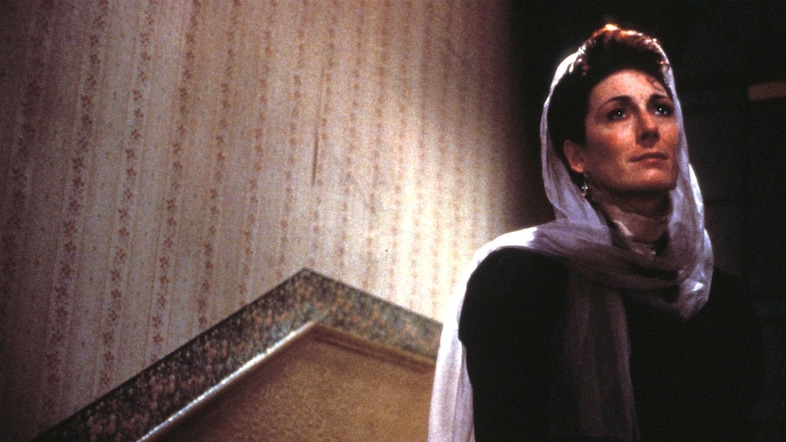
John Huston’s final film was an adaptation of the most famous story in James Joyce’s collection Dubliners, set at a house party in Dublin in the early days of 1904. A husband (Donal McCann) spends his evening distracted with trivial matters until his wife (Anjelica Huston) is struck by the memory of an event from her adolescence that he is hopelessly disconnected from. Huston’s The Dead is a family affair, involving multiple immediate relatives in key production roles, and honours the sombre themes and prickly satire of Joyce’s prose. Few films dig into the mournful, spiritual feelings of the snowy countryside as successfully as this.


Babette’s Feast (1987)
In 19th-century Jutland, a closed-off Protestant community is disrupted by the arrival of Babette (Stéphane Audran), a mysterious French woman who asks to be the housekeeper of the two elderly women overseeing the religious flock. They conspire to treat Babette coldly, even when Babette wins 10,000 francs and wants to spend it treating her fellow villagers to a fine French banquet. One of the most celebrated films about food, this Oscar-winning drama centres on a woman with a saint-like determination to thaw icy hearts and revitalise her own artistic spirit through the rituals of cooking. Babette’s Feast is like a parable, a rejuvenating and cleansing tale tucked away in a sheltered, unforgiving corner of the world.

Dekalog (1988)
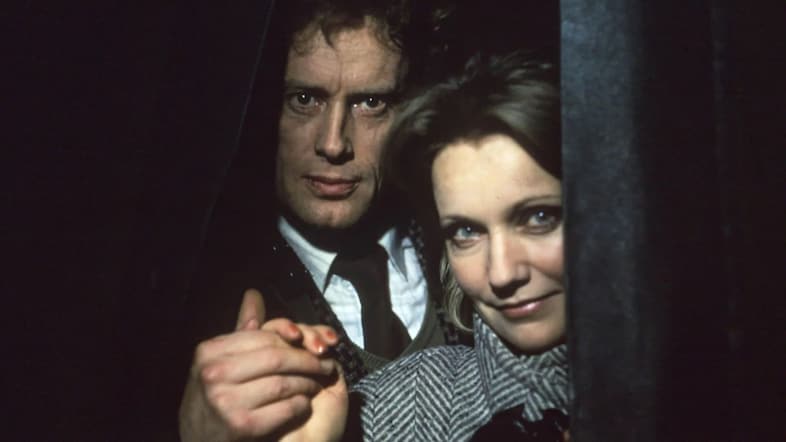
Anointing any Krzysztof Kieślowski project as his best is an impossible task, but his rich and lengthy Dekalog, an anthology series of ten episodes themed around a different Commandment, is too striking and poignant to deny. Set in pockets of social housing and other quotidian Polish environments, the chilly winter setting of the third episode only enhances the intimate, searching scope of Kieślowski’s project – taking place on Christmas Eve, Three is a story of love and loyalty where a taxi driver is tempted by an old flame at Christmas. Kieślowski poses open questions about intimate (and Catholic) human fears and desires in quiet, mundane winter settings, pitting his conflicted characters against the cold curiosity of the universe.

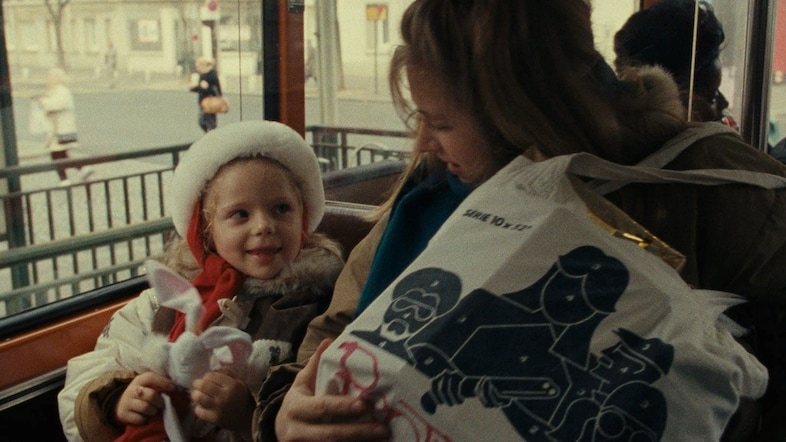
A Tale of Winter (1992)
The highlight of Éric Rohmer’s Tales of the Four Seasons cycle, A Tale of Winter is tinted by the grey, brown and blue hues of a Parisian winter. A typically indecisive and incomplete Rohmerian protagonist, Félicie (Charlotte Véry) is raising her daughter by a lover five years after she last saw him. There are new men, but none of them seem totally eligible, and she still believes her daughter’s father will re-enter her life. Rohmer draws our attention to Shakespeare’s The Winter’s Tale, with its fantastical motif of reincarnation, to underline the promise of renewal associated with the season, leading to a mundane but seismic encounter in the bustle of the city.

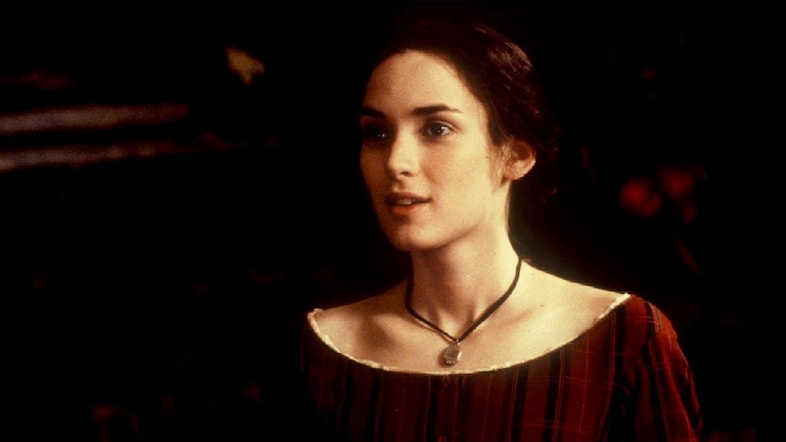
Little Women (1994)
Gillian Armstrong’s 1994 adaptation of Little Women faced an uphill battle to get made in 90s Hollywood, but casting superstar Winona Ryder as feisty writer Jo March got the ball rolling on a version of Louisa May Alcott’s bildungsroman that’s endured for over 30 years. With incredible cast chemistry and a classic-feeling style with the emphasis on real emotions, Armstrong’s storytelling is economical but never rushed, and the extended winter sequences from Alcott’s book are dazzlingly and sensitively rendered on-screen with crisp, breathtaking exteriors and warm, moving drama inside the March home, charting the tricky task of four teenage girls growing up at the same time.

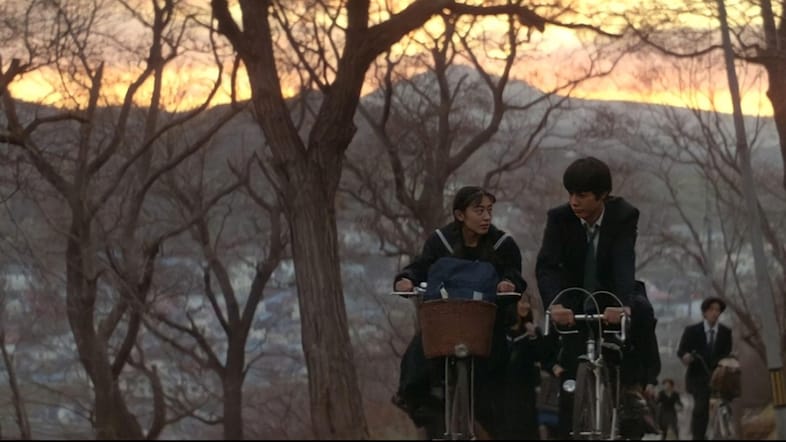
Love Letter (1995)
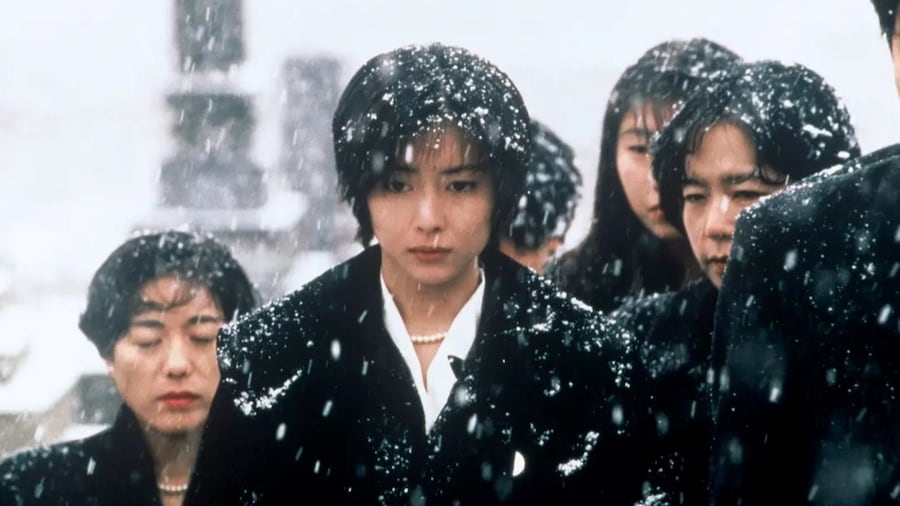
The debut feature from Shunji Iwai (All About Lily Chou-Chou), this romantic drama focuses on a grieving young woman who sends a love letter to her late fiancé’s old address – to her surprise, she receives a reply. Set between Otaru and Kobe in Japan, Love Letter casts Miho Nakayama as both women implausibly corresponding with each other, inviting them on a journey into the past against shots of brilliant white snow and mushy roads. It’s searching and alive from the opening scene, where the grieving woman lies on a snowy hill, looking upward, before walking all the way down to her partner’s memorial, a long take charting her return from the sublime back to the land of the living.

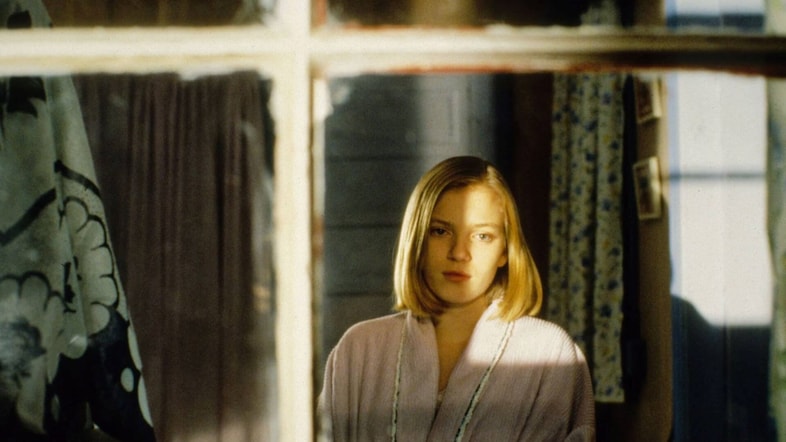
The Sweet Hereafter (1997)
Two acclaimed films based on books by Canadian author Russell Banks were released in 1997 – Atom Egoyan’s The Sweet Hereafter and Paul Schrader’s Affliction. Both take a novelistic approach to the generational pain coursing through a rural, snowy town, but only The Sweet Hereafter builds towards something you could call hopeful. Ian Holm plays a lawyer who persuades Canadian townsfolk to pursue a class-action lawsuit after 14 children are killed in a school bus crash, and Egoyan parallels the multifaceted grief of the town with the lawyer’s own familial dysfunction. Filled with poignant, thorny questions about how an older generation views a younger one, The Sweet Hereafter reverberates with haunting, human emotion throughout.

Hotel by the River (2018)
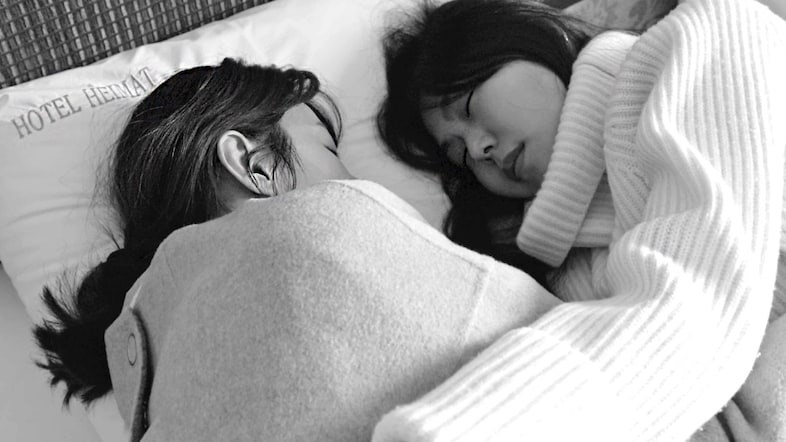
Plenty of Hong Sang-soo’s microbudget interpersonal dramas are set in areas of the Korean peninsula during winter, but the humour, stirring emotions and eager intimacy of Hotel by the River deserve special commendation. In a hotel by a frozen river, an ageing poet invites his two jaded, adult sons for a charged reunion; meanwhile, a woman is tended to by a friend at the end of a messy affair. With greyscale cinematography, Hong ably draws out his characters’ scars and open wounds in soju-fuelled confrontations and kind connections with strangers – the severe winter chill makes their eventual honesty feel both more clumsy and heartbreaking.
Read our guide to the films of Hong Sang-soo here.
