
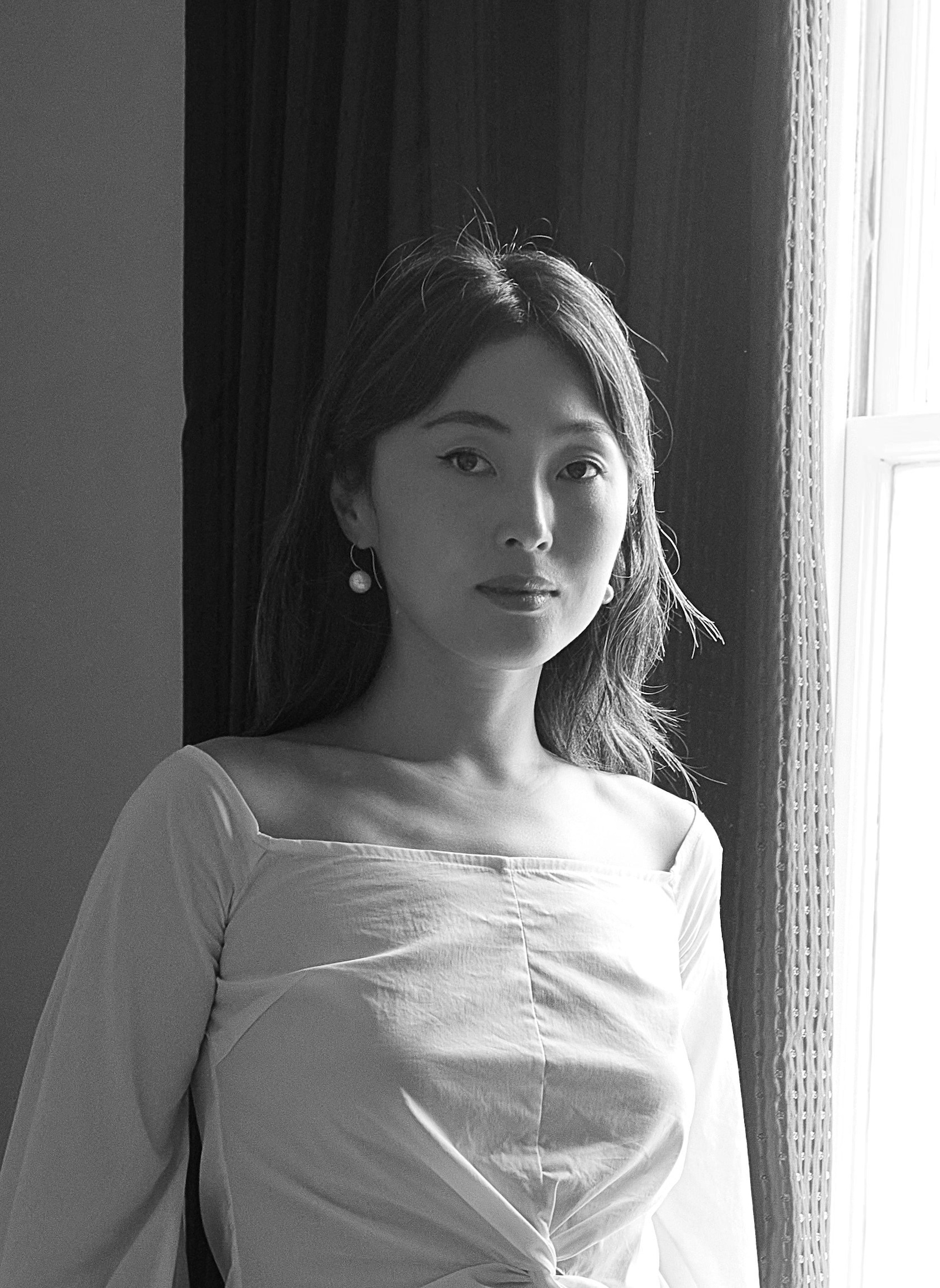
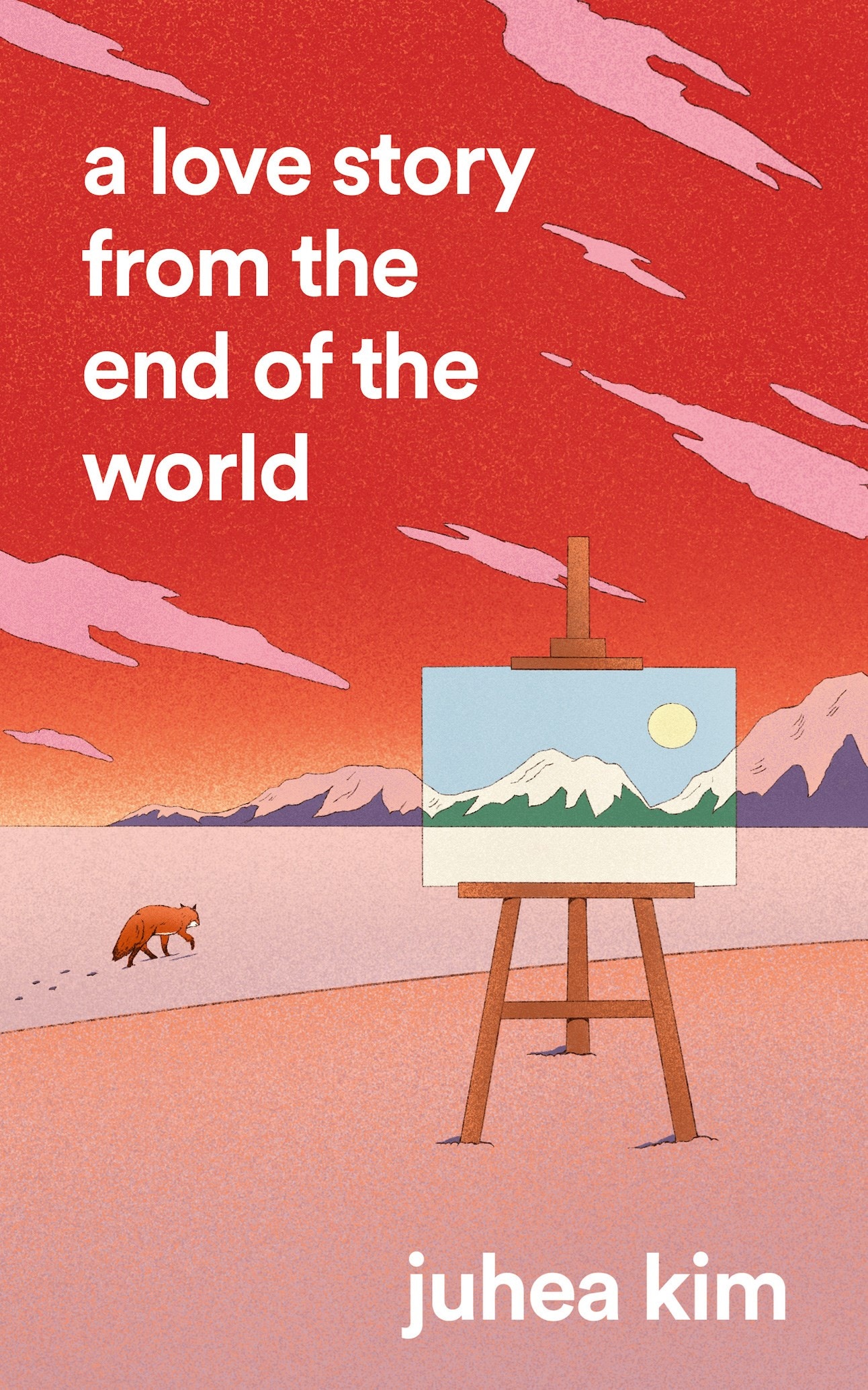
What does love look like at the end of the world? This is the question at the core of Juhea Kim’s latest book, A Love Story From The End Of The World – a collection of ten short stories, published by HarperCollins, that traverse continents and futures to ask how humanity will endure when the planet we depend on is threadbare, when the very nature of nature is no more. At a time when the climate crisis is impossible to ignore, Kim offers us something visceral and distinct – an alternative to the inertia of facts and statistics, and a reminder that art and the most rudimental human sentiments still hold transformative power.
“I’ve been an environmental advocate for the past 20 years,” says the Korea-born, Oregon-raised writer, who approaches climate narratives by blurring the lines between fiction and non-fiction. “That experience made me realise, almost physically, what is at stake.” Though the collection is her first work of the emerging genre Cli-Fi, Kim resists the rigidity of the category. For her, the stories are above all an exploration of love and her love of nature (her “first and possibly greatest passion”).
Biodomes, extreme weather, contamination, waning biodiversity; lovers who meet only briefly before climate upheaval separates them; a woman seeking adventure in France; interspecies care in a world that deems animal extinction and industrial farming normal. Even at their most surreal, the stories draw from Kim’s own life – an art historian’s eye, a vegan’s moral compass, an advocate’s urgency. In this collection, love becomes a framework for understanding what is worth saving: the natural world, our capacity for human connection and the fragile but resilient threads that bind them. What emerges is not a pessimistic vision of apocalypse but a meditation on empathy and tenderness when such sentiments feel otherwise lost.

Rose Dodd: A Love Story From The End Of The World is a collection of love stories, set in the future after the Anthropocene has collapsed. The book is both intimate and apocalyptic. What did you feel fiction could express about the climate crisis that non-fiction couldn’t?
Juhea Kim: We currently have all the facts we need about the degradation of our planet and what we can do to stop it, but it’s still not enough to convince people to change. We’ve come to blame nameless entities, governments, organisations and corporations for creating the current disaster. We think that we’re helpless because the system is more powerful than we are as individuals, but we as individuals created that very system. And the fact is, human beings make up those bodies. We need to appeal to our inner humanity, and what can achieve that better than merely listing facts and statistics is art, because art, including fiction, is an expression of our humanity. If recognised, perhaps it can awaken something within those engaging with the art.
RD: So you’re looking to trigger an emotional response, to appeal to the empath within?
JK: I think the best hope we have now, given the current ecological state of the planet, is to re-awaken our humanity through art.
RD: Your depictions of the end of the world are eclectic, dystopian but eerily possible. They are also fun and experimental at times. Was this intentional?
JK: The word fun is important, especially when you’re dealing with such a harrowing topic as our demise. There has to be an equal and opposite effect that’s positive and engrossing and fun to read. You don’t want the readers to feel like this is torture, because the message won’t get across as well.
“The best hope we have now, given the current ecological state of the planet, is to re-awaken our humanity through art” – Juhea Kim
RD: Did using a short story format aid this?
JK: The first decision that a painter has to make is how big and what shape the canvas is going to be. Short stories are able to capture a multitude of very different emotions in a very concise format. I loved being able to say something playful and funny, moving and romantic, and at the same time tragic and incredibly sad. A good short story is able to convey all those emotions – even on the same page. I knew that each could deliver a lot of emotional impact, but in very tight turns. Writing a short story is like driving a fast car around very tight corners.
RD: Together they feel like an anthology. And, while hypothetical and in part imagined, we are left questioning what the future might look like, if we continue as we are. When it came to world-building, how much is fictionalised and how much is informed by the things – political, geographical, emotional – you’ve learned as a climate justice journalist and advocate?
JK: Some of it is, of course, fictional and speculative, but I would argue that stories like Biodome or Bioark have resonated with people because there are elements of them that remind us so much of our present reality, only stepped up just a little bit further. Then, other stories are very much rooted in reality and come directly from my reportage in a particular area. A Woman’s Life in Ten Scenes is an example of this. When I wrote this, I was also writing a feature on the loss of water in the desert reservation it’s set in, and the damming of rivers and how that relates to salmon populations, clean water and local livelihoods.
RD: And each story is set in a different location.
JK: I really wanted to show more than just one location or one concern or issue. I wanted it to come from a variety of places and viewpoints – especially the global South, and from places and people that have not received the same amount of attention. Places further away from me, but some close too. I’m from Oregon, and one story in the collection takes place in central Oregon, which is the high desert. People forget that there is this vast tract of area and native people that have been living there for millennia. I loved being able to explore places and traditions that are close to me.
RD: At the end of the world, what does love represent? Is it escape, survival, realism or hope?
JK: I suppose all of my books ask that: what is love? What is the nature of love? There are multiple types of love explored across the ten stories. What I do believe or understand about the nature of love is that it can cross time and place and endure, and I hope that these short short stories show even just a quick glimpse of that, light and dark, because it’s hard to show all of that beauty and truth in full.
“This amazement at art and humanity – at nature – is worth protecting” – Juhea Kim
RD: As we get ever closer to environmental collapse, do you think love will persist or will that become increasingly unstable too?
JK: Even within my lifetime, love has changed. Look at dating, for example, I think dating has become something quite unnatural. I feel for the younger generations who don’t know what a pleasure it is to meet people organically, and that is not limited to romantic relationships alone. I remember very fondly the time when I used to just pick up the phone and call my girlfriends and have two three hour conversations, people who I had just seen at school. You didn’t have to text first to ask if it was okay to call them, like “are you free?” Or, “Should we schedule a zoom call?” It was much more organic, and we were more open and receptive to reaching out and invading each other’s spaces. In the past few decades, we’ve become increasingly closed off. I do think that the more technology progresses, the more closed off from real connection people will become. That being said, I do hold hope because I think what most of us want is to love and be loved.
RD: People are scared of commitment too, as a result of an excess of choice. Technology seems to push us towards isolation.
JH: I think it’s part of the system’s push to make us into consumers rather than human beings. We are constantly trained to stay glued to our phones, rewarded for interacting with them, rather than human beings in the flesh. We’re addicted to our screens. When you go to a museum and you see these different artworks that people have created in the past, what that brings is amazement. And I think amazement is something that we have become very distanced from. We’ve become desensitised to all these wonders, partly because AI-generated deep fake images and videos proliferate our screens and we can barely differentiate between what is real and not. Then there is war and violence and economic uncertainty. It’s no wonder we’re cynical.
But art is something that restores this human amazement. That’s why it’s so important, right? During the time when you are seriously engaging with a work of art that a human being put out as her testimony to life, and you’re feeling something, and maybe you’re talking it with friends, that’s when we are being the most human we can be in 2025 in a world that’s relentlessly telling us not to be. And nature too, from which a lot of art is inspired by. This amazement at art and humanity – at nature – is worth protecting.
A Love Story From The End of The World by Juhea Kim is published by HarperCollins and is out now.
