

Constance Debré talks about her favourite new novel, and the “anxiety, pain, loneliness and madness” of being a writer
This story is taken from the Autumn/Winter 2025 issue of AnOther Magazine:
“I met John Tottenham in LA because we have the same publisher, Semiotext(e). I was intrigued to read his first novel, Service, because I’m interested in first novels written by middle-aged people. In sport, it’s good to be young, but not always in literature. You have to go through some kind of trouble before you can write a book. Service is about a character called Sean – a double of Tottenham – who is in his late forties and working in a bookstore in LA while trying to write a book. It’s a great book about literature and what it is to be a writer. Being a writer is an impossible quest – it’s not easy and it’s certainly not fun. It’s a quest for something vague but absolutely meaningful. And this thing for him, and for many of us, is writing. Tottenham describes how difficult being a writer is. I feel the same anxiety, pain, loneliness and madness in this life we have chosen. There’s a faith in being a writer. We can all build reasonable discourses about the objective importance of literature, but at the end of the day I’m not even sure what it means. But I know it has to be done. There’s no other way to refuse this madness than by having this life. For someone like Tottenham and for myself, that’s the only thing we can do. Every writer is someone who struggles to live, from Kafka to Proust. That’s what literature is about – it shows we’re not alone in our loneliness.”

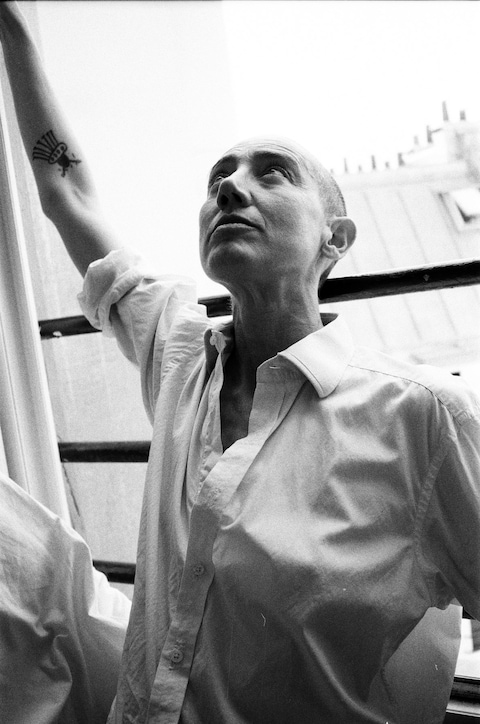
Constance Debré’s birth as a writer in her early forties coincided with the death of her former self. Abandoning her marriage, her career as a lawyer and her bourgeois Parisian life, the author chose to embark on a simpler, more ascetic way of living, spending her days reading, writing, swimming, smoking, sleeping and having sex with women for the first time. The results of this radical identity shift are chronicled in unsparing detail in the author’s propulsive trilogy of autofictional novels: Playboy (2018), Love Me Tender (2020) and Name (2022), translated from French into English and published by Hedi El Kholti and Chris Kraus’s Semiotext(e). In a series of short, sharp and emotionally devastating vignettes, Debré recounts scenes from the dissolution of her marriage, the bitter custody battle over her young son, her new life as a lesbian and a childhood spent with drug-addicted parents, dissecting sexuality, society, gender, politics and family with brute force. Critics have hailed Debré’s books as manifestos for a minimal way of life – she makes living with less seem, spiritually speaking, very appealing – although she refutes this description; instead, she says simply, “They’re novels.”
This story features in the Autumn/Winter 2025 issue of AnOther Magazine, which is on sale now.
