
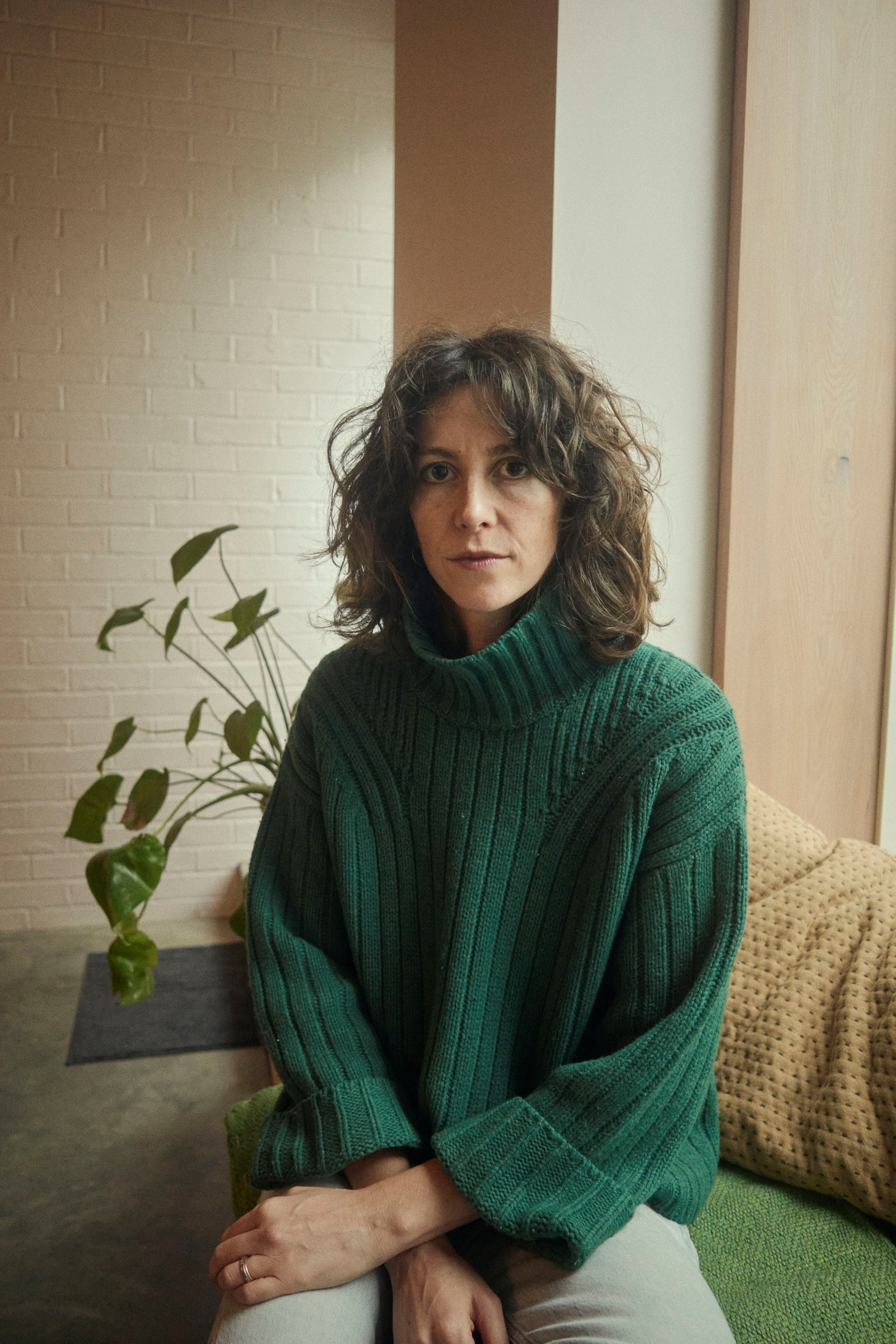
Thea Lenarduzzi was once told a story about a girl, Elizabeth Annie, who was locked in a tower and destined to perish there a few years later. The story went that the girl was diagnosed with tuberculosis by her medical father, who decided she should be tended to in this purpose-built edifice on his estate. Like the tower which still stands, the story persisted, becoming the focus for a swathe of local myths and legends. Only as it turns out – and it’s no great spoiler to say this – the story isn’t quite true.
The Tower is a matryoshka doll of a book, which starts with this papery outer layer and, by way of Katherine Mansfield, Walter Benjamin, Carl Jung, illness, girlhood and more, peels back these different skins to reach the real, inner story: that of the author, denoted here as simply T. The former Times Literary Supplement editor’s follow-up to Dandelions – a hybrid of family memoir and cultural history spun out around the central thread of Lenarduzzi’s grandmother – also flexes the parameters of fact and fiction. But here, she suggests that the boundary between them is much more porous than we would like to think.
In the process of disentangling Annie’s story, T peppers her text with revelations about research as a refraction of our own mindsets, the narrativisation of our lives and others’ and whether there is such a thing as a real self when our experiences are filtered through fiction.
Here, Thea Lenarduzzi speaks with AnOther about the creative impulse and how a storyteller’s own imperfections make a dent on the stories they relay.

Miriam Balanescu: With The Tower being, to use the book’s own metaphor, a “punched mirror”, a scattering of reflections, what was your initial conception of the book?
Thea Lenarduzzi: I think of it as a story about stories, why and how we tell stories, why a certain kind of person tells the stories that they tell; how there’s an ineluctability about the stories that we’re drawn to. It was this kernel of a story that my husband, then-boyfriend, told me all those years ago, and no matter how scant it was, I was interested to know more. The more I tried to work out what happened, the more it became a question of, why am I trying to work this out?
MB: Were the memoir elements something you planned from the beginning?
TL: Not at all. There’s a sense of something greater than the storyteller, that the stories are finding their way through you as a medium. There’s a fate to it, and you can resist it, which I sort of did. I didn’t think I would write the book that I wrote at all. I didn’t even think I would try to write anything about Annie. It was this story that I would take out of my pocket and stroke when I was alone. The journey aspect is genuine: it was both a geographical journey, going up to the source of this story, but also back to the source of the person, the child you once were.
MB: When your nonna gave you her diary, she said “it was real and without fiction”. I wondered whether that was partly the genesis of this project.
TL: My nonna made me a writer, in a sense, because she was a repository and teller of tales, but I hadn’t remembered the diary connection until you said it. I have always been fascinated by diaries. I tried to keep them myself when I was a kid. There was a trend in the 1990s to give your diary a name, like in Little Women. I tried to keep a diary loads of times, and I never could. It always felt like a great personal failing. So many heroines from the books I had grown up reading kept diaries. I have always been fascinated by the impulse to tell the self to the self, but also to the imagined potential audience.
“We tell stories the way we tell them because they are a product of the hundreds of thousands of stories we’ve been exposed to” – Thea Lenarduzzi
MB: Did you always intend to create a slippage between fiction and non-fiction?
TL: I knew that I wanted to tell a story in the way that, as far as I’m concerned, the best stories have always been told: the direct address to your reader. Think about Conrad, the best short stories – there’s always that framing, the ‘come close by the fire’. It was important to echo the oral nature of stories. I think we tell stories the way we tell them because they are a product of the hundreds of thousands of stories we’ve been exposed to. The parameters of our minds are dictated by the stories we’ve known. I’ve been writing a biography of Natalia Ginzburg and [have been] reading letters between her first husband and her while he was in prison. He writes about how he can’t wait to get out and see if they can find a way to be together that isn’t derived from stories they’ve read. It strikes me as such a true reflection of how we all live: in the margins of the stories that we’ve loved and been moved by.
MB: Why make omissions, especially the places where your stories unfold?
TL: I wanted to preserve an element of unknowability, the magic of the stories that I have always loved: fairy tales, myths and urban legends. Storytelling is such a fragile thing. It’s so easy to kill it, so easy to take your phone out, fact-check something, then dismiss it. I wanted to throw a few obstacles in the way, to slow people down and hopefully make them relish that unknowability, not shut the story down before it’s had a chance to get its hooks in.
MB: How much were conversations about the ownership of stories and who has a right to tell what story on your mind?
TL: It’s always a question that turns in my mind, the ethics of telling other people’s stories, the different ways in which you can, the legitimacies of those ways. By that same token, the ethics and legitimacy of telling your own story is another question. Why are you doing it? To what ends? What meaning are you imbuing your story with? Every teller of tales has a tremendous responsibility to work out why they’re telling the story that they’re telling, and what the legacy of it might be.
“I wanted to preserve an element of unknowability, the magic of the stories that I have always loved: fairy tales, myths and urban legends. Storytelling is such a fragile thing” – Thea Lenarduzzi
MB: Your book shows there’s a kind of insufficiency in storytelling around tragedy.
TL: I wanted to give a sense of: the traumatic incident in my childhood was an extraordinary day for me. But it isn’t an extraordinary incident in the grand scheme of lived lives, because there’s something so utterly mundane, sadly, about that incident on the train. I don’t know a single person who calls themself a woman who didn’t experience something similar as a girl. It’s about weaving it into the broader tapestry of lived experience. You can use terms like coming of age and that glosses over the brutality of so many of these incidents. But it was also a confirmation of a common experience.
MB: The Tower asks whether storytelling offers liberation or is a trap. What was your own experience of writing, freeing or constricting?
TL: Both – there’s a freedom in finding your way and moments where things click. It feels like you’re finally living in a rounded, multidimensional, time-travelling kind of way. It can make you feel dizzy almost. But once you’ve committed something to a page you’re then bound to it. You will always be responsible for what you’ve put out there. In the book, there’s also a question about the mutability of identity, our different versions of ourselves. The lines on a page are like the bars of a cell in a sense. There’s a part of you that’s always trapped there in that past.
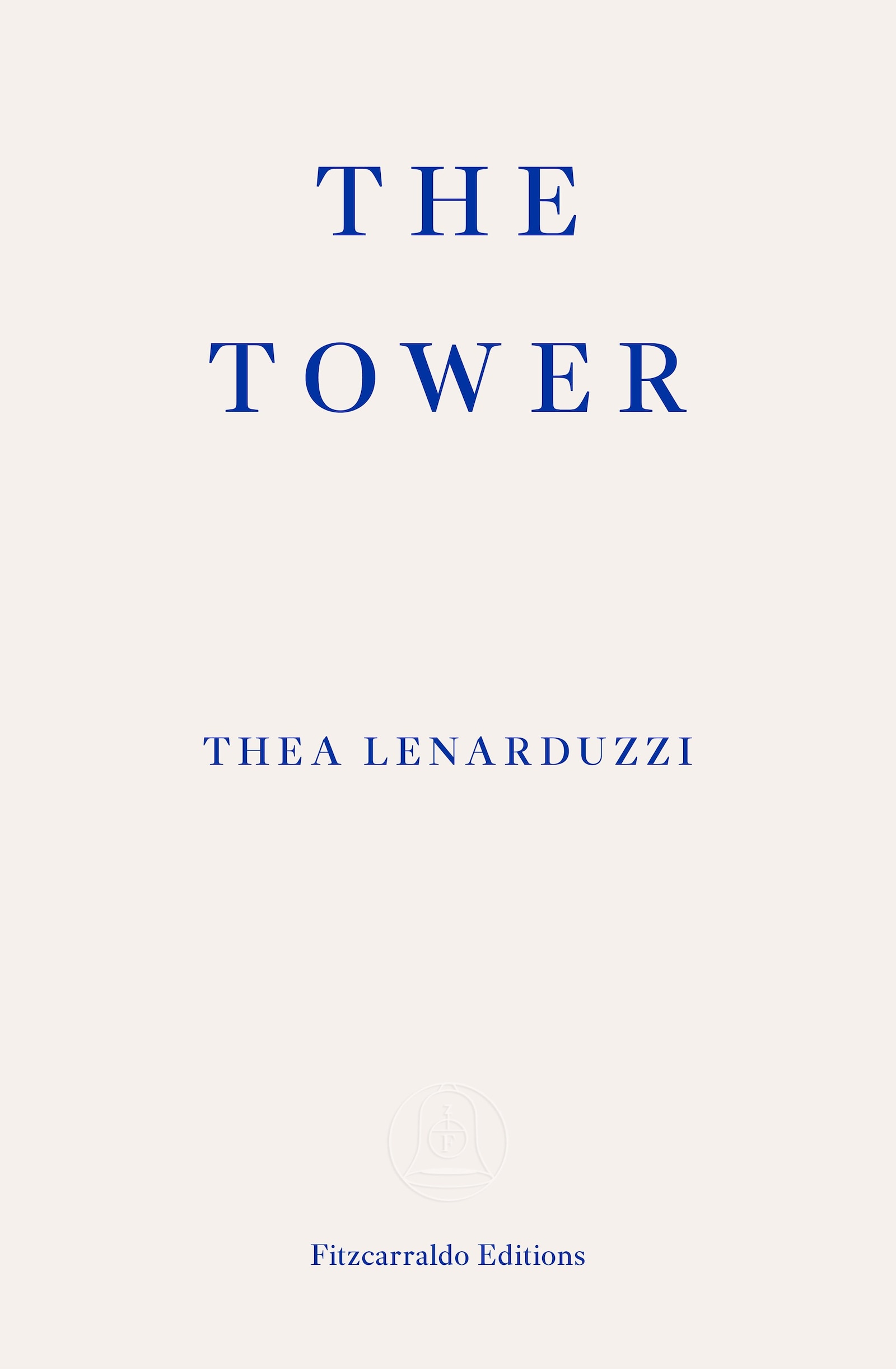
The Tower by Thea Lenarduzzi is published by Fitzcarraldo Editions and is out now.
