
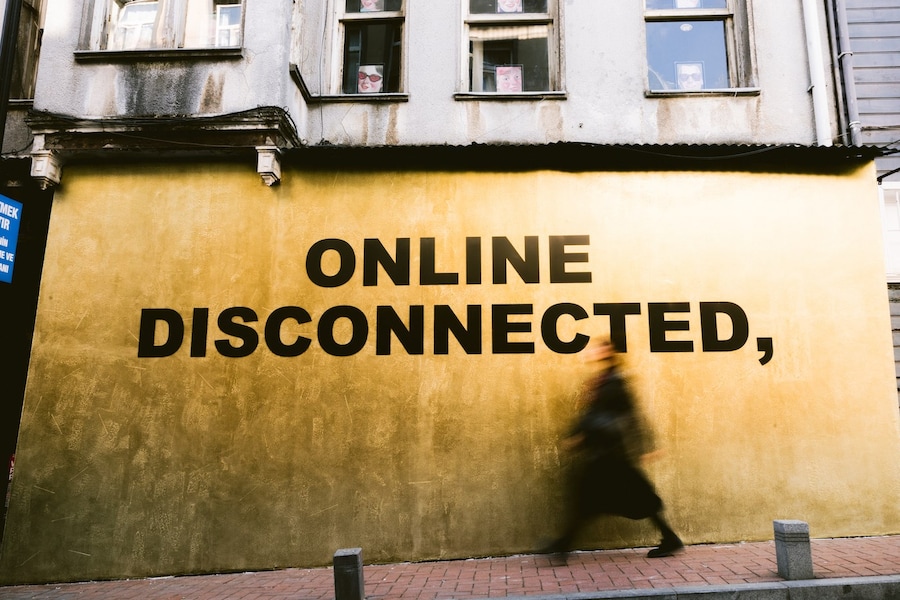
At Istanbul’s International Arts and Culture Festival, creative voices from across the world explored the slippery nature of reality right now, kicked off by artist Jeff Koons
“Art is the front lines of resistance,” said Turkish psychpop musician Gaye Su Akyol onstage at Istanbul’s exuberant annual cultural gathering IST.FESTIVAL. “Being an artist is my way of surviving in this surreal world. Because you can do anything; you are as free as a ghost.”
There might be no better city – a centuries-old melting pot that has seen four empires rise and fall – to grapple with the question posed by this year’s festival: “What is really real?” Indefatigable co-founders Demet Müftüoğlu-Eşeli and Alphan Eşeli, and arts and culture director Nazy Nazhand, celebrated the festival’s 15th anniversary with an immersive three days of talks, screenings, live music, exhibitions and performance beside, and sometimes on, the waters of the Bosphorus. An eclectic mix of voices from the worlds of art, music, fashion, photography and literature travelled to the city, among them pop artist Jeff Koons, Dutch photographer duo Inez & Vinoodh, musician, actor and artist Scott Mescudi (aka King Cudi), artist Lou Doillon, model and actor Malgosia Bela (showcasing her playful black-and-white short, Muse, directed by husband Pawel Pawlikowski) and performance artist Ekin Bernay – who displayed a vivid example of how differently her body moved in Istanbul – hopping pavements, dodging cats – compared to elsewhere in the world. All were invited to explore the slippery nature of reality right now; the ways our realities are shaped and fractured – and how they might be reimagined.
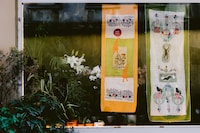
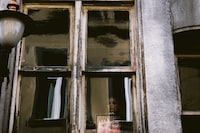
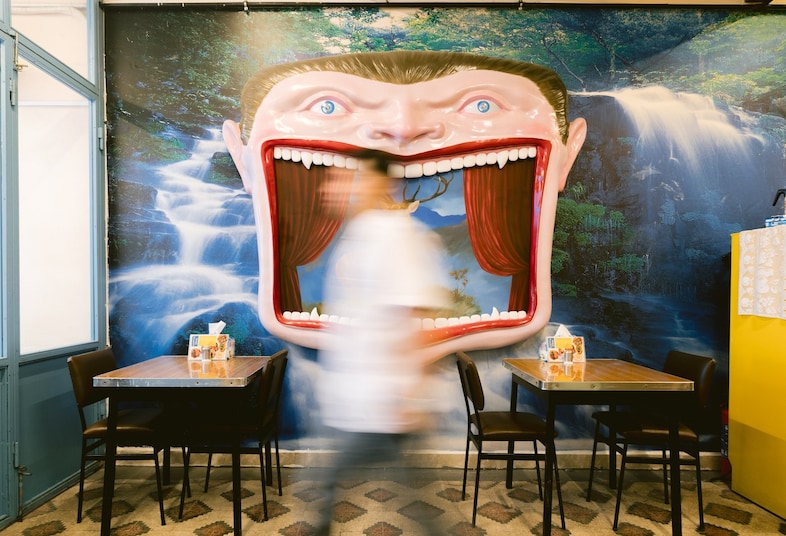
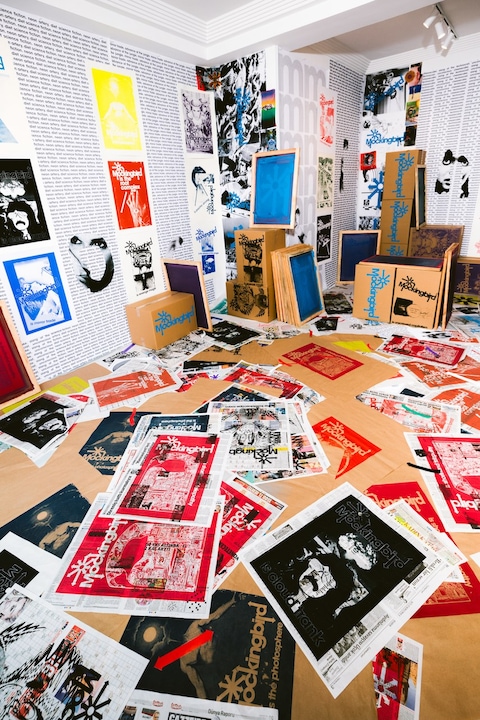
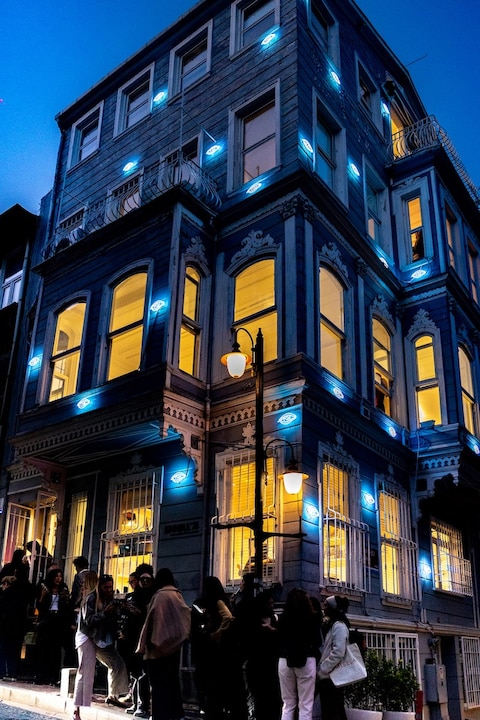
Author Orhan Pamuk once described Istanbul as “an archipelago of neighbourhoods in which everyone knew each other”, a community spirit that was in full evidence at the festival, where talks started onstage but stretched offstage and long into the night. “Everything in my life that led me to something, was all based on a feeling. If I let my mind run things, I don’t think it would ever have happened,” said Mescudi at a crowded music venue in the arts district of Beyoğlu, reflecting on how emotion and imagination have the power to create new worlds. Further along the Bosphorus coast, a group exhibition, Nearness, tethered itself in the historic neighbourhood of Arnavutköy, a village-like district that zig zags up the hills from the pier. Sound installations, neon artworks, sculpture and painting popped up in bakeries and florists, peeking out from barbershops and the upper levels of the area’s colourful patchwork of wooden Ottoman townhouses. “We cannot think of a more apt backdrop to these critical conversations than in Istanbul – our home and inspiration – which for centuries has been a bastion of creative thought and innovation,” said co-founders Demet and Alphan. Here, we excerpt the talk that opened the festival, held at Istanbul’s airy Museum of Modern Art – a conversation with Jeff Koons hosted by Timothée Verrecchia, about art after the algorithm.

Timothée Verrecchia: One thing that you and I have discussed is what’s required to stay curious. I’ve always been in awe of your curiosity, your energy, and your constant appetite for new things – new cultures, history and places. I’d love for you to explain to us how you stay in what seems to be a constant state of wonder.
Jeff Koons: I try to stay open to everything. And I just want to state here, being in this environment and kicking off the festival, as an artist, I think what pulled me to the art world was being able to be part of a group – the idea, the avant-garde. And so to be here in this intimate environment with everybody, I mean, this is what I’ve always wanted: to be able to be in dialogue about possibilities. I’m interested in the possibilities for myself to become, but also the possibilities that we all can become as a group.
So this intimacy is really what I have always looked for – to be in dialogue about art. I’m really grateful to be here, to be open to everything. I’ve tried to develop a practice of the removal of judgment and just the acceptance of everything. And to understand that certain things, at some moments, may be more relevant to me – more significant – than other things, but it doesn’t mean that what I’m not looking at at that moment is any less important. Everything’s perfect in its own way.

TV: It seems like it’s very specific to your work in terms of how you use science for its innovation in order to think about the duration and the sustainability of your work over time. You mentioned to me how all the research that you do on materials, for instance, is really about making sure that your works can be outside in the world – be outside in history and interacting with the outside world, with the elements, with people who want to engage with the work. So much of innovation feeds the creative process in the sense that it helps the work live in the world.
JK: Yes, and it has to do with a dialogue – a kind of responsibility. We were speaking earlier, just because of our shared interest in life, about Steve Jobs. I never met Steve Jobs, but I’ve always enjoyed his philosophy of objects and of caring. Walter Isaacson, in his biography of Steve Jobs, speaks about a moment when Steve is in the backyard with his father. His dad tells him that they’re going to paint the fence, and he explains to Steve that it’s important to paint both sides of the fence – not just the side they’ll be looking at from their home, but also the side the neighbour will see.
And this type of caring – I try to tell my children, and [my wife] Justine – I try to communicate: forget about aesthetics, forget about everything. The most important thing is to care. If you care about something, everything else comes along. The concept of aesthetics comes through caring. A sense of morality comes through caring. Everything is based on just caring – being thoughtful about something, whether you’re preserving something or destroying something, serving or not serving.
I try to practice that within my work, within my use of technology. I understand that everything goes to dust, that everything ends up decayed and falls apart – even the most durable of materials. But that still gives us an opportunity to try to care.
It’s this idea that if you can affect one person’s life, if you can be generous in some manner to just one individual – it’s the same within the arts: trying to create something that, in some manner, can communicate to somebody, that you can be of service to, that you can serve, that you can be generous toward, and that you can share a human experience with.

TV: One conversation we had was about seeing things pass. You mentioned that everything goes to dust, everything decays. And although we’re constantly either in denial or battling that notion, I’d love to think about what that means in terms of this theme. You mentioned this experience you had in New York City recently, going past a chapter of your life that had kind of disappeared. What is it that represents reality on a day-to-day basis? What do you think really is real?
JK: I think the interaction with oneself and with the environment. I was at Nobel Laureate Week in 2014, and I met Eric Betzig there. Eric had previously won the Nobel Prize for Chemistry, and I was having a conversation with him. He said, “You know, life is just a chemical, animated chain reaction.”
That was the first time I ever came across this concept or definition of life, and I thought, That’s beautiful. That’s what it is. And that’s when I stay very focused on this – it’s just the elements, these chemicals interacting. One is affecting another, and that’s creating a certain sensation. My fingertips are tingling – it’s a chemical chain reaction, but it’s the animation of it. It’s one chemical reaction against another to another that gives this animation. This is life; but this is who we are. This is how we have feelings, how we have sensations, and how we interact with the world. So I like to think about trying to keep those chain reactions flowing – celebrate them, enjoy them.
There’s a large communication about AI, and AI is amazing – I’m so appreciative of all the information that comes and the big dialogue about it. But AI doesn’t have the ability, at this time, to fear death or to experience joy. It can feed words, it can feed the simulations – but it doesn’t know those feelings. And we know those feelings. I hope that we can learn to experience our senses on an even higher level. In a way, we feel challenged by that – to do it, to define what this biological experience is.
The Nearness: A Neighborhood exhibition will remain open to the public until November 10. More details on IST. FESTIVAL here.
