)
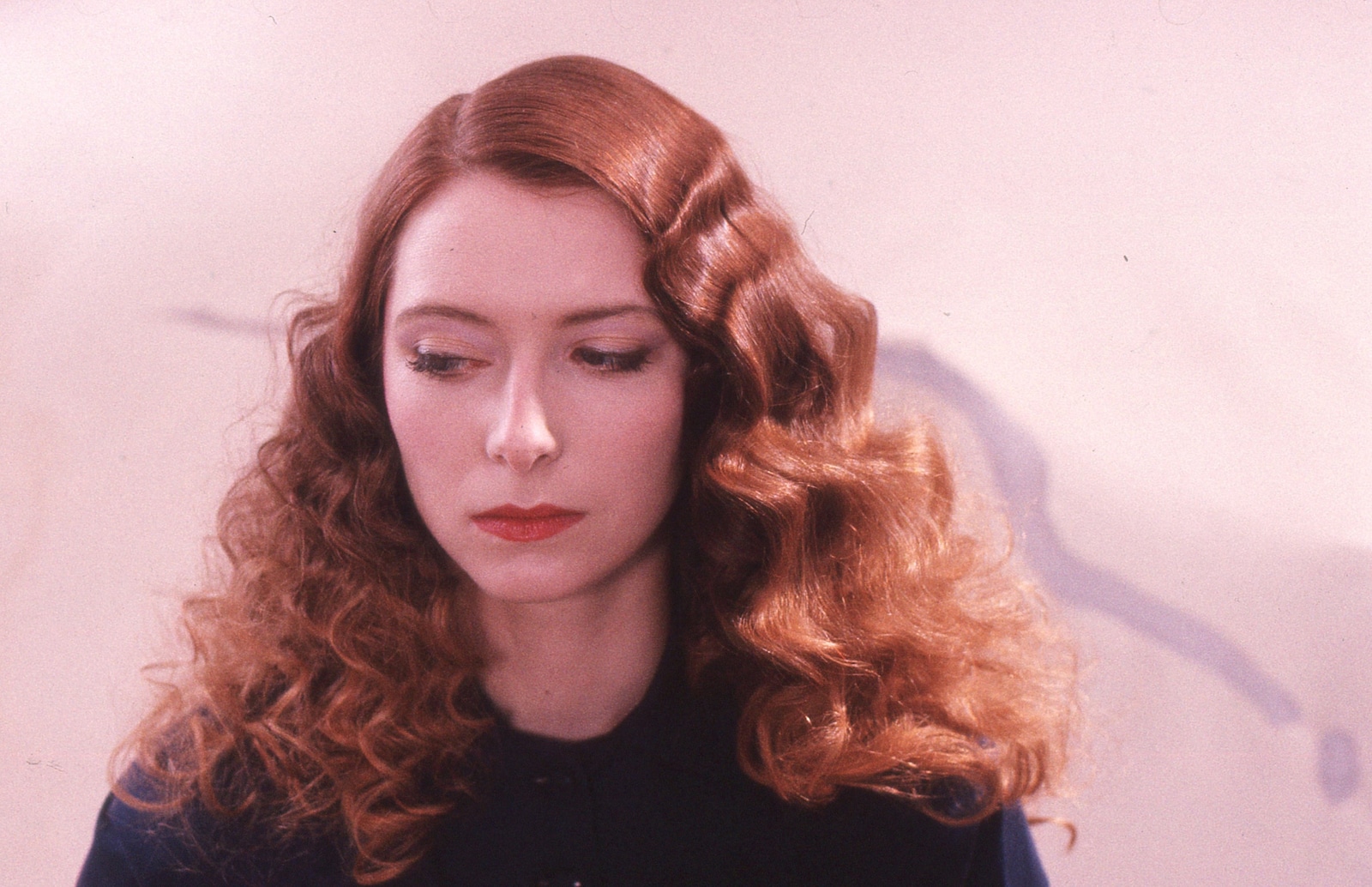
Few figures in cinema embody the word ‘ongoing’ quite like Tilda Swinton. For nearly four decades, she has moved through film, art and fashion with a mercurial presence that defies category – at once avant-garde icon, Oscar-winning actor, collaborator and fashion muse. Rizzoli’s new release, Tilda Swinton: Ongoing, captures not only Swinton’s prolific career but an intricate web of lifelong friendships, creative collaborations and dialogues, presenting a portrait of an artist whose curiosity and generosity remains infinite.
“We didn’t want a coffee table book,” says Julia Kozakiewicz, the publication’s managing editor and project manager of the Ongoing exhibition at Amsterdam’s Eye Filmmuseum. “We had such a wealth of material, both in text and image, that we really wanted to maintain the balance between a photographic album and something that can not only be looked at but also read from start to finish.” The result is a book that oscillates between accessibility and artistry, weaving together conversations with collaborators, texts by Rajendra Roy and Olivia Laing, and images from over 30 photographers, alongside Swinton’s own archive.

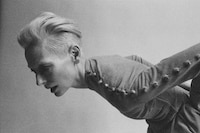
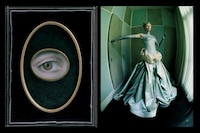
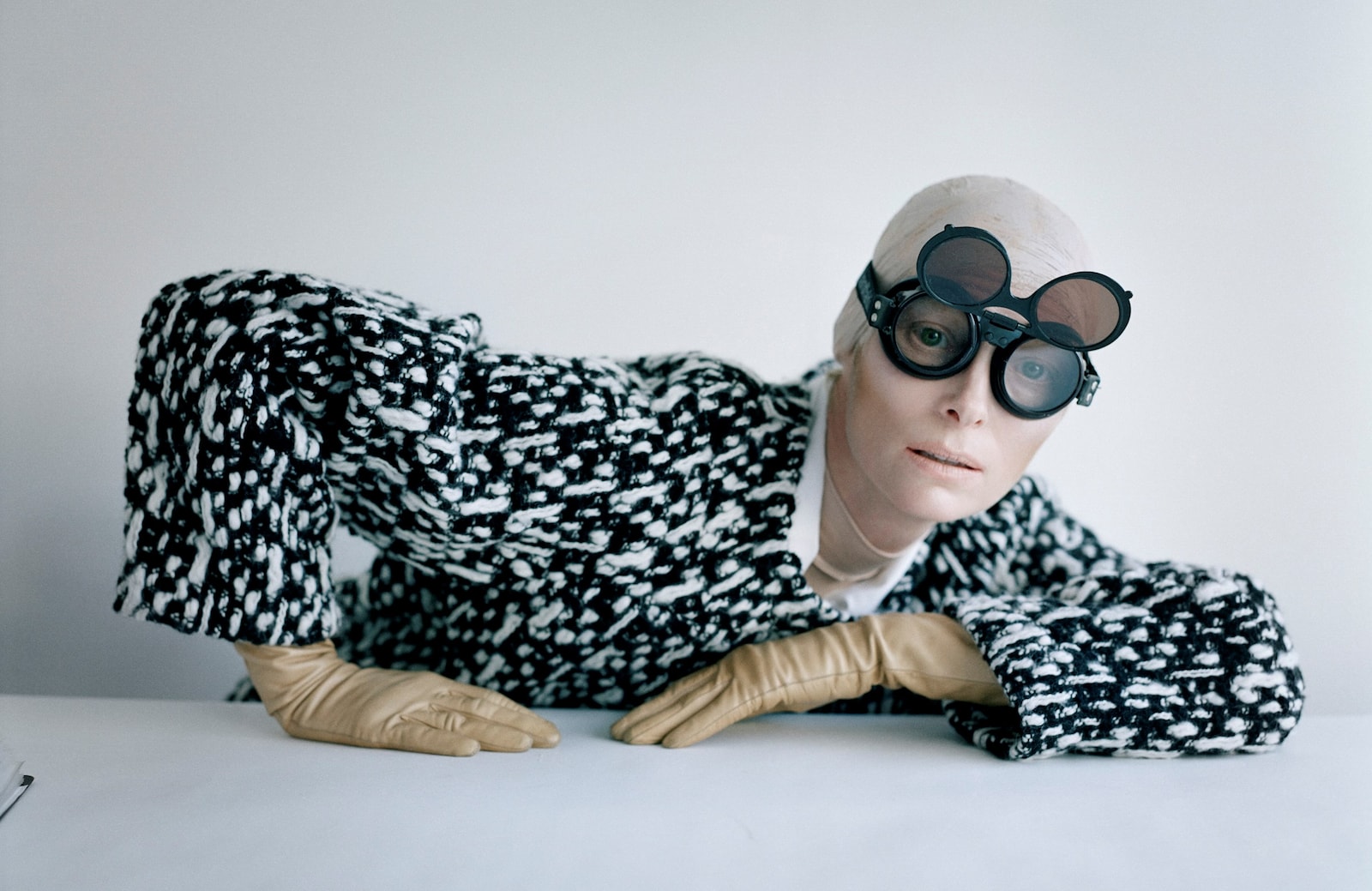
Swinton’s ethos of collaboration shapes every page of the book, with contributions from nine of her closest artistic partners, including filmmakers Joanna Hogg, Apichatpong Weerasethakul, Pedro Almodóvar, Luca Guadagnino, and Jim Jarmusch; fashion historian Olivier Saillard; photographer Tim Walker; writer Olivia Laing; and creative director Jerry Stafford. Each brings new perspectives that, together, form the vast constellation of voices. For Kozakiewicz, this ethos shaped the book at every level: “Tilda’s way of approaching her creative collaborations fully informed the way we worked. We wanted a book that would reflect what we tried to convey in the exhibition – that friendship is the true starting ground for creativity and art, and an essential part of the process.” That sense of trust, generosity and intellectual sharpness, she adds, is Swinton’s signature, and the reason her collaborations retain such freshness.
The book feels less like a retrospective than a living document, and an invitation into Swinton’s kaleidoscopic world. The opening conversation is a tender letter to Derek Jarman, titled Your Forever-Shoes. Swinton writes about shared rituals, pressed flowers, the eponymous shoes, and their enduring life of friendship. For Swinton, Jarman’s presence continues to seed her work, as she writes about the jade plant on her desk that descended from the first plant he ever tended.

In form, the publication embraces a spectral quality: four different textured papers and acetate sheets layer the work like film reels. “Throughout the whole process, we were thinking a lot about ghosts, phantoms, layering and overlapping, liminal spaces,” Kozakiewicz reflects. “How better to represent that in the physicality of the book than with different choices of paper? The acetate sheets represent that ghostly, filmic presence, while the varying textures and weights make the book more dynamic.” Like Swinton herself, Ongoing insists on the porous, the layered, the unfinished – art as a process and continuum, not a final outcome.
Later in the book, Olivia Laing’s essay, The Borderless Republic, writes about Swinton as a “soldier of cinema”, devoted to the liberation of the body, the fluidity of feeling and the endless possibilities of life. Laing argues that life is inherently fluid, and that bodies, time, and our sense of self is always changing, but humans cling to illusions of solidity and borders. Swinton embodies this mutability not only through gender shifts or multiple roles in a single film, but by revealing the porousness of character. Her performances, whether the jagged trauma of We Need to Talk About Kevin or the restrained grief of The Souvenir Part II, render the body a site of psychic truth. Beyond performance, she treats cinema as a “borderless republic”, a communal space where audiences surrender control to enter a shared, new world.

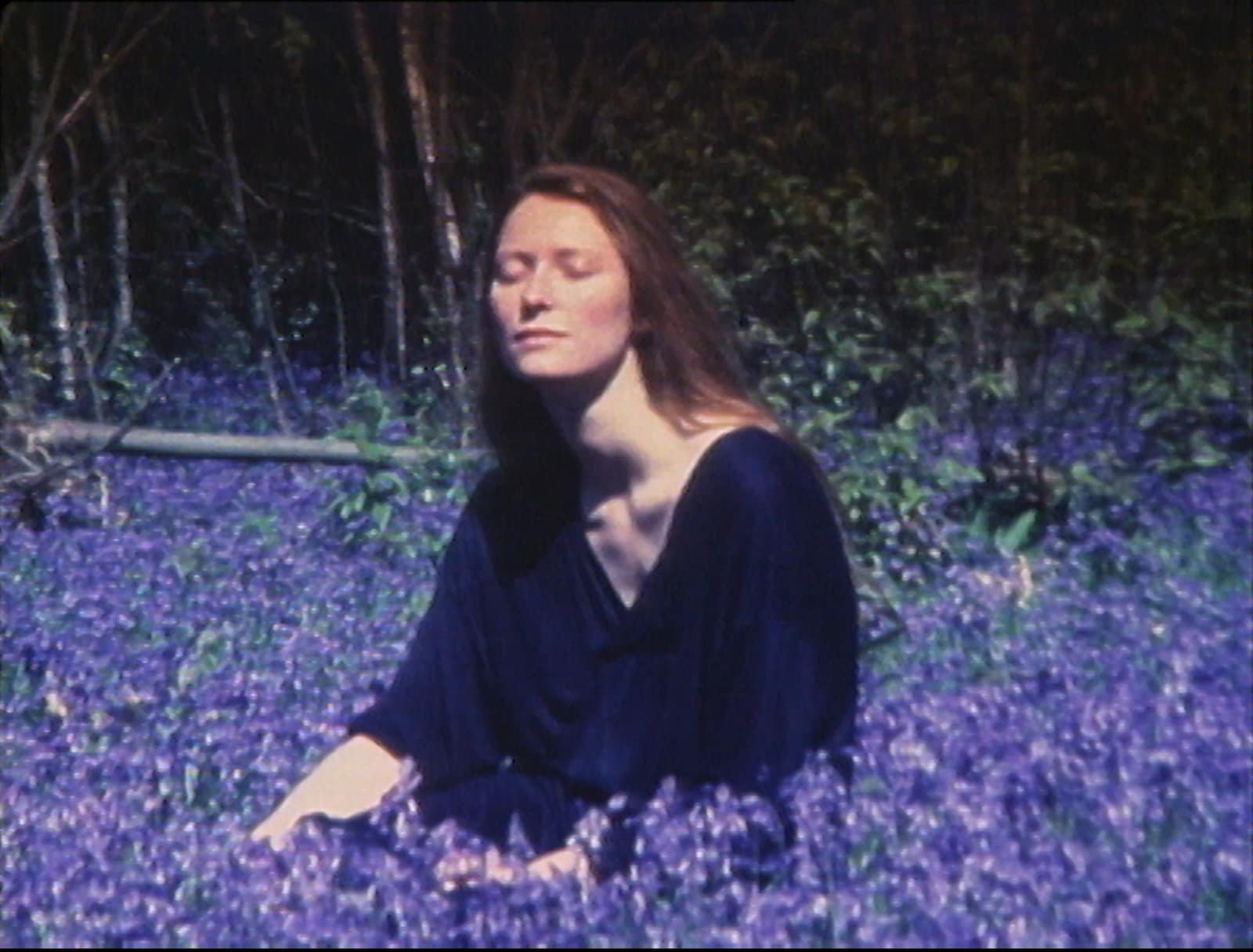
The book is an intimate archive, featuring early images that trace Swinton’s evolution from her playful, androgynous self in Joanna Hogg’s Caprice, to Simon Fisher Turner’s candid portraits capturing Swinton and Jarman, to Peter Lindbergh’s sculptural, iconic photographs. These archives reveal an artist perpetually in motion, remaking the frame around her. Central to the book is the idea that memory is not a record of the past but a portal to the future. In conversation with Joanna Hogg, they discuss the “history of the future”, whereby personal and artistic histories are seeds for what comes next, and creative pauses are “lay-bys”, or fertile moments to begin new artistic pursuits. Together, their work shows vulnerability as a superpower: two artists perpetually ready to imagine the next thing together.
The final conversation with Olivier Saillard discusses Swinton’s new project at the Eye, a deeply personal journey through her life via clothes in a performance titled A Biographical Wardrobe, where Swinton brings her own eclectic clothing collection to life, unpacking family heirlooms, red carpet dresses, film costumes and personal items including her christening gown and her father’s military uniforms. In the conversation, both stress that identity is iterative, not fixed; as Swinton poetically puts it, it’s like a bouquet of flowers: you examine each bloom in turn, with patience and curiosity, without rushing to grasp the whole.

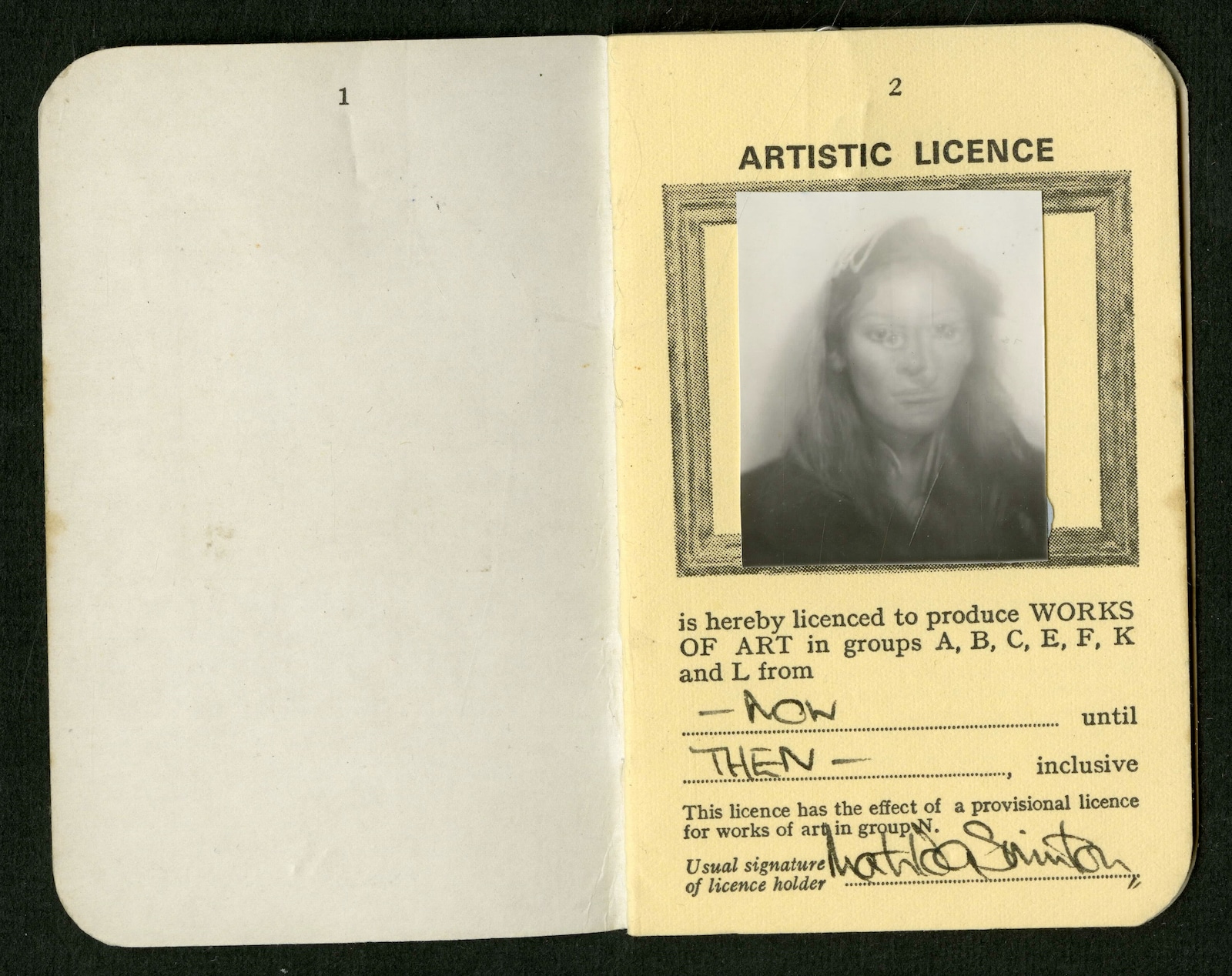
The book makes the case that creativity is not a matter of confidence or accomplishment but of remaining porous, willing to be surprised, and continuously in conversation with the past, the present, and the future. In these pages, Swinton’s life is not a biography but an evolving work: a meditation on time and possibility, reminding us that the most compelling identities are never fixed, but ongoing – like Swinton herself.
Tilda Swinton: Ongoing is on show at Eye Filmmuseum in Amsterdam until 8 February 2026. The accompanying monograph is published by Rizzoli and is out now.
