
Screen Shots: in a new series of flash fiction for AnOthermag.com, critic and essayist Philippa Snow looks at the interior lives of female characters on screen.
Two people sitting with their backs to each other in a bistro – that was marriage. Chairs flung across the room; tables flipped; fingers idling on the switch of an electric carving knife: all these things were marriage, too. When he’d visited the Taj Mahal, Anna’s lover had sent her a postcard, and the postcard had said: I’ve seen half of God’s face here, and the other half is you. Ever since, she had wondered which half of God’s face he had supposed her to be. When she looked at herself in the mirror, everything was not just present and correct, but so perfect that it might be called divine: her eyes the ice-water blue of a husky’s; her mouth a roseate bloom; her skin pale enough that one could scarcely believe it was warm to the touch. Underneath all that, however, something had begun to rot. The very milk of her had turned. Anna knew that her eyes were her most striking feature, and still it was obvious to her that she would not be the half of God’s face that held His eyes, but the half that bore His mouth: a gaping hole; a place from which things emanated, whether terrible or ecstatic. She pictured herself grabbing that electric carving knife – as she once had at home, holding it up to her throat just decisively enough to leave a small, fast-bleeding wound – and cleaving God’s head in two, splitting it widthways as cleanly as an apple through its core. God’s mouth surely had to be unfillable, and she imagined that the universe itself was held inside it, hot and glistening and wet.
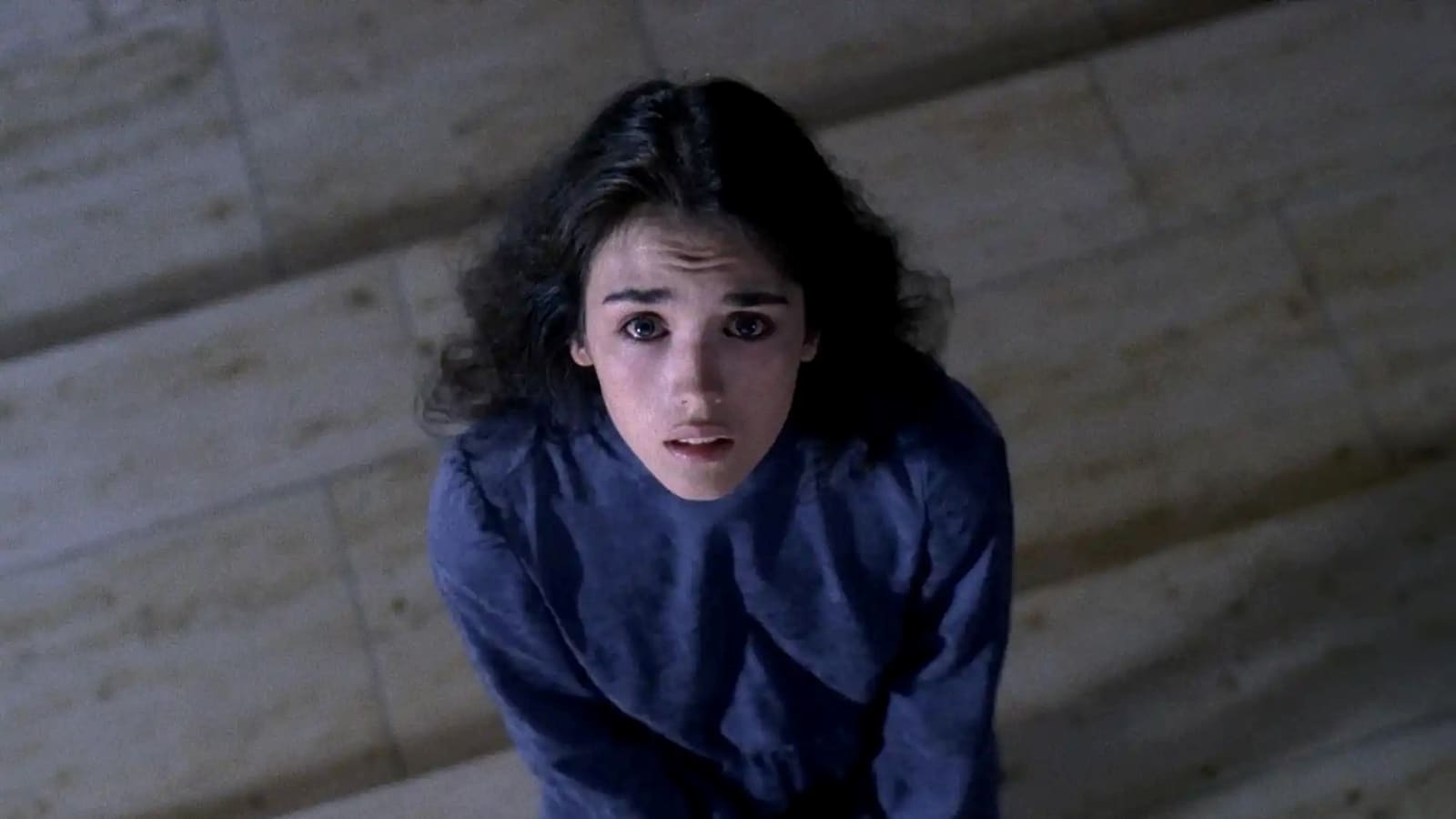
A whore, yes, a monster, a whore, I fuck around with everybody! she caught herself screaming in the middle of a fight with her husband. The words came out of nowhere, and were not exactly true. It was possible she really was God’s mouth – his hot, wet and unfillable instrument – and this was Him using her to speak. She taught ballet for a living, and had always ensured that her students were made intimate with pain. She roared into their preteen faces; bent their limbs until they wept. Nevertheless, they kept returning to her classes, as if drawn there by a spell. Ballet, with its frequent demands for contortion and starvation, was another way of saying something with your body that was not exactly true. In this instance, the lie was that what you were doing did not hurt. She had seen other women perform the same trick with both motherhood and marriage, though this particular feat remained beyond her – perhaps because where most women seemed to be filled with such qualities as patience and goodness and tenderness, all she had room for was rage and desire. She knew somewhere in her husband’s subconscious crouched a version of her who more closely resembled these good, patient women: blonder, quieter, less libidinous, a kindergarten teacher with her hair in a neat, sexless plait. She dreamed about this mirror-person sometimes, and the dreams were so vivid it was as if she was living two lives simultaneously: one fit for a horror movie, and the other with the plot of a romance.

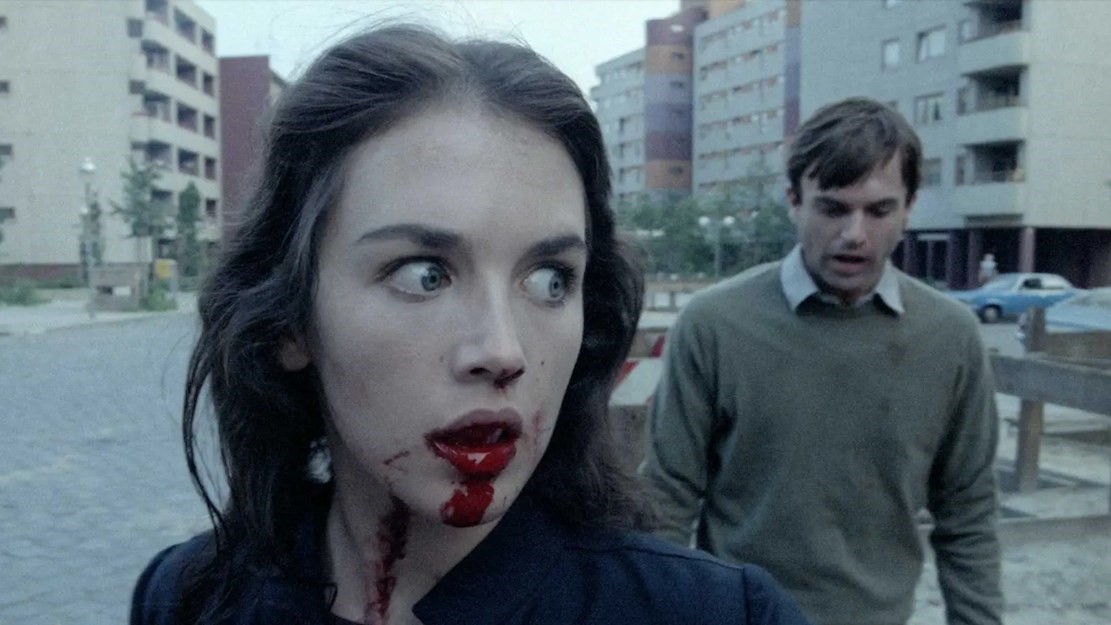
One especially harsh winter, her desire became so ungovernable and vast that it transformed from an ache into a thing. This thing, many-tentacled and slippery, climbed out of one of the openings on her body – she did not remember which once it was done – and then grew very quickly to the size of a man. In secret, she installed it in a run-down apartment in Kreuzberg, where she made love to it nightly. She marvelled at its stamina – its tireless ability to violate her several ways at once. This affair was different from the one she’d been conducting with the lover who had sent her the postcard, in the sense that it did not really feel like infidelity at all. When Anna fucked her monster, she was like a self-pollinating flower. She was one of those animals that changed sex at will, a wild beast that could get itself pregnant. It was hard to explain, but since nobody knew that the creature existed, she did not need to explain it anyway. Their trysts carried on for several months, until one day she was riding the U-Bahn and noticed a shifting sensation in her gut – not as dramatic as the one she’d experienced when the creature first emerged, but unsettling all the same. Climbing the long escalator to the concourse, she found herself trembling. Electricity surged through her veins, and as if she no longer had control of her body, she began to jerk and scream, flinging her groceries at the wall of the subway.
A mess – an unsanitary mess! An abomination! A whore, yes, a monster! As she dropped to her knees, visions swam before her eyes: of herself and the sweet blonde twin from her dreams, tearing at each other’s faces and rolling in the mud; of a dog dying underneath the porch of a house. Her lips bled; her ears bled; the holy mouth at the meeting of her thighs also bled, and the red comingled with something pale and murky – a fluid that suggested suppuration or sex. After this, she walked home to her husband instead of to her creature in Kreuzberg and, still in a trance, chose to tell him what had happened. She said it was a miscarriage, though this was not quite right. It was more like an outpouring, an overflowing of hunger, and where once it might have left her feeling queasy and tainted, now it made her feel powerful, instead. She was God’s mouth, but God was also inside her. Her husband thought her vulgar. Well, perhaps he was not vulgar enough. Vulgarity was not one of the things they called marriage, but it was, in a sense, how the human race continued itself. Without it, life was monstrous, and you went about inside it as if you’d already died.
