
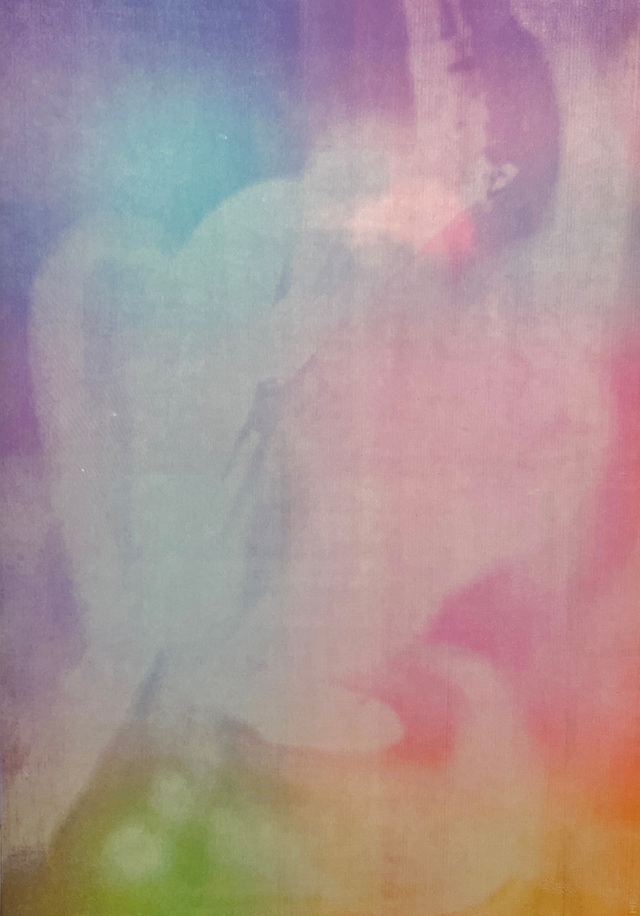
Inspired by the Iranian artist’s own story, Soli-Sombre at Rencontres d’Arles explores migration via the histories of plants and flowers transplanted into different landscapes
In 2011, multidisciplinary artist Pooya Abbasian travelled from his home in Iran to Cannes to accept an award on behalf of his imprisoned long-term collaborator, the acclaimed Iranian dissident filmmaker Jafar Panahi. While there, Abbasian was warned that he too would face prison if he returned to Tehran. “I chose to stay in France,” he says. “I came for two months, I stayed 15 years.” Before leaving Iran, Abbasian had been making work about exoticism and the ways artists from the Middle East might represent themselves for European and American audiences. Exiled in Paris, he found himself occupying the other side of that dynamic. He had become, as he puts it, “an exotic kind of object”.
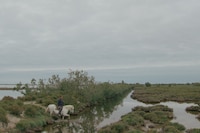
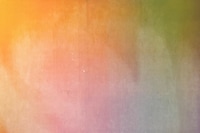
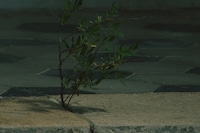
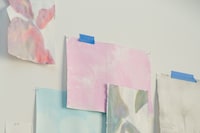
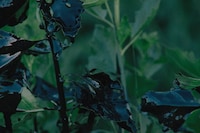
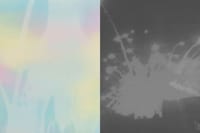
This theme of migration – or displacement – is at the heart of his latest exhibition, Soli-Sombre, currently on show at the Rencontres d’Arles photography festival. As the third recipient of the Guerlain and Lee Ufan annual Art & Environment Prize, Abbasian developed this idea during his residency in Arles, exploring migration by tracing the stories of flora transplanted from their native regions to different countries, disrupting their adoptive ecosystems.
He began filming and photographing the Virginia baccharis (Baccharis halimifolia), which grows abundantly in the Camargue region of southern France, around Arles. This frothily flowered bush, native to the United States, was introduced to France in the late 18th century as an “ornamental shrub”, but is now outlawed on the European Union’s list of “invasive alien species of concern”.

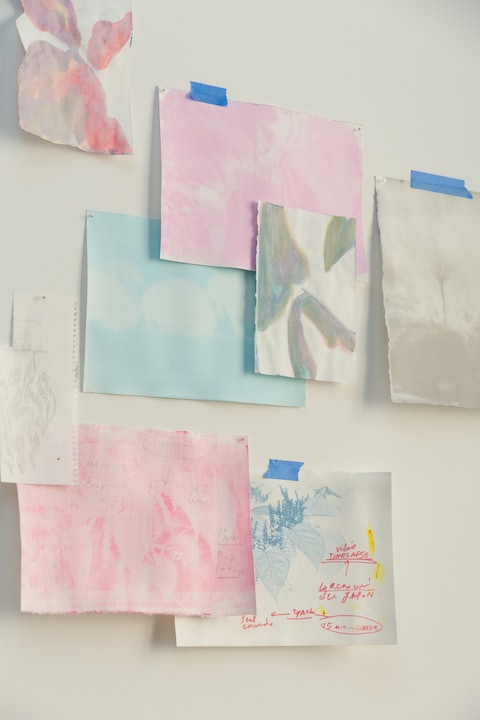
Capturing these so-called “weeds” as they dance in the wind, he projected his footage onto light-sensitive paper, overlaying it with newsreel images of explosions in wartorn Tehran skies. Introducing paint to his elaborate procedure of projection, scanning and printing with aluminium plates, the image becomes abstracted and minimal with gradients of vivid, unreal colours. Only the ghost of the original remains, impregnated faintly within the accumulation of processes.
But he is not interested in attempting to portray reality in a conventional sense. Even the notion of reality as a fixed state or the ability of images to present reality is something he interrogates. “I was obsessed with the question of documentary and fiction and how images present it. I realised that there is no guarantee of reality in non-fiction; it can be even more manipulative. Everything is a lie,” he says. Then, thinking, “But lies can achieve a kind of poetic truth.”

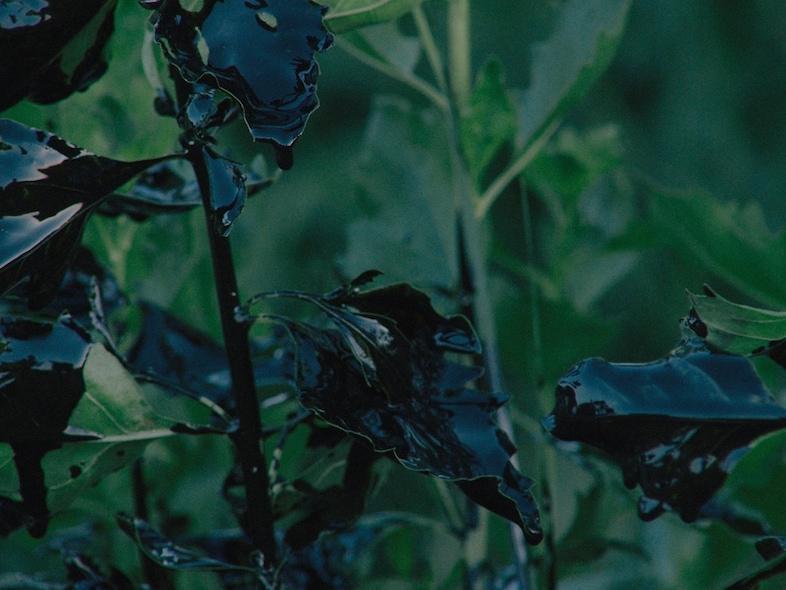
Ultimately, what Abbasian is interested in is ambiguity. “I always thought there is point A and point B, and in between there is transition,” he says. “After many years, I understood there is no point B, there’s only transition.” For the artist, this state of transience is not passive, it’s a “very solid space that we can exist in”, and that’s reflected in the way he moves between mediums, blurring the distinction between the different processes involved in developing his original, legible image. “I developed this personal technique – there is photo, there is video, there is painting, and there is what’s happening in between.”
Abbasian is working in a space of statelessness – a place between leaving and arriving, between fact and fiction, between mediums. In a short film, he depicts the fable of a shepherd's meeting with a mythological creature exiled in the marshes of the Camargue. The hypnotic soundtrack of cow bells, the Mistral rustling the Virginia baccharis, and the waves of the Mediterranean fill the gallery. It’s a poetic confrontation between cultivated landscape and wild nature, between the known world and the unknown, between fact and fiction. With the baccharis representing the threat of otherness – both part of the landscape yet a risk to its equilibrium – it’s an encounter that remains unresolved.
Soli-Sombre by Pooya Abbasian (the third iteration of the Guerlain and Lee Ufan annual Art & Environment Prize) is showing at Lee Ufan Arles until 4 October 2026.
