
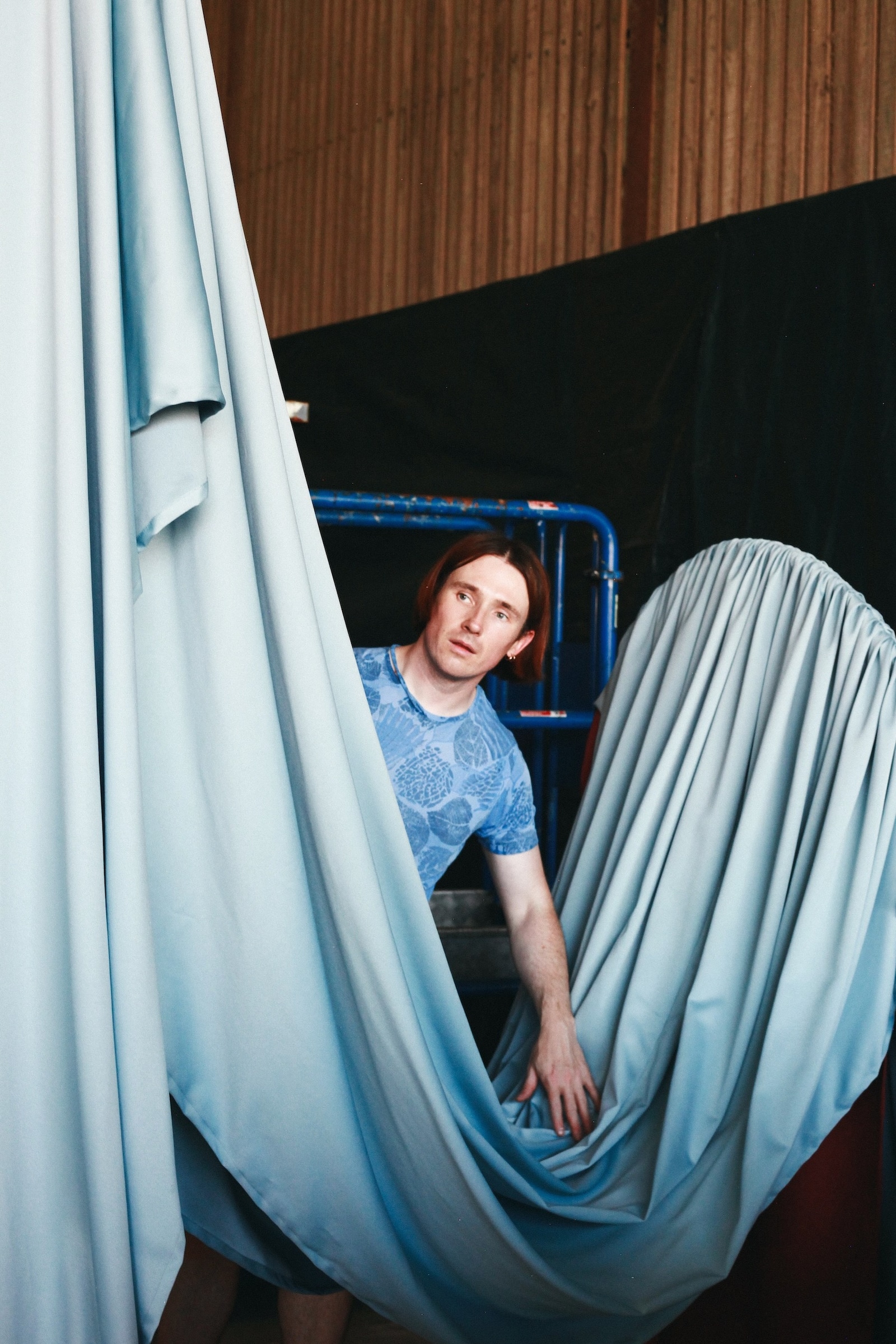
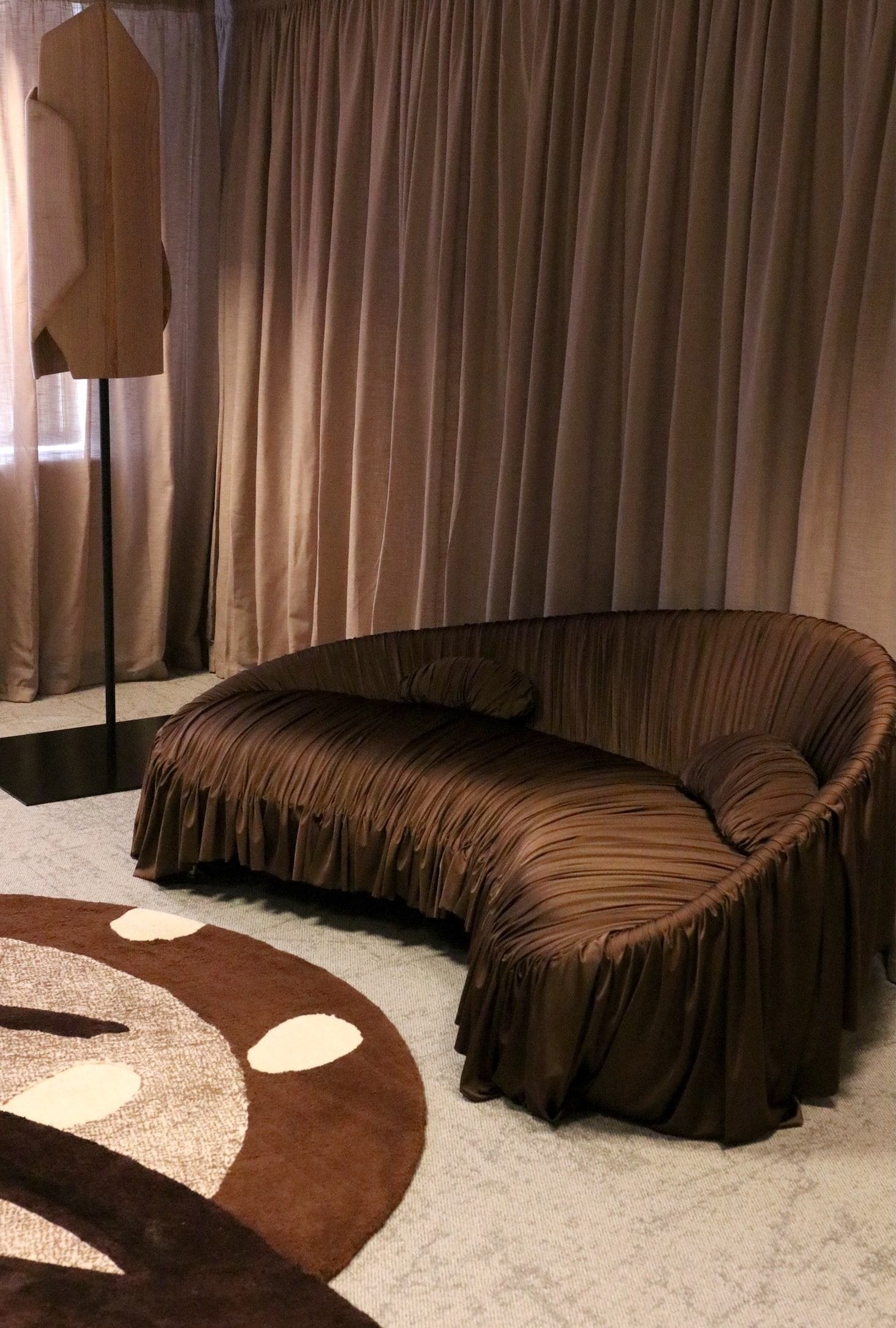
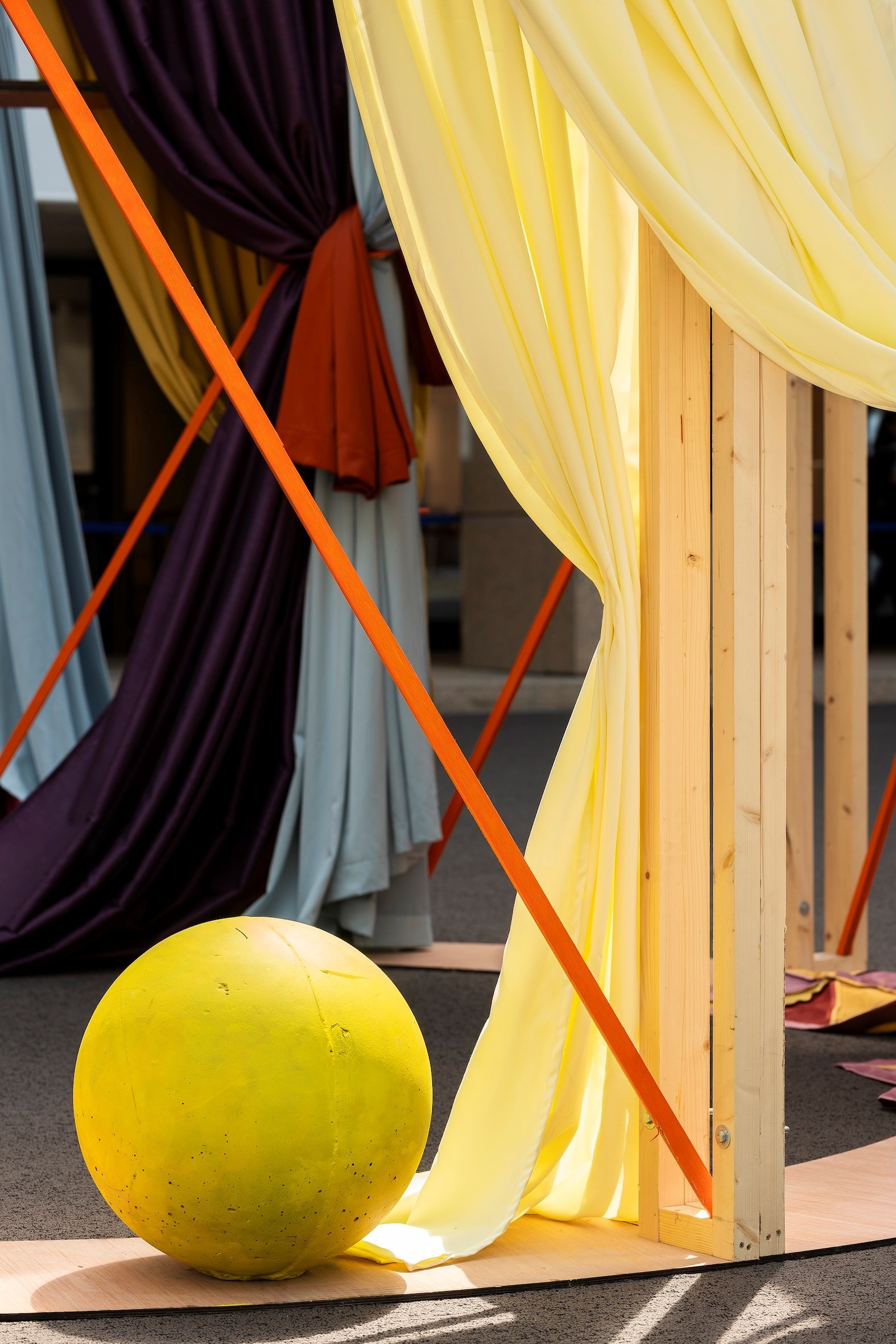
From Wexford in Ireland, Central Saint Martins graduate Richard Malone imbues their colourful pieces with traditional craftsmanship, using skills passed down through their maternal lineage. In 2015, Malone debuted at London Fashion Week with Fashion East and, more recently their fashion practice has stretched into sculpture – Malone’s billowing indigo piece took centre stage at The Royal Academy’s 2023 Summer Exhibition. Now, they are heading up an ambitious project for Ireland’s Presidency of the Council of the European Union 2026. The rotating presidency is, in bureaucratic terms, a six month role chairing negotiations between EU member states, and culturally, it is a change for the country holding the seat to tell Europe something about itself. For Ireland, whose term runs from July to December 2026, that means Cultúr 2026, a programme of artistic exchange built around shared histories. Cuimhne agus Séadchomhartha (Memory and Monument) will show across several official spaces in Brussels, spotlighting a host of Irish artists while uncovering shared material histories throughout Europe.
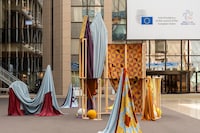
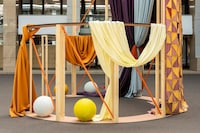
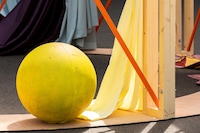
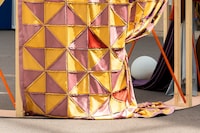
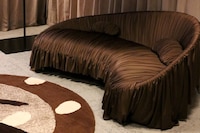
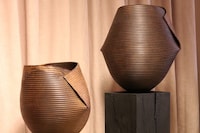
“I’m really interested in this recent Irish renaissance, which is also quite farcical,” they laugh, when we speak ahead of the opening. “It’s really focused on the industries that produce lots of cash: major movie stars, people winning Oscars … ” Ireland, they tell me, is “in the pocket of colonial superpowers”, and Cuimhne agus Séadchomhartha will delve into the multifaceted creative roots of the country away from commercial ideals. “It’s a massive responsibility. I’m trying to give visibility to something that is overlooked in the history of Ireland. People now see it as leftist space given its celebration of the arts, but when the country was founded 104 years ago it was extraordinarily damaging for women and queer people. Women couldn’t even work. They became indentured servants to their husbands.” At the same time, Malone is inspired by Ireland’s powerful women who have pushed for change, noting that female presidents ruled until the artist was in their twenties. “Our ex-presidents are really involved in the elders’ movements and Palestine movements. They were pushing for gay rights.”

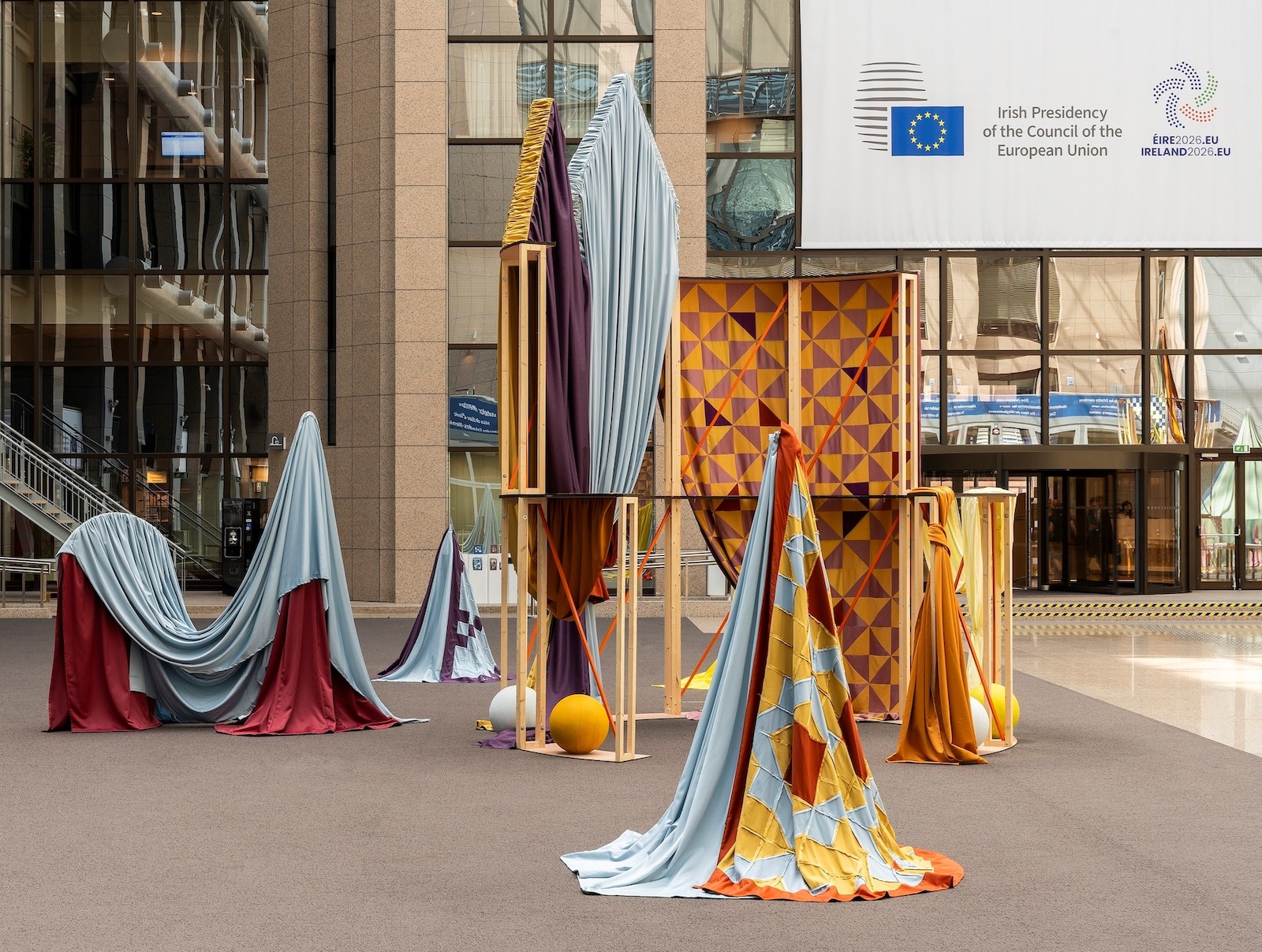
Traditional crafts have an important role in the exhibition, which is framed around the idea of meeting places: markets, theatres and public squares. Malone and their featured artists celebrate skills that have traditionally been gendered, such as macramé, a weaving technique that was often used in domestic spaces. Sometimes it would be made by Irish migrants for wealthy homeowners, passed off as the wife or daughter’s creation. The Irish triple and double chain quilting pattern can also be found migrating around the US and Western Europe, with fine backings used for luxury houses, or shirt offcuts from Belfast factories when created for the makers themselves.
This movement of craft skills tracks a violent and oppressive history; women travelled with samples during the famine to be able to find employment when they reached their destination. “They were not always by the book,” the artist says. “You would see some pieces now that would be called abstract expressionism because of how they’re put together. They are quite radical things. And they’re fundamentally imperfect because someone’s hands have made them.” The stitch pieces were rarely categorised or signed, a “complete erasure of the people who’ve made them. My pitch was to position these things as valuable and make these sculptural artefacts out of types of labour that are not valued.”

Malone is inspired by the communal nature of stitching and quilting, which often involves groups sitting around talking while making. “The conversations you’d have around those quilts led to things like the abortion referendum, the gay marriage referendum. If those political changes hadn’t happened in Ireland, I wouldn’t be the person selected for this, almost certainly. I’m using the quilt as a way of speaking about gender, labour and class.”
For the fabrication of some works, Malone has collaborated with We Make Good, a Dublin-based social enterprise that provides skilled employment and training to people who face social challenges, including migrants and those from the criminal justice system. “It’s very rare to have stitch production in Ireland now,” they say. “I wanted to work with them for some time. They really value stitch and that type of labour. It’s very quietly political and they are so collaborative. We had a long sampling period where people were making these small squares and figuring out what we could make into an exciting language.”

There is also a display of contemporary Irish photography by artists including Venus Patel and Alice Rekab, and a spotlight on artists and craftspeople such as Aleana Egan and Sara Flynn. Malone’s curation focuses heavily on working class and queer voices. “I like doing projects where I’m not the only one,” they tell me. “I find it’s more sincere when you have an overview of different practices that are happening rather than saying this [single practice] is Irish. It’s powerful to see these artists working during the same time who are singular, but also have this opposition to what we tell each other the history of Europe is.”
Malone hopes the exhibition will cut through the colonial narrative of international craftsmanship, which has shown little respect for the traditions that underpin it or the weight it carries. It’s a history written, they tell me, by “very wealthy white men on a grand tour, who at that time didn’t value what they were looking at. But more importantly they didn’t understand it because they weren’t labourers. The exhibition is about pulling pieces together for a really deliberate reimagining.”
Cuimhne agus Séadchomhartha (Memory and Monument) is on at the Justus Lipsius Atrium in Brussels for Cultúr 2026 until 12 December 2026.
