 (c) the artist)
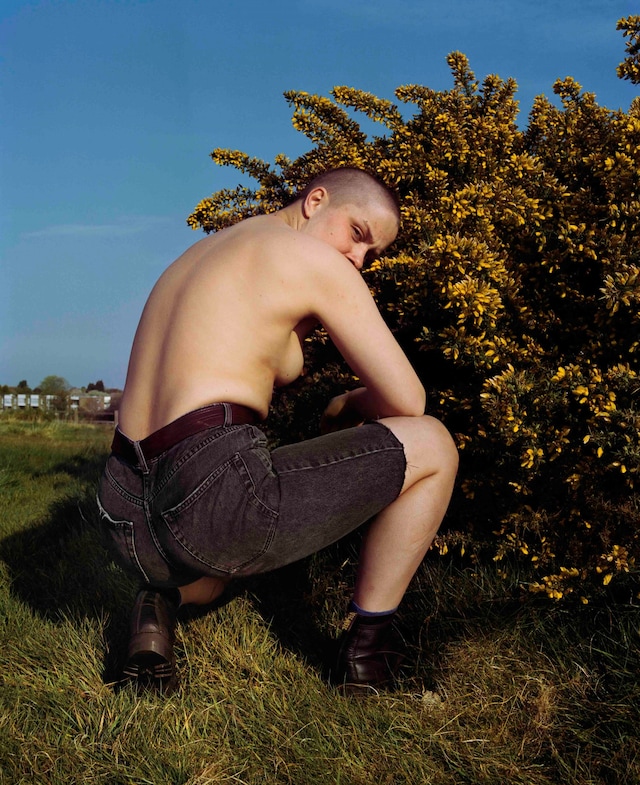
Close to Home, a new exhibition at the Baltic Centre for Contemporary Art, pairs two artists’ visionary chronicles of North-East England
There is an openness to Close to Home: bringing together photography and moving image work from documentary photographer Tish Murtha and Newcastle-based artist Kuba Ryniewicz creates a space that feels expansive as it moves through time, capturing the transforming nature of places and communities. “I knew I wanted to shift away from the traditions of displaying a photography exhibition,” says curator Niomi Fairweather. The images here aren’t hung up in frames, and some of them have been expanded to the size of the gallery’s walls, taking up space in an entirely new way. For Fairweather, the approach revealed the dynamism in Murtha’s work, and explores the relationship that the light and shadow in these images had to renaissance artists like Caravaggio.




While Murtha’s work echoes the tropes of art history, the working-class communities captured in her photography persist and transform over the decades. They are placed into a dialogue with contemporary pieces by Ryniewicz, who describes his work as “a river flowing through these islands”. His images appear across the gallery space, including the evacuation doors and the toilets, adding to the sense throughout this show of expanding the things that might traditionally be seen as worthy of a gallery space. Fairweather says that in the curation and hanging of this show she was thinking about “getting rid of that hierarchy in terms of the images and what people might see as important”.
Space is vital to Murtha’s work; in her Youth Unemployment series, subjects are often dwarfed by the vastness of the space, surrounded by the ruins of demolished buildings. At first glance, it might be tempting to think of this work as being exclusively about the hardship or suffering of working-class communities, but Murtha’s images are animated by the joy of community, whether in the closeness of childhood friendship in Elswick Kids, or a shot of two men sat together with a beer in Save Scotswood Works. At its core is Murtha’s relationship to the communities in the images: “Me mam didn’t have subjects,” her daughter and archiver Ella tells me. “She had her people and she was in it with them. Her approach was informal and instinctive, and after a night in the darkroom, she loved giving prints to the people she’d photographed. Her pictures weren’t just records of lives; they were acts of connection.” This idea can also be seen in Ryniewicz’s practice; from the Daily Weeding series that captures the mundane routines of life during the Covid-19 lockdowns, to The Nightclub, a 2026 video taken outside of a queer club in Newcastle, from which the artist deliberately removed the audio. “There’s an idea of a parallel society that can co-exist,” he tells me.

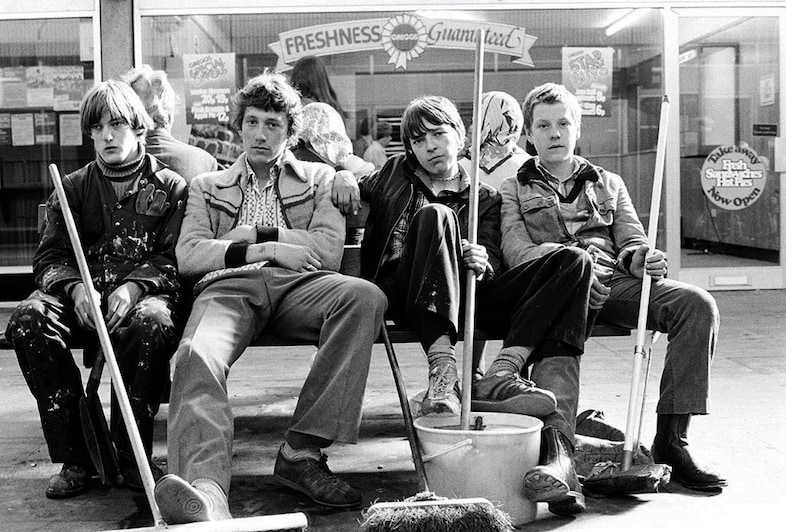
The work’s political dimension is inescapable; Murtha documented the changing nature of a community, the activism that aimed to preserve it, and the impact of government policies on Newcastle. And with it comes the danger of communities coming undone; an anxiety captured in Save Scotswood Works. The exhibition foregrounds not just images of communities, but creates the space for new ones to be formed. Ella describes the show as serving as a reminder that “behind every debate are real people with real hopes, fears and struggles.” While the imagery from a series like Youth Unemployment is stark and sometimes even brutal to look at – two kids with a fire burning behind them; a boy sitting with his back propped up against a fragment of a demolished building – the people that Murtha captures are always shown to be deeply human, whether they’re joyful or languid, together or alone. “The poverty my mam photographed wasn’t inevitable. It was created by political decisions, and that’s why her work still feels so relevant today. These things don’t just happen, they are the result of choices.”
It’s work that is designed to reinforce the humanity of people and places that are so often treated as monolith for political purposes. Ryniewicz and Ella both stress that not everyone will see things the same way – including the exhibition itself. The point, though, is to create a space for dialogue. Describing his video work Good News, in which Ryniewicz asks people about good things that happened to them, and their hopes for the world, he says he hopes people can “come to the exhibition and see people saying what good things happened to them and realise they think similarly, but don’t have anyone to talk to. I think that the gallery space can create a dialogue.”
Tish Murtha & Kuba Ryniewicz: Close to Home is on at Baltic Centre for Contemporary Art until 4 April 2027.
