
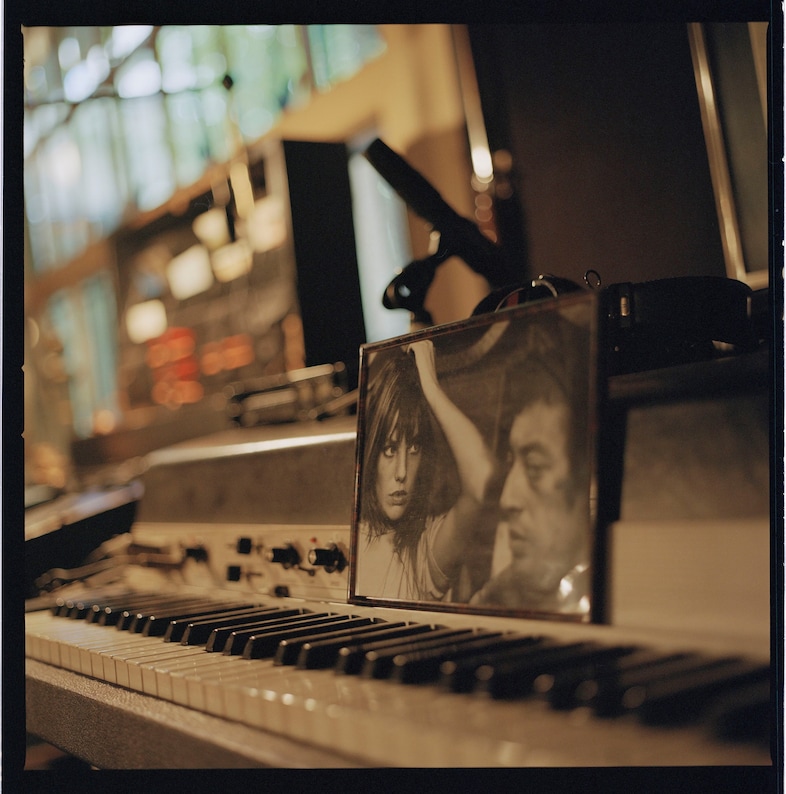
At the opening of her debut photography exhibition, 5 Bis, we talk to Charlotte Gainsbourg about immortalising her father’s Parisian home as she remembered it from her youth
When she was 19, Charlotte Gainsbourg “wasn’t well. I was a mess”. Her famous father, Serge Gainsbourg – France’s beloved chanteur-provocateur – invited her to move back in with him and recuperate at his home, 5 bis rue de Verneuil in Paris. “Everything was ready for me to step back into my childhood house with him and try to pull the pieces of my life together,” she recalls. “Then he died so suddenly.”
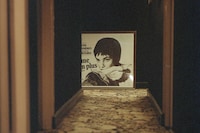
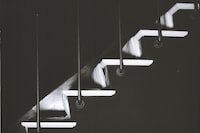
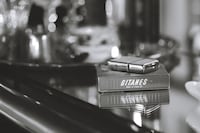
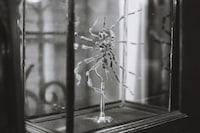
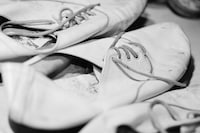
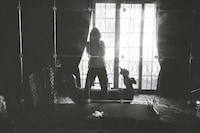
For some 30 years, Charlotte kept her father’s house preserved as he’d left it – a “private mausoleum” where she could visit and grieve, away from the cemetery and the curious gaze and unwanted attentions of the general public. Then, in 2023, the house became a museum. But before Maison Gainsbourg opened its doors as a heritage site, Charlotte used her Hasselblad camera to document the place. Scared of forgetting it – of losing her memories of her father’s house, as she feels she has misplaced so many other treasured possessions over the years – she approached the task in a manner she characterises in the exhibition text as being like a cat burglar; she pillaged all she could – by way of photographing. “I steal before it's too late,” she writes. “I steal before all of you enter. My lair. My hideout.”
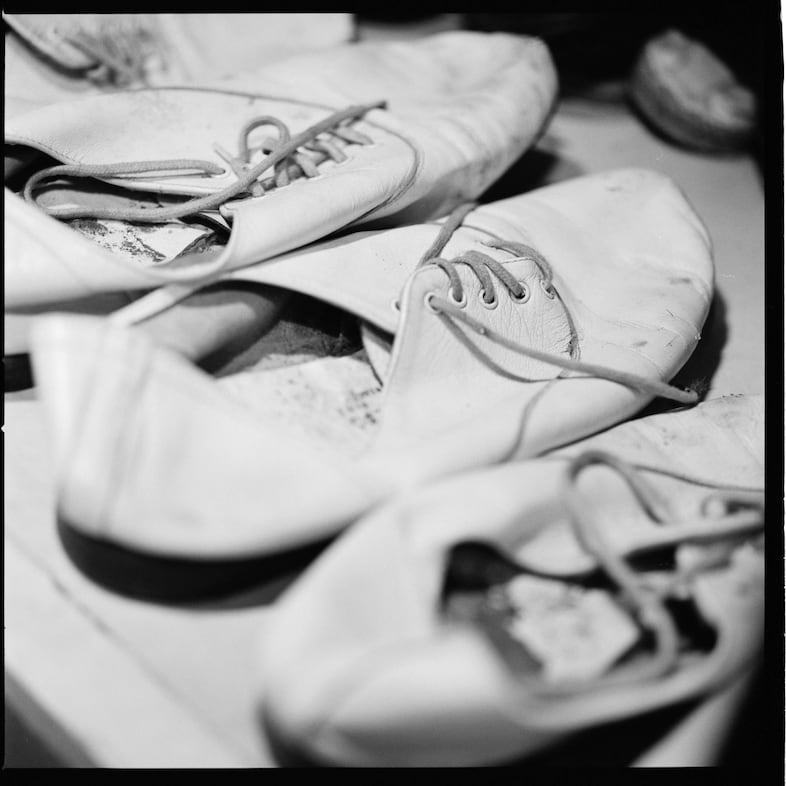
Now, these evocative pictures are on display in her debut photography exhibition, 5 Bis, curated with the help of Saint Laurent creative director Anthony Vaccarello. The show, running as part of this year’s world-renowned Rencontres d’Arles festival, is held in The Cloister Gallery – a sequestered space entered via a doorway on one of the medieval town’s narrow, picturesque streets. It presents Charlotte’s pictures of signature Serge Gainsbourgesque artefacts – a packet of Gitanes and a cigarette lighter, identical pairs of well-worn white lace-up Repetto shoes, a photograph of her mother, Jane Birkin, resting on the keys of a piano – alongside more private objects, such as the contents of the fridge, medication, a battered Louis Vuitton case next to a bidet. The gallery – a single room – is thickly and darkly carpeted, and the photographs, hung against the matt-black walls, seem to float in the enveloping darkness. The atmosphere is reverential, it echoes the sense that these images are precious stolen goods.
Here, we talk to the acclaimed actor and singer about her debut photography exhibition, grieving a father who is also a public treasure, and letting go.

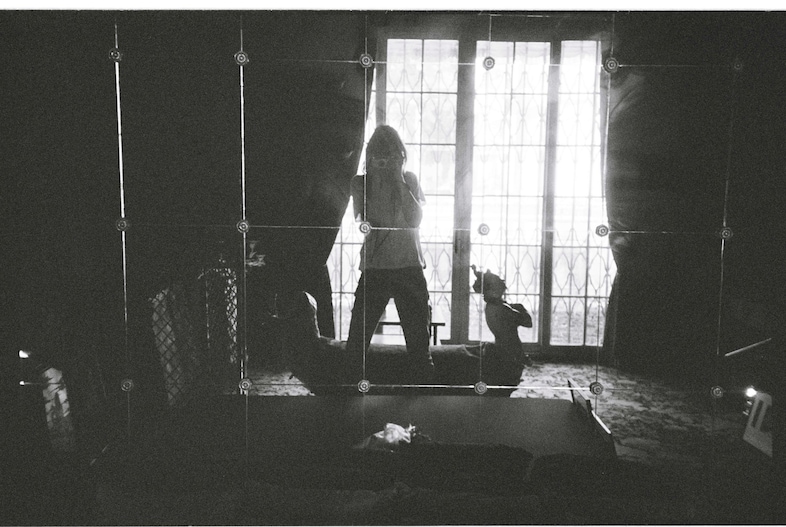
Emily Dinsdale: The word ‘souvenir’ has a dual meaning – in French, it’s a memory. In English, it’s a physical token, a memento. These pictures are both …
Charlotte Gainsbourg: I knew I was opening his house to be a museum, and it would no longer feel private. So these are the last moments I had with all the objects, but it wasn’t to make them into souvenirs; it was more to make sure I don’t forget. I’ve lost many, many things. I’m not careful enough. So maybe grabbing as much as I could with a camera was a way of making sure I remembered.
ED: We often think of photography as a document of truth, but also it can be very subjective, like memory – what we choose to include and omit.
CG: I think it was always hopefully my way of looking at these things. Maybe I was positioning myself as a child, very close to the ground, but it was quite unconscious. A lot of pictures already existed of his house, so I guess I wanted to make these photographs as intimate and as personal as possible … so, close to the ground, because I was always sitting on the floor, and the objects that always fascinated me. The spiders were one of my favourite things. The exhibit has around 30 pictures, but I’ve done a ton, so it was great that Anthony Vaccarello helped me by picking out what seduced him.
ED: I feel like our relationship with objects changes after we’ve lost the person who owned them.
CG: Completely. I was really young [when my father died] and my whole world collapsed. Every piece of paper he had touched or scribbled on, I kept; everything became precious. But I think it’s a problem, being that attached to material things. I put sentimental value on everything, even a sweet wrapper.
ED: In the exhibition text, you describe the last visit to his house before it was opened to the public as “saying a new goodbye”. Would you liken grief to a series of goodbyes?
CG: Yes, and what I realise is that it’s good in a way, but it never ends. Looking at the photograph of his shoes, for instance, the missing comes alive again. But that’s life. This might sound unconnected, but it reminds me of how someone said to me the other day, “Why buy a dog when you know that they're going to die ten years later?” That's life.
ED: If you followed that to its logical conclusion –
CG: You’d never do anything, right?
ED: Because the grief is in relation to the love. You mentioned the picture of the shoes, and, for me, that is one of the most moving photographs in the exhibition. Maybe it’s because we’re really seeing a space someone once filled but has now vacated.
CG: Yes, and because they’re not pristine, they’re, you know, sort of ugly. But I find them beautiful, they're worn and scratched. I don’t think he had more than three pairs, but the simplicity of what he owned is something that really makes me think today, because I own so many shoes, so many clothes, whereas he chose everything so carefully.

ED: It must be so much more complicated to miss someone when they have such a public presence. They are everywhere and nowhere.
CG: That was very tough. When I was 19, that was the part I couldn’t cope with – everybody was mourning him. Everybody was saying how difficult it was for them, and I had to be polite and say sorry, when in fact I wanted to say, “But he’s my father! Do you realise what you're saying? What about my grief?” But people want to share when they love a public figure. I became the closest to what they could touch of him. With my mother, by the time [of her death] I was older and I understood what people wanted to share. I was grown up enough to listen and – still pretend, but listen – and not close them off.
ED: Now Maison Gainsbourg is open to the public, does it still have the same resonance for you?
CG: It was my own private mausoleum. I kept it for so many years that way, that it was time to share. But, again, some kind of grief because I had to let go. I’m so happy that people can go in, but it doesn’t feel like it’s mine anymore. I've put it out of my mind. I needed to let go.
ED: Do you think you were spending time there to feel a presence, or to kind of acclimatise to an absence?
CG: It was a dialogue – not with him, because I didn't feel his presence; it wasn’t like that. But I didn’t feel alone. Or, in any case, I was doing those pictures hoping he was seeing me. I always felt a protection, not only in his house, but in general … like a positive aura, a nice hand on my shoulder.
ED: The experience of the exhibition is of being invited to see intimate details. Does it feel exposing to share these pictures?
CG: For my whole life, since I was born, I was not private because my parents shared everything. Like every famous couple, they were showing their kids – you know, doing breakfast in our family home with photographers – and so I never had privacy. I mean, they didn’t share everything, but it wasn’t an anonymous experience. So, I don't feel embarrassed about sharing too much or something that would be indiscreet. Showing his medications, for example, for me, doesn’t feel intimate – they spoke openly about everything. But I hope I’ve kept things – like a private garden – that I won’t ever share.
5 Bis is organised in partnership with Saint Laurent and Maja Hoffmann and is at The Cloister Gallery, Rencontres d’Arles, until 6 September 2026.
