)
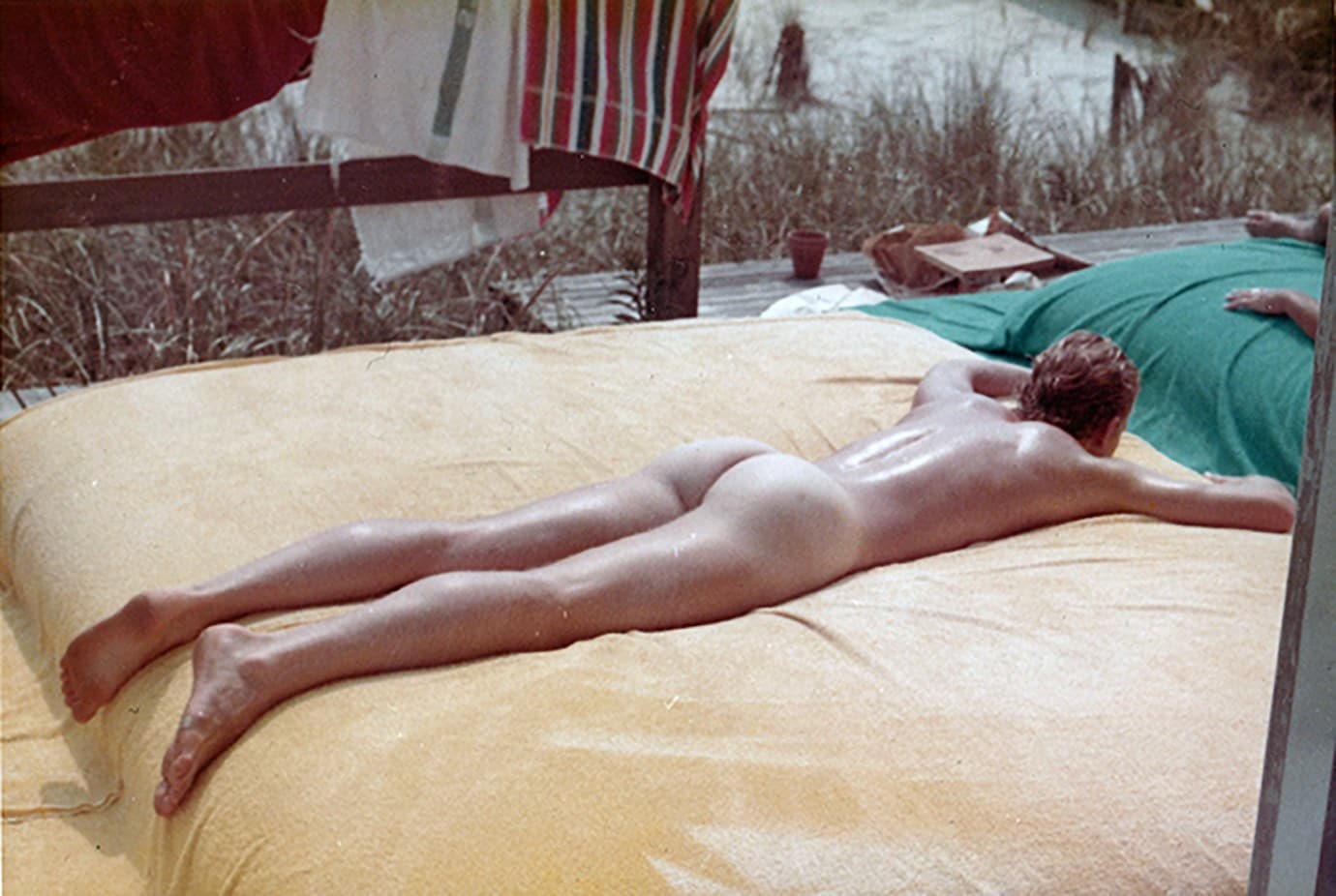
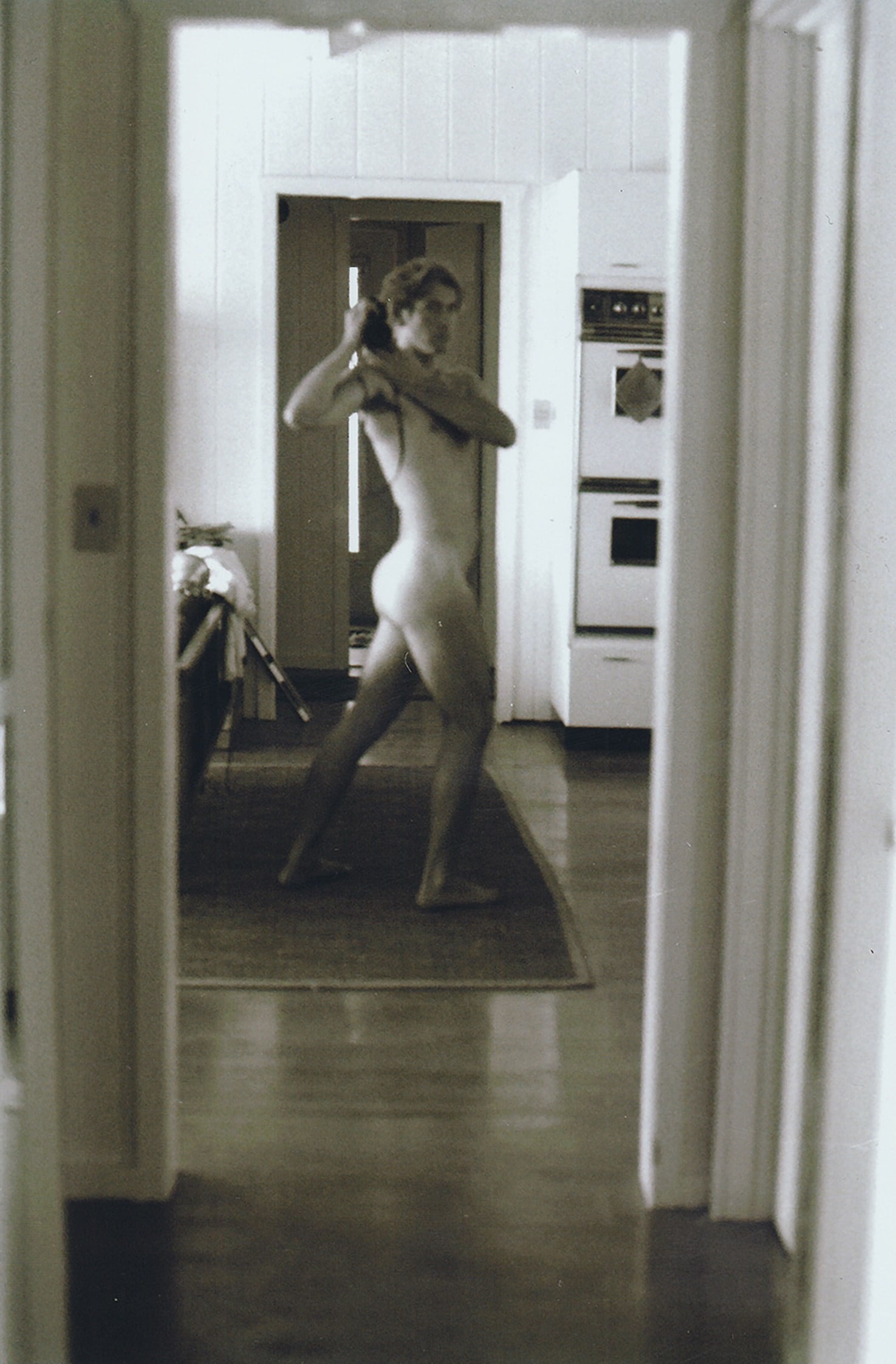
It is not hard to imagine the pull Larry Stanton had on the men at Fire Island Pines. Take his 1976 nude self-portrait, shot in a hallway mirror. His hair scruffy, the focus soft. A tan line marks where a Speedo once sat. His pose recalls that ancient Greek stud of a sculpture, the Discobolus. “The arch of his back, his ass […] you can see he’s the same as his models,” says writer Michael Bullock over Zoom, laughing. “That’ll be some good Instagram bait.”
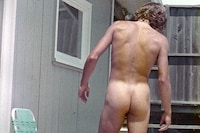
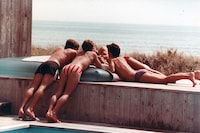
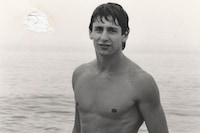

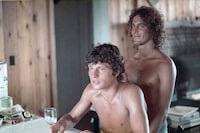
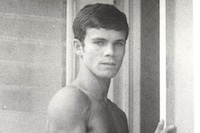
Known primarily for his pretty-boy portraits and pencil illustrations, this new exhibition, Larry Stanton: Friends + Lovers, instead centres the artist’s photographs and films. Speaking to co-curators Bullock and Fabio Cherstich, the theatre and opera director and custodian of Stanton’s estate (who both contributed chapters to Fire Island Art: 100 Years published by Phaidon this year), the pair explain that the show emerged only a few months ago, following coffee in Milan. The duo left their Salone lunch with the plan to return Stanton’s work to the island he documented. As such, the exhibition opens temporarily at 230 Bay Walk, a beach house much like the one in Stanton’s nude, before moving to the Fire Island Pines Visitor Centre, where it will remain on display until 5 August 2026. No one knew it at the time, but Stanton’s photographs document many faces that would not get the chance to age.
Some two hours from Manhattan by car then boat, Fire Island is a strip of barrier beach off the southern shores of Long Island. Its 32 miles of pristine coastline have, since the 1920s and 30s, fostered an enclave of hedonistic freedom and artistic possibility. Away from the mainland’s antagonism, gay New Yorkers set sail for The Pines and Cherry Grove to build their own kind of utopia, inverting heteronormative ideas of housing, desire, coupling and kinship. Over time, this community transformed the island into the queer pilgrimage it remains today. “It’s one of the few places not built for straight families,” Bullock confirms. “Conventional social structures are pretty much out the door from the moment you get on the ferry.”
)
In 1968, Stanton met banker Richard Lambert on the dock of the Pines, who became his lifelong companion and patron. Their Fire Island house was a salon of sorts, welcoming artists, writers and friends, including Henry Geldzahler, Christopher Isherwood, Ellsworth Kelly and David Hockney. Taken between 1974 and 1978, the images in the exhibition preserve that world suspended in a moment post-Stonewall, before the Aids epidemic devastated the community. Stanton died of Aids-related complications in 1984, not yet 40. These homosocial images capture a place held in time: a cadre of beautiful bodies, mainly men, enjoying their offshore liberation. A playful snapshot of boys in the sand.
“I’ve always thought of Larry’s photographs and drawings as two chapters of the same story. The camera allowed him to collect encounters. He photographed people he met in the streets [which] often became the starting point for his portraits,” Cherstich says. “The drawings are never simple translations of photographs. They’re acts of remembrance. Larry wasn’t interested in documentary realism […] he was searching for the emotional truth of a face.” Of the Super 8 films, which Cherstich describes as the “most intimate works,” he says, “they were never conceived as artworks, but rather as fragments of life, memory and friendship. If the photographs freeze a moment, the Super 8 films allow us to inhabit it. They reveal the atmosphere of a community before the Aids epidemic forever changed it. They remind us that Fire Island was not simply a place, but a condition – a space of intimacy, desire and freedom.”
)
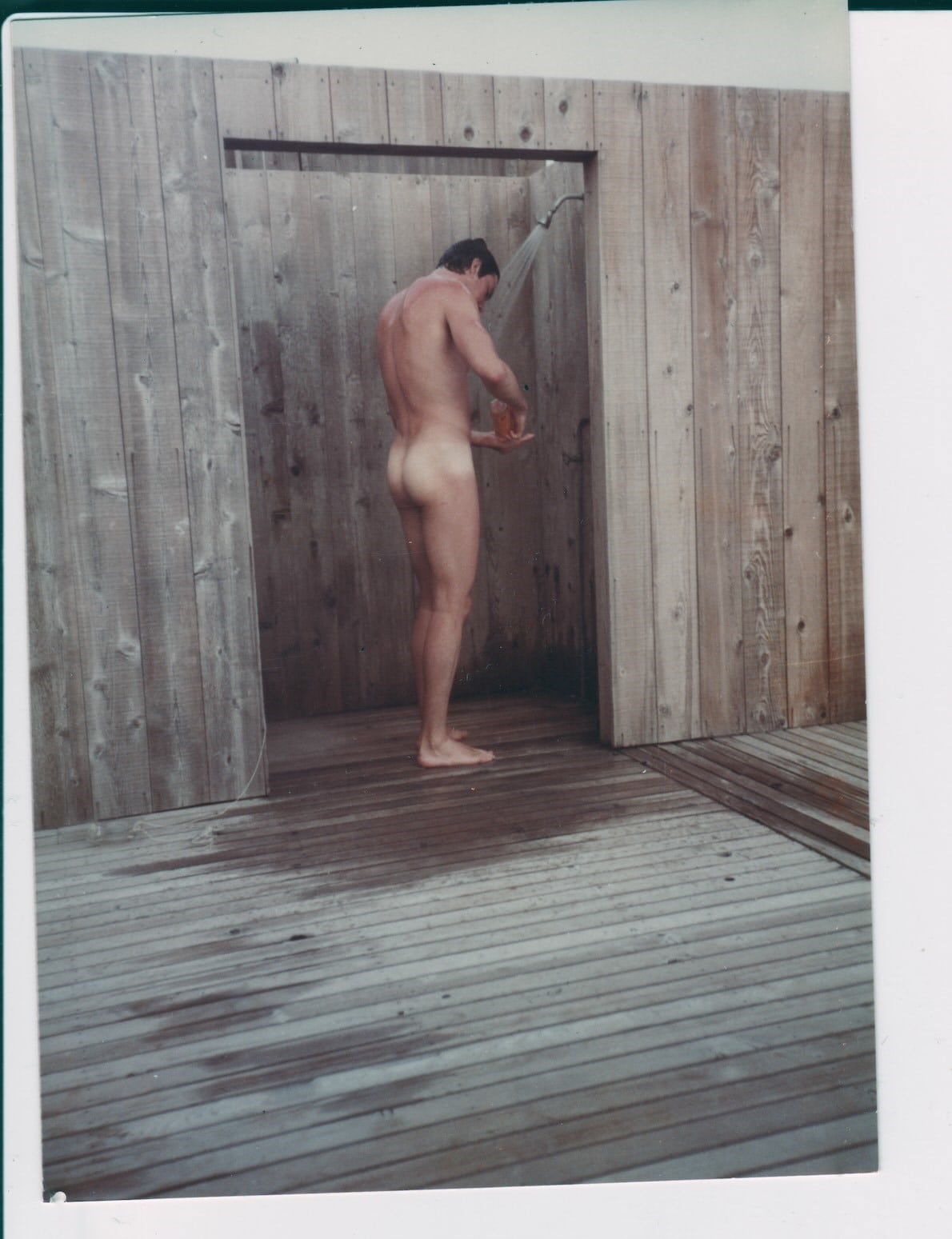
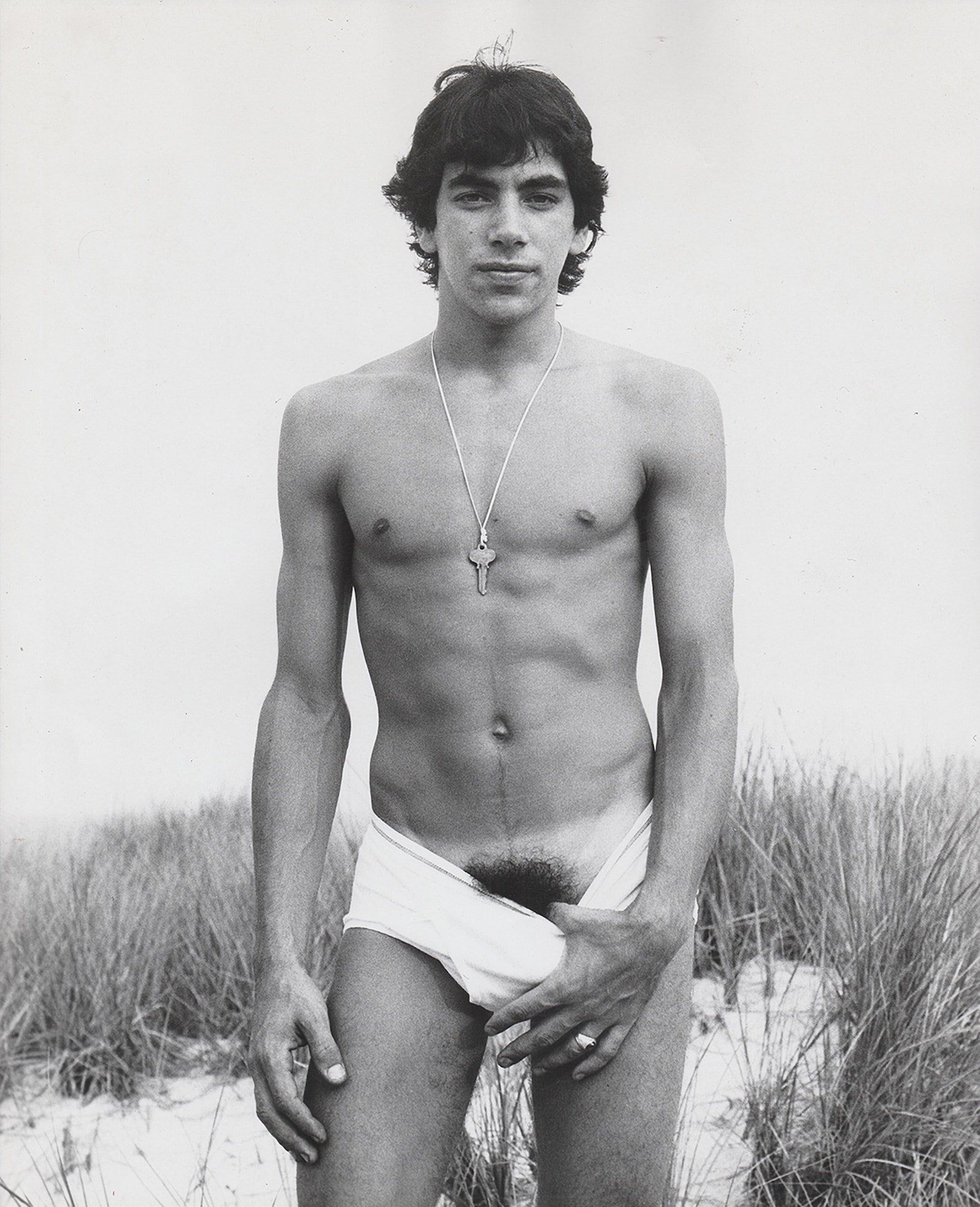
Bullock observes that Stanton’s photographs “are not simply examples of one-sided objectification. What Stanton captures is a mutual exchange of charisma, beauty and charm between photographer and subject. These photographs record a flirtation between newly liberated comrades, where desire flows in both directions and the act of looking becomes a shared experience rather than an act of possession. You can see it in the eyes of each participant.” He continues, “that reciprocity is incredibly moving to me, profoundly sexy, and, in many ways, the embodiment of walking down the boardwalk in the Pines, both in the 1970s and today.” Perhaps more so than his drawings, Stanton’s photographs have a conversational register. The washed-out images record not just the subject but the conditions of exchange. Stanton’s subjects are seduced by him, and he by them. In one untitled work from 1975, a sun-worn twink stands among the dunes in white briefs and a necklace, as he showcases his pubic hair above his waistband. Somewhere between a muscle-mag pin-up and a proto-Calvin Klein superstar. A gay Marky Mark.
Alongside the photographs and films is a digitised presentation of material David Hockney made during his time with Stanton and Lambert in the Pines. Cherstich remarks that “there is something incredibly generous in the way Hockney looks at him. Larry appears completely at ease, playful, vulnerable and beautiful without ever seeming self-conscious. They remind us that before becoming part of art history, these artists were simply friends spending summers together, sharing time, making work and living intensely.”
)
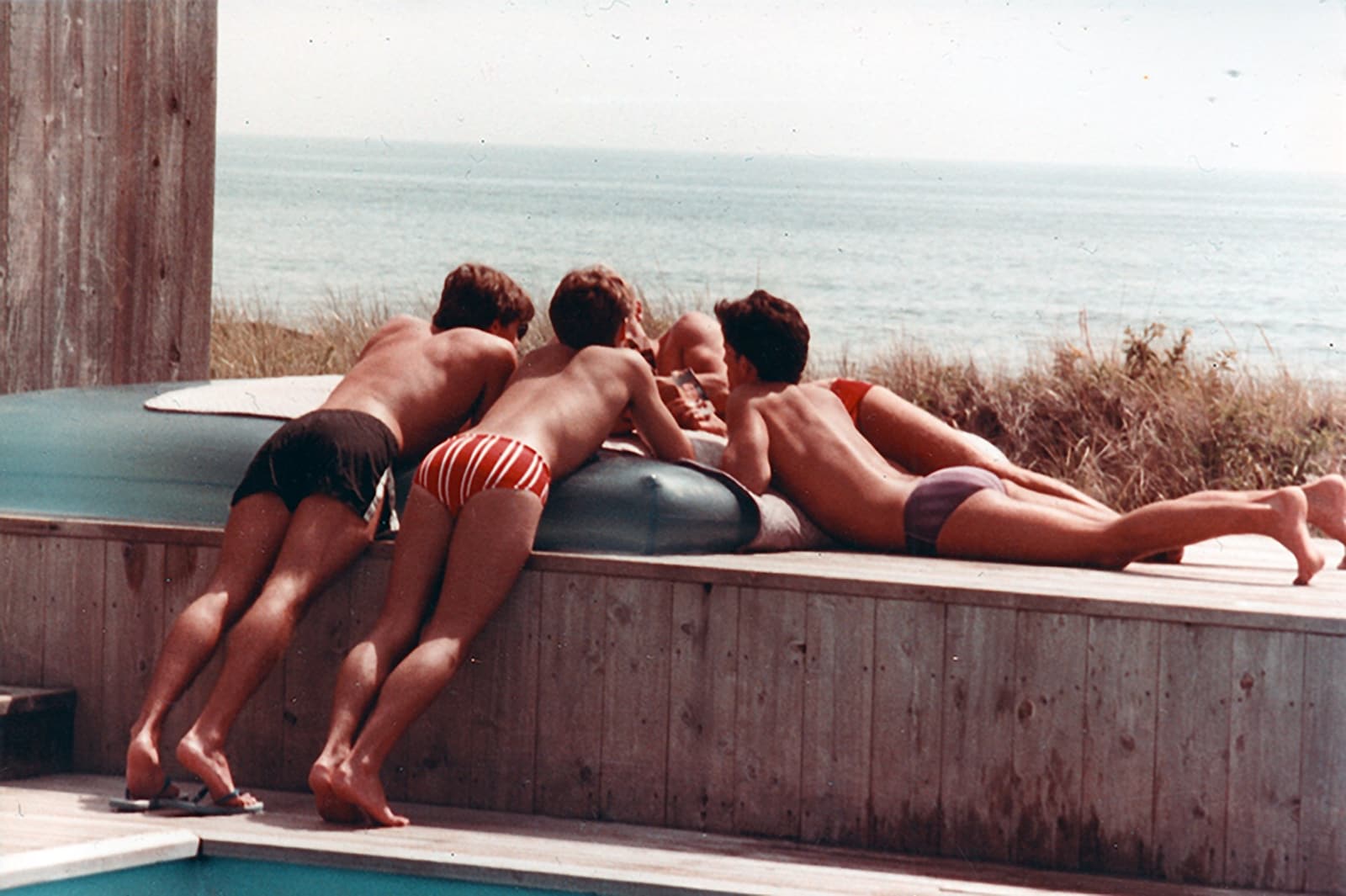
There is also a newly digitised slideshow from a book Hockney made in 1975 documenting his summer, gifted to his hosts. Across 40 pages, the images arrange into sequences and mosaics that anticipate Hockney’s celebrated ‘joiner’ collages to come. “It’s very intimate, very sexy but it’s also a real record of the time,” says Cherstich. “Going through these images, you have the feeling you’re looking at friends, you understand what they liked, how they dressed, the energy of this community.” He explains experiencing a feeling of anemoia – John Koenig’s neologism for a nostalgia for a time one never knew. Alongside these is a Super 8 film Stanton shot in 1978 at Ken Tyler’s studio, where Hockney was making Paper Pools, offering a beautiful view of one artist watching another work.
“Larry’s work reminds us that archives are never only about the past […] it remains alive because it continues to ask timeless questions about love, identity, memory and the importance of looking carefully at one another,” says Cherstich of Stanton’s resonance today. If Stanton is viewed as Hockney’s successor, their shared sensibility persists in contemporary queer portraiture. Think of Drake Carr, Harry Freegard, Louis Fratino and Salman Toor, whose work carries a comparably erotic tenderness. Fire Island’s artistic renaissance has grown since the 2010s, thanks to residencies and development programmes alike. Bullock’s chapters in the Phaidon doorstopper outline this continued legacy, he writes, “artists have been able to commune with queer ancestry – soaking in the beach, the sun and each other – while creating paintings, photographs, films, sculptures and performances that carry the ethos and spirit of this place into the future.”
)
Returning these photographs to Fire Island feels full circle. For Cherstich, it also marks a personal milestone: despite having spent years researching and championing Stanton’s work, this is his first visit to the island itself. He will also perform there alongside the exhibition. Perhaps present-day Pines-people and Grove-goers will look at these works and experience the sense of anemoia. Or maybe they’ll simply be caught mid-flirt with the hunk in the hallway. The blonde Brando, all looks and libido. Bullock summarises that the exhibition “works on a deep historical and artistic level, but also on the most basic, primal level […] for any kind of mainstream gay person who just wants to see hot guys.”
Larry Stanton: Friends + Lovers is now open at 230 Bay Walk in Fire Island Pines, and continues at The Visitors Center from 13 July until 5 August 2026.
