
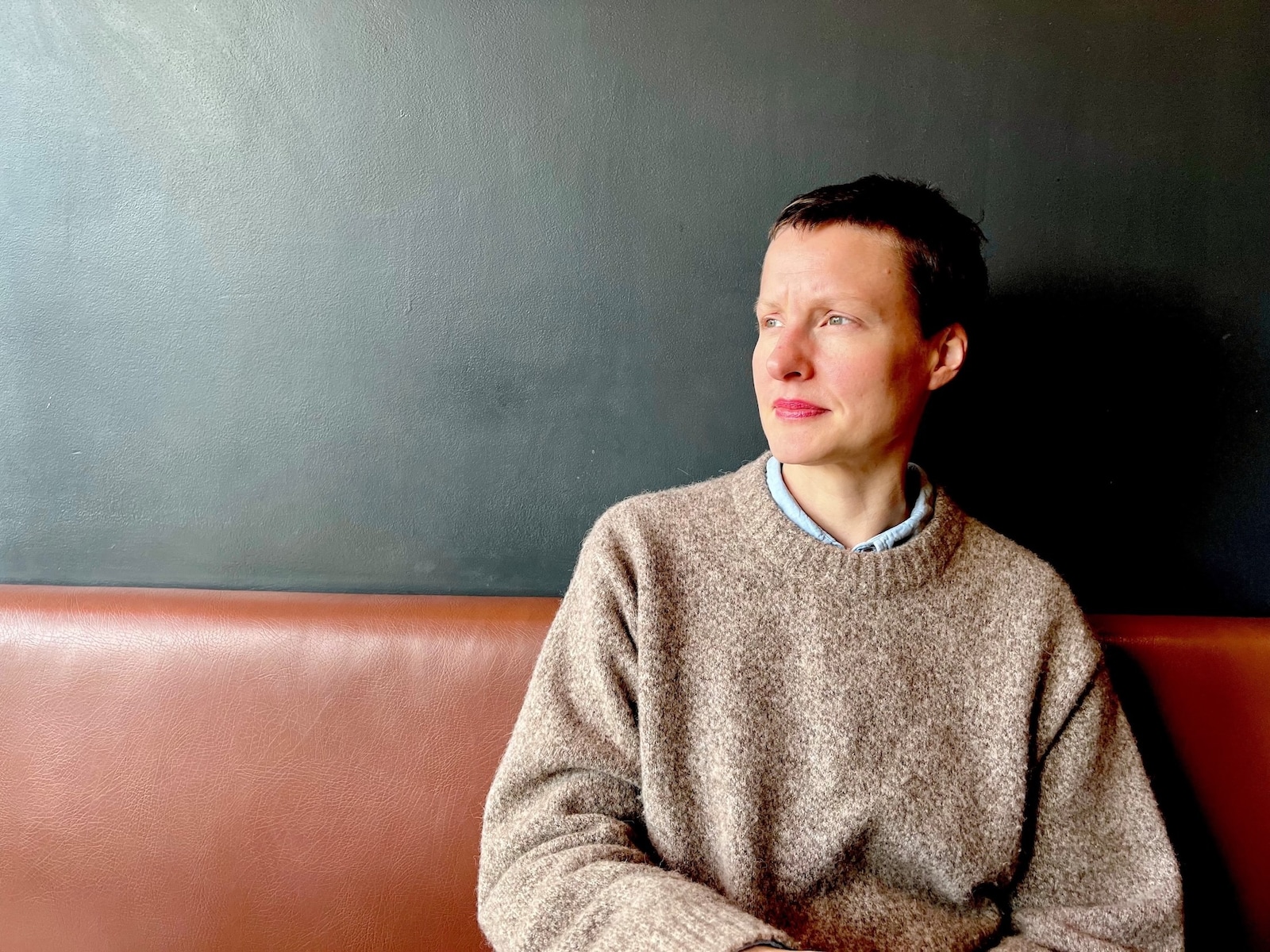
“The book is not about Tracey Emin,” Alex Hyde, associate professor in gender studies and co-director of UCL Gender and Sexuality Studies, explains over Zoom. We are discussing her rich and devastating second novel, Exhibition, which follows an intense relationship between two women artists from different class backgrounds: a working-class photographer named Rabble and an unnamed upper-middle-class painter. Narrated by Rabble, we follow them from their start as art students in Brixton to adulthood, travelling from London to Berlin, Algiers and New York. Inspired by London’s Young British Artists (YBAs) of the 1990 – which saw the rise of Damien Hirst, Sarah Lucas, Christine Borland, Emin and more – Hyde found herself drawn to this short yet explosive moment in British art history for its bravado and fearlessness. Emin’s work inspires many of the book’s themes, with Hyde drawing on her works for source material.
“It turns out that it’s quite fraught to engage Emin in the making of fiction because it’s absolutely impossible to separate her from her art,” Hyde tells AnOther. “The book is not about Emin and the characters are not Emin. And yet, you can’t separate Emin from her artwork. That’s part of what I’m interested in in the book – the self as art and how that is a feminised trope.” Exhibition explores a number of themes: authorship, the ethics of photography, white working-classness, misogyny between women, and so much more – but at the centre of it all is Rabble and this unnamed artist, her muse, friend, enemy, her compass and centre, her obsession. “I kept thinking of possession because the book opens with this idea of being an artist, and when you’re dead, you stop making the work and the value increases,” Hyde says. “It is sold as this high-value possession traded as a form of capital, and yet there is also this idea of one person [Rabble] possessing this quite intense friendship. But they cannot entirely possess one another.”
Here, Alex Hyde talks about the darkness that can exist within women’s relationships, the mythology of photography and the possibilities of care and intimacy outside of heteronormativity.

Halima Jibril: Exhibition was inspired by the social and cultural history of the YBAs in the contemporary 90s London art scene. What drew you to this particular time period and this group of people?
Alex Hyde: Arrogance. The sort of negative reputation, the bullishness of that time. I’m not necessarily of that era; I was 16 in 1997, but I remember it. Everyone who is slightly middle-aged now looks back on that time with a degree of nostalgia. It was short-lived – that late 90s bubble before 9/11. There was an atmosphere then of frenzied competition and arrogance, an announcement of being a scene. But it was also very constructed; there was so much press and media around these artists. There was a confrontational aspect to much of their work, which was inspiring. My interests are less about the historical rooting of an art movement and more about the atmosphere of the period.
HJ: I’ve read a few books this summer that have centred on very intense relationships between women: Lonely Crowds by Stephanie Wambugu and Famesick by Lena Dunham. These relationships are often difficult to describe. They can be a source of comfort, they can be homoerotic and simultaneously the best and worst thing that has ever happened to you. What made you want to explore this dynamic between Rabble and her unnamed object of obsession?
AH: The core motivation is that messy, dark, murky, not entirely pleasant but totally profound and compelling nature of desire. The desire between women – and I don’t necessarily mean sexual desire, but there’s definitely homoeroticism there. There was a moment when my editor mentioned that the relationship between the two women should potentially be consummated in a sexual relationship, and I was like, absolutely categorically no. But that does not exclude desire and arousal and envy and misogyny as well. I was really interested in the idea of misogyny between women. As a feminist, you can have an ambivalent relationship to writing misogyny, but it’s in there. I was just really interested in the darker compulsions of that relationship. Setting all of this in the context of a creative collaboration, the idea of connecting through making art and commercial artwork. Ideas about female ambition and success – it was all really exciting to write about. It’s a very narrow book; it’s just them [Rabble and the unnamed artist] all the way through. There are a few others that come in, but really, that was the key drive.
HJ: While reading the book, I noticed that Rabble has no romantic relationships or interest in others. She’s seemingly asexual, apart from her compulsion towards the unnamed artist. What was the choice behind this?
AH: That was a real point of principle. I do not want to write a romance. Rabble could definitely be asexual, but I’m not making this about an identity. At no point in the book do I state that this character is this, or their pronouns are that. It was a deliberate choice because her primary relationship was with the artist. But also with other characters like Duncan and Bill. I wanted to make this book about forms of family, care and connection that are outside heterosexual marriage, relationships or even romance. This idea of a life that is not built around heteronormativity.
“I was just really interested in the darker compulsions of the relationship [between women]” – Alex Hyde
HJ: I felt a lot of things for Rabble’s character – but towards the end of the book, I mostly feared her. Particularly because of the way she spoke about photography. In an argument she’s having with the unnamed artist about her photography practice, she asserts that when she’s planning to take a picture, she is “watching, setting a trap”. In her interactions with her subjects in this book, from Duncan to Kwame, she doesn’t seem to care whether they are doing well – she wants her image. There is something vampiric about her approach to photography.
AH: I was really interested in the comparison of form among photography, portraiture, painting and other art forms. I used photography and this question of capturing and possession as one of the more sinister elements of Rabble’s character, and this desire to control and capture. I’m also exploring this idea that she is erased as an author. There was always this idea that Rabble would erase herself and sink into the background so that she could watch more effectively. There is also this element that, through taking a photograph, you also take someone’s soul; you possess them in some way. So the mythology of photography, as well as what we assume it does, how it naturalises moments, was really helpful to think about.
HJ: One of the main tensions in the book is about authorship. Rabble takes pictures of the unnamed artist but lets her keep the images as her own work. It seems to me that Rabble knows the images have more power with the unnamed artist than with her – that she can take the images places she cannot because of her socioeconomic background. Can you talk about your exploration of class in this novel?
AH: The idea of the underdog coming up was appealing. In relation to the gifting of the photographs, I viewed it as arising from the chemistry of the exchange, because that moment was brief. They never intended to be, nor were they, career-long collaborators. It was that chemical reaction of an artist and a photographer, and that felt enough for me. In Rabble’s case, there was a sense of inaction and a quiet resignation. You’ve got someone [Rabble] who has finished art school and is doing good work that people aren’t really interested in and someone [the unnamed artist] who’s doing something edgy and difficult and has the ambition, the resources and the self-belief to commit to it.
When Rabble goes home after university, her brother asks: “OK, you’ve got your degree, what are you going to do with it? Teach?” There’s this assumption that you don’t just turn round and say you’re going to be an artist; you don’t where I come from [Birmingham]. It’s just preposterous. Another thing about the YBAs is that there was this whole red-top newspaper “Is it art?” scandal because their work wasn’t painting or sculpture – it was something else. At the same time, art was popularised and commercialised but also made ridiculous. For someone from Rabble’s background to say “I’m gonna be an artist” in this context, it’s almost unthinkable. You acquiesce to the limits that everyone else around you assumes you have. But in the end, Rabble wins in a way.
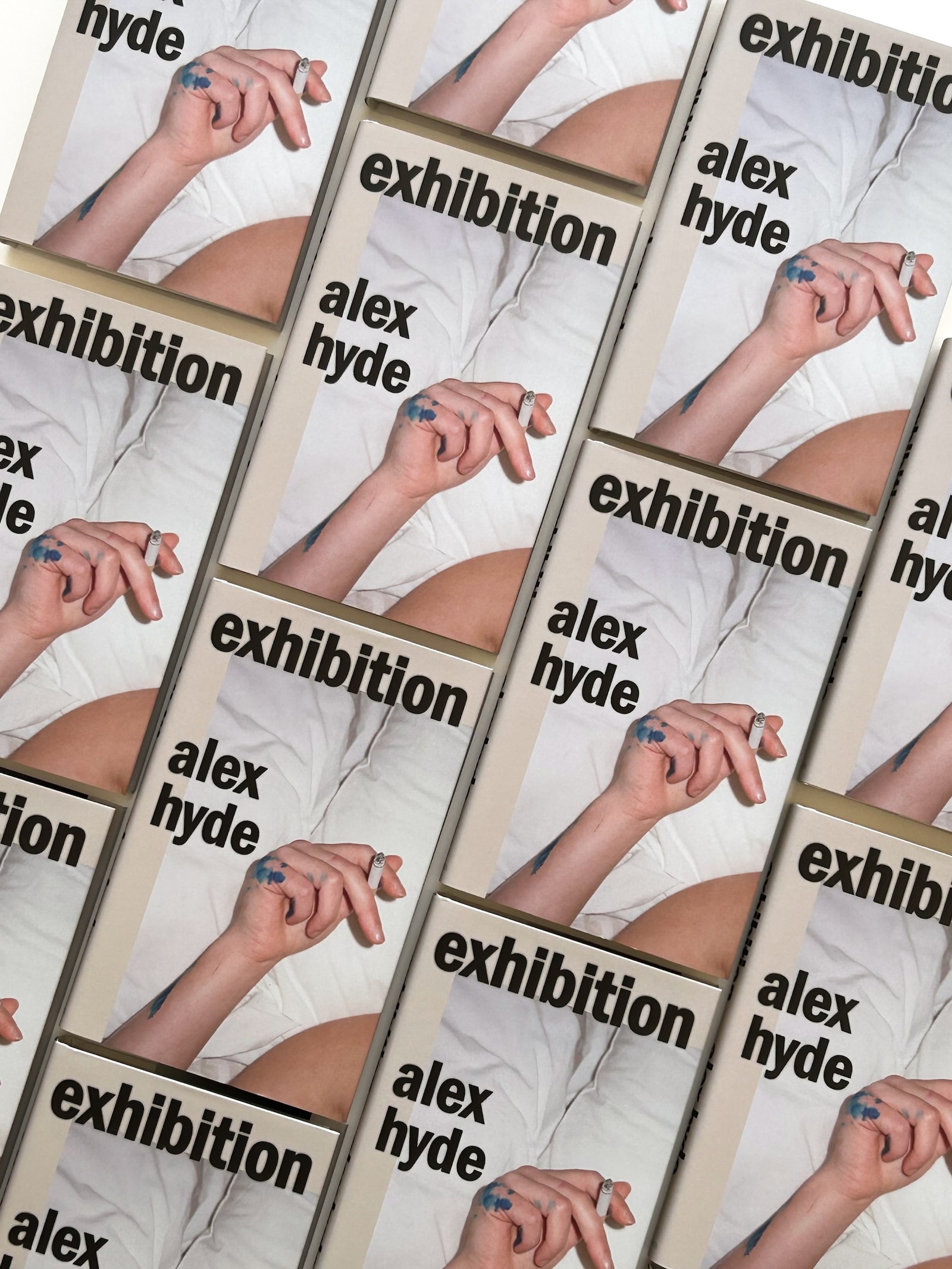
Exhibition by Alex Hyde is published by Granta and is out now.
