
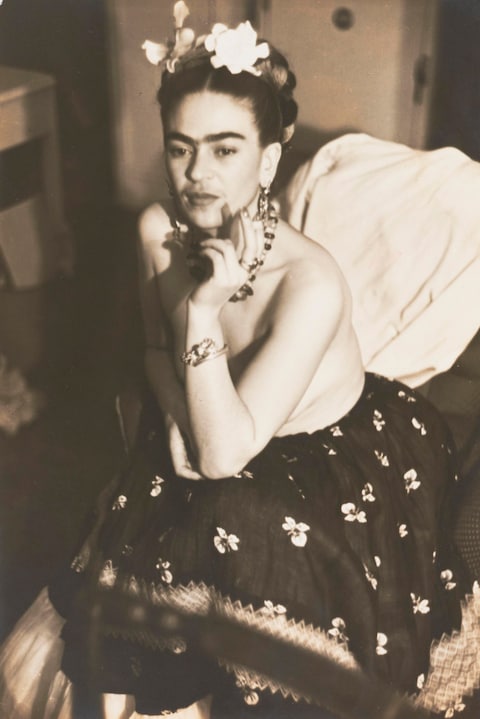
As a new blockbuster show opens at Tate Modern, we ask: who was the real Frida Kahlo?
Although the Mexican artist Frida Kahlo spent much of her life bedbound in La Casa Azul (The Blue House), she would go on to achieve recognition far beyond its colourful walls. The artist’s legacy is honoured in Frida Kahlo: The Making of an Icon at Tate Modern – one of the most anticipated exhibitions of the year that has broken records in Tate’s pre-sale ticket history.
The demand is unsurprising. For decades, Kahlo has been reduced to museum gift shop bric-a-brac, a symbol of commodified culture in the form of tote bags, wall posters, dolls and coffee mugs. This ‘Fridamania’ – a dedicated section within the vast exhibition – encapsulates the frenzied fandom for the remarkable woman who self-mythologised, pouring her heart, soul and pain into painting. “I paint self-portraits because I am so often alone,” Kahlo once admitted.
But beyond her status as an icon – a global brand – what do we really know about the real woman, muse and artist?
The Irreverent Rule-breaker
Born in Coyoacán, Mexico City in 1907, Kahlo was mischievous and strong-willed, rebelling against the rigidity of her devoutly Catholic mother. As a teenager she was tomboyish, her dress sense androgynous. She’d often sport a three-piece suit and tie, and wear her hair slicked back, as seen in a famous family portrait from 1924 alongside her sisters. At school – she attended a prestigious preparatory school for girls – Kahlo was known for being disruptive, a rule-breaker. Legend says she and her friends would set off firecracker bombs in the school, leading to her temporary expulsion. It was at school that she first encountered her husband-to-be, the renowned artist Diego Rivera, in 1922, when Rivera painted his first significant government-commissioned mural, Creation. The curious Kahlo broke into his studio space to watch the artist at work, which left a lasting impression on Rivera, who was 20 years her senior. Several years later they would meet again, marrying not long after in 1929.
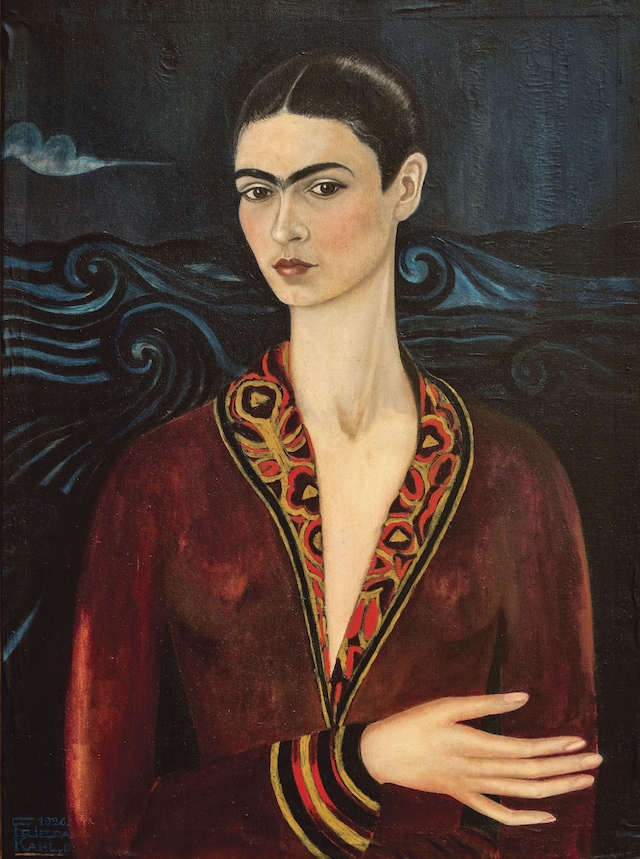
 1926. Private Collection.)
The Resilient Fighter
At the age of six, Kahlo was diagnosed with polio, which left her with one leg shorter than the other. Then, in 1925, aged just 18, she survived a catastrophic bus accident. The crash left her with a broken spine, ribs, collarbone, pelvis and legs – and unable to have children. Much of Kahlo’s life was shaped by chronic pain, relapses and medical intervention. According to Hayden Herrera’s biography, by 1951 Kahlo had undergone more than 30 operations. Which is perhaps why the bed as a site of both suffering and healing appears so frequently in Kahlo’s art.
In the aftermath of her accident, bedbound and bored, Kahlo turned to painting in her lonely convalescence. Borrowing her father’s paints, she set up an easel on the bed while still in her plaster cast and began painting self-portraits. Self-Portrait with Velvet Dress from 1926 is an early example of this reclamation of her image in the wake of her life-altering accident. As Herrera writes: “She created a self that would be strong enough to withstand the blows life dealt her.”
Deeply Political
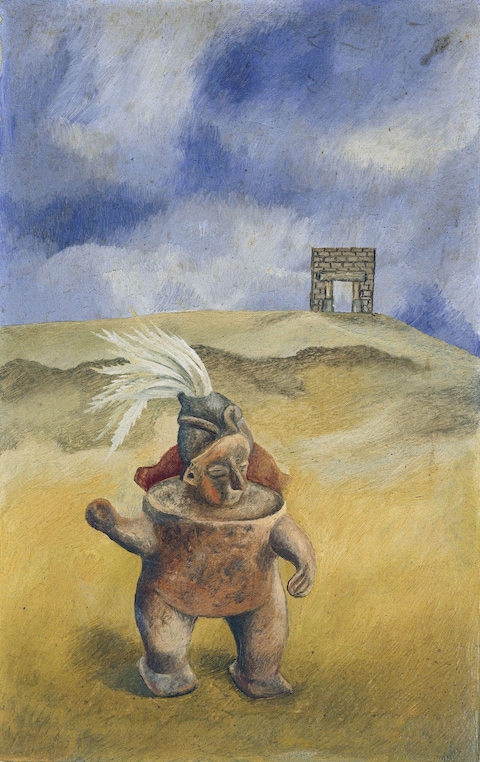
Witness to the Mexican Revolution (1910-1920) and later, in 1927, a member of the Communist Party (PCM), alongside many of the bohemian creatives and thinkers she affiliated with including Rivera, Kahlo had unwavering political beliefs. Kahlo and Rivera were part of an intellectual circle that contributed to a post-revolutionary redefining of Mexicanness. Famously, Kahlo was romantically connected to the former Soviet leader Leon Trotsky, who found asylum with his wife in Mexico City at La Casa Azul, after being exiled from Soviet Russia under Stalin’s regime. Trotsky and Kahlo began their love affair soon after. In 1938, Trotsky was assassinated.

Unapologetically Feminist
Still married to Rivera, Kahlo grew to resist the role of the submissive, supportive wife. In 1933, when travelling with her husband in the US, Kahlo was interviewed by The Detroit News, which ran the piece under the headline: Wife of the Master Mural Painter Gleefully Dabbles in Work of Art. The condescending tone paints a picture of how Kahlo was perceived; she got her own back during the interview, correcting the interviewer by stating it was in fact her – not Rivera – who was “the big artist”. She would go on to prove herself right, eventually stepping out of her husband’s shadow.
Although she never proclaimed to be a feminist, Kahlo painted taboo subjects relating to the female experience that were otherwise quite absent from art history – subjects such as birth, miscarriage and adultery. Her feminism can also be read in her irreverence towards social norms, as well as her defiant gaze in her self-portraits. As a consequence, she inspired generations of feminist artists such as Judy Chicago, Ana Mendieta, Carrie Mae Weems and Catherine Opie.
 1937. Private Collection.)
The Reluctant Surrealist
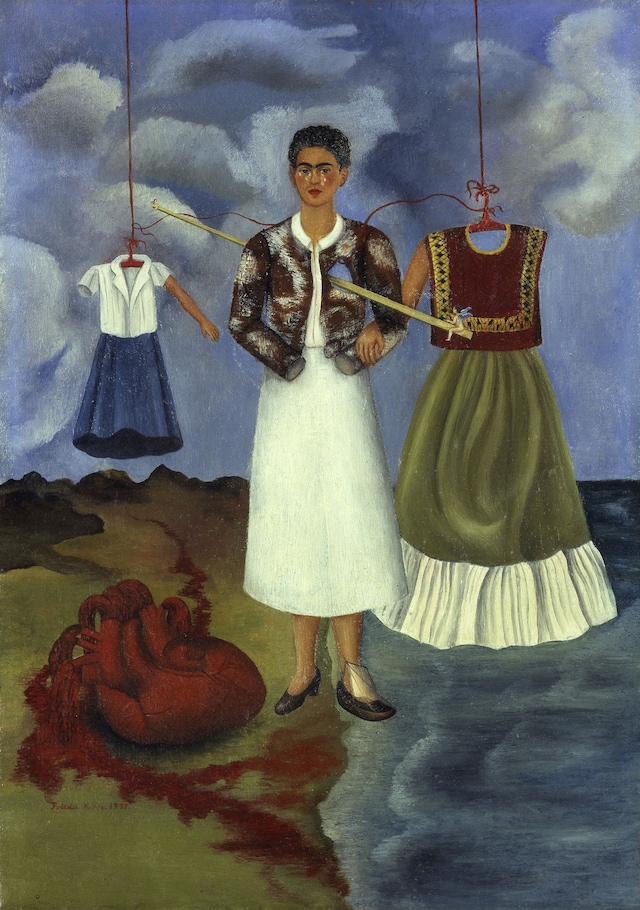
Kahlo was embraced by the Surrealists, whom she met in Paris in the 1930s. André Breton, an influential figure in the movement, was particularly taken with Kahlo, declaring she was “a self-made Surrealist”. But Kahlo rejected the label and disliked Breton. Later, she would casually remark: “I never knew I was a Surrealist ’til André Breton came to Mexico and told me I was.” However, it is undeniable that many of her paintings, including one of her most famous works known as The Two Kahlos, 1939, appears to adopt a Surrealist influence. In this dreamlike painting, two Kahlos – in Mexican and European dress – sit close to each other, their hearts conjoined by a blood vessel. The Mexican Kahlo holds a miniature portrait of her husband, while the European-dressed Kahlo holds scissors, blood spilling out and staining her white dress.
Indigenous Style Icon
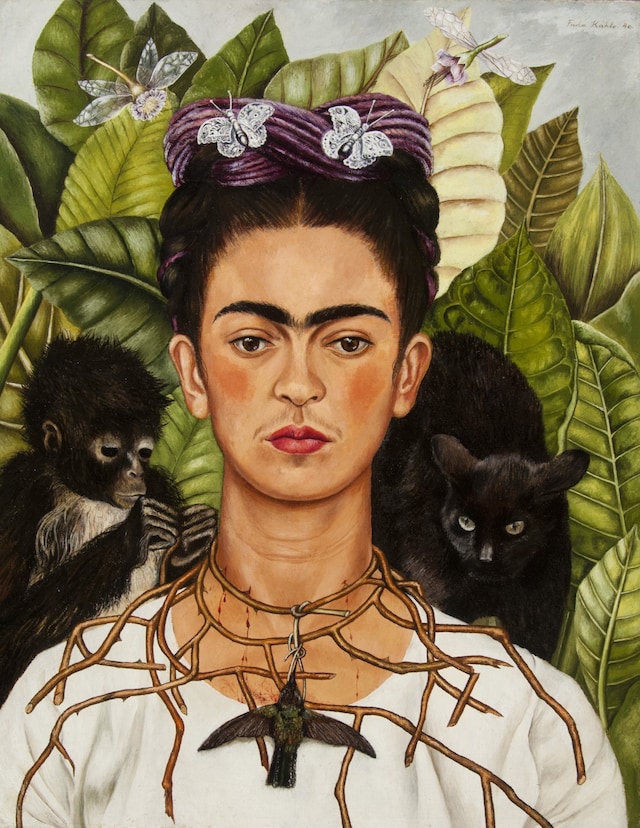
A proud Mexicana, Kahlo loved clothing and insisted on wearing a traditional Mexican wardrobe, adopting the Tehuana dress, which was worn by the indigenous Zapotec women. Her dress famously inspired the designer Elsa Schiaparelli, who upon discovering Kahlo in Paris in the 1930s, created the Madame Rivera dress based on Kahlo’s look. The artist’s self-fashioning represented more than a frivolous sartorial preference. The wide skirts allowed her to mask her physical disabilities, but also communicate her national pride and political convictions. Following the Mexican Revolution, indigenous dress had become particularly popular among intellectuals and creatives, contributing to rebuilding a sense of nationhood. Kahlo’s facial hair, a soft moustache, and her most ubiquitous identifier – her monobrow – were arguably self-fashioned and represented a deliberate rejection of European beauty standards.

Openly Queer
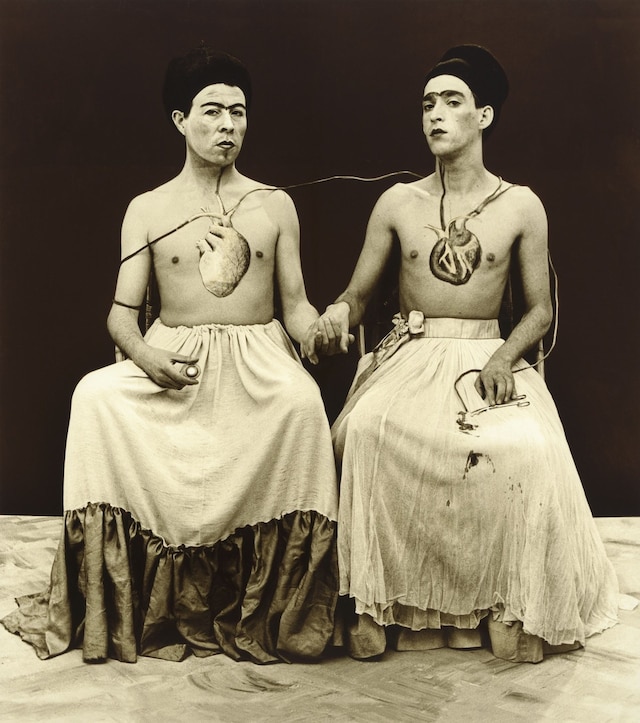
Kahlo was openly bisexual, defying the conservative norms of 20th-century Mexico. She took up numerous male and female lovers throughout her life, including the Mexican singer Chavela Vargas and, according to rumour, with her creative collaborator, the radical, Italian-born photographer Tina Modotti, who was also a member of the Mexican Communist Party. Reflecting her role in LGBTQ+ art history, the Tate exhibition emphasises how she embraced her masculinity and queerness. Kahlo was certainly responding to the sexually progressive atmosphere of avant-garde circles she affiliated with, notably the experimental dress of the Dadaists, Claude Cahun or the flapper style of figures such as the Mexican poet and model Carmen Mondragón.
A Social Butterfly
Despite many bouts of loneliness due to poor health, Kahlo was a social being with many friends, as is evidenced in the Tate show, which reveals her broad social circle with numerous cultural figures including photographers and artists by the likes of Imogen Cunningham, Nickolas Muray, Lola Álvarez Bravo, Kati Horna, Remedios Varo and Leonora Carrington. Through shared intellectual and creative interests – as well as political beliefs – Kahlo built an elite community around herself and Rivera. In her biography, Herrera describes Kahlo as charming and magnetic, arguing that Kahlo and Rivera were people who worked hard, and played hard.

Flamboyant and Funny
Kahlo is often contextualised through pain and tragedy. But what many fail to emphasise, perhaps including the Tate show, is her wicked sense of humour and how she found strength through lightness. “Nothing is worth more than laughter,” she once quipped. Reflecting her resilience and playfulness, in 1953 at her first solo exhibition in Mexico City (shortly before her death), she ignored the advice of doctors to stay at home. Instead, she insisted that her bed be moved into the gallery space at Lola Álvarex Bravo’s gallery. She arrived by ambulance in her beloved Tehuana dress to cheering and applauding crowds. “It is strength to laugh and to abandon oneself, to be light,” said Kahlo. “Tragedy is the most ridiculous thing.”
Frida: The Making of an Icon is on at Tate Modern until 3 January 2027
