
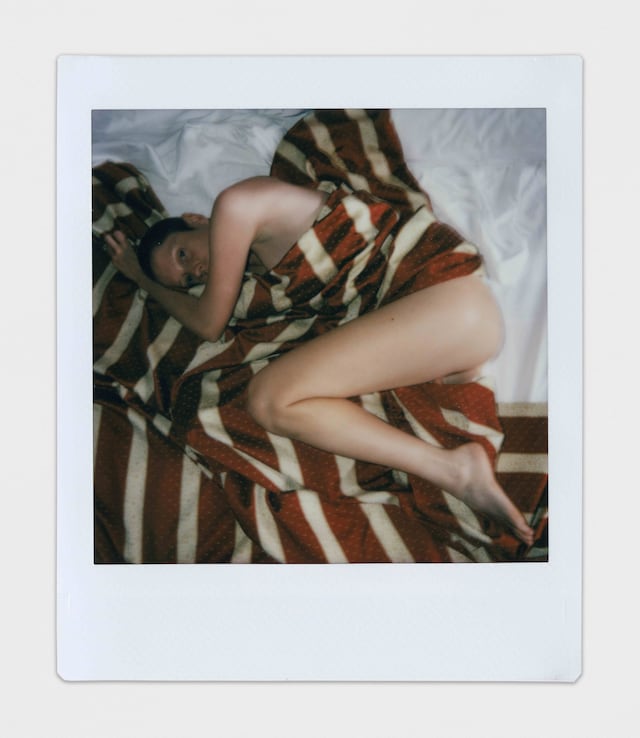
The Czech-born, New York-based photographer documents an entire year in a confronting series that explores the mysteries of the self, now on display at Harkawik in New York
On New Year’s Day in 2022, photographer Marie Tomanova pledged to take a self-portrait with an instant camera every day for a year. It would be a year of epic travelling for the Czech-born, New York City-based artist. She moved between her home in NYC and Dublin, Lisbon, Czech Republic, Rome, Florence, Venice, Maine, Tokyo, Paris and Antwerp. But she didn’t anticipate quite how confronting the task ahead would be. “This project took a lot out of me,” she tells AnOther. “It made me look at myself, but in ways that I didn’t even expect.” And setting up a tripod “in the wild” wasn’t always easy.
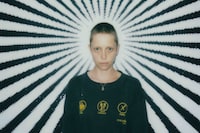
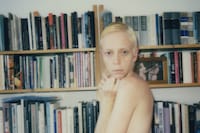

Despite her rigorous work ethic, being bound to a daily obligation often felt confining for an artist who values creative autonomy. “I used to say that my spirit animal was a wolf,” she explains, “and what that really meant – the image in my head – was freedom. I just tied myself down to a creative project that I had to do every day.”
Nonetheless, she made it to 2023 having created a distinct and arresting photograph each day, bar a gap in July when, for reasons she can’t even explain, she allowed the project to lapse. “I just stopped,” she recalls. “I missed a day, and I was devastated, and then one day became two. Ultimately, I had to start again.” But this break in the continuity of the project, named Three Empty Weeks in July, would become one of its defining features.
For Tomonova, those pictureless weeks came to represent the mystery of the self and the imperfect knowledge we possess about ourselves. “That gap became really important to me,” she says. “I visited Ryōan-ji a Zen temple in Kyoto, which is a rock garden where there are arrangements of 15 rocks, but no matter where you stand in the garden, you can only see 14 of them – one is always missing. The power in what is incomplete, or beyond comprehension, stood out to me as those three empty weeks.” The series of portraits present the artist a recurring vision of herself, but the gap in the sequence allowed her to somehow trace the contours of her absence. “Those three empty weeks showed me who I am,” she says.

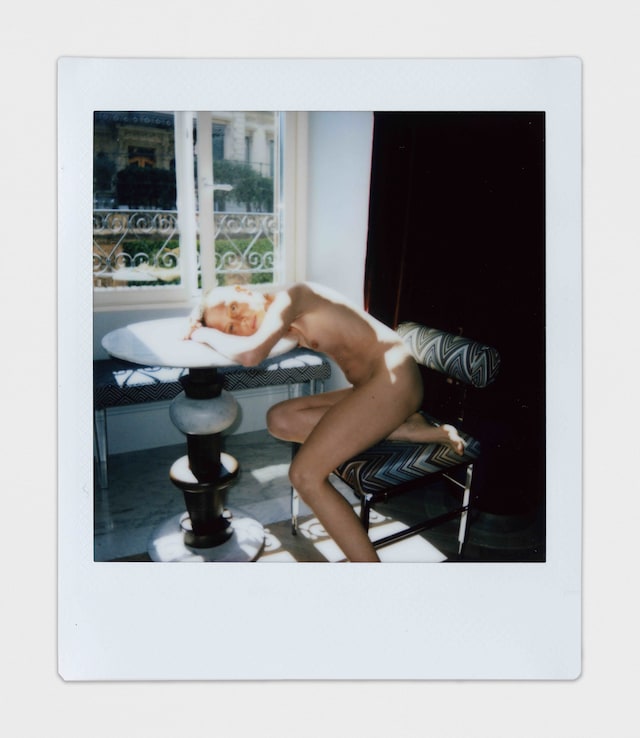
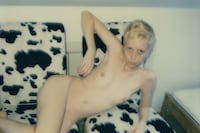
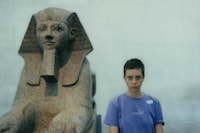
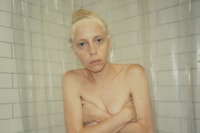
The project otherwise encompasses the artist’s year in 344 distinct, arresting images. Presented without context, other than the self-defined parameters of the project itself, the portraits depict Tomanova in a variety of different lights, places and moods. The camera she uses – a Fujifilm Instax Square SQ6 – has a double-exposure feature, allowing her to superimpose herself on her environment with intriguing, ghostly effect. Whether nude, alone, with a companion, bleached out, reflected, concealed in shadow, backlit by purple dusk, close-up, hidden by flowers, submerged in water or dwarfed by monumental architecture, she recurs throughout each image – the one ever-present feature amid the changing scenes.
Before becoming a photographer, Tomanova was a painter and it shows in the composition of her self-portraits. Many of the objects she chooses to include – flowers, fruit and books – have the quality of a still life. “I love that you make a connection,” she says. “Lately I have been working on figures and still life – painting, drawing, and now, ceramics; using flowers and fruit-like colours. The subconscious is working; the evocations are real, but unintentional.”
Three Missing Weeks in July is a profoundly intimate project. Like reading someone else’s diary, it invites us into what, at times, feel like very private moments. Some of the portraits are traditional nudes in the sense that Tomanova is posed, stretched, arched languorously for the camera. Others are truly naked – those unadorned moments when we aren’t revelling in our nudity like a costume. In one portrait, the artist is curled in a fetal position with her bare back to the camera – a pose of profound vulnerability.

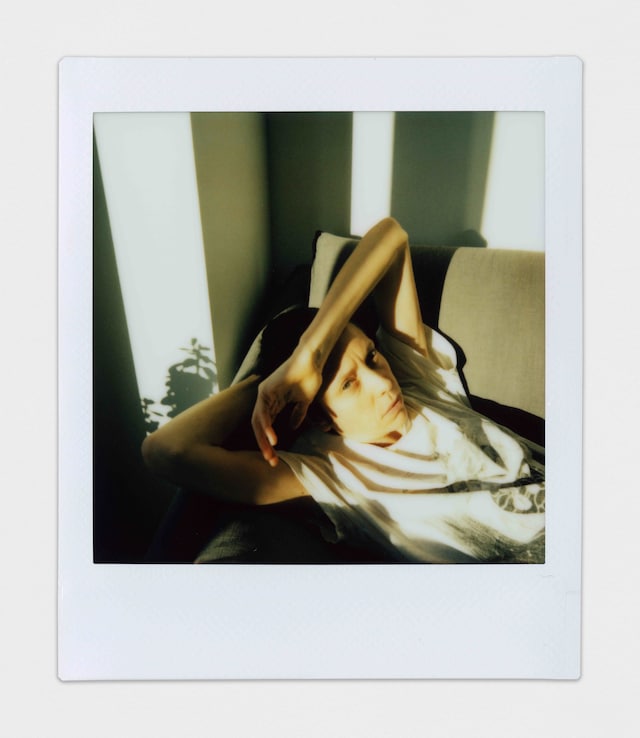
While she didn’t set out on this project with the explicit intention of putting these portraits on display (“I did not shoot them to be either public or private, I shot them to stay creative”), I wonder how it now feels to launch such a body of work into the public realm? “I am ready to let them go,” she says. “As with any of the images I make, my relationship to them is always changing. I actually feel deeply inspired with this project – looking at it now with the distance of time – and have decided to take self-portraits through the whole year every five years. This type of continuous longitudinal project on identity is very embedded in my work and I think it’s interesting to turn it towards myself.”
Three Empty Weeks in July by Marie Tomanova is on show at Harkawik, New York, until 18 July 2026
