
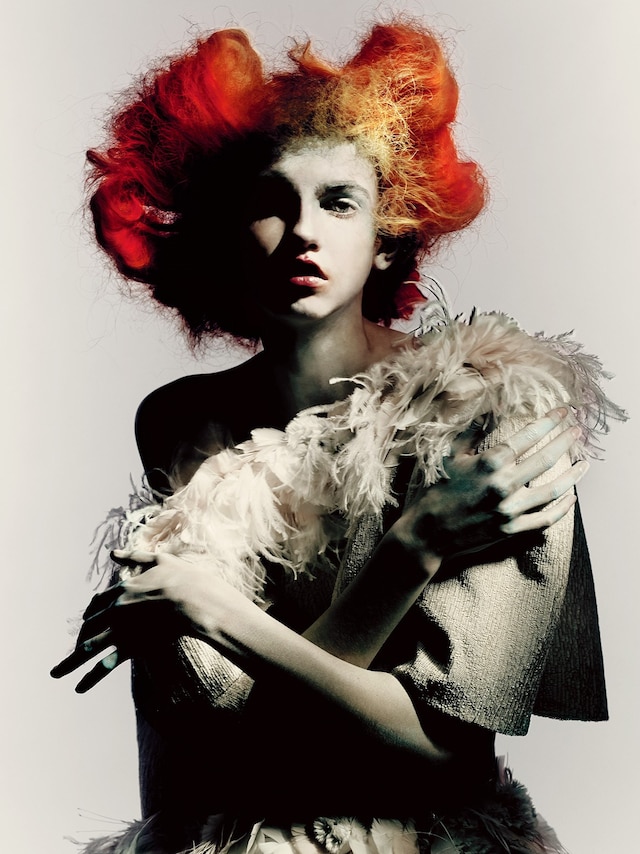
A new exhibition at The MOP Foundation in A Corũna explores the singular and experimental visual language of the Italian fashion photographer, including unpublished imagery
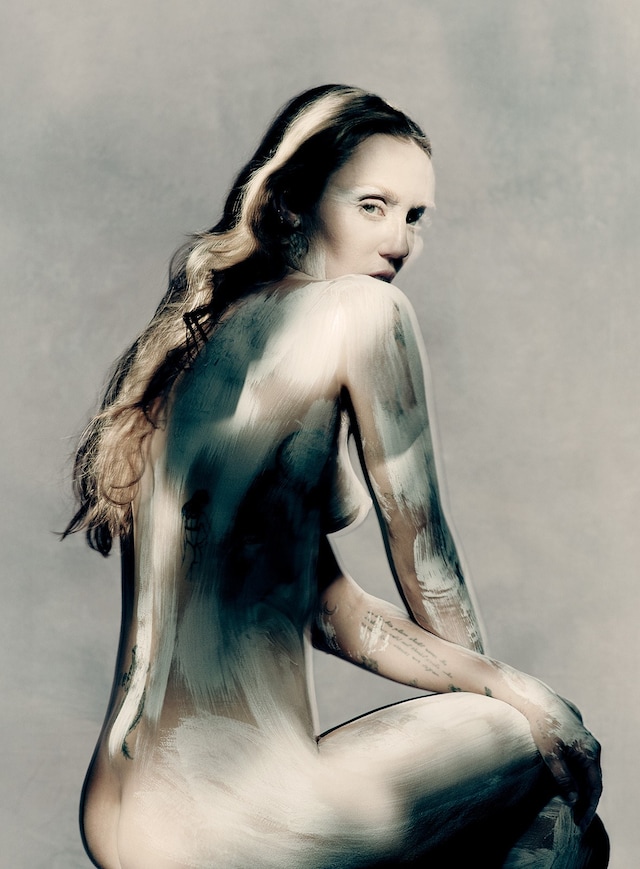
For more than four decades, Italian fashion photographer Paolo Roversi has built a singular visual language – it is unmistakably his own. Shooting on an 8x10 Polaroid film camera, he creates dream-like imagery, with a surreal luminosity that draws the eye to both the clothing and the model. The resulting photographs transport fashion into an otherworldly realm. Having moved to Paris in the early 1970s, he has remained there ever since, creating campaigns for some of the world's largest fashion brands and designers. During his experimental process he incorporates oil paint and fabric directly onto the image’s surface, or moves a handheld flashlight across a long exposure, drawing the viewer’s eye toward whatever he most wants to illuminate.

A new major exhibition at The MOP Foundation in A Corũna titled Doubts is dedicated to Roversi, placing memorable masterpieces alongside previously unseen images that have spent years, as he puts it, sleeping in boxes. For Roversi, doubt is the open door to creativity and imagination. The exhibition space has been transformed into nine interconnected sections – Theatre, Appearances, Shadows, Doubts, People, Presence, Grace, Beauty and Fading – each expressing a different facet of his aesthetic, and together illustrating both the breadth of his technical mastery and the consistency of his vision.
Among the most affecting spaces is a reconstruction of Roversi’s Parisian studio. A tight, intimate room is cornered off in the exhibition space, with sheets hanging softly around its edges. The room is spare. Standing inside it, you begin to understand something essential about how he operates: the studio is a world he constructs around himself, a controlled environment in which the unexpected is always invited. He describes it as feeling like home.
The following conversation took place at the MOP Foundation ahead of the exhibition’s opening.

Sofia Hallström: I wanted to start by asking you about the title of the exhibition, Doubts. After four decades of working, how has the nature of your doubts changed?
Paolo Roversi: I think the doubts have been growing throughout my life as a photographer … Not fewer doubts, but more and more. The more I know, the more doubts I have.
SH: How did you arrive at your particular way of working, with the distinct soft focus and the sense of movement captured. Was there a specific doubt, moment or accident that changed the direction of your photography?
PR: I never look for perfection. I look for expression, for emotion. I don’t mind if a picture is sharp or technically perfect. Photography is a vulnerable profession, and I don’t want to reproduce reality exactly. I like to keep a part of imagination, of dream. I like when an image gives you a moment of pause … a space for feeling something beyond what’s literally there.
SH: You sometimes introduce paint and other materials into the image during its process. How did that come about?
PR: It probably began with Polaroid. Polaroids change over time, so I experimented with many different ways of working with them. For a few years, Polaroid produced not paper prints but transparent pigment film, and I had the idea to add silver leaves, flower leaves, and then to scratch into the surface altogether. That’s where the colour and texture came from.
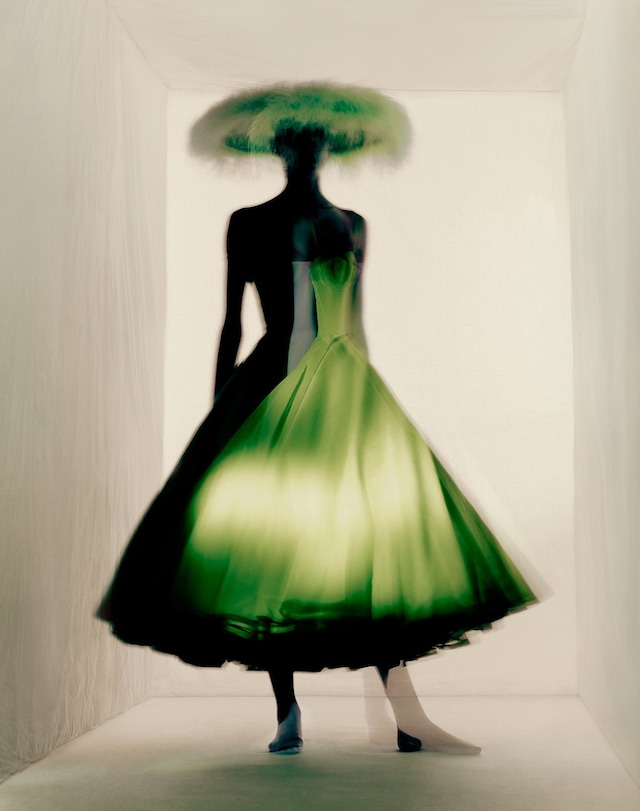
SH: The curator of the exhibition spoke about how you move a flashlight across the surface of the image during long exposures. It feels like you’re drawing with light and time.
PR: That small pocket lamp is one of my favourite lights. I hold it in my hand and I can direct it exactly where I want – your face, your hands, your hair – at whatever angle I choose. It’s like drawing. It’s mysterious, and always different, always unexpected. You can never quite predict the result.

SH: How do you decide which element to illuminate? Is it improvisation, or something more considered?
PR: It’s improvisation, but not an accident. There’s a distinction. It’s a very controlled light, but at the same time it’s a feeling. It’s hard to explain.
SH: The exhibition includes images that haven’t been shown before. Why had they been held back until now, and what made this feel like the right moment?
PR: These images were sleeping in boxes for years, and now they’ve come back to life, and I love that. Some images come out immediately and become very famous pictures, and you never quite know why. Others sleep in the box, and sometimes they’re even better than the ones that were celebrated straight away. Every picture has its own life, and it isn’t really me who decides. It’s a kind of destiny.
SH: I’m interested in your birthplace in Italy, the city of Ravenna, and the artistic and cultural influences of the city. Do you reference that place and its history in your work?
PR: Ravenna is always in my work, always in my life, in my art. It is natural. My roots are very deep and very important.


SH: In a previous interview with AnOther, you said “I love what I do. I love to work, I love fashion, and I love photography. I will keep going.” What inspires and motivates you today, is there an area in photography that you still have yet to explore?
PR: I love photography, I love fashion. It is a pleasure to work in it, to be a fashion photographer. I’m not ashamed of that at all. As for what’s next, I work day after day. I’m not expecting some great revelation. Just step by step, day after day.
SH: Walking around the exhibition, I kept thinking about something you said in a Vogue interview: “For me, fashion photography is portrait photography … it’s a double portrait: a portrait of the person, and a portrait of the dress they’re wearing. And I was always looking for models who would inspire me to say something different.” What are the qualities that you are looking for in your subjects?
PR: The model is very inspiring. For me, the model is not just a person standing in front of a camera, smiling or posing. They’re a human being who gives me personality, humanity, energy, and feeling. That’s what’s important. I think of the studio as an empty space, and a great model can fill that empty space with almost nothing at all.
SH: You’ve consistently chosen the studio as your workspace throughout your career. What drew you to it?
PR: It’s like a home for me. It’s my place to work. It’s like my shop. I feel free there, and I feel like I can create my own world.
SH: What’s the single most important piece of advice you would give to a photographer starting out today?
PR: Respect your roots. Enjoy photography. And be honest, spontaneous and free.
Doubts by Paolo Roversi is on at the MOP Foundation until 20 September 2026.
