
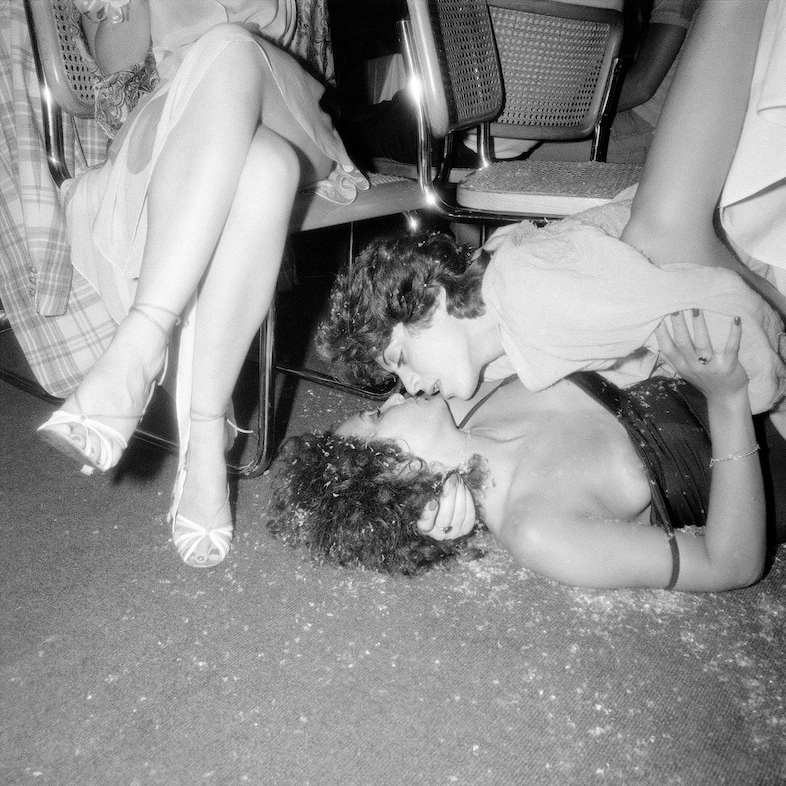
In her new book Sex, Clubs, Dissent, writer Amelia Abraham traces how photographers have documented queer nightlife across six decades, preserving moments of pleasure, protest and community that might otherwise have been lost
Archives are imagined as places of preservation: orderly repositories where history is safeguarded against disappearance. But for queer communities, they have historically carried the threat of erasure or exposure more than the promise of remembrance. “State or bureaucratic archives often fail to hold the complexities of gender, sexuality, and desire,” says writer Amelia Abraham. “They have traditionally focused more on violence than joy. The work of building queer archives is to create an alternative.”



Her new photobook, Sex, Clubs, Dissent: Visualising Queer Nightlife, is one such contribution. Bringing together images from the 1960s to the present day, alongside essays and interviews, it offers an expansive visual history of queer life on and around the dancefloor, and explores how photography has preserved, celebrated and at times jeopardised it. “Rather than a comprehensive catalogue or chronology, I wanted the book to be more porous,” Abraham explains. “For the sections and photographers to resist categorisation, to create a sort of connectivity through time.”
A regular on London’s dancefloors for the past 15 years, Abraham previously explored queer nightlife venues in her 2019 nonfiction book Queer Intentions, asking what the spate of closures around gay bars revealed about a shifting political and technological landscape. “Eventually, I wanted to think less about the losses and more about what these spaces gave us to begin with.” Through ongoing conversations with nightlife photographers in her own circles, the medium emerged as a natural way in: “I’ve always been drawn to moments of hedonism and intimacy captured on film.”
A central tension in the book, however, is the push-pull between the importance of visibility and the risks of exposure. In nightlife spaces premised on pleasure and presence – on the sensory intensity of the here and now – what does it mean to extract a moment and preserve it in pixels? Is the camera anathema to freedom? It’s a question familiar to many of us in an era of instant image-sharing and digital surveillance, with no-photo policies increasingly welcomed in clubs.

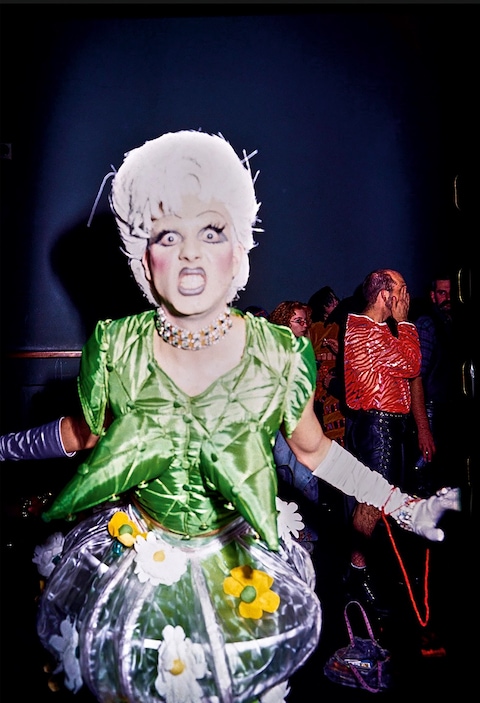
But as Abraham discovered while researching in the Bishopsgate Institute Archives – combing through records of bathhouse arson attacks, police raids on gay venues, and newspaper reports outing participants of sexual subcultures – it has always been “a game of cat and mouse”. “Often, visual documentation is used to criminalise, out, and shame us,” she writes in the book. “In other instances, images can redeem us.”
Del LaGrace Volcano's raucous black-and-white photographs of Chain Reaction, a lesbian S&M club night held in Vauxhall during the 1980s, attest to the liberatory potential of being seen. “We deliberately made spectacles of ourselves at that time because we demanded to be both seen and heard on our own terms,” Volcano tells Abraham. “We were making more than just photographs; we were creating a cultural template, ‘herstory’, if you like, in a world that was actively trying to erase us.”
For Abraham, cultural templates are visible throughout the book. “There’s a through-line of thinking about ancestry or legacy,” she explains. “It’s something we’ve always done – passed down codes or questions or cultures intergenerationally. Queer people don’t necessarily have queer biological families they’re understanding their identity from, so we get it from our elders.”

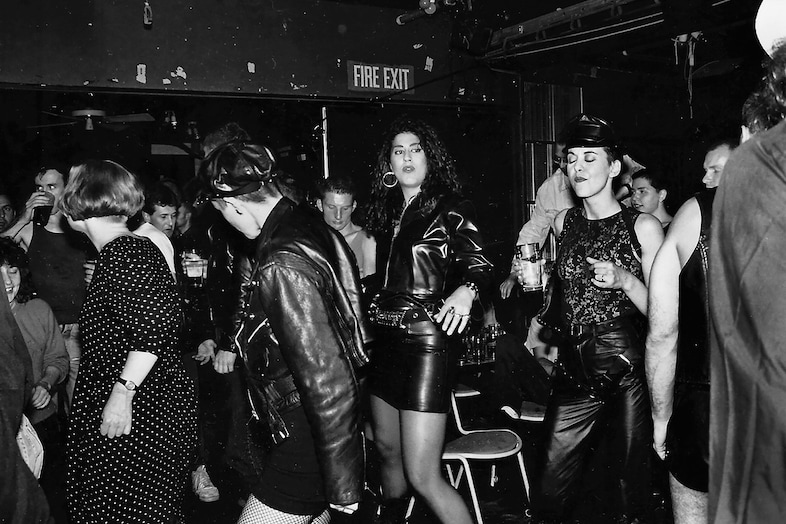
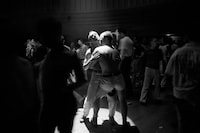
Life-affirming scenes of dancefloors, ACT UP die-ins and drag-show fundraisers during the HIV/AIDS crisis reveal just how vital that lineage is. One image, Jean-Marc Armani’s Closing Night of Gay Pride at the Mutualité, captures a shirtless couple clinging to one another beneath a spotlight while dancers blur around them – a moving reclamation of pleasure in the face of so much pain. Then, as now, when parties, protest and politics are increasingly intertwined, the night out is framed as a lifeline: a source of intimacy, solidarity and mutual aid.
Alternative archiving is especially urgent within trans communities. Glittering snapshots of friends and lovers at carnivals, in nightclubs and dressing rooms are drawn from trans memory archives in Argentina and Mexico. “Before, when you put ‘trans’ in the search bar, tragic images would appear,” Cecelia Estalles, co-founder of Archivo de la Memoria Trans Argentina, tells Abraham. “When the archive was established, the search results changed completely. I think all our work has something to do with presenting a new way of seeing the world via the trans gaze, a loving gaze. Like when someone who cares for you takes your photo.”
That idea of a “loving gaze” is also felt in Rene Matić’s intimate shots of dancefloor makeouts and messy moments at birthdays, or Sabelo Mlangeni’s tender scenes of collective care inside a queer safe house in Lagos. For Abraham, the most compelling nightlife photographers are often insiders: people trusted by the communities they document. “There’s this celebration throughout the book of the photographer who is a regular at the bars and venues they shoot, who’s part of the family, who comes back every week,” she says, citing Alice O’Malley at New York’s Clit Club in the 1990s, or Roxy Lee, Dani d’Ingeo and Michele Baron lensing club culture and afterparties around London today.

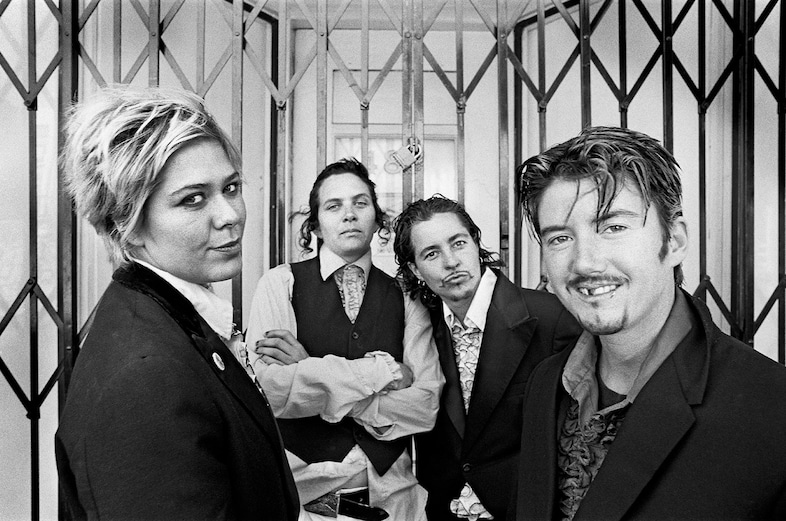
Sex, Clubs, Dissent is less interested in producing a definitive history than assembling an archive of possibility. As McKenzie Wark writes in the book’s epilogue, documentation can become “another kind of afters”: a space that enables more queer life to happen. “We might look to the image not to gawk at the queer thing cut from its life,” Wark writes, “but to imagine what made the life frozen in the image possible.”
Sex, Clubs, Dissent: Visualising Queer Nightlife by Amelia Abraham is published by MACK and available here.
