
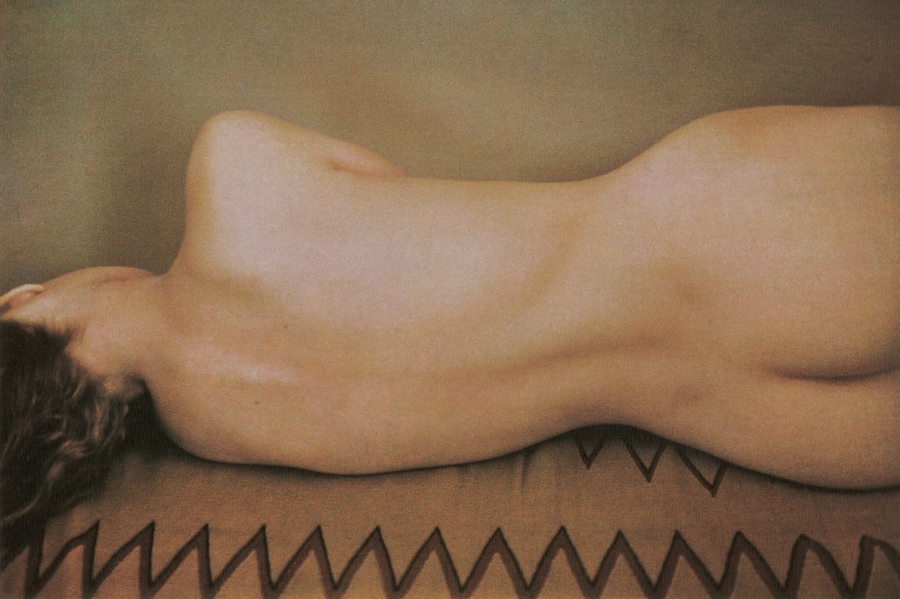
A new exhibition at La Galerie Rouge in Paris pairs the painterly photographic works of Sheila Metzner with Lillian Bassman, two photographers whose painterly images were shaped as much in the darkroom as behind the camera
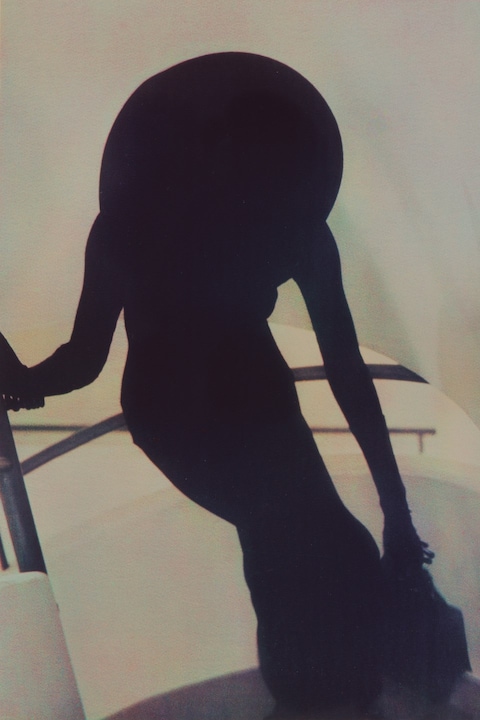
Contracted to Vogue from 1981 to 1989, American photographer Sheila Mentzner’s poetic visual language, achieved in part by the laborious, almost alchemical, Fresson printing method, is synonymous with fashion photography from that decade. Born in 1939, the photographer’s portraits of people such as Uma Thurman, Robert Mapplethorpe and Willem Dafoe, alongside commissions for brands including Ralph Lauren, Fendi and Shiseido have been the subject of several monographs and exhibitions.
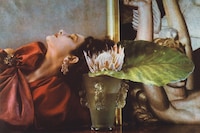
C’est Chic, a new exhibition at La Galerie Rouge in Paris pairs Metzner’s work with that of photographer, Lillian Bassman (1917-2012). Although working decades apart, this curatorial proposition suggests that the pair have much in common. Both were born in Brooklyn, developing successful careers in the highly male-dominated field of 20th-century fashion photography, whilst navigating life as working mothers; Metzner’s blended family includes eight children, Bassman two. Prior to photography, they both developed their understanding of fashion by working in art direction. Bassman was the right hand woman of Alexey Brodovitch at Harper’s Bazaar, with Metzner becoming the first female artistic director at the advertising agency Doyle Dane Bernbach.
Beyond this similar biography, it is their shared pursuit of a pictorial vision honed both in camera and the darkroom that has cemented their place in photographic history. The Pictorialist movement of the late 19th century saw photographers such as Julia Margaret Cameron, Alfred Steiglitz and Edward Steichen seeking to highlight the artistic qualities of the medium at a time when purists argued that photography could not possibly be considered as a fine art akin to painting.
To some, an appreciation of surface and beauty has become passé in an image culture driven by identity politics. Yet, for Metzner, it is exactly this recognition of beauty that she describes as having a “transforming power.”

Adam Murray: How did your experience working as an art director inform your photography?
Sheila Metzner: As an art director I worked with many important photographers such as Richard Avedon and Melvin Sokolsky. They were shooting commercial work. When I became pregnant with my first child, I decided to end my career as an art director and was looking for a career in which I could make my own hours. A very good friend of mine, also a talented photographer, named Aaron Rose told me I had a good eye and would make a good photographer. When I started shooting my work wasn’t commercial, it was personal.
AM: Previously, when describing your move into photography, you said for ten years you only photographed and worked with friends and family, not showing work publicly. Can you give me some insight into that period of your career? How did you know when you were ready to work as a photographer?
SM: I had been shooting personal work for ten years and making my own prints in my darkroom at home while raising my five children. I learned how to print from reading books by photographers who described the chemicals they used. I would go into the darkroom and mix chemicals and make prints at night. In that period, I put together a portfolio of 22 prints I loved that felt like photographs. I used so much Spotone on these prints they were practically paintings. I brought them to the curator of the Museum of Modern Art, John Szarkowski, and he selected three to be included in a group show called Mirrors & Windows. The show was well received and my photograph, Evyan Kinderhook Creek, was published in The New York Times as a full page and was the star of the show. Soon after, I was called to a meeting with Alexander Lieberman at Condé Nast who gave me my first assignment for Vogue as a photographer. He asked me to go to Paris and photograph Jeanne Moreau, which I did. So, one might say, I was called to photography.

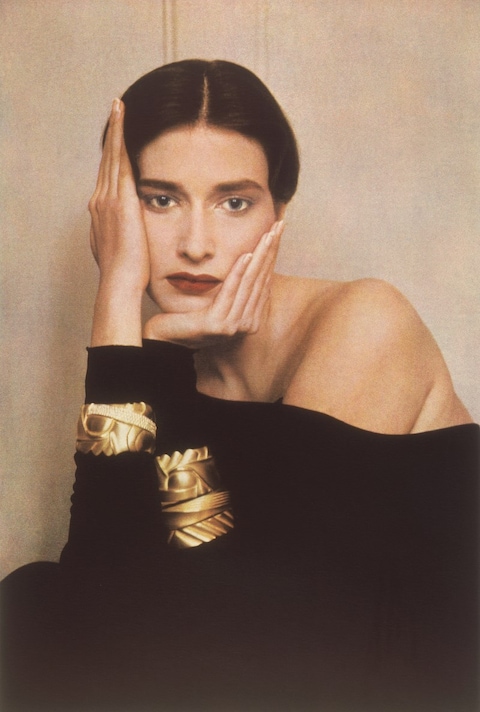
AM: Mahal. Apartment 125, 1980 features in this exhibition. If I understand correctly, this was the beginning of the idea that you wanted to do fashion photography. What do you enjoy about making fashion photographs?
SM: They are just like anything else. An opportunity to make a powerful image. When I began taking pictures, I always photographed friends and family. My commercial photography was just an extension of that. I shot my first fashion story for Vogue at my home, in my bedroom, and put the model on our bed. Over the years I began to branch out. I opened a studio three blocks from my house on the Upper West Side and shot many fashion photographs there. I also had the opportunity to travel and shoot fashion all over the world. This was an excellent situation as I enjoyed travelling and was able to put objects I loved – furniture, jewellery, vases, flowers – from all over the world into my photographs.
AM: Collaboration is intrinsic to fashion photography. Can you introduce one of your most important collaborators during your career?
SM: When I began to make colour images, I needed to find a printer I could work with. I sought out the Atelier Fresson outside of Paris and asked if they would print my images and they agreed. This began a collaboration with three generations of the Fresson family. They use a dye process that allows me to choose the colours I want to print with, and their prints are the closest to realising the colour and grain that is true to the film image that I see in my colour negatives. Over the years this has been a very fruitful and powerful collaboration.
AM: Ralph Lauren writes about your photographs in the foreword to your 2001 book Form and Fashion, “But in addition to an elegant gown or piece of jewellery, what they really sell is her dream.” What is your dream?
SM: It is interesting that Ralph would say that. He may perceive it as that, but I don’t have a dream. I set out to photograph my reality, which is what I see before me. All the images I made were created. I put the model there, the clothes, the setting. So, one could say that I photograph my truth.
C’est Chic is on show at La Galerie Rouge in Paris until 19 September 2026.
