
The American artist’s most personal show yet, Bring Me Men at Nicoletti gallery draws attention to how “masculinity” is produced by various systems of power
Above a tunnel at the entrance to the United States Air Force Academy, two-foot high letters once spelled out a command: “Bring Me Men”. Fresh cadets marked their transition into military life by ritually marching through this gaping maw. For London Gallery Weekend, artist Gray Wielebinski has resurrected the now-retired military slogan as the title of his exhibition, Bring Me Men, at Nicoletti gallery, mounting it in aluminium on its façade, where it seems almost to wink in its exaggerated theatricality.
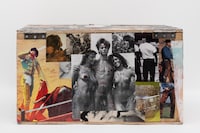
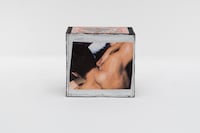
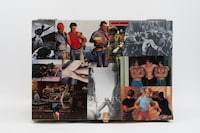
“It feels both quite menacing and, from my perspective, extremely camp,” the artist tells me, as we stand beneath the transposed imperative in the summer heat. “The institution itself … it’s this mouth, almost like Audrey II from Little Shop of Horrors. There’s never enough bodies and subjects.”
Dressed with a kind of studied ease, in deep-maroon Kiko Kostadinov Asics trainers, a red bandana, an athletic T-shirt and shorts, Wielebinski says that while researching the exhibition, he found out that his own father had walked the US Air Force Academy’s battle ramp, ahead of two years’ service that helped him pay for college. The revelation provides a gateway to Wielebinski’s most personal show yet, which draws attention to how “masculinity” is produced by various systems of power.
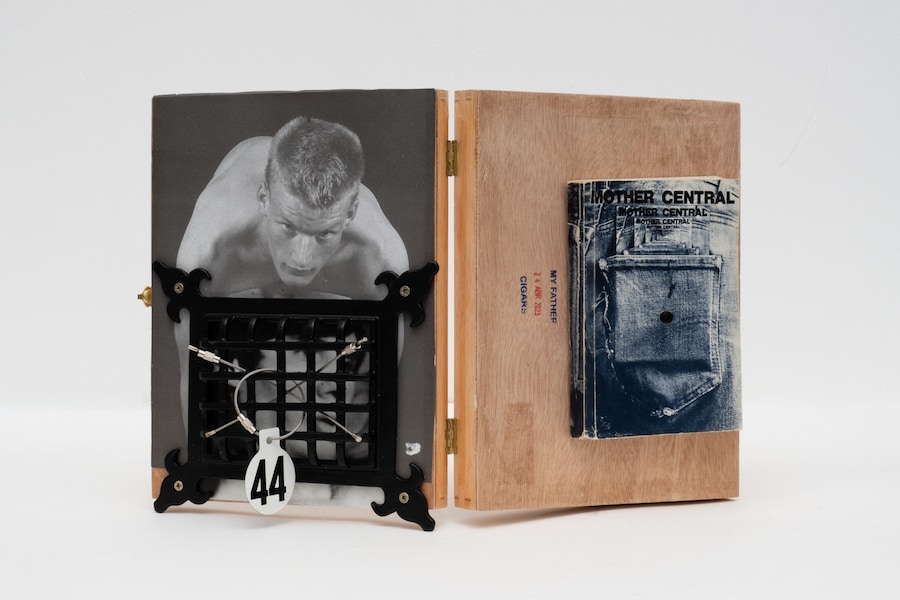
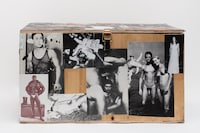
Less flamboyant than the show’s opening statement, the sculptures inside brim with similar conceptual gestures, collaging and remixing printed matter, personal items from the artist’s studio and found artefacts evocative of sites – such as locker rooms and football fields – that he implicates in the construction of male identity. The assemblages have a stick-and-glue quality to them, feeling homemade, intimate, almost adolescent.

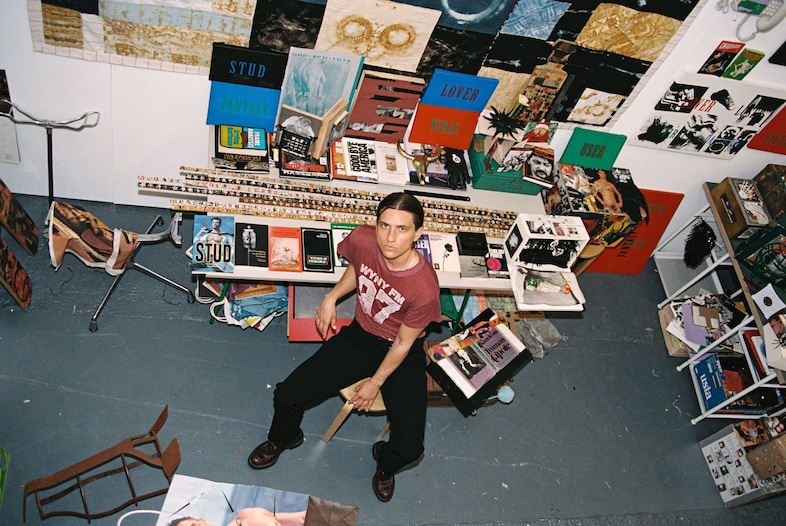
Underpinning the show is the post-structuralist notion that institutions promote standardised, aspirational identities in order to make subjects easier to control. “It’s a very particular structure of creating an identity that feels specific enough to feel attached to, but then it is this form of dehumanisation,” he says.
The works move between focusing on individuals and the systems working to flatten them into stereotype. Along the edge of a table bisecting the room, star-shaped cutouts of the faces of famous male actors, artists, directors and musicians are pasted to rulers. The pieces, which might not look out of place as classroom decor, respond to the idea of “star-making” in Hollywood’s Golden Age, studio systems built on the production of idealised masculine archetypes. Elsewhere, behind a frosted screen, photos of men signing releases for their appearance in adult films embody this more overtly.
The art world is not immune from these powerful structures, Wielebinski says, as artists are tempted to make Faustian bargains in pursuit of commercial success. “As an American artist, I’m interested in the shadow that the 20th century has cast on what our contemporary art world looks like now, thinking about the abstract expressionists creating their personas or having them created for them, like Jackson Pollock, in a way that was very specific and intentional,” he says. “There is this crafting of identity, both with the artists themselves, or maybe the galleries they’re working with, or collectors.”

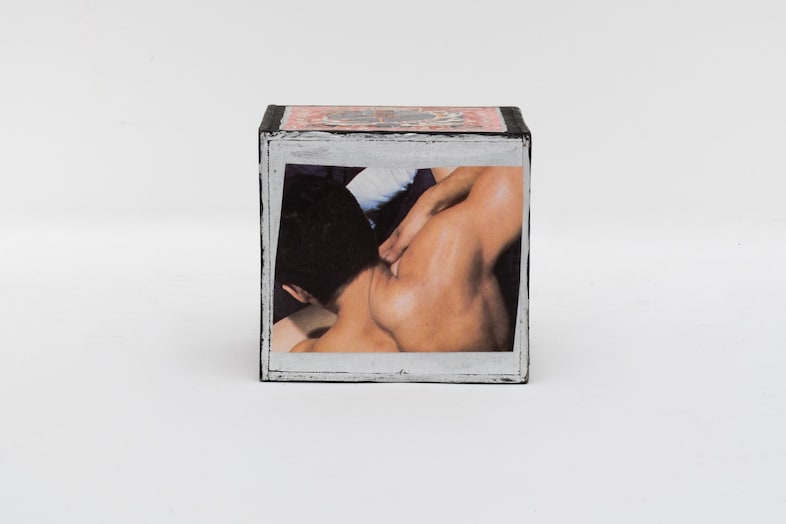
A cross made out of Abercrombie & Fitch shopping bags printed with images of scantily-clad male models shows how easily the production of highly stylised masculine ideals can draw attention to its own construction. “These images of ‘idealised white masculinity’ of the 2000s – which is when I was coming of age in Texas in a very normative time – were shot by Bruce Weber,” the artist says. “They are so homoerotic … It’s very knowing.”
Wielebinski’s use of containers filled with personal items brings a psychoanalytic register to the show. First aid kits are a key motif – sometimes open, sometimes sealed – suggesting forms of defensive self-containment and an increasingly anxious, inward-facing subjectivity. “I think the rise of fascism and panic about many different things in the UK – fear of trans people and immigrants, and in the US similarly, alongside gun culture and private property – is producing an inward turn,” he says.
The show makes a strong case for collage as the dominant cultural logic of the 21st century. For Wielebinski, the endless possibilities of recombination make for exciting artistic material. Influenced by post-war German art, he places this work in a lineage that includes artists such as Rosemarie Trockel and Isa Genzken. “I’m really thinking about what it means to cut up a world you don’t recognise and try to make it anew, to make it liveable, to make anything at all of it,” he says.
)
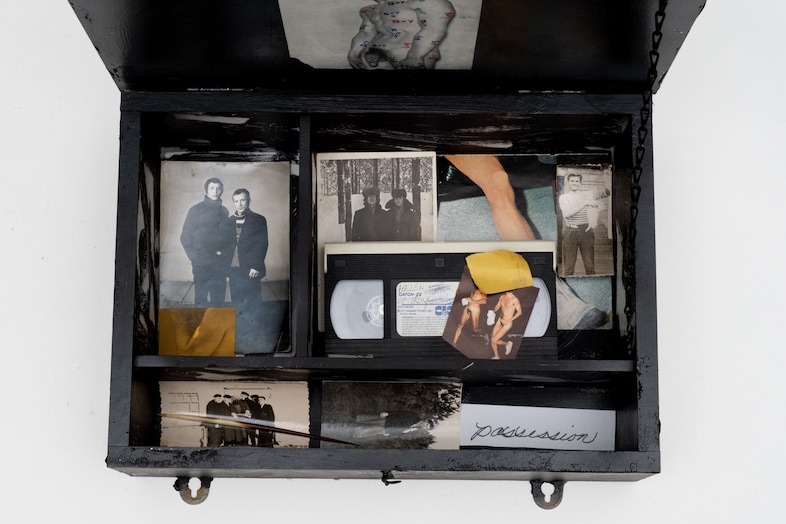
Collage may well offer an escape from inherited systems of meaning and identity formation, but what is most powerful about its use in this context is that it also describes the structure of emerging systems of control. As legacy institutions lose their authority, contemporary subjectivity is being formed through collage-like systems online, where images and information circulate as fragments, and the danger is that they are algorithmically, rather than individually, curated and distributed. It is this frightening digital backdrop that imbues the handmade, analogue quality of Wielebinski’s work with all the more force.
Bring Me Men by Gray Wielebinski is on show at Nicoletti in London until 4 July 2026.
