
Featuring the work of Derek Jarman and Felix Gonzalez-Torres alongside a host of contemporary artists, Goldsmiths CCA presents an eye-opening survey of crip strategies and discourse
A “flare-up” is shorthand for an intensification of symptoms. Natasha Hoare, senior curator at Goldsmiths CCA, explains that it also, “points to affect’s importance, in terms of a flare of light, bringing light to areas often obscured, but also a kind of celebration.” It’s a suitably capacious framework for the work on display, which, Mariana Lemos, co-curator of Flare-Up, notes, “includes a community of people diagnosed as disabled, those who don’t identify with the term or have official diagnosis, as well as carers, social workers.”
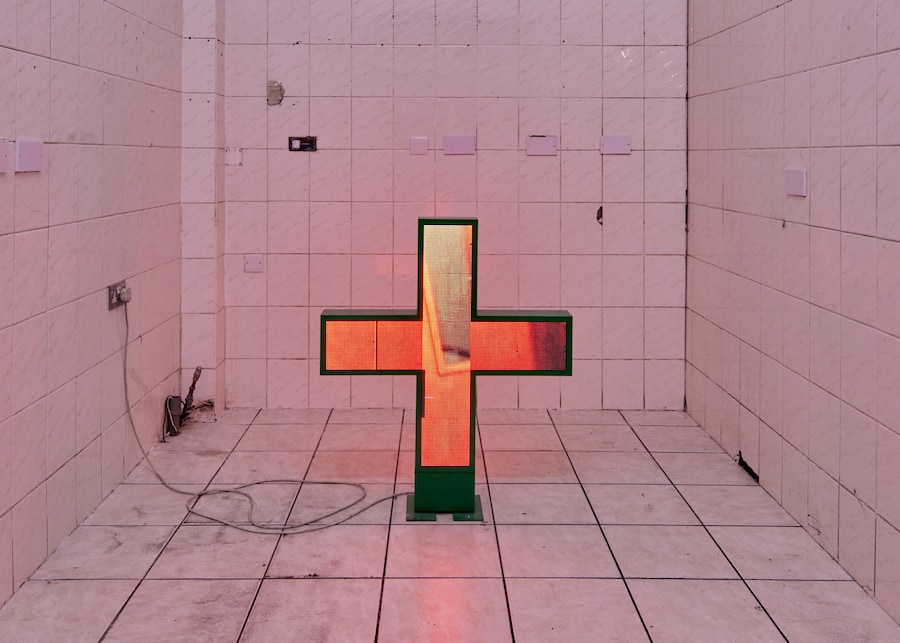
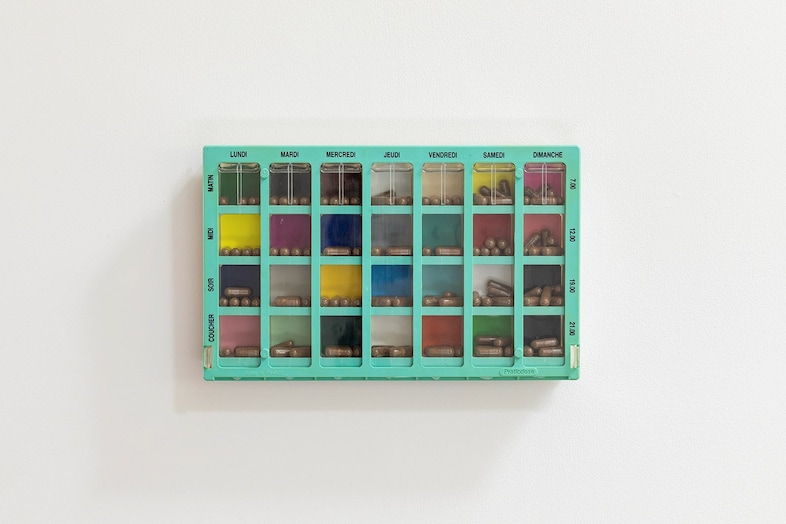
Flare-Up tackles a paucity of language for communicating the varied experiences of sickness and disability. This paucity intersects with poverty, isolation and physical barriers to making. Constellations of citation recur throughout – Benoît Peron’s Pillbox Dungeness Seed Bomb (2018), for example, contains seeds from plants at Derek Jarman’s Prospect Cottage, displayed alongside Jarman’s, Act Up (1992). Lemos explains that here, citation is a mode of community-building that “creates company in isolation”, as well as pointing to ancestral lineage.
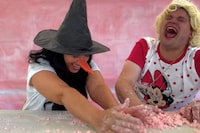
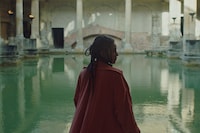
Not all the exhibiting artists identify as crip, a reclaimed term that draws on queer and feminist strategies and forefronts intersectionality. “People kept telling us that we couldn’t use the word [crip],” Lemos notes. “They assumed we didn’t have our own experiences of disability, which disregards invisible disabilities. [Natasha and I] came together through experience of chronic illness.”
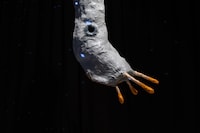
Abi Palmer’s giant Chic Slug (2024), rotating on a disco ball motor, greets visitors to CCA. Soft and sexually fluid, the maligned slug opens up a post-human, speculative strangeness that troubles normative attitudes to the body. Downstairs, the sound and movement of Felix Gonzalez-Torres’s beaded curtain – “Untitled” (Chemo) (1991) – ripples through the gallery. Nearby, Jamila Prowse’s Flare: the muted outline of a body in bed as a camera flash overtakes the scene (2025) traces “the undefined passage of sick time”. Prowse combines image, closed caption and diaristic observations from periods of being bed or housebound, some of which trouble social norms, such as going weeks without washing. The film is profound and moving, recalling Nan Goldin’s unstaged documentation of lives led, in which photography’s distortions and predilections impose their own layers.

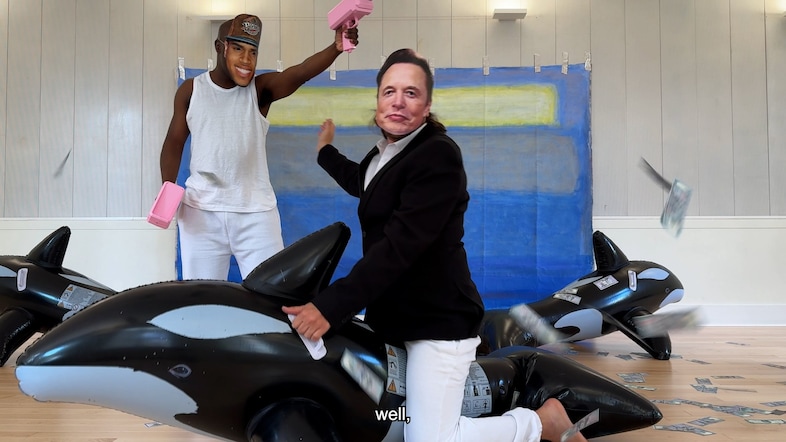
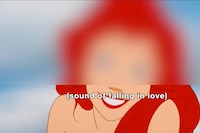
Upstairs, linguistic play introduces beauty and ambiguity, as in the scores from JJJJJerome Ellis’s songbook The Clearing (2021), which propose stuttering as a radical act of refusal against hegemonic and colonial concepts of time and speech. Creative captioning recurs in Christine Sun Kim’s Close Readings (2015). Clips from iconic movies – Ghost, The Little Mermaid – are shown partially blurred and without sound. Sun Kim asked four Deaf collaborators to write interpretations of the scenes, which sit alongside the official closed captions.
Many of the artists are required to work with whatever is within reach. RA Walden collects insect specimens from their immediate vicinity; Bella Milroy writes and draws on the Department of Work and Pensions envelopes containing pronouncements on their support. The envelopes, Hoare notes, speak to “the state’s insertion into your domestic space, landing like a grenade on your doormat.” Never has this felt truer. The UK government has quietly frozen its Access to Work scheme, as well as proposing devastating cuts to Personal Independence Payment (PIP), a lifeline for millions of disabled people. “There’s this infuriating talk of wanting to help disabled people get back into work,” Lemos says, “when the only support that keeps disabled people working has been cut.” While institutional interest in crip art is on the rise, the lives and practices of many of these artists are under severe threat.
.)
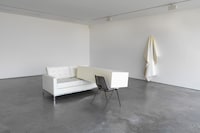
The title of Angela de la Cruz’s Transfer (Ivory) (2011), refers to the action of moving from bed to wheelchair. A coffin-shaped block, the artist’s height, connects a gorgeous Florence Knoll modernist sofa and a Robin Day chair – familiar from schools and hospitals. Lives judderingly intersecting. “Can’t think, too sick,” are the final, heartbreaking words of Lizzy Rose’s spermwhale in Sick, blue sea (2018). Rose, an artist and activist who died in 2022, aged 33, after a long struggle with Crohn’s disease, co-created the Access Toolkit for Artists along with Leah Clements and Alice Hattrick. Such toolkits have proved crucial for crip artists and art workers in the UK, and the discourse feeds into CCA’s adjustments, which include creative audio descriptions recorded by multiple voices. The approach demonstrates that access can play an active role in exhibition-making rather than becoming a checkbox exercise.
The exhibition ends with a joyful installation by Freestylers, a disability-led collective of neurodivergent people, whose live dance and movement sessions feature in Honey You Are Art (2024). This is shown in a room strewn with emergency foil blankets, Freestyler members’ paintings and oversized shoes to be tried on. This is the largest institutional exhibition in London to cover these themes. Hoare notes, “We’ve experienced a bit of pushback. People saying, Oh, that’s niche, that’s not for me. It’s an extraordinary response. [These issues] interlink to every aspect of human rights.” It’s exhibitions like Flare-Up, I wager, that will help shift this attitude.
Flare-Up is on show at Goldsmiths CCA in London until 16 August 2026.
