
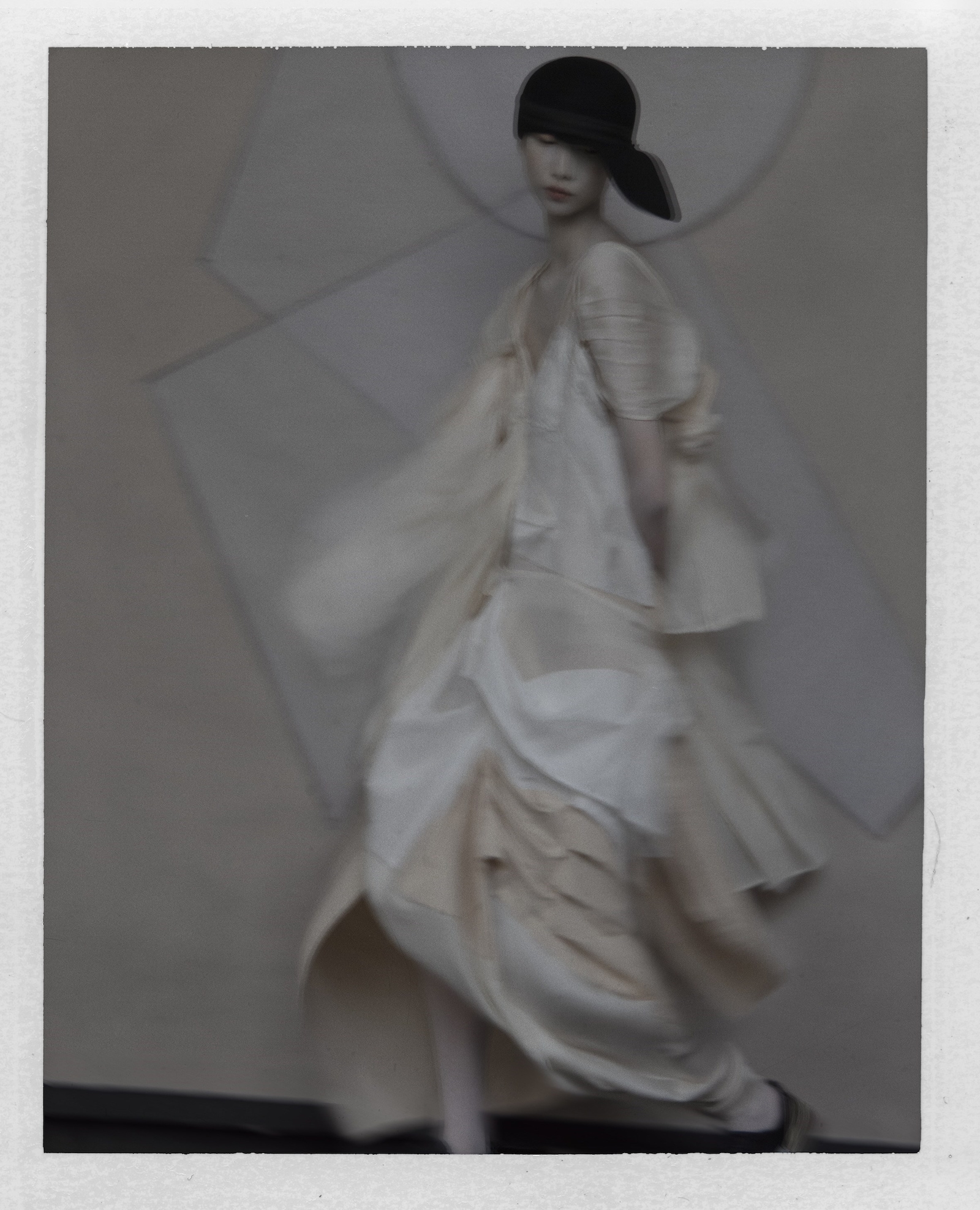
Since rising to prominence in the 1970s, photographer Sarah Moon has enchanted audiences with her ethereal work, which has a painterly and abstract texture that renders her images dreamlike and a little ghostly. She’s said before that she likes to give her photography a literary frame, and her images – which hint at consuming narratives bigger than a single shot – possess a way of seeing that is darkly romantic.
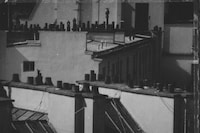
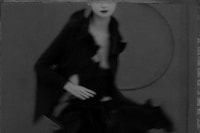
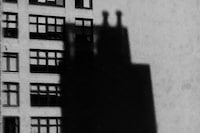
“Sarah believes strongly in the atmosphere of a photograph or picture, rather than simply documentation,” says her gallerist Michael Hoppen, who has worked with Moon for 37 years. Today, the gallery opens a new exhibition of her work spanning 2003 to the present, the fifth solo show in a nearly four-decade collaboration. “Rather than simply photographing clothing, she aims to capture the ‘indescribable ambiences’ and the ‘evanescence of beauty’. She described the process of working at the archives as being in a ‘precious casket.’” That fatalistic outlook is also articulated in the words of her late husband, the French publisher Robert Delpire, who wrote that “Sarah knows instinctively that the petals fall too soon,” when publishing a five-volume survey of her work.
Designers including Dior, Comme des Garçons, Chanel and Yohji Yamamoto have sought her eye over decades-long collaborations that even now, in her eighties, show no sign of ending. Most remarkably, she works with an almost unprecedented artistic freedom and does not take briefs. Instead, she imbues her commercial shoots with her unique poetic authorship, in a true collaboration between designer and photographer.

When she was artistic director of Christian Dior, Maria Grazia Chiuri once said of Moon’s collaboration with the house: “Sarah Moon’s signature resides in her capacity to give form to unconscious movements and retrospective intuition and in her aptitude to image indescribable ambiences. For all these reasons, her vision is perfect for transcribing the story told by my creative process for the Dior collections: that of a woman anchored in her epoch, drawing her strength by listening to her emotions.”
Moon’s intuitive approach feels its way into form. “As soon as I take something out of its context, I am already in a fiction,” she tells AnOther. “At the beginning, to make sense of what I was looking for, rather than a story, I used to create a situation. I don’t do that anymore; I feel I am always expecting a story that I don’t yet know. It is as if the instant I am wishing for and trying to provoke with all my strength will carry the story itself.”
, 2022)
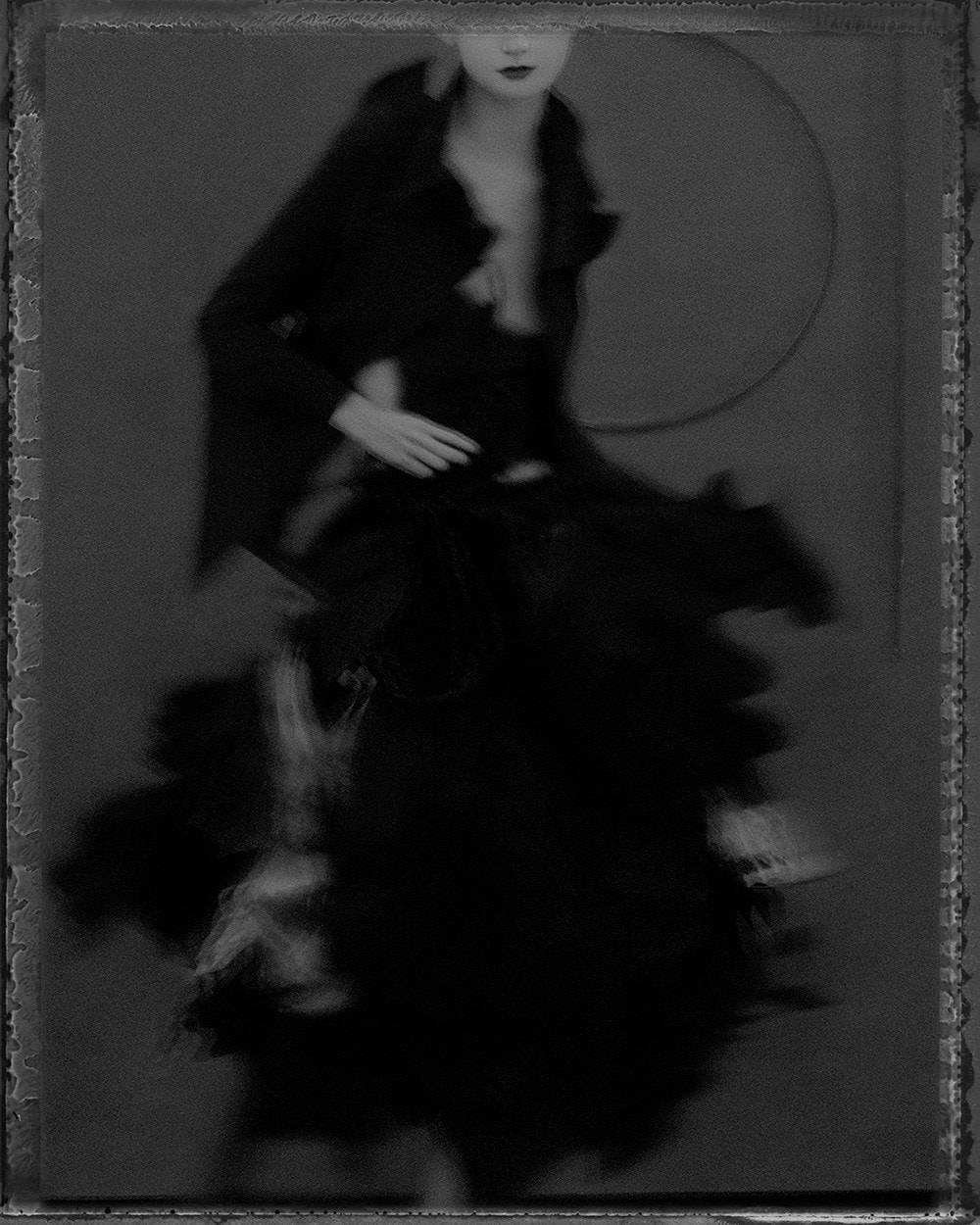
“That is what drives my creative energy, knowing there is something ethereal, something different in the air” – Sarah Moon
It’s a sensibility that occupies the same universe as French poetic realism, in particular the doomed romanticism of director Marcel Carné’s fog-misted streets, stalked by a melancholy Jean Gabin in the 1938 film Quai des brumes. “When I go outside, it is more about an echo between the world and me that I am looking for,” says Moon.
“I remember Jean Gabin said in Quai des brumes, ‘When I see someone swimming, I see someone drowning.’ Maybe that is the story of my photography. I photograph privilege; illusion; evanescence; unlikeness; and beauty. Then I seek for an emotion. It seems an even more hopeless quest … but I get there and my friends and models trust me to deliver something very unusual – that is what drives my creative energy, knowing there is something ethereal, something different in the air.“

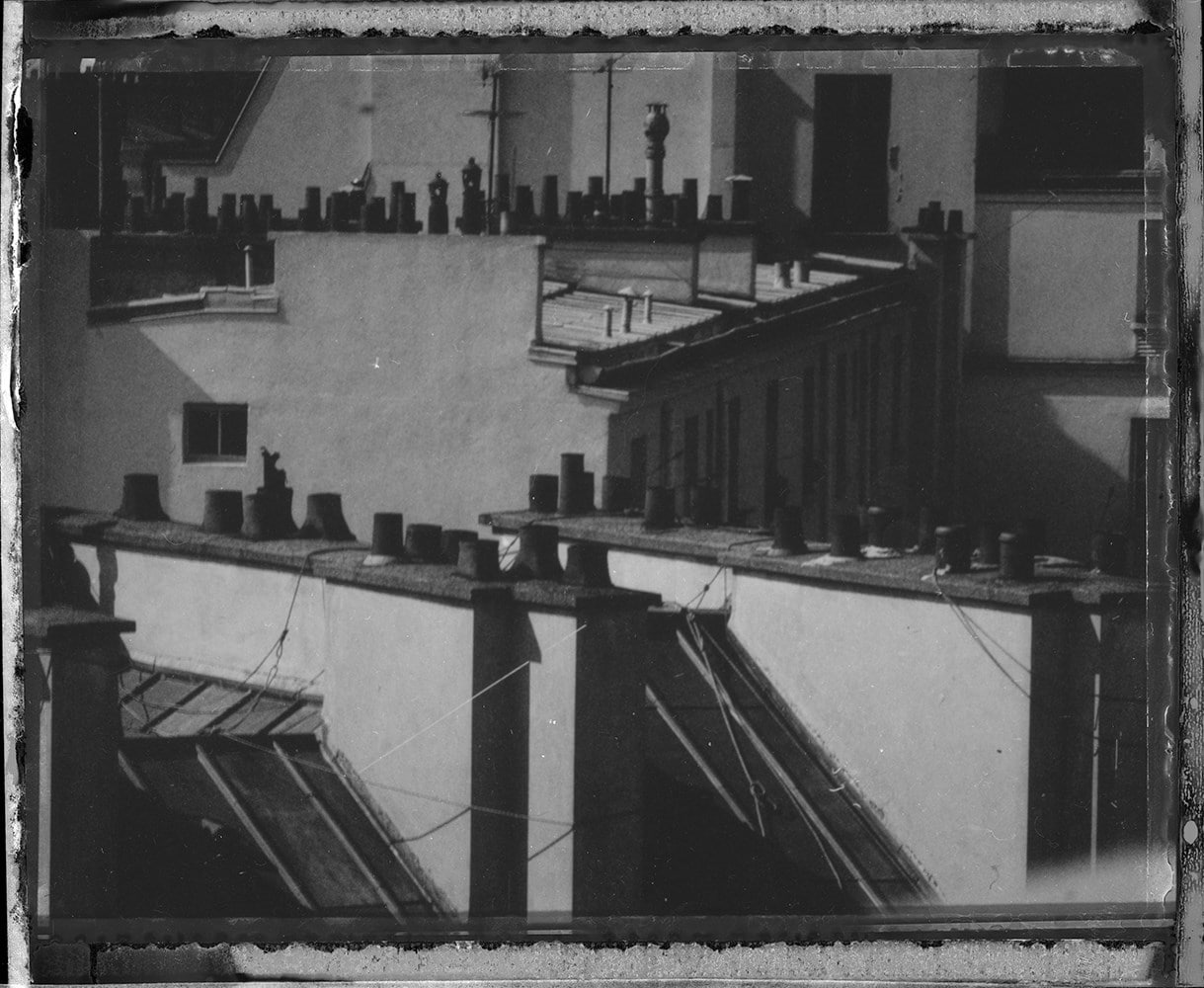
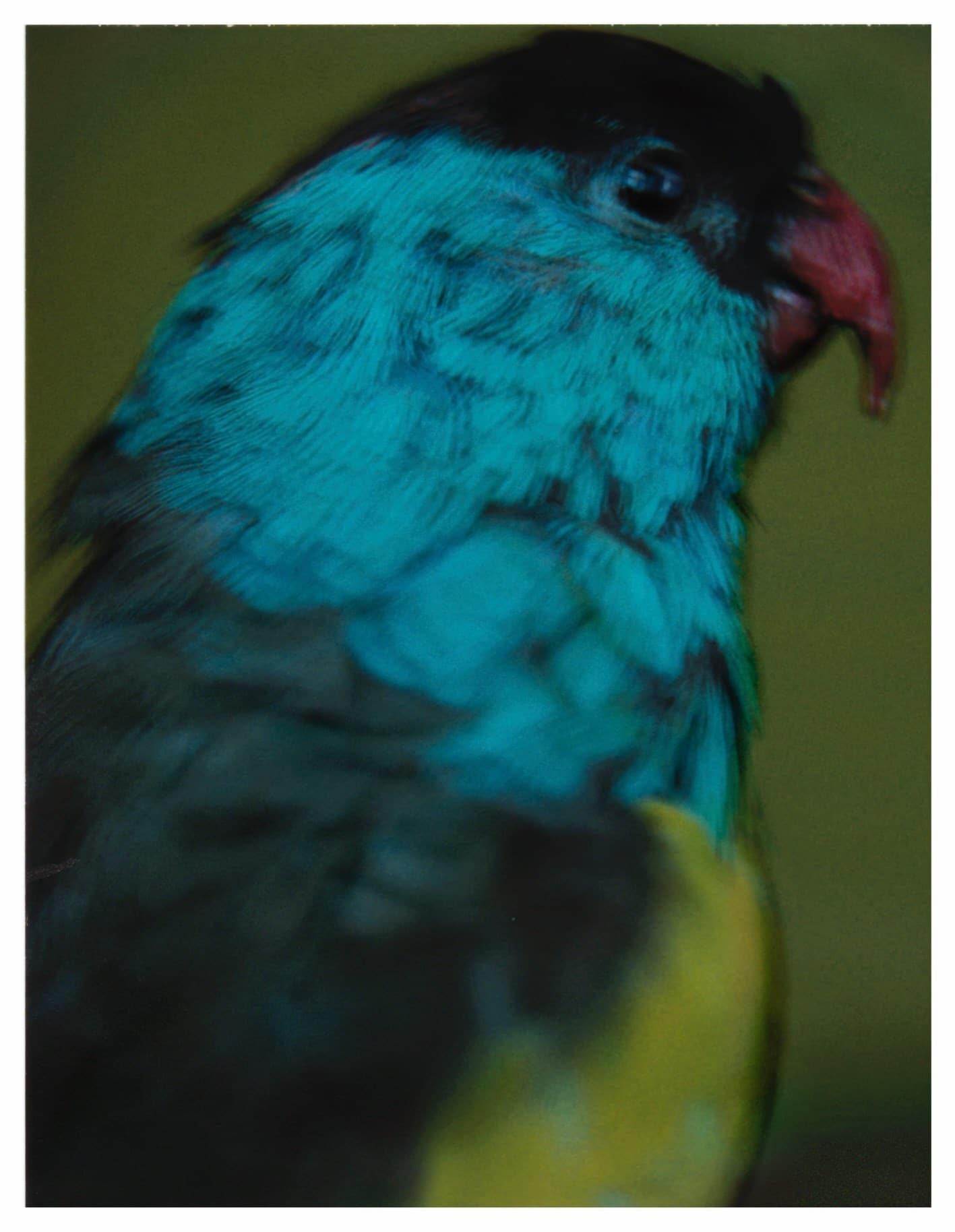
In the printing, the dream takes material form through a careful process executed with trusted craftspeople, also responsible for informing Moon’s later adoption of saturated colour. She has worked for many years with her printer Todd, a relationship Hoppen describes as fundamental, each knowing instinctively what the other expects.
She shoots with the process in mind: pigment transfer, a handmade technique not unlike dye transfer, invented by Adam Lowe at Factum Arte – “one of the great printers of recent years,” says Hoppen. “There is no mechanical process,” he explains. “Being printed by hand using pigment separations gives Sarah’s colour work that thick, rich colour appearance that is her signature and is like no other.” For Hoppen, the work is timeless: “Fashion photography feels less relevant today,” he says, “but somehow Sarah’s work remains and exists outside simply fashion. Her images refuse to become tired and derivative – they are so much more than simply a fashion photograph.”
Sarah Moon is on show at Michael Hoppen Gallery in London until 17 July 2026.
