
From shows by Richard Prince, Arthur Jafa and Marina Abramović, here are seven standout shows you don’t want to miss at the 61st Venice Biennale
The Venice Biennale, now in its 61st edition, is the world’s oldest and most influential international art exhibition. Since its founding in 1895, every two years, it brings with it a fresh constellation of artists, newly conceived national pavilions, and a host of exhibitions unfolding across the city. This year’s edition, however, arrived amid extraordinary political turmoil, with protests, pavilion closures, and the resignation of the Biennale jury following disputes over the participation of Israel and Russia dominating headlines alongside the art itself. The political tensions surrounding this year’s Biennale have inevitably informed how the exhibitions are seen, discussed, and experienced.
Here are seven exhibitions across Venice’s palazzos, galleries and pavilions that stand out amid it all.
, 1969/2019)
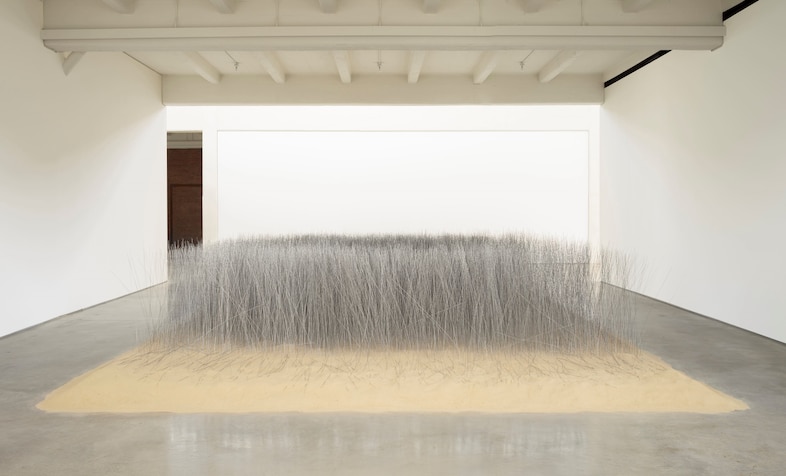
Lee Ufan at San Marco Art Centre: Until 22 November, 2026
Before you settle in for an aperitivo in St Mark’s Square, head to South Korean artist Lee Ufan’s exhibition at San Marco Art Centre Venice (SMAC), set within the historic Procuratie overlooking the piazza. Organised by the Dia Art Foundation and curated by Jessica Morgan, the presentation spans eight galleries, bringing together more than a dozen paintings from 1978 to the present and three major sculptural installations.
The artist, who turns 90 this year, is a founding figure of Mono-ha, a late 1960s Japanese movement that placed raw materials such as stone, steel and glass into direct relation, and a key voice within the Dansaekhwa (monochrome painting) movement in Korea.
The exhibition unfolds chronologically, beginning with the seminal From Point and From Line works of the late 60s and 70s, where repeated, measured gestures track the gradual depletion of pigment. Made with the canvas laid flat, these early paintings establish Lee’s enduring focus on time, process, and the relationship between mark and emptiness. By the 80s, that restraint loosened in the From Winds and With Winds series, where broader, more fluid strokes sweep across the surface, guided by the rhythm of the artist’s breath. Later works, including Correspondence and the now-iconic Dialogue paintings, return to a pared-back language, often structured around a single, deliberate gesture. In the more recent Response series, colour takes on greater prominence, with elongated marks shifting through tones of red and blue. Hold out for the final room, where Lee Ufan’s site-specific paintings are made directly onto the walls and floor, attuned to Venice, where such surfaces have long served as sites for artistic intervention. Once you’re done, there’s an Alighiero Boetti exhibition just along the corridor that’s well worth your while.

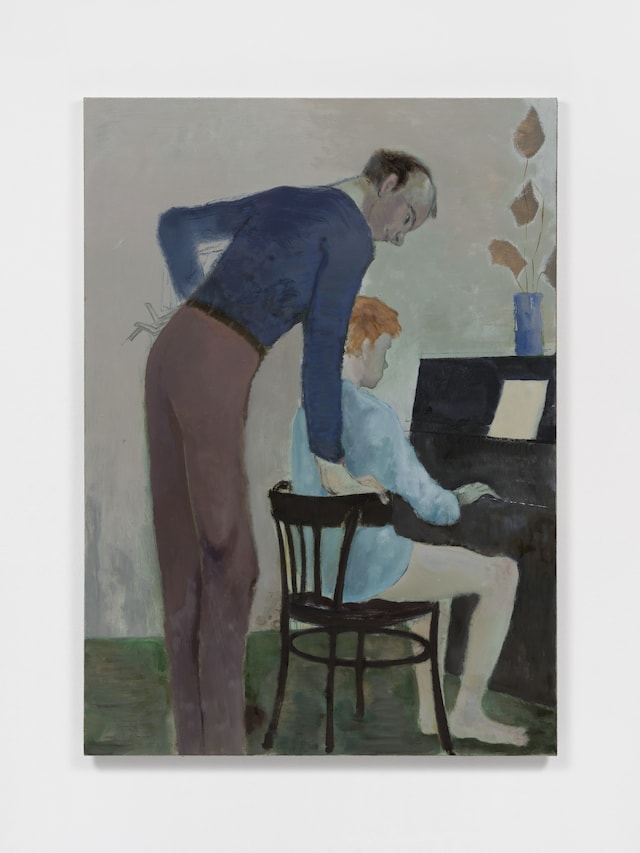
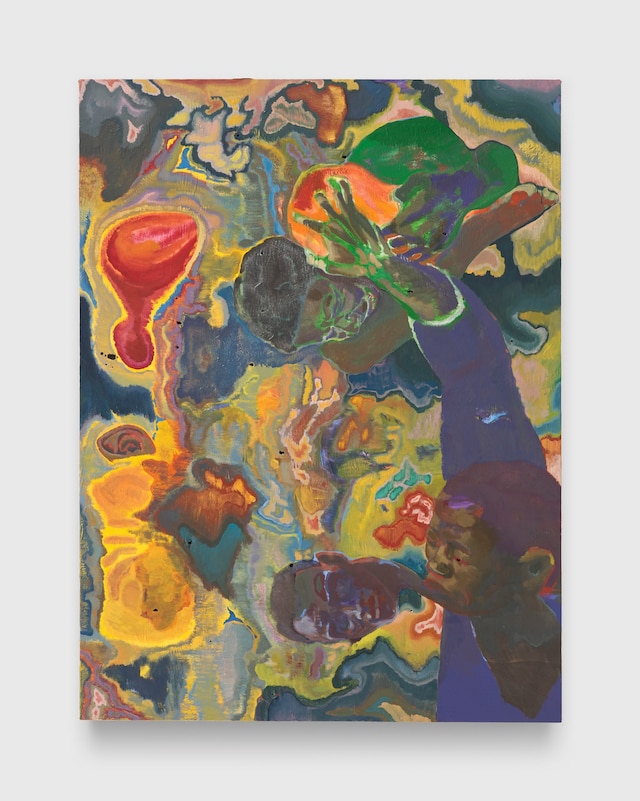
If you’re looking for painting, Sanya Kantarovsky’s exhibition is among the strongest on display in Venice this year. On view at Palazzo Loredan, home to the Istituto Veneto di Scienze, Lettere ed Arti just off Campo Santo Stefano, the show unfolds across a sequence of book-lined rooms, their Murano glass chandeliers casting shifting shadows over the works below.
Born in Moscow and raised in New York, Kantarovsky brings a painter’s sensitivity to an interdisciplinary practice. His figures, with their spindly limbs and elongated forms, bring to mind artists such as Egon Schiele and, more recently, Kai Althoff, probing states of vulnerability, alienation and uneasy intimacy. The paintings range from a dying centaur to a terrier-sized dog on a bed set against a Rothko-like block of colour, and figures with long, spindly fingers clutching a cigarette.
Up close, areas of chalky flatness sit beside slick, fluid passages of oil; elsewhere, pigment appears thinned, pooled or partially erased. Again, hold out for the final space, where a Murano glass bust, its eye encasing a spider, sits within a small chamber of intricately carved relief walls, the kind you’d expect in a Venetian palazzo. It’s a reminder that seeing contemporary work in these historic interiors is one of the real pleasures of Venice, lifting it beyond the usual white cube.
, 1999)
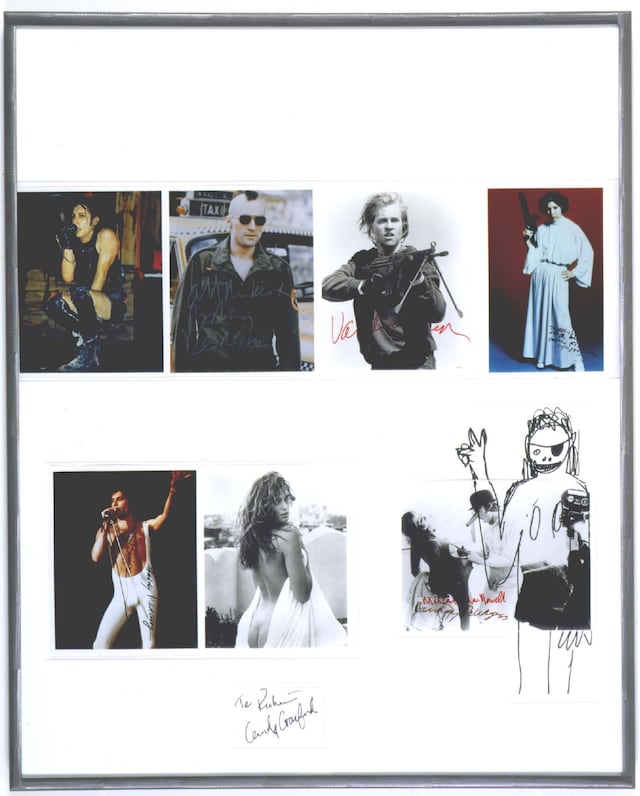
Helter Skelter: Arthur Jafa and Richard Prince at Fondazione Prada: Until 23 November, 2026
Speaking of the pleasure of seeing contemporary art set against the dazzling interiors of a Venetian palazzo, head to Ca’ Corner della Regina, Fondazione Prada’s Venetian venue, where American artists Arthur Jafa and Richard Prince are brought together for the first time.
Curated by Nancy Spector, Helter Skelter places the two artists side by side, bringing them into conversation through their shared use of appropriation. Both draw from the vast churn of popular culture, pulling images from film, music, magazines and the wider visual landscape, reworking them to very different ends. Prince returns to familiar territory. Biker women lifted from pulp magazines, muscle car hoods reworked into sculptural forms, and an unfinished chopper all point to his long-standing fascination with desire, masculinity and the mythology of America. Jafa, by contrast, turns to moving image, assembling fragments into charged sequences that confront the histories and lived realities of Black experience. The exhibition unfolds across the palazzo’s ground and first floors, moving between photography, sculpture, video and installation, with more than 50 works in total.
Amid it all, make time to sit with Love Is the Message, The Message Is Death (2016), Jafa’s now-iconic seven-and-a-half-minute film. Built from his deep archive of found footage and set to Kanye West’s Ultralight Beam, the work cuts between fragments of Black life in America, from the police killing of Walter Scott to Barack Obama singing Amazing Grace after the Charleston church shooting, and a couple holding each other in the floodwaters of Hurricane Katrina. These sit alongside appearances by figures such as Nina Simone and Serena Williams. Years in the making and first shown at the outset of Donald Trump’s presidency, it’s not something to pass by.

The Promise of Change by Michael Armitage at Palazzo Grassi: Until 10 January, 2027
As a rule of thumb, anything staged at François Pinault’s Venetian venues, especially during the Biennale, is worth your time. The Punta della Dogana, a former customs house reimagined by Tadao Ando, hosted Pierre Huyghe’s sprawling 2024 exhibition, an artist whose immersive environments seem made for spaces of this scale. Then there’s Palazzo Grassi, the grand classical counterpart on the Grand Canal, also reworked by Ando, which this year plays host to the monumental canvases of Kenyan-born, London-based painter Michael Armitage.
Installed across the piano nobile, the exhibition brings together 45 paintings and more than 100 studies and drawings from the past decade. Rooted in East Africa – Kenya in particular – Armitage’s works move between the political and the allegorical. Scenes from the 2017 elections, which he witnessed while accompanying a television crew at Nairobi’s Uhuru Park, unfold with a charged, almost carnivalesque energy. Elsewhere, images of pandemic lockdowns or migration take on a more elusive, dreamlike quality.
Central to the work is his use of lubugo, a traditional Ugandan bark cloth made from the inner bark of a ficus tree. Its fragile surface, cracked, punctured and stitched, becomes part of the composition, seams running through the image like veins. Up close, the paintings feel raw and unsettled. Step back, and they cohere into richly layered scenes that at times recall Goya or Gauguin, while remaining grounded in contemporary East Africa.
Over at Punta della Dogana, parallel presentations see Lorna Simpson fill the galleries with more than 50 works spanning video, sculpture and painting, while Paulo Nazareth’s exhibition Algebra transforms the former customs house through works shaped by migration, colonial histories and trade routes.
, April 1936)
Did you know that Peggy Guggenheim gave a teenage Lucian Freud his first appearance in a public gallery? His oil painting Old Men Running (1938) was included in a group exhibition that year at her Cork Street space, Guggenheim Jeune. The gallery lasted just 18 months and staged fewer than 20 exhibitions before closing due to financial strain. Yet in that short time, the gallery helped launch artists such as Eileen Agar, Salvador Dalí, Barbara Hepworth and Piet Mondrian, championing abstraction and surrealism at a time when London was far from being the contemporary art hub it is today.
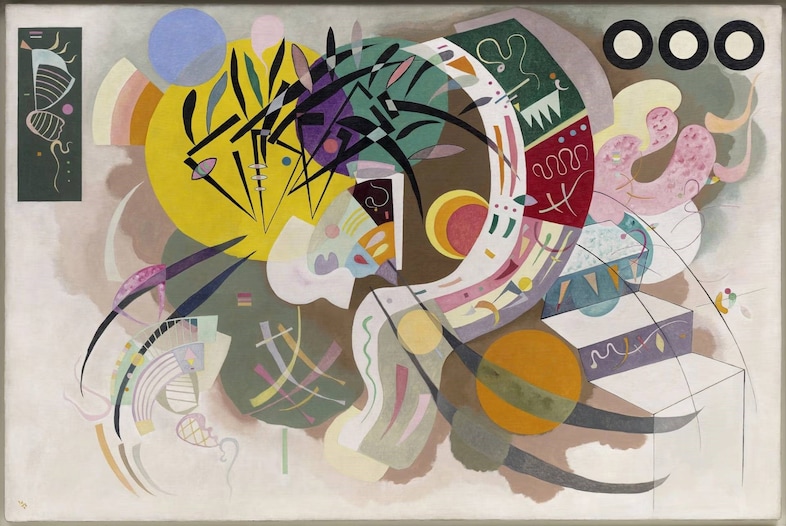
In 1949, after the gallery’s closure and the end of the Second World War, Guggenheim relocated to Venice, installing her collection, including many works first shown in London, in the Palazzo Venier dei Leoni. This month, that same building hosts an exhibition of more than 100 works, bringing together key pieces from those pioneering London shows. Among them are works by Jean Cocteau, who had his first monographic exhibition with the Guggenheim in London, and Wassily Kandinsky’s pivotal Dominant Curve (1936).
Curated by Gražina Subelytė and Simon Grant, the exhibition’s brilliance lies in its structure. It unfolds show by show, recreating Guggenheim Jeune’s original programme, with archival posters and press materials displayed alongside the works. You begin with key abstract and surrealist works that defined the gallery’s short but intense run, with artists such as Eileen Agar, Jean Arp, Barbara Hepworth, Wassily Kandinsky and Piet Mondrian setting the tone. From there, the exhibition moves into the gallery’s solo presentations, returning to Kandinsky alongside Marie Vassilieff, whose “portrait dolls” feel surprisingly contemporary. As you move through, look out for the section on modern sculpture, alongside portraits by Cedric Morris and presentations tied to Atelier 17, the influential printmaking studio founded by Stanley William Hayter. There is also a reconstruction of the Abstract and Concrete Art exhibition, with works by Mondrian, Sophie Taeuber-Arp and others.
If you can’t make it to Venice this year, fear not: the exhibition will travel to the Royal Academy of Arts in November 2026, before heading to the Guggenheim in New York in spring 2027.
 Shanghai)
Transforming Energy by Marina Abramović at Gallerie dell’Accademia: Until 19 October, 2026
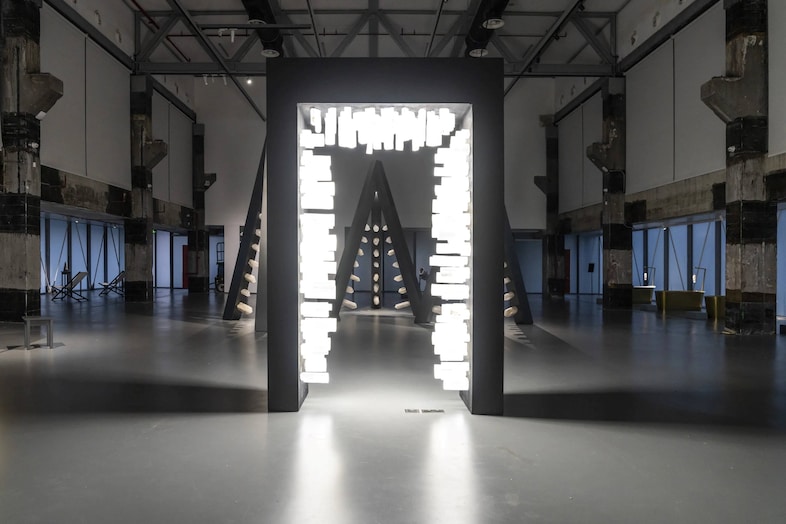
She’s already made the history books as the first female artist to have a solo show at the Royal Academy of Arts in London. She was also the first woman artist to receive the Biennale’s Golden Lion. Now she’s got another accomplishment to add to the CV: the first living woman artist to be honoured with a major show at the Gallerie dell’Accademia in Venice. In a first for the institution, the exhibition unfolds across both permanent galleries and temporary spaces, placing Abramović’s performance practice in dialogue with Renaissance masterpieces. And if it needed any further sense of occasion, the exhibition coincides with Abramović’s 80th birthday.
So what can we expect from Transforming Energy? Well, it’s as close to a retrospective as you can get without calling it one, bringing together key works from Abramović’s early career – Rhythm 0 (1974), Imponderabilia (1977), Light/Dark (1977) – alongside a number of new pieces created for the occasion. Her participatory practice is foregrounded through the Transitory Objects – the first works in which she invited the public to participate – stone beds and crystal-embedded structures activated by lying, sitting, or standing. The exhibition revisits Balkan Baroque (1997), the Golden Lion-winning performance in which Abramović sat for days in the Venetian head, scrubbing blood from a pile of 1,500 butchered cow bones, in memorial to the Bosnian War. And Titian’s Pietà – on the 450th anniversary of the artist’s death – meets Pietà (with Ulay) (1983), a photograph of Abramović and her former partner echoing the composition of the Virgin Mary cradling Christ.

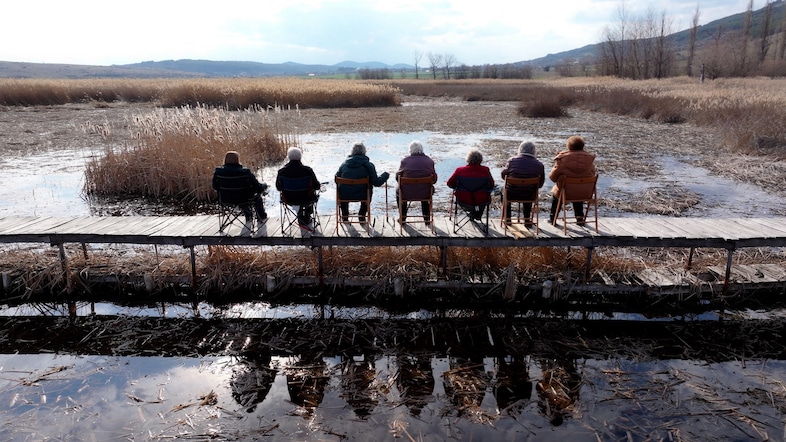
Pavilions at the Venice Biennale often come with queues. Some are worth the wait, others less so. If your strategy is to pick one and commit, make it the Bulgarian Pavilion. Titled The Federation of Minor Practices, this year’s presentation imagines the pavilion as the headquarters of a fictional research lab operating within a future shaped by care, collective attention and alternative political structures. Curated by Martina Yordanova, currently curator at the National Gallery of Bulgaria, the project looks back from an imagined future to the early 21st century as the moment when these conditions first began to emerge. It also marks the first time these four artists have been brought together within a single curatorial framework.
At its core are four newly commissioned films, each approaching that premise from a different angle. Gery Georgieva’s UWU Channel Radiance channels digital mythologies and online identities. Veneta Androva’s Spray and Pray probes the mechanics of disinformation through algorithmic systems. Rayna Teneva’s Geography Is Destiny traces the uneasy coexistence of care and violence in Bulgaria’s Rose Valley. Maria Nalbantova’s work at Dragoman Marsh centres on ecological care and local narratives.
The pavilion is located in Sala Tiziano at the Centro Culturale Don Orione Artigianelli in Venice, part of a 15th-century complex originally set up by the Jesuits as a place of care, later becoming a monastic site. It’s just a short walk from the Gallerie dell‘Accademia, so easy to swing by before heading over to Marina Abramović’s show nearby.
