, 1989)
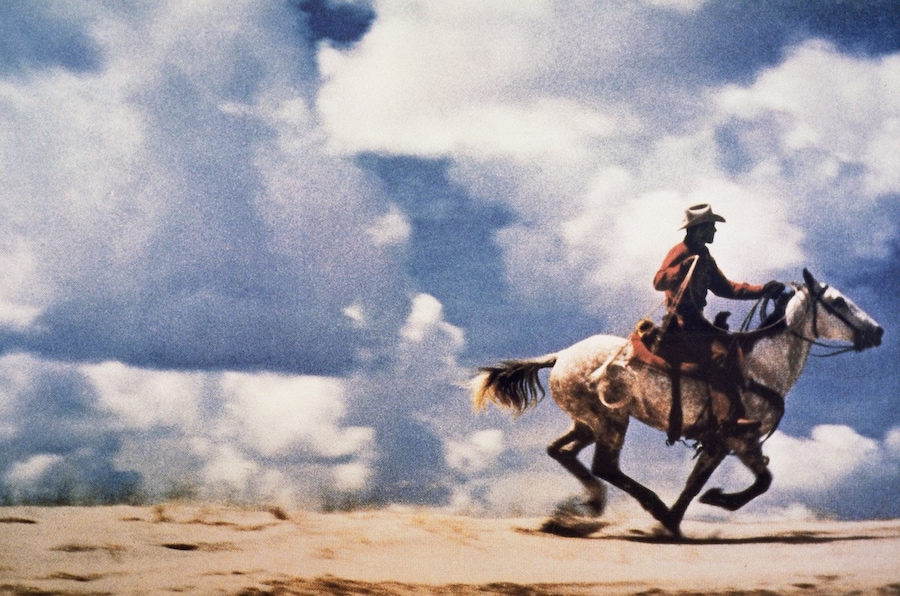
Bringing together some 150 works, a new exhibition in Vienna shows how the American conceptual artist transformed our understanding of photography, and how we see the world
Few artists have probed the authorship, seduction and afterlife of circulated images as persistently as American conceptual artist Richard Prince. At the Albertina Museum in Vienna, a major exhibition brings together some 150 works, many never shown before. Focused on Prince’s photographic oeuvre from the 1970s to the present, it includes seminal series such as Fashion, Gangs and Cowboys, alongside sculpture, painting, collage and autobiographical imagery. Together, they broaden the view of Prince as a master of appropriation art in photography, dissecting the myths and media codes of American consumer culture.
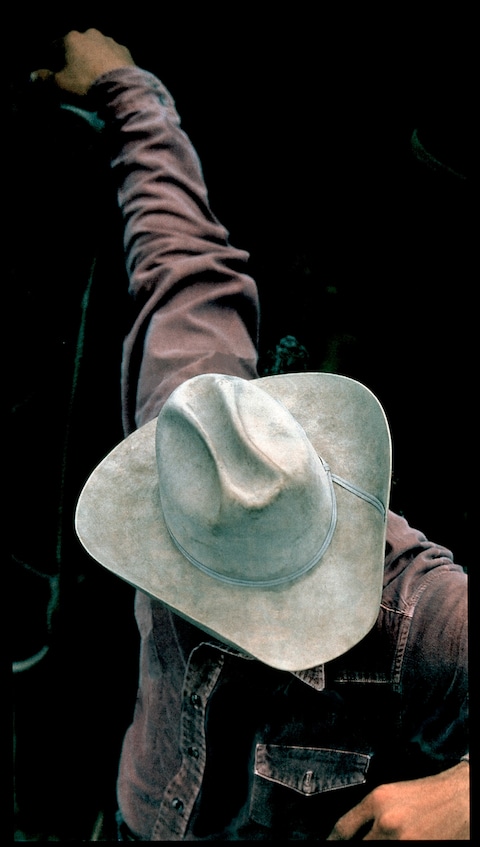
The exhibition opens with one of Prince’s signature Cowboy photographs from 1999, introducing a series central to his career. Seductive, cinematic and instantly recognisable, it stages the core tension of his practice: Prince’s work is deeply analytical, attuned to semiotics, cultural signifiers and coded visual language, yet alert to the aesthetic seduction of the images he appropriates. Associated with the Pictures Generation and appropriation art, Prince emerged in New York in the late 70s and early 80s alongside Cindy Sherman, Sherrie Levine and Barbara Kruger, all of whom questioned authorship, originality and the authority of images. As Dr Walter Moser, chief curator of photography at the Albertina Museum, notes, “Prince could be described as someone brought up through cinema and television.” Drawing on advertising, film, popular culture and consumer America, Prince made the already-circulated photograph the raw material of his practice.
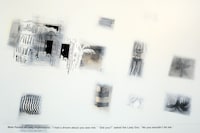
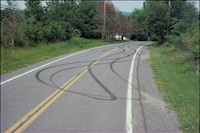
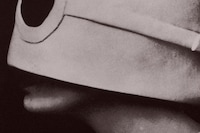
Questions of authorship and authenticity emerge in the introductory room through Magic Castle, a slide projection combining Prince’s own photographs with dia slides of postcards he collected. Shown here for the first time in its full assemblage, the work keeps the distinction unresolved. “Is the viewer looking at Prince’s own photograph, or at an image already made, circulated and consumed?” asks Moser. “It’s not about the death of the author, but about giving the author a new life.”
Through rephotography, manipulation and montage, Prince gives pre-existing images renewed authorial life and emphasises their signifying codes. As Moser suggests, the exhibition’s core concerns come into focus: “Can we ever look at the world with fresh eyes, or is our perception always already shaped by images, media and pictorial traditions?”
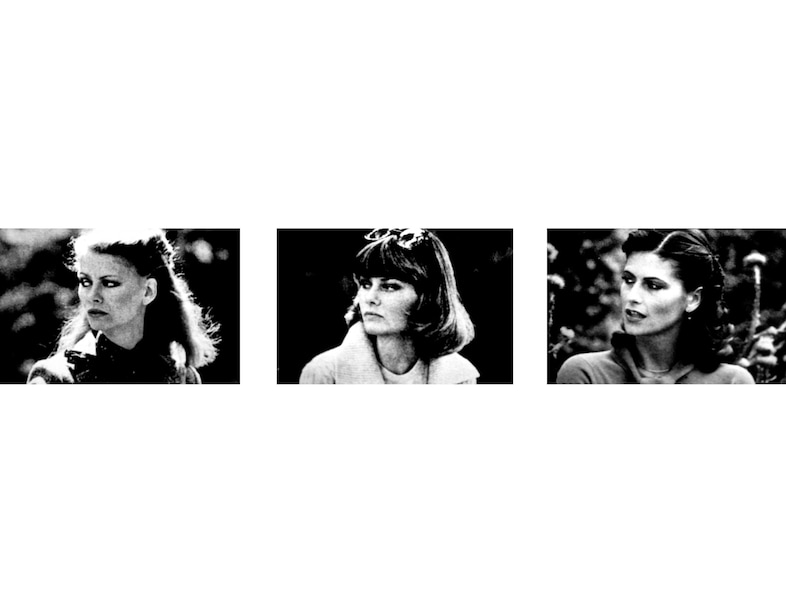
Beyond the introductory room, Prince’s vast works fill an expansive, open space. Untitled (Three Women Looking in the Same Direction) (1980) presents a striking triptych-like arrangement of three female models, framed as rephotographed advertisements. With all three women facing left, reminiscent of a film strip, the work functions as a visual cue: through Moser’s curatorial placement, it points towards Prince’s renowned Cowboys series.
Its technical qualities echo Prince’s early practice. After moving to New York in 1973, his work in the clipping department at Time-Life Inc, producing magazine tear sheets, sparked his interest in appropriating advertisements. Using a small 35mm camera, Prince rephotographed printed images, cropping out text, logos and commercial context. Removed from their original function, they acquired an uncanny charge within the museum.
, 1980)
Early sequenced motifs, from luxury interiors and Dunhill pens to watches and fashion models, reveal Prince’s interest in the semiotics of visual media. As Moser explains, “crucially, the materiality of the printed photograph remains visible: its grain, blur and traces of reproduction. By grouping related subjects and repeating motifs, Prince exposes the visual codes through which media address us.” In Untitled (The Same Man Looking in Different Directions) (1978) and Untitled (Watches) (1978), masculinity, success, luxury and power recur as culturally coded ideals.
These works also expose gendered stereotypes in American popular culture. “Women look away from the viewer, out of the frame, and in the same direction, while male models are presented in urban contexts and dominate the gaze by confronting the camera directly,” says Moser. Prince pushes this further in Untitled (Richard Prince and Cindy Sherman) (1980), where he and Sherman “wear identical wigs and make-up, and become difficult to distinguish from one another.”
Elsewhere, appropriation merges with montage. In the C-print Fashion series (1982–1984), Prince rephotographed fashion magazine images in black and white, then again through colour, creating a subtle violet tone. Cropped, enlarged and stripped of visible eyes, they become unsettling. In Entertainers (1982–1983), he drew on black-and-white magazines portraying sex club performers near Times Square. Rephotographed and layered with colour foils, the images become fragmented, echoing the venue’s stark colour contrasts.
Spiritual America IV (2005) addresses the controversy around Prince’s original Spiritual America (1983). The original work appropriated Garry Gross’s controversial nude photograph of Brooke Shields at age ten; its title was borrowed from Alfred Stieglitz’s 1923 image of a castrated horse, a critical metaphor for American society. Prince exposes the structures around the rephotographed image: authorship, ownership, money, publicity, legal rights and exploitation. Photographed by Sante D’Orazio in collaboration with Richard Prince, Spiritual America IV shows Shields as an adult, restaging the image on her own terms and regaining authorship and power within its history.
, 1999)
In Gangs, Prince combines three photographs from various sources, advertisements, magazines, popular culture and subculture, within a single frame, interrogating how photography shapes reality rather than simply recording it. Meaning shifts according to what an image sits beside; each work becomes “a kind of small exhibition within a frame.” The title refers both to a group and to the darkroom technique of printing several images together.
In Cowboys (1989–1995), Prince rephotographs Marlboro advertisements, cropping away logos and text until the commercial image becomes myth: freedom, masculinity and the American West. Yet the series also “deconstructs that myth, especially in 80s America, when Ronald Reagan, a former Hollywood Western actor, was president.” The Girlfriends series draws on amateur biker magazine photographs of women presented as bikers’ girlfriends, posing with motorcycles. Like the cowboy, the motorcycle suggests freedom and emancipation, while raising questions of gender, performance and the male gaze.
As so often in Prince’s work, “the image remains unstable, layered and unresolved.” Does rephotography expose controversy, or claim the evocative image for itself? Refusing fixed answers, Prince’s work teeters between affirmation and critique: exploitative or liberating, seductive or critical, personal or commercially constructed. “Prince analysed how photography transforms our perception of the world,” says Moser. Photographs do not simply reflect reality, but “shape identity, desire and the way we see the world.” In a culture of copied and circulated images, shaped by misinformation and visual manipulation, Prince’s question cuts sharply: “If the copy is the original, what does that make the original?”
Richard Prince is on show at the Albertina Museum in Vienna until 16 August 2026.
