
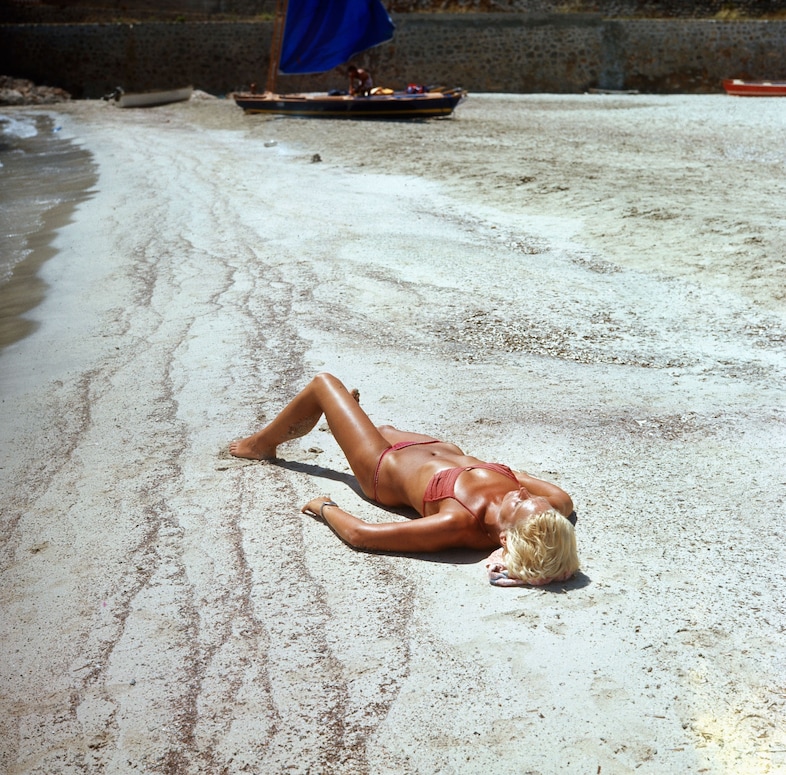
A new book uncovers Walter Rudolph’s sun-drenched photographs of the White Isle as it veered on the cusp of mass tourism and superclubs
History has a peculiar hold over certain places, forever dangling the memory of an earlier, often better time over us. Ibiza is one such place, where different generations will always say theirs was the last to experience it before its supposed ruin. What we can say for certain is that 50 years ago, when German photographer Walter Rudolph went there with his camera in tow, the island – large parts of it, at least – would have been unrecognisable compared to today.

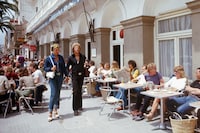
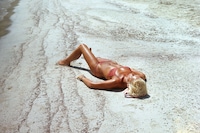

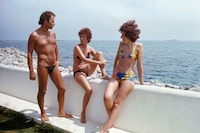
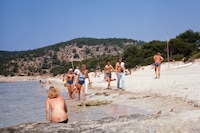
By the mid-1970s, the kernels of nightlife culture were already there (Pacha opened in 1973) and tourism was on the rise, but Ibiza was still an outpost for bohemians, a few years away from becoming the land of superclubs. “It was just in that sweet spot between still being in the past and being popular,” says Emma Salahi, owner of Ibiza’s Agony + Ecstasy Gallery, which is publishing a new book of Rudolph’s photographs that document this juncture in the island’s history.
A commercial photographer who often travelled for work, Rudolph was brought to Ibiza by the airline Iberia, yet his photographs extend far beyond the typical lifespan and purpose of a campaign. Reimagined through an editorial lens, the photographs stand today as a visual diary of Ibiza’s duality as both a tourist destination and island community. Local doñas go about their own business while revellers drink, shop and sunbathe away the daylight hours dressed in a 70s summer uniform of either billowing flares or barely-there swimwear.
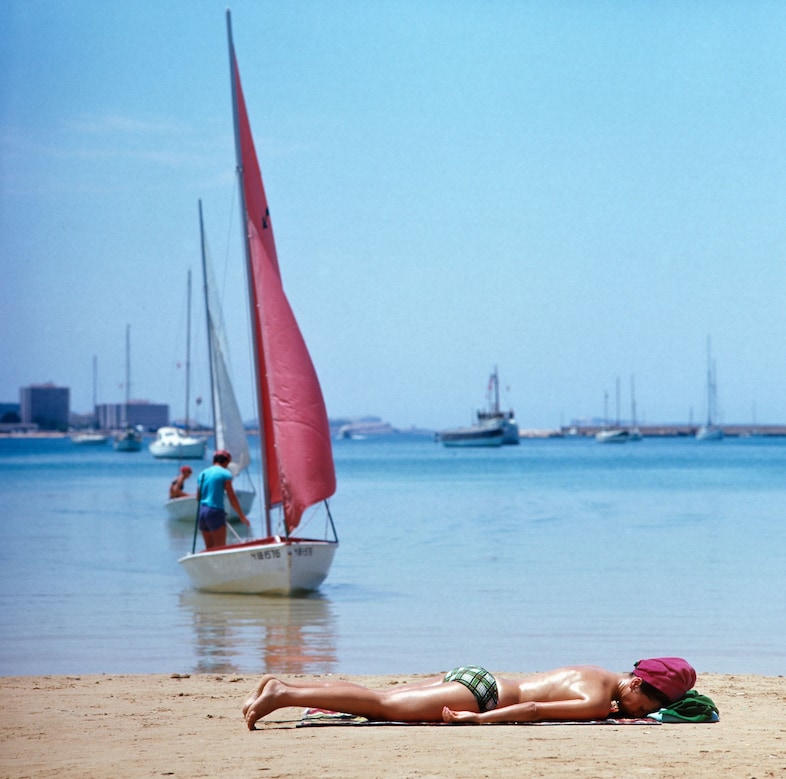
Shot on Kodak film and a square format camera, Rudolph’s images are imbued with a sun-kissed optimism. “I think he made Ibiza look very glorious, which it is. He very much relied on natural light. You can feel the heat through those photographs,” says Salahi. “He really did have a great way of capturing sunlight, colours and people. It takes you there instantly.” So much visual storytelling around Ibiza’s history unfurls in the loud yet darkened interiors of after-hours clubs, making Rudolph’s vivid collision of traditional whitewashed walls, honey light, azure skies and seas feel even more potent. His deeply saturated hues remind Salahi of Martin Parr’s work, and there’s a parallel too in their mutual focus on tourism (though Parr’s was a recurring personal fixation; Rudolph observed holidaymakers while on commission).

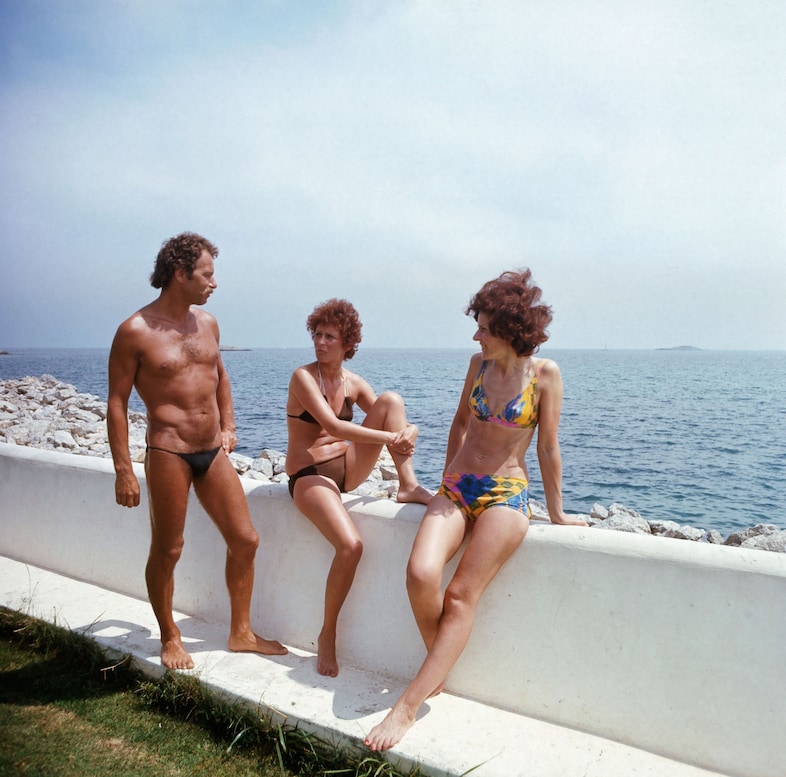
With their gym-tightened muscles, carefully styled outfits and knowing poses, there is a sense that the people in Rudolph’s photographs want to be seen, and seen as desirable. The photographer often indulged them, and there are a handful of blistering portraits that could have fallen off the page of a clothing catalogue rather than an airline campaign. Yet this was still long before the image-mediated experience of the island that most visitors have today.
“It still has that element of innocence and that element of rawness,” Salahi says of what Rudolph’s photography reveals about the island at that time. “It really captures that hippie movement when Europeans were testing the waters with Ibiza.” Ibiza had been an enclave for those seeking a laidback lifestyle, as well as Spanish people fleeing Franco’s dictatorship, which ended with his death in 1975 – the year before Rudolph’s images were shot. The return of democracy led to Ibiza regaining its autonomy and reinstating Ibicenco – a dialect of Catalan – as an official language. It also fed into the island’s flourishing tourism industry. Travel campaigns and photography were part of the machine that ultimately contributed to the transformation of Ibiza, creating an interesting tension in the work. The book pauses to show some of this process unfolding through photographs of the market traders, ferry lines, and legions of airline staff fuelling, and fuelled by, Ibiza’s burgeoning popularity.
Drawing on her background in fashion media, Salahi’s edit brings out some of that commentary on tourism. “Yes, it’s commercial photography, but I’ve conceptualised it in an editorial way,” she says. At the beginning of the book is a photograph of a quiet street bathed in soft shadows, laundry suspended from balconies. Next to it is another street, this time lined with throbbing red restaurant tables jostling for space, throwing the island’s endless transformation into stark relief.

Today, Ibiza is battling the sisyphean effects of its long-heralded reputation. Swelling to a record 19 million visitors in 2025, its communities are dealing with an amalgamation of affordable housing shortages, the fragility of a seasonal economy and the continuing shifts away from the culture that made people fall in love with the island to begin with, whichever generation that may be. Salahi describes Rudolph’s Ibizan images as bittersweet, reflecting an “amazing time in the 70s”, but in doing so, they highlight what’s been lost to “the VIPs and the Instagram culture”. “It is a sad fact that arguably the island’s best years are probably behind us, but one we must come to terms with,” she writes in the foreword. The book preserves this moment in time, “wonderfully captured in lashings of glory by Walter Rudolph.”
Walter Rudolph: Ibiza 1976 is published by Agony + Ecstasy Gallery and is out now.
