
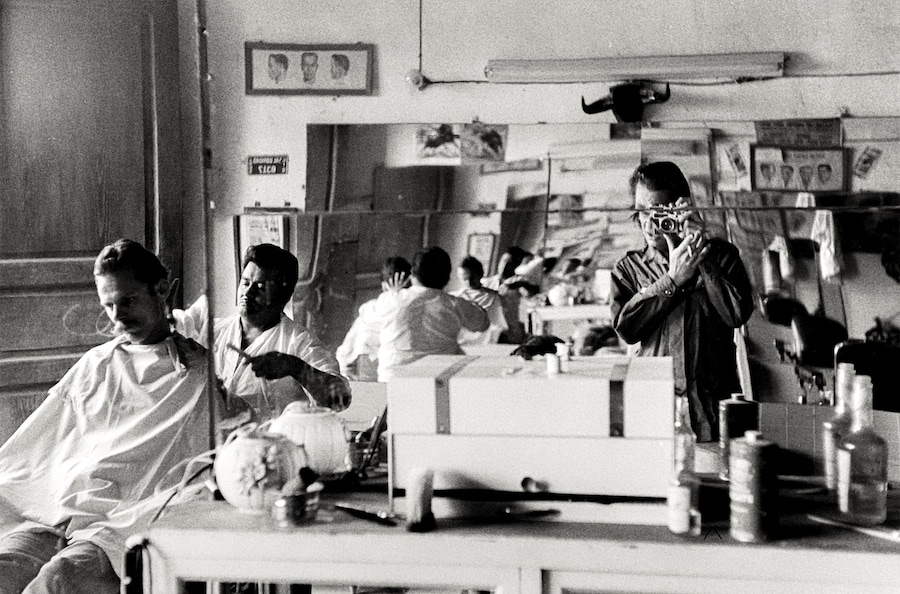
Photographer Larry Clark and artist James Gilroy have been carrying these stories since the 1970s. In their new book, they finally share them
Larry Clark and James Gilroy first met in downtown New York in the early 1970s. Clark had already published Tulsa by then – the book that would reshape documentary photography and announce one of the most uncompromising artistic voices of the 20th century. Gilroy was painting and drawing, moving through the same circles. They became, Clark says, the kind of friends who understand each other without words. Over the 50 years that followed, they lived parallel lives that kept crossing – through the art world, the downtown scene, through drugs, close calls and stories they told each other and almost nobody else.
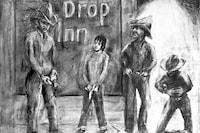
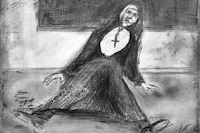
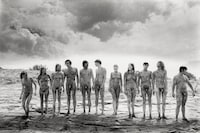
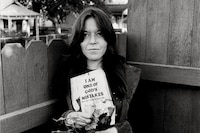
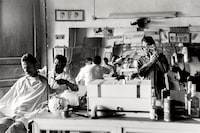

Those stories are the basis of Bedtime Stories for Bad Boys and Girls, their first collaborative book, which brings together Clark’s photographs and Gilroy’s drawings alongside their own voices, preserved as transcriptions of lost recordings. “It’s the kind of things you wouldn’t normally tell at a dinner party,” Gilroy says. The material spans from the 1950s through the 70s and beyond – accounts of being young and reckless and alive to everything, including the parts that didn’t end well. It is a testament to a particular kind of male friendship, the kind built not on sentimentality but on witness. Clark puts it simply: “Life can actually encompass all of these strange things. It doesn’t have to be cookie-cutter. It’s okay to be weird.”
What emerges from all of it is a document of two lives lived without apology and without looking away. For Clark, living and documenting were never separate impulses. “I tried to go past what you thought I could,” he says. “To go all the way into the unknown. Documenting it meant that I could remember just how far I could push it.” Neither of them was making art about life. They were doing both at the same time, and barely distinguishing between the two.
Here, the pair unpack two works from the book and the stories behind them.

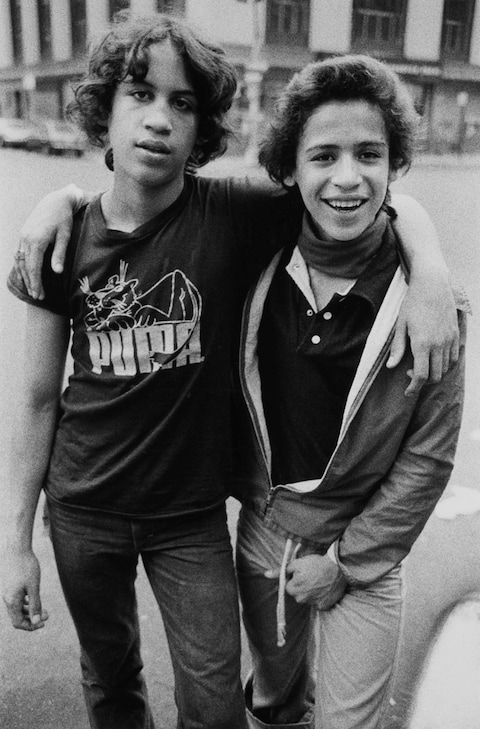
Kiko & Coco by Larry Clark
Larry Clark: “This picture is of Kiko and Coco, two of the hustlers I met on 42nd Street, around 1978 to 1981. I had a monthly appointment nearby on 41st Street, and sometimes I had to wait – so I’d wander up to 42nd, and that’s where I met them. They were part of a crew of kids, mostly from Puerto Rico. Their parents, aunts and uncles would bring them over and dump them on the streets as teenagers – sometimes just to collect a welfare cheque. That was the extent of it. So these kids lived rough. They’d go with men to get by. The Johns would come and it was transactional – that was the gist of it. Most of them weren’t even gay. They just needed a way to survive. There’s a film Paul Morrissey made called Forty Deuce – it was a play first, by Alan Bowne, and I saw that first. Either one would give you a sense of the lives these kids were living. I got fascinated by all of it and started taking pictures of them. 20 years later, I tried to look some of them up. I found one or two. Most of them had died.”

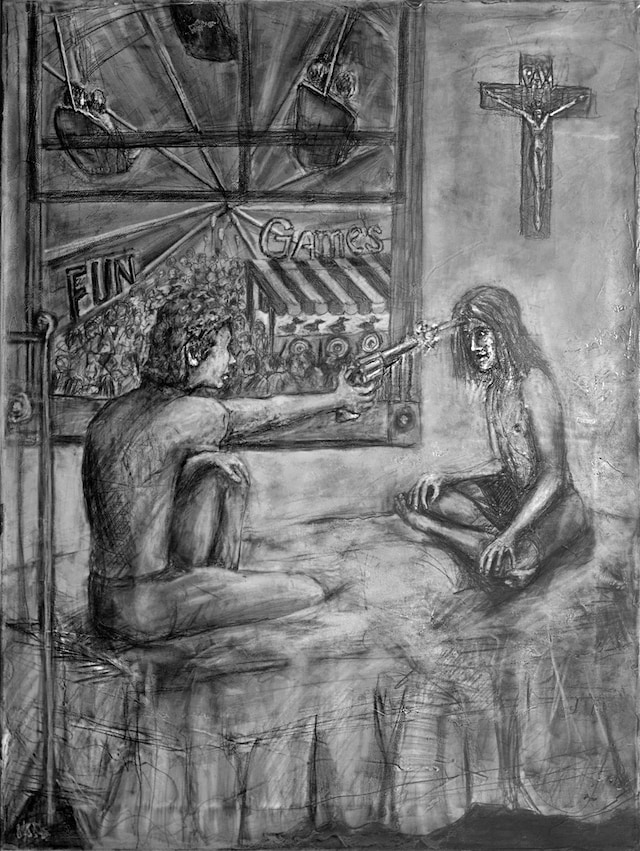
Russian Roulette Frankie by James Gilroy
James Gilroy: “It was around 1967–68 and I was with my friends at the Village Gate – the Byrds had a hit out, Eight Miles High. Afterwards we smoked some pot, feeling invincible, walking over to the feast of St Anthony’s on Houston Street. A lot of carnival stuff was going on, then boom – a really loud noise. You could feel it viscerally. Nobody knew what had happened. It seemed like everyone stopped, but then the feast went on. Turns out, a day or two later, we heard this kid Frankie and his friend were playing Russian roulette. Frankie shot his best friend in the head – on acid. He was never right again. The brothers Junior and Dougie had brought back Owsley acid from California. It infected the Village; everyone took it. Things were just starting to happen with the war going on. I was in art school, and we were all worried about the draft. Everybody knew it was a bullshit war and we were being lied to. Everything was changing and happening so fast. I was starting to become aware of a social revolution – things I cared about, or thought I should care about, I really didn’t care about any more. The feeling of living with abandonment was very appealing.”
Bedtime Stories For Bad Boys and Girls by Larry Clark and James Gilroy is self-published and is out now.
