
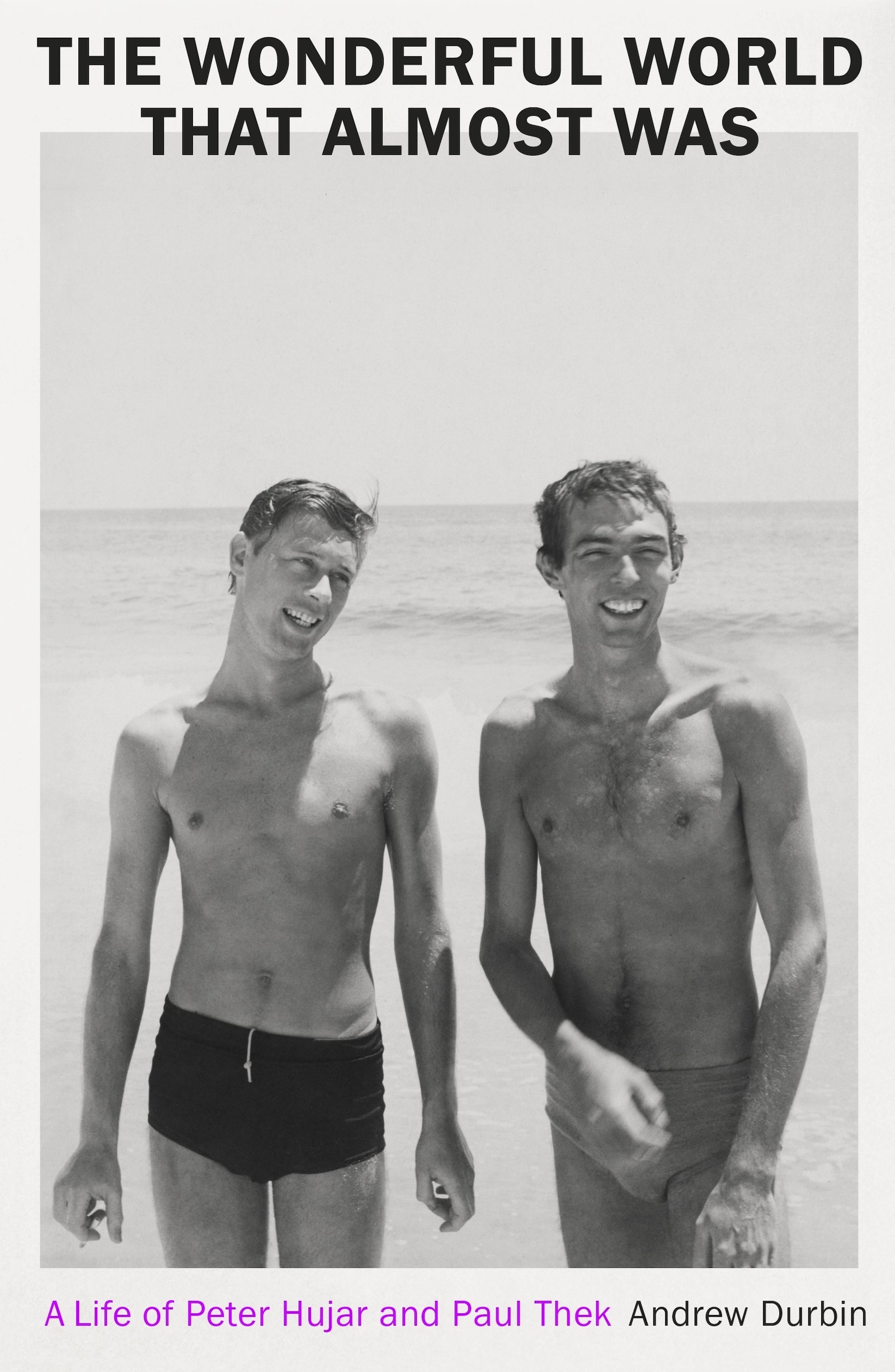
Writer Andrew Durbin has a theory that the first 24 hours of a relationship tell you everything you need to know about how it will evolve. “Every serious relationship I’ve had, the whole arc is contained within that first day,” he says. We sit in silence for a moment, contemplating this idea. We’ve been discussing Peter Hujar and Paul Thek, the subjects of his new dual biography, The Wonderful World That Almost Was – two extraordinary artists who played crucial roles in each other’s lives and work as friends and lovers. Looking at the first portraits Hujar took of Thek during their first meeting, Durbin can discern the harbingers of their end in their beginning; clues about their future dynamic which would prove to be their undoing.
The first portentous 24 hours took place on a road trip in 1956, in Key West, Florida, though they were each with other people; it would be a year later before anything actually transpired between them. At the time of that first encounter, they were both in their early twenties, and neither of them were established artists, yet Hujar’s photography was already remarkably distinct and lucid, his style already recognisably his. Meanwhile, there’s something more undetermined about Thek; he’s still trying to discover himself. “In those photographs, there’s so much uncertainty in Paul,” Durbin says. “He’s beautiful, he’s sweet, but he’s not sure who he is.”
From this hugely important first encounter, the book traces the development of Hujar and Thek’s almost-two-decade-long relationship as they become lovers, sharing an apartment in New York, travelling and working in Italy together and apart, and take huge creative strides – Thek becoming a critically acclaimed artist and Hujar establishing himself as a commercial photographer while taking the portraits that would establish his future posthumous status in the canon of 20th century photography.

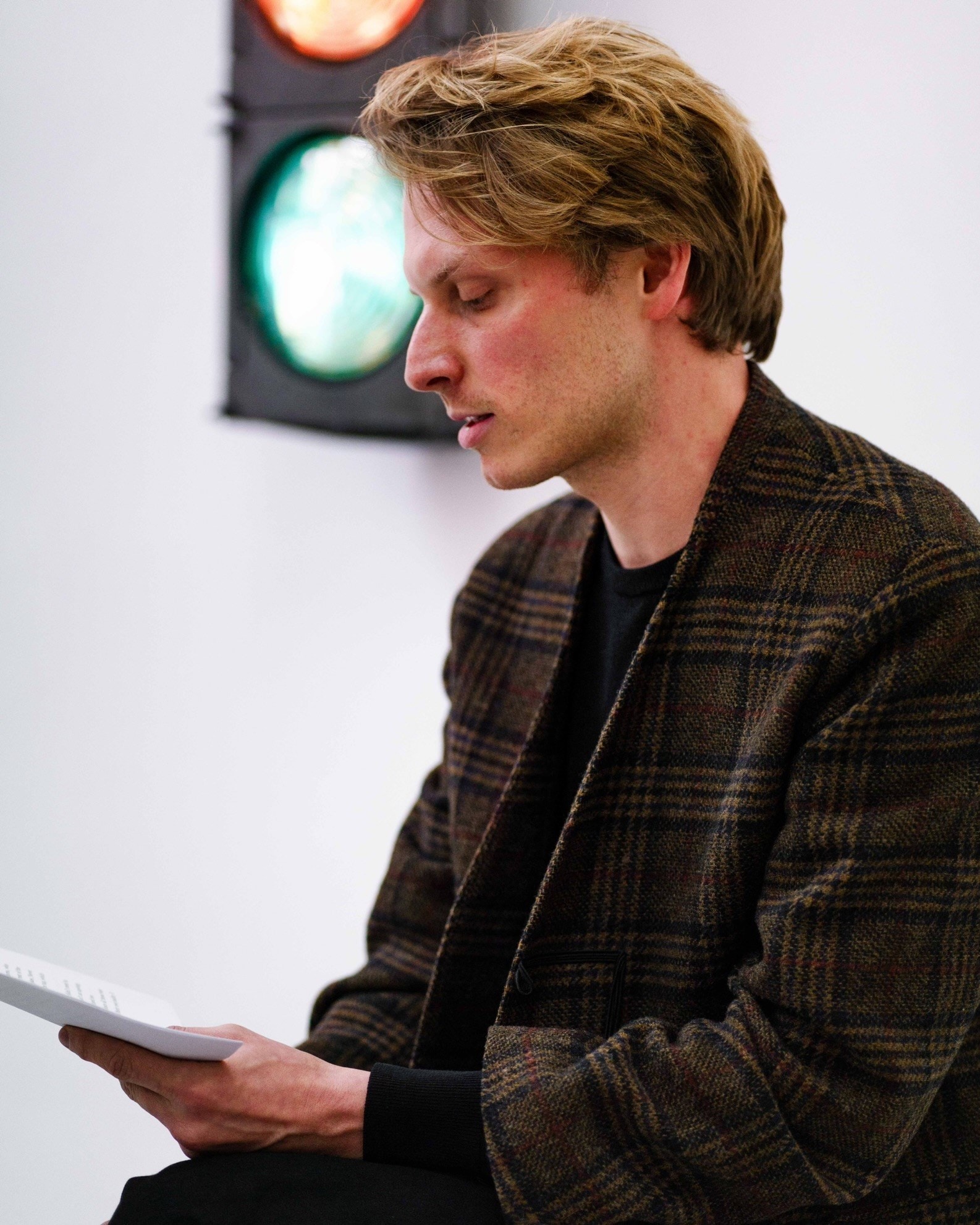
The idea of a dual biography evolved from Durbin’s research on Hujar. “It became obvious to me that there’s this important story between these two artists, coming of age at the same time, who go on to really change art in very different ways, and who represent something very interesting to me as an individual, in terms of how they live queer international lives.”
Together, they circled the epicentre of the downtown New York art world, their lives intersecting with some of the most exciting moments and individuals of that extraordinary scene. But The Wonderful World That Almost Was perceives its protagonists through the prism of the individuals they were close to, rather than a larger reading about the culture (which Durbin feels they both would‘ve resisted, anyway). “I had to acknowledge the world they were living in and the moments they were touching. But, for me, the more engaging way to approach how they lived in the world was through the people they cared about. I thought a lot about the women in their lives. The spine of the book, in many ways, is actually not their relationship, but their relationships with Linda Rosenkrantz, Shayla Bay Cole, Anne Wilson and Susan Sontag. As I was writing the book, what really moved and amazed me was these women and the work that they made. I think it tells an interesting story about what it was like to be alive and creative at a particular moment in time, and for that moment to resonate with the larger culture, but also retreat from it. I think that was the push and pull they were both thinking about constantly.”
The art of biography is a delicate dance, sometimes in the dark, between firsthand, secondhand and thirdhand sources, memories, anecdotes, and educated interpretations. Durbin, who has been immersed in writing this book for the past five years – “I was deeply engaged with them, thinking about them all day long” – is masterful when it comes to animating his subjects and weaving a compelling narrative without taking biographical liberties. “I thought a lot about biography as a practice; as a kind of poetics; a kind of making. As you said, when you put together a biography, you’re dealing with a lot of very disparate elements, and you have to somehow weave them together; you have to take a letter or a conversation you’ve had with someone remembering something 70 years later, maybe you have a diary entry, and you have to turn it into a story. And so I was very interested in narrative, I wanted to write a truthful, engaging story that people could be drawn into. But I was cautious of the kinds of leaps that I could and couldn’t make.”
“It became obvious to me that there’s this important story between these two artists, coming of age at the same time, who go on to really change art in very different ways“ – Andrew Durbin
Durbin was fortunate that Thek and his circle were prolific writers. “Paul and so many of his friends kept diaries and letters, so actually, there was a plethora of written material.” And, while Hujar’s side of their correspondence didn’t survive, his portraits did. Having contemplated his very first images of Thek in 1956, what do his final pictures of him in 1975 reveal? “As Paul grew older, he became more doubtful about what he knew about himself and about others, and I think that reasserted itself by the end of the relationship,” says Durbin.
Like all good romances, it doesn’t end happily, but that’s not the point. The measure of a relationship shouldn’t be defined by its ability to last forever; some of the most important and affecting relationships are brief or precarious. “Paul Thek’s work is about fragility. He once said himself, ‘Things become more beautiful, the more fragile they are.’ And I think the fragility and decline in the ending [of their relationship] gives the beginning all of its meaning, in some ways,” Durbin explains. “As I was writing the book, I was aware that I was trying to set up something very beautiful that would come to an end in a very harsh way. And I suppose that never concerned me in any way. All of us have had really important relationships that have come to an end, and they’ve come to an end in ways that left lingering pain. I think that was true for them, and I think that’s always an important story to tell and not shy away from.”
The Wonderful World That Almost Was by Andrew Durbin is published by Granta and is out now.
