
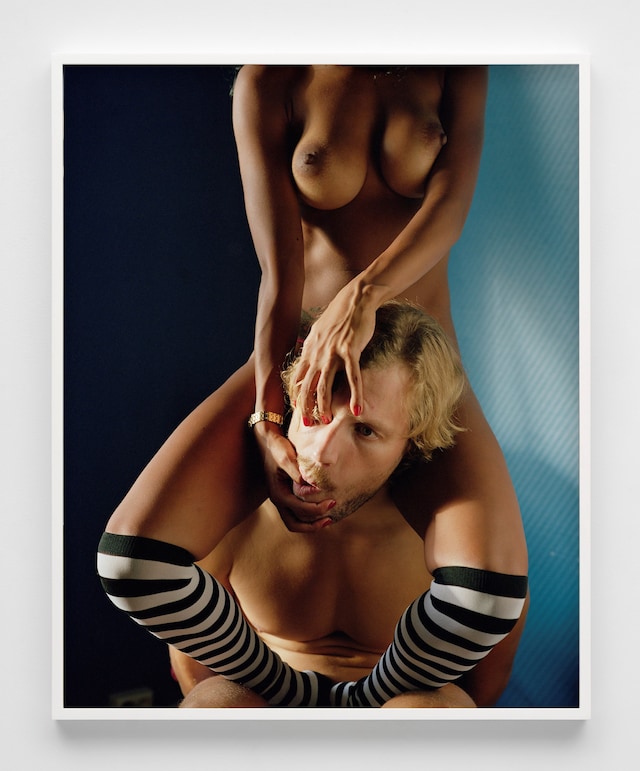
In his own words, the Norwegian artist talks us through his New York show of often abject and generally disarming images
Torbjørn Rødland woke up on one of the final days of 2023 with a “thirst for grain.” The artist was in Berlin for the Callie’s residency when he had an epiphany that he preferred Ruben’s sketches over his vast, more detailed paintings. The moment called for trying a “different part of the photographic vocabulary,” he says. The result of Rødland’s previously uncharted chapter are on display in his new exhibition, Bones in the Canal and Other Photographs, at David Kordansky Gallery in New York.
The outing is roughly separated into two sections, with a suite of 35mm photographs, the fruits of that awakening almost three years ago on a cold German morning. “I’m okay with the facial features starting to be more suggested, rather than described in every detail,” the Norwegian photographer explains about the grouping, which features black and white images in addition to his more familiar brightly lit and obscurely narrated vignettes. Italian cityscapes pop throughout the stills, as well as backdrops of France, London, Shanghai, and Los Angeles. The New York-based artist notes the “pictorial spaces with more emphasis on the full space and the figures within, rather than in front of a background.”
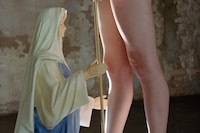
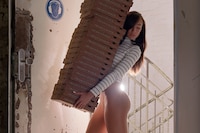
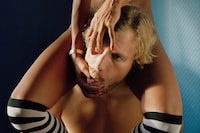
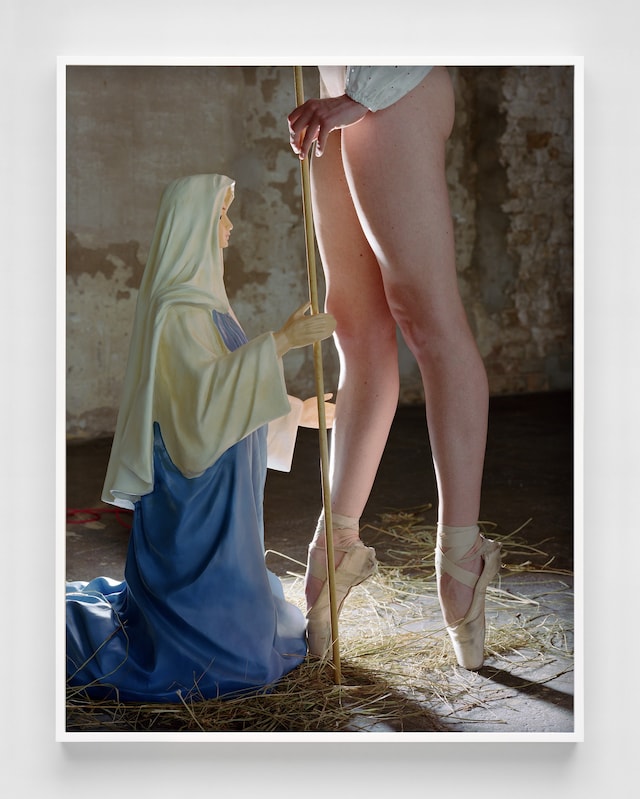
Compared to Rødland’s more cinematic and intricately orchestrated larger works, which occupy the second half of the show, the smaller-scale photographs are “less described and less felt when the lens is longer.” The show’s larger pictures, which he shot at his Berlin residency with an industrial background, feature bodily contortion and a corporeal questioning of the everyday objects, ever-lingering concerns in the artist’s often abject and generally disarming images.
Here, in his own words, Torbjørn Rødland talks more about the show.
“The change is a reaction to AI. I’d been pushing my medium towards fantasy art, while always being grounded in everyday observation. AI showed me what happens when that push could be freed from everyday observation and I found it to be quite vulgar. If the future is not in pushing more in this direction and doing the things that the machines can do so well, what other directions can be interesting? I was tempted to do what I hadn’t done before.
“Someone told me that they had walked past a couple at the opening of this show who, at first, thought that they were looking at AI pictures. And it’s sad because that is not the question that should be at the forefront of the viewers’ minds when they approach these pictures. One should be discerning, but those are not the most productive questions to ask about this work.

“My early pictures were already about walking back into reality, despite the feeling that it was too late to try to be a romantic in the forest. People walking into an exhibition [and] doubting that what they see as photography is new, but the general distrust is very familiar to me.
“Professional dancers help create interesting forms for the human body, and hopefully, a form of meaning can float in when the body is twisted or presented in a way that is different from how you’d normally see it being presented. If someone is just standing straight up and down, which is what people typically do when they line themselves up in front of the camera, you then have to really work hard to get it to an interesting place. I typically have an idea that starts somewhere quite far away from that, and then we improvise and see what feels more natural.
“What is commonly called editorial is more of a fight that I’m not comfortable with because I don’t see them as editorials. It’s all a part of the same praxis. This show has no photographs made in the setting of a magazine collaboration, but I approach them as an engine to push myself into making or realising a lot of images over a short period of time, like a day or two, while getting help to source costumes and locations. Casting is also much easier. People who are happy to do something for a magazine can be skeptical of helping with an art project.

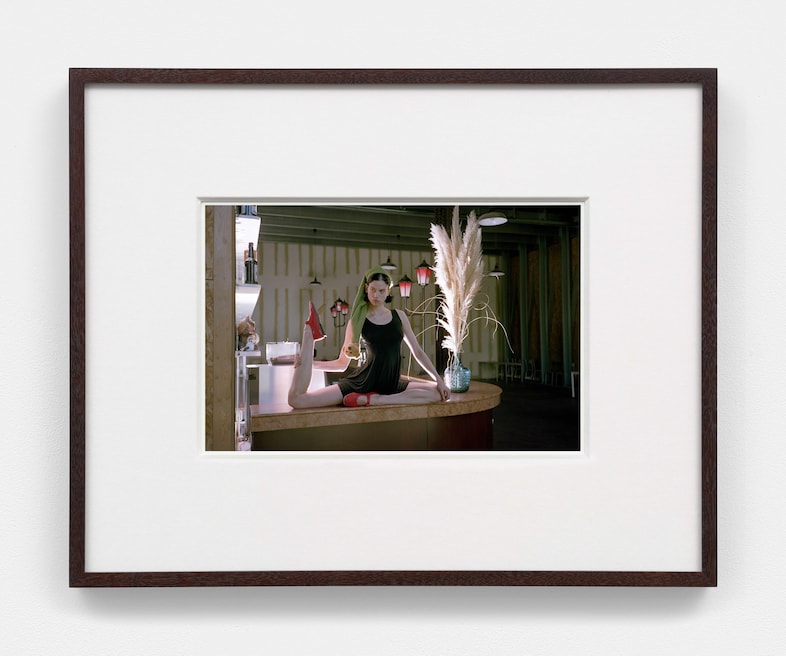
“The celebrity aspect is a grey zone. In this show, there are models with a certain level of fame, like Lily McMenamy. I’m interested in this as one of the ways a photograph can open up individually to different viewers. Even if everyone recognises Paris Hilton, you still have different responses to that recognition. You are more in the minority recognising faces in this exhibition. I’m interested in all of these very individualised responses to a photograph. That recognition that hits you in the stomach can also be for a prop, a place or a person. A few of the larger pictures in the back room feature Nativity figures. Mary and the Wise Kings are arguably more famous than Paris Hilton or Robert Pattinson.”
Torbjørn Rødland: Bones in the Canal and Other Photographs is on show at David Kordansky Gallery in New York until April 25.
