)
Bounty: something that is given generously or in great abundance, as in a crop’s yield. Or a reward given, as in the price offered for the capture of a fugitive. It is a word that suggests both beauty and violence, pleasure and horror.
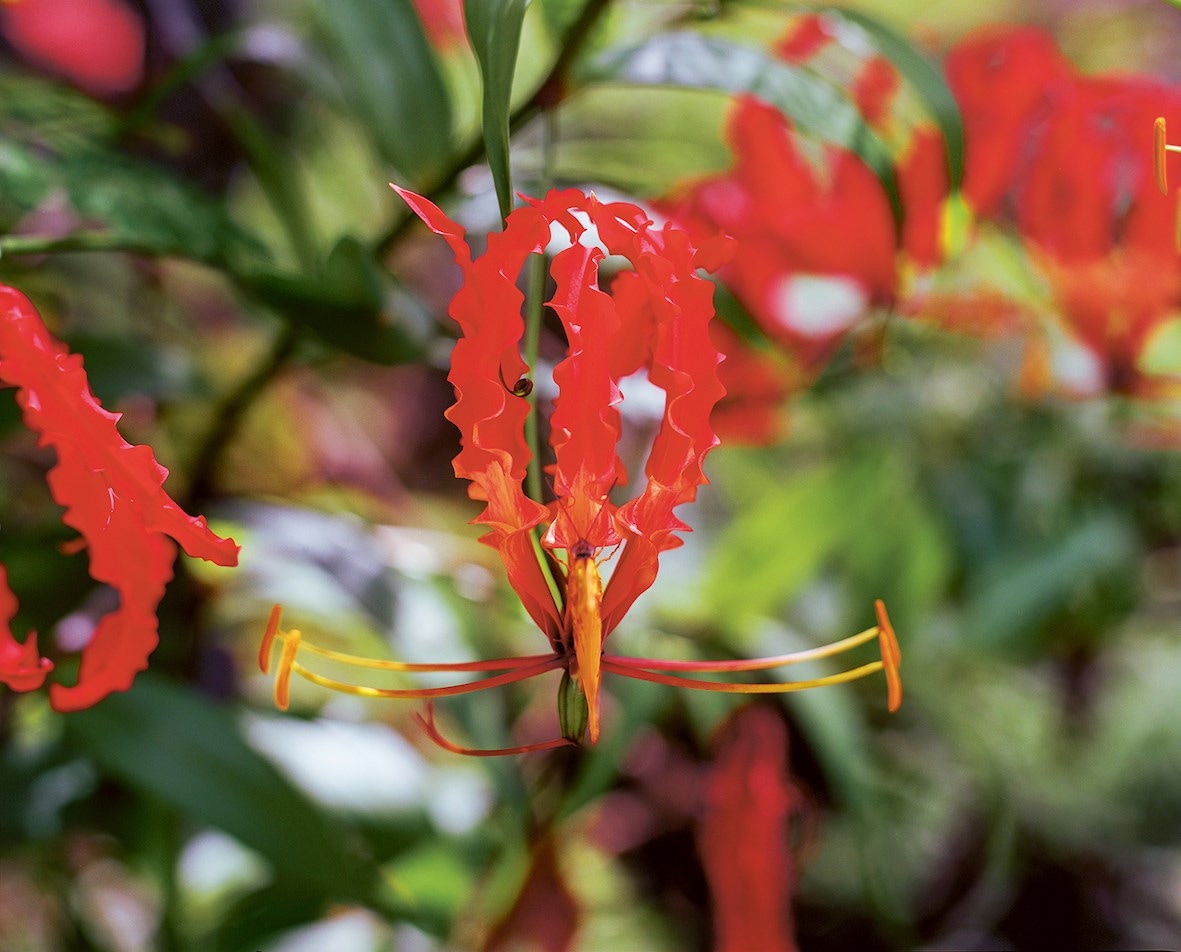
Bounty, the artist and filmmaker Steve McQueen’s latest monograph, excavates the word’s dual meanings. Published by Mack and designed by Irma Boom, the book features vibrant photographs of Grenada’s flora taken by McQueen in the summer of 2024: coral-fringed hibiscuses and a cluster of crimson jungle geraniums, velvety chenille plants – their catkins drooping and caterpillar-like – and speckled dancing orchids in cream and butter yellow. Bounty also includes two poems, The Bounty by the late Saint Lucian poet and playwright Derek Walcott and “beauty” by Dionne Brand.
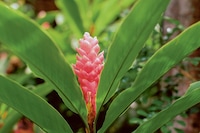
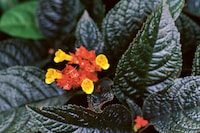
“The prompting of this project came from going to the Chelsea Flower Show in 2023, even though the idea was stirring beforehand,” McQueen tells AnOther. Hosted by the Royal Horticultural Society, it’s considered the world’s most prestigious horticultural exhibit. Grenada received its 16th gold medal that year. “The colonial nature of it and the idea of an English garden sent me on my way.”
Lurking within Grenada’s idyllic beauty is a legacy of colonial extraction and violence. The island’s bountiful nature made it ripe for centuries of exploitation. The French first colonised the island in 1649, later ceding it to the British in 1763. Under British control, Grenada’s native peoples, the Caribs, were exterminated and the island quickly became a central hub in the transatlantic slave trade. The British transported thousands of enslaved Africans to Grenada in order to support the cultivation of sugar. Both the French and British transformed the island’s flora, bringing with them cocoa, coffee, and nutmeg. (Nutmeg remains a major export for the country; it produces 20% of the world’s nutmeg.) After the abolition of the slave trade, indentured labourers from China and India were brought to the island to work on sugar and cocoa plantations.
“At some point, all of these groups would have looked at these flowers with wonder,” says McQueen. Through his intimate study of the island’s landscape, McQueen meditates on the island’s violent history, its aftermath, and undeniable beauty. “The representation of plants has always had an important place in the history of art,” adds McQueen. “This collaboration goes back to the Stone Age.”
)
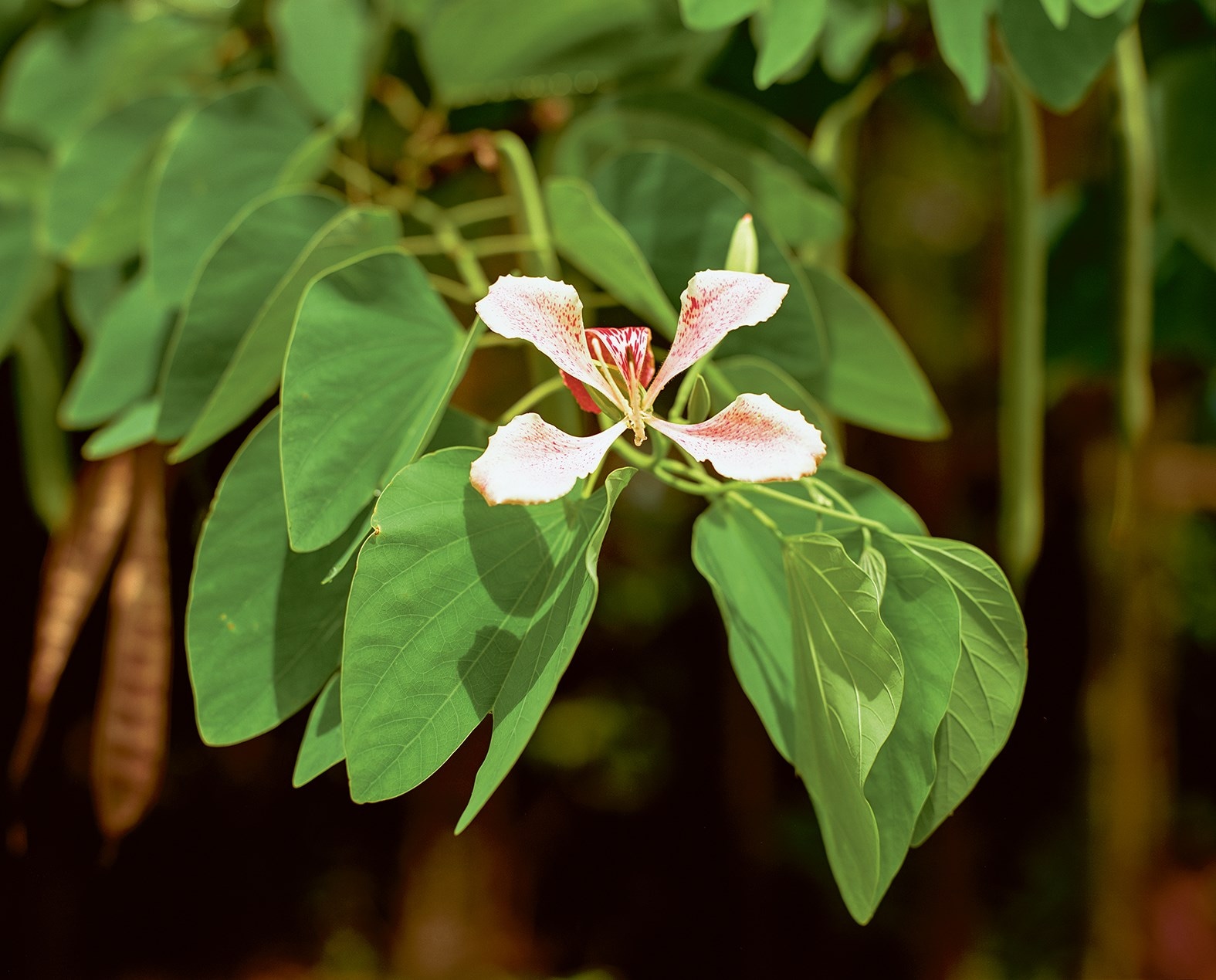
“Sometimes the most horrific things happen in the most beautiful places. That’s the perversity of life” – Steve McQueen
McQueen’s father is Grenadian, his mother Trinidadian. “Grenada was always seen as home, even when I was at home in London,” says McQueen. “In this moment in time, it has become more important to me.” Bounty is the third work he has made in his father’s home country. His 2002 video Caribs’ Leap references the mass suicide of a group of Caribs who, to avoid being captured by the French, dove off a cliff. Footage of Grenada and its inhabitants is contrasted with a group of figures who fall from the sky. McQueen’s two-channel video work Ashes (2014-15) also functions as an elegy; he pays homage to the titular figure, a young fisherman from Grenada who was murdered during a violent encounter with drug traffickers. One video shows Ashes on a weathered boat, luminous and virile against the backdrop of piercing blue sky, while the other chronicles the building of his grave.
Like cotton and sugarcane, certain plants have violent associations. In 1787, the Royal Navy sent the HMS Bounty to Tahiti to collect breadfruit, which would then be transported to the British West Indies. Naturalist Joseph Banks, the founder of Kew Gardens, who made a name for himself by accompanying Captain James Cook on his expeditions, suggested the plant as a source of cheap food for the enslaved. The breadfruit never arrived, owing to the famous mutiny that took place on board. It was successfully introduced later on and became a staple of many Caribbean diets, including Grenada’s.
This intricate web of associations becomes clear through Walcott and Brand’s poems, which add context to and deepen the meaning of McQueen’s photographs. Both works are colored by grief and slavery’s afterlife, what scholar Christina Sharpe calls “the wake.” In The Bounty, composed as an address to his deceased mother, Walcott reflects on colonialism’s enduring legacy, tracing its imprint in both the land and his mother’s life. He traverses the English countryside, the “blue hills” of Saint Lucia and the deck of the HMS Bounty, linking them as sites where memory and history converge.
)
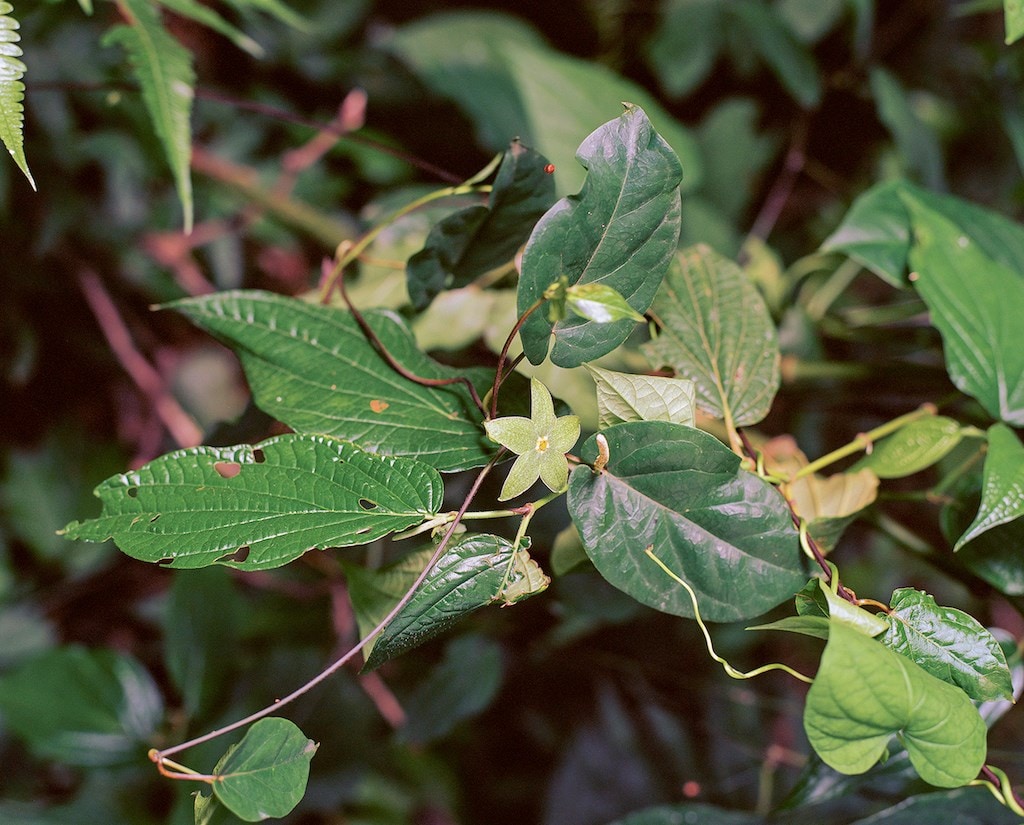
Brand’s poem considers how we survive amidst ongoing exploitation and crisis. In both poems, beauty’s endurance is almost unbearable, something that leaves one astonished and awe-struck. “Sometimes the most horrific things happen in the most beautiful places,” reflects McQueen. “That’s the perversity of life.” The process of making Bounty revealed to McQueen that, in Grenada, “There is a certain type of resilience which can transform, transcend, and is timeless.”
Bounty considers the violence that arises from a desire to capture and own beauty. McQueen hopes that Bounty “reflects on the viewer and the nature that surrounds them in whatever form it takes.” It asks us to question what lies between, as the opening of Walcott’s poem states, “the vision of the Tourist Board and the true Paradise.” We look at McQueen’s images and wonder, whose paradise is this? To whom does it belong, and what do we make of it?
Bounty by Steve McQueen is published by Mack and is out now.
