
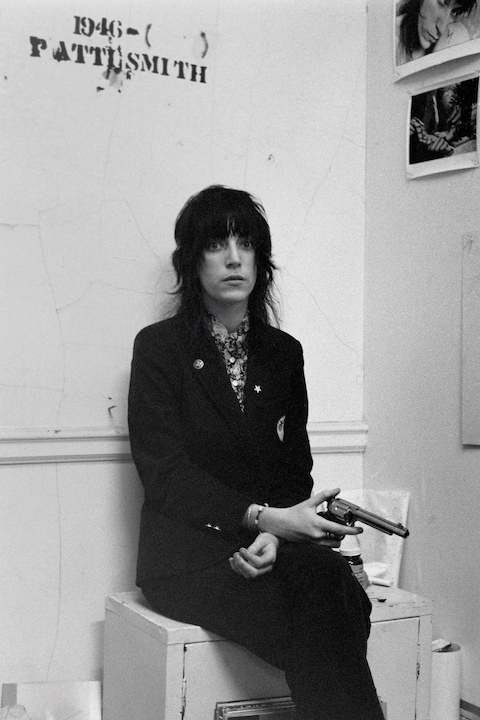
Lost for nearly four decades, a new book of Albert Scopin’s photographs at the Chelsea Hotel capture a young Patti Smith, Robert Mapplethorpe, Wim Wenders and more
Albert Scopin’s images of 1970s New York carry a spectral sense of colour; some are double-exposed, the subjects passing through one another, appearing sheer against crowded streets. In one frame, a man in a silver coat and a bright red scarf roller-skates through the geometric lobby of a hotel. In others, people’s cheeks are an unreal red, their faces painted with heavy costume makeup. Inside the hotel, Scopin depicts bedroom walls scrawled with writing; turn a page and Patti Smith is pictured next to the words “alien” and “rhum rabbit run”.
These are the stories Scopin captured at the infamous Chelsea Hotel. The German photographer lived there from 1969 to 1971, embedded in the chaotic, febrile ecosystems that thrived behind its closed doors. More than a residence, the hotel was a magnet for the downtown art scene, fueling the counterculture movement by prioritising creative freedom over rent. Scopin’s latest exhibition and book, Scopin: Chelsea Hotel (published by Kerber Verlag), features images of his years there that were lost for nearly four decades.



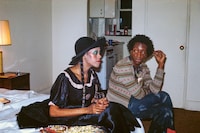
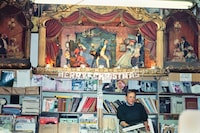
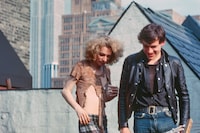
“At the time we were really busy,” Scopin explains. “I sent the photographs to friends who worked at ZEITmagazin. I trusted they were being well kept there, but we were doing so much throughout the 70s; we didn’t think much about it. It was only when I returned to Germany that I wanted my material back – and realised it was gone.” In 2016, he received an unexpected email from Galerie Ahlers that the lost film had been recovered. To Scopin, this project had been left 50 years in the past; its “lost-and-found” nature was a happy surprise. “I didn’t know it was going to be such an important moment in history,” he tells me. “To someone coming from Germany, New York was a different world.”
Attracted to the Chelsea Hotel by an interest in the musicians who frequented the hotel, including Bob Dylan, Janis Joplin, and Leonard Cohen, Scopin found himself in a microcosm where a 25-year-old Wim Wenders was just another face in the hallway. “The hotel was well known; people said you had to be there,” he adds. “I also didn’t have much money, and I could live there for $40 a week.”
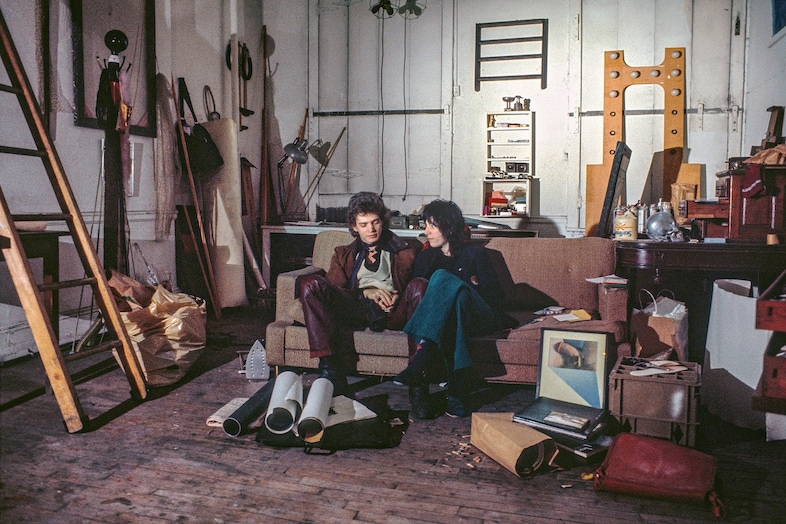
Aside from his own practice, at the time, Scopin worked for fashion photographer Bill King. “I was a good assistant, but I wanted to photograph people as they were. I didn’t want to make the camera too important.” His approach was one of “decentering” the lens. “I wanted to photograph people’s inner selves, which isn’t naturally possible. Though, in a certain way, I believe I found an approach: everyone’s room at the Chelsea was more or less their inner self,” he says.

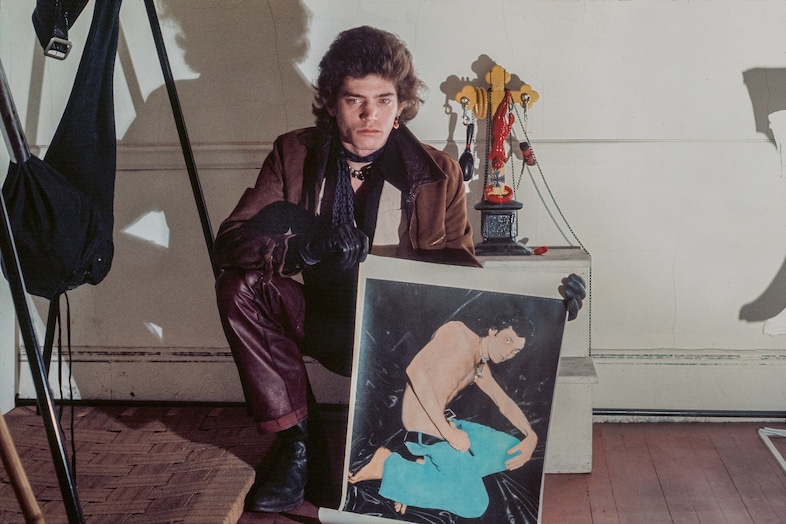
Documenting these spaces was a focal point for Scopin. The character of each interior came through as brilliantly as the residents themselves. “I was very lucky to see these very strange, expressive rooms,” he says. “They were on the upper floors, from the eighth to the twelfth, and were absolutely mind-blowing – different worlds from door to door. You’d meet the people in the elevator, talk to them, and sometimes they’d just invite you to come in.” What was it like inside the surreal little worlds that co-existed within the hotel? “George Kleinsinger was a musician who was totally into animals; his room was a jungle,” Scopin recalls. “Another room was totally empty and white, containing only the silver helium cushions from Warhol and nothing else. It was very extreme.”
Going beyond the “wild years” that turned the hotel into modern myth, Scopin’s lens offers a softer entry point. “It was wild in the sense that we were open to new ideas. Everybody believed in building up a new world. Naturally, some people experimented with drugs, but that wasn’t the basis. People worked seriously on projects; everybody thought that theirs was the best,” he laughs. “There were lots of little Andy Warhols around.”
Scopin captured many of his subjects before they’d “made it”. “Patti Smith and Robert Mapplethorpe were already extraordinary. They each brought their own environment with them,” he says. “[Other residents] liked to be photographed and wanted their homes to be documented. Everybody wanted to be recognised as a star. I also painted my camera yellow at the time, so nobody was afraid of it.”

Behind each photo was a conversation, though some were more outlandish than others. “There was Prinz Roderick Ghyka, whom I photographed in his underwear. When I came into the room, he was perfectly dressed. He was a gentleman studying at Cambridge who seemed pretty normal. As he started talking, he began to take his clothes off.” Another story Scopin doesn’t often share is an encounter with feminist author Germaine Greer, who debated Norman Mailer in 1971 at New York’s Town Hall. He recalls, “When I wanted to photograph her, she flipped the gender roles. She told me she thought that if men wanted to talk to women, they had to sleep with them first.”
This March, the long-lost project will return to New York. A charity event organised by Mary Goodman will celebrate the publication, and a copy of the book will be presented to Patti Smith. It’s a homecoming; as Scopin says, “The story of the hotel will be alive for a long time.”
Scopin: Chelsea Hotel is published by Kerber Verlag and is out now.
