
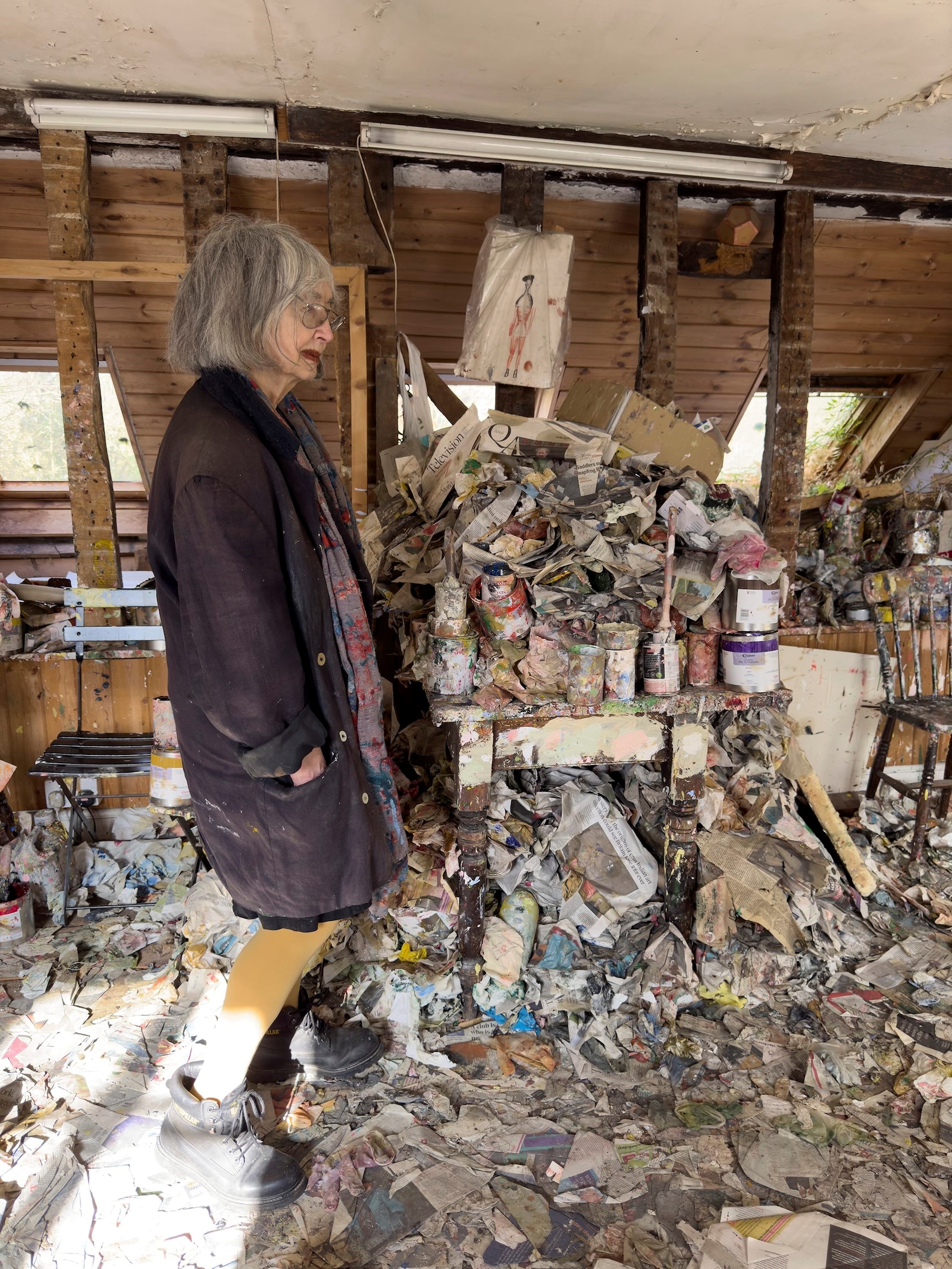
Described variously as a rebel and a late bloomer, there is much to dissect in the life and work of Rose Wylie, who, at the age of 91 is celebrating the opening of the biggest exhibition of her paintings ever staged. The Picture Comes First is a vivid retrospective at the Royal Academy in London, with 90 works telling the story of her extraordinary career. “I’d love [for] people to be moved, enthusiastic and deeply affected,” the artist says of the show. “I might not get that, but I would like it!”
Wylie studied art as a young woman, then went on a total hiatus in order to raise her children before picking up the paintbrush again in her fifties. Wylie, who lives and works in Kent, has plenty to say about being a woman (and a mother) in the art world – and what it was like being married to someone in the same career: her late husband was Roy Oxlade, who died in 2016.
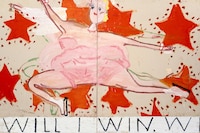
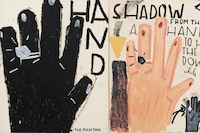
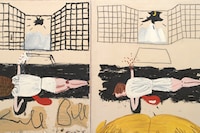

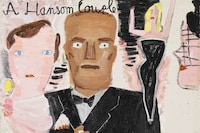
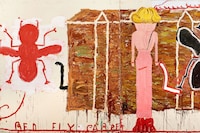
Wylie’s canvases are vast, her palette is bold and her subject matter includes iconic women from medieval royalty, literature and contemporary sport. There’s a playfulness in everything she makes, yet she describes herself as “deeply serious”. Her process seems intense – she will typically see something that piques her interest, visually, and draws it to make a memory. Later, she will paint it. Wylie admits that she can get stuck and “hate” her paintings but that’s nothing that can’t be remedied by “work and work and work”.
Here, Rose Wylie talks about her show at the Royal Academy, motherhood, and being a late bloomer.
MA: What does the forthcoming Royal Academy show mean to you?
RW: It’s great! If I ever say to friends that I have a show somewhere, no one’s interested … all they ever want to know about is if I have a painting in (the RA’s) summer show! The public has huge affection and respect for the Royal Academy. They just love it.
MA: You have been described as a ‘rebel painter’. How do you respond to that?
RA: Copywriters like to use snappy little words, don’t they? I suppose sometimes the paintings have slightly unusual juxtapositions. But I don’t know if they are talking about my paintings or about me and my attitude. I do have an attitude. My garden isn’t manicured: a lot of people might call my garden out of control. Possibly that’s what they think about my work. That could lead to people calling me a rebel. What do you think? Why do you think they call me a rebel?
MA: I suppose one reason is maybe because of the scale you work at?
RW: But lots of artists work big!
, 2015)
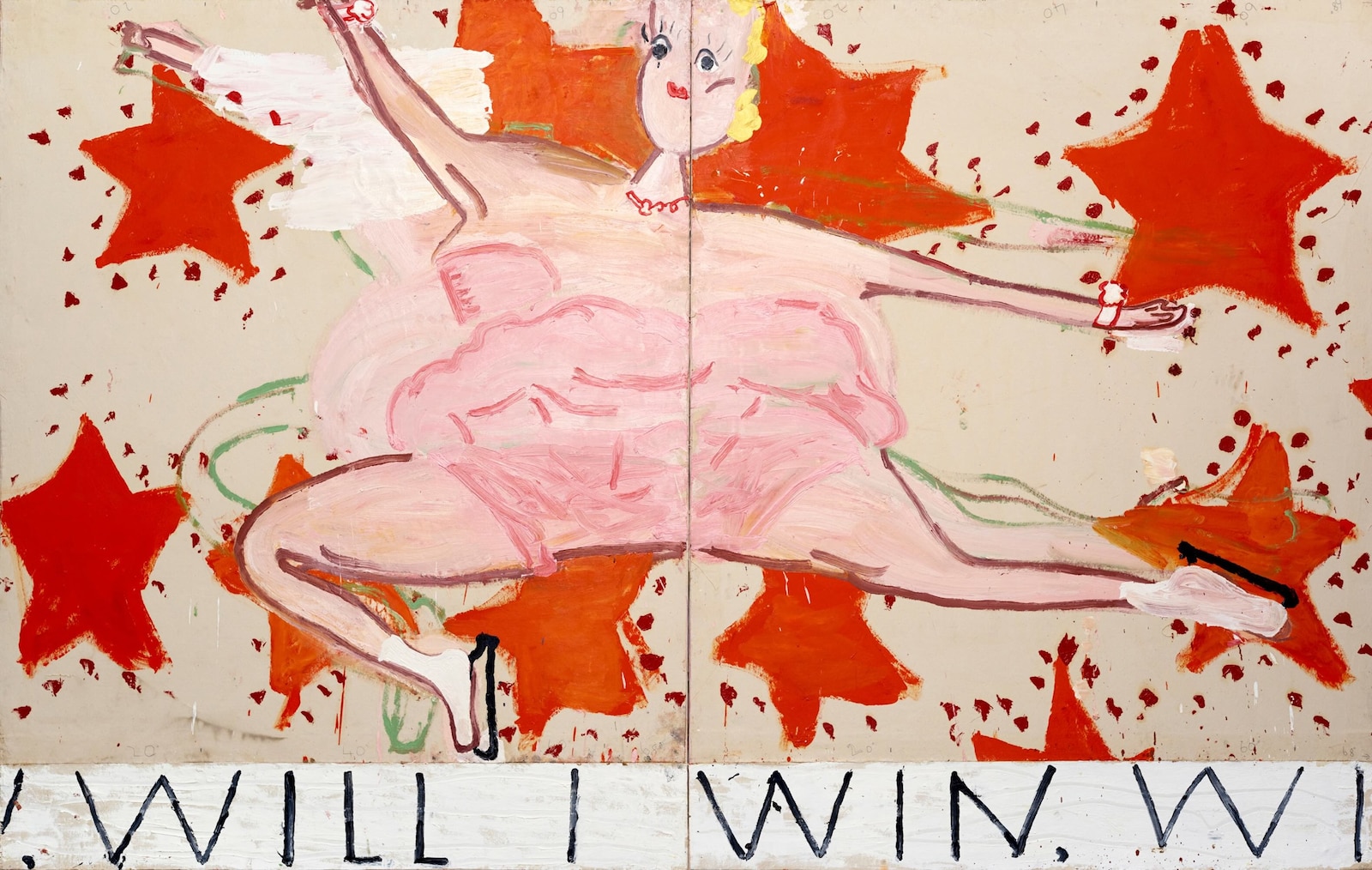
MA: True.
RW: Or maybe they think women should do little chintzy paintings? I won’t do that. My canvases are not stretched and have threads hanging off them. At the edges of the painting, it’s clear where the canvas has been cut. Perhaps that’s what they are getting at. Also, I always wear the same clothes. I think people should wear what they’ve got and cut them up and change them about … maybe the rebel thing comes from that? I don’t mind being called a rebel – it’s better than being called stuck in the mud. I am both playful and deeply serious at the same time – and I don’t know how that goes together. I’m not a precious up-your-arse-painter.
MA: And what about ‘late bloomer’?
RW: I don’t mind that. What I don’t like are certain other words that people use about me and my life. I own a house and some journalists who visit like to call it a little cottage. I find that rather irritating: I don’t like having chintzy or domestic narratives attached to me. I’m much more industrial: I like hard white light.
“Big is good. It’s a release from being a woman with restricted areas and means. And I think it suggests confidence. You have to have self-belief if you paint big” – Rose Wylie
MA: Creativity and motherhood aren’t always the happiest of bedfellows. Has it been difficult to do both?
RW: No, because when I was a mother, I was being a mother. I’m a mother. Children need you to be there. They don’t want you to be switching off and doing your own thing and disappearing and being obsessed with your own painting. They want you there as an anchoring. Now the children have grown up, they don’t have problems. A lot of artists’ children have problems about being marginalised. Being available was important and I just cut out [painting] and came back to it. It’s most unfair because it should be equal for men and women and it’s not. It’s just a problem for women.
MA: Your husband was a painter too. Was that difficult or motivating?
RW: We got on extremely well. When I got into painting, he was well known and I wasn’t known at all …
, 2012)
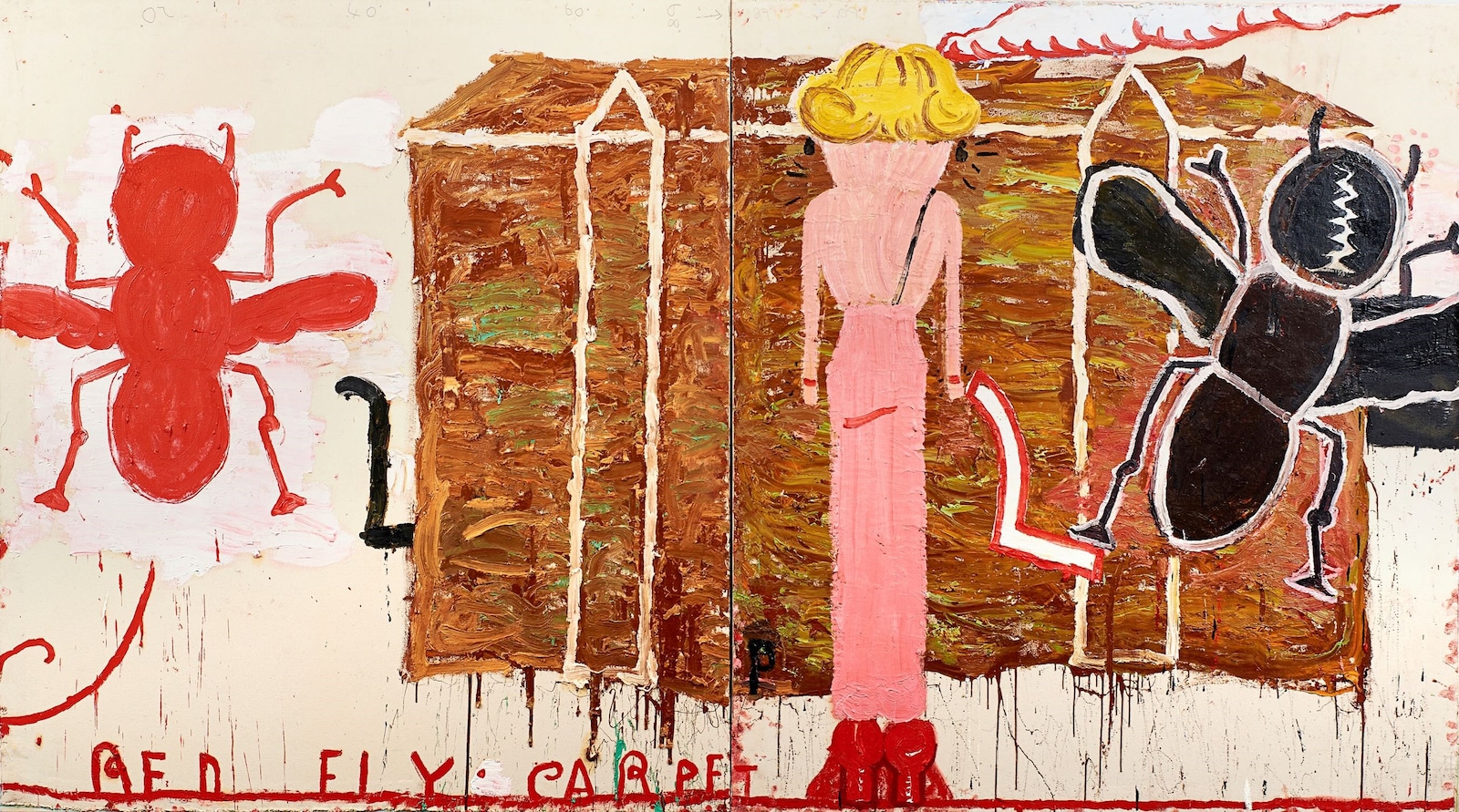
MA: Were you ever jealous?
RW: No. Jealousy is not the word. At first, when curators came to see us both they would spend all their time – two and a half hours – with Roy and ten minutes with me. I thought that was totally unfair and I decided to get around this by making sure that if a gallery person came for one of us, the other kept out of the way. That worked out okay and as I got better known Roy was always supportive.
MA: Can you tell me a little about your painting process?
RW: It starts when I see something which I think is visually exciting. It’s not about psychology, plot, context or fighting a political point. It’s a visual – something I like the look of and find exciting and I’ll often do drawings so I can keep it. I work from that to the end of the painting. A painting can be from several drawings and the painting can change until the thing looks like it could look alight. And then I stop. But that can be a long process with a lot of aesthetic discrimination going on. I do a lot of thinking but I’m also impulsive. If it seems okay you leave it, if not, you carry on. I can’t tell you, really. [Laughs].
MA: I love your use of colour. Tell me about the shades you choose and how you put them together.
RW: I’m glad you like the colour because nobody else ever mentions it! Some people think you have to use purple, orange, dark red and screaming blue. I use a lot of white with umber in it. Fra Angelico from the Early Renaissance used a lot of umber and white when he put buildings in his paintings. Sometimes I fill the canvas up with the colour first and sometimes I leave the canvas bare and it comes up like the Bayeux Tapestry. If you put a dark colour on first, anything you put on top of it is exciting and exhilarating. I think colour is hugely important.
MA: And what about the scale of your paintings?
RW: When I started off, I thought historically important paintings were big, like altar paintings or New York School paintings. I seemed to connect small canvases with women being unprofessional, being secondary, perhaps working in a small room and not having much space. And I thought, ‘Why not just go for it and have them big?’ I love big! I like Renaissance paintings that go up the wall from ceiling to floor. I love all that. Big is good. It’s a release from being a woman with restricted areas and means. And I think it suggests confidence. You have to have self-belief if you paint big.
 with Duster, 2018)
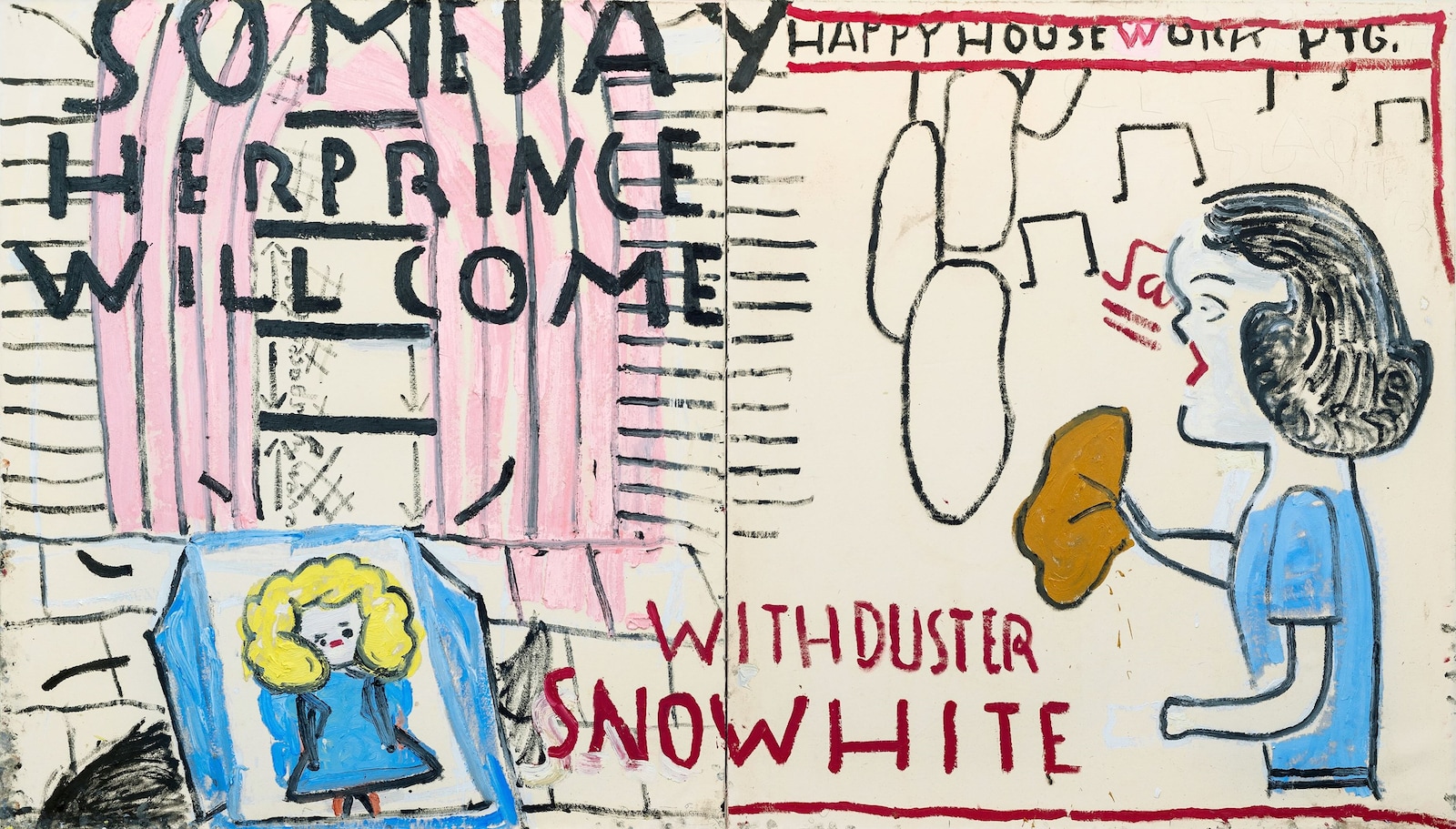
MA: How do you choose which people will feature in a painting?
RW: They don’t need to be a well-known beauty but they have to have something special and unusual about them. With Bette Davis, she has a terrific mouth and those hooded eyes and I think she has presence. I once painted a group of footballers and they all had something about them … Thierry Henry was languorous and elegant and Ronaldinho – his hands flicked, his feet flicked, his ponytail flicked. I used all that.
MA: Which contemporary painters do you admire?
RW: Kerry James Marshall is good. I have liked his work since he first came to England. I very much like Tal R. And Tschabalala Self, who I think has great vitality and a streak of marvellous vulgarity … [her work is] strong and very irreverent. I always rather liked Sarah Lucas, too.
MA: What advice would you give to any painter starting out?
RW: The obvious thing is to keep going. Don’t bother too much about outside opinions – they’ve never bothered me.
Rose Wylie: The Picture Comes First is on show at the Royal Academy in London until 19 April 2026.
