
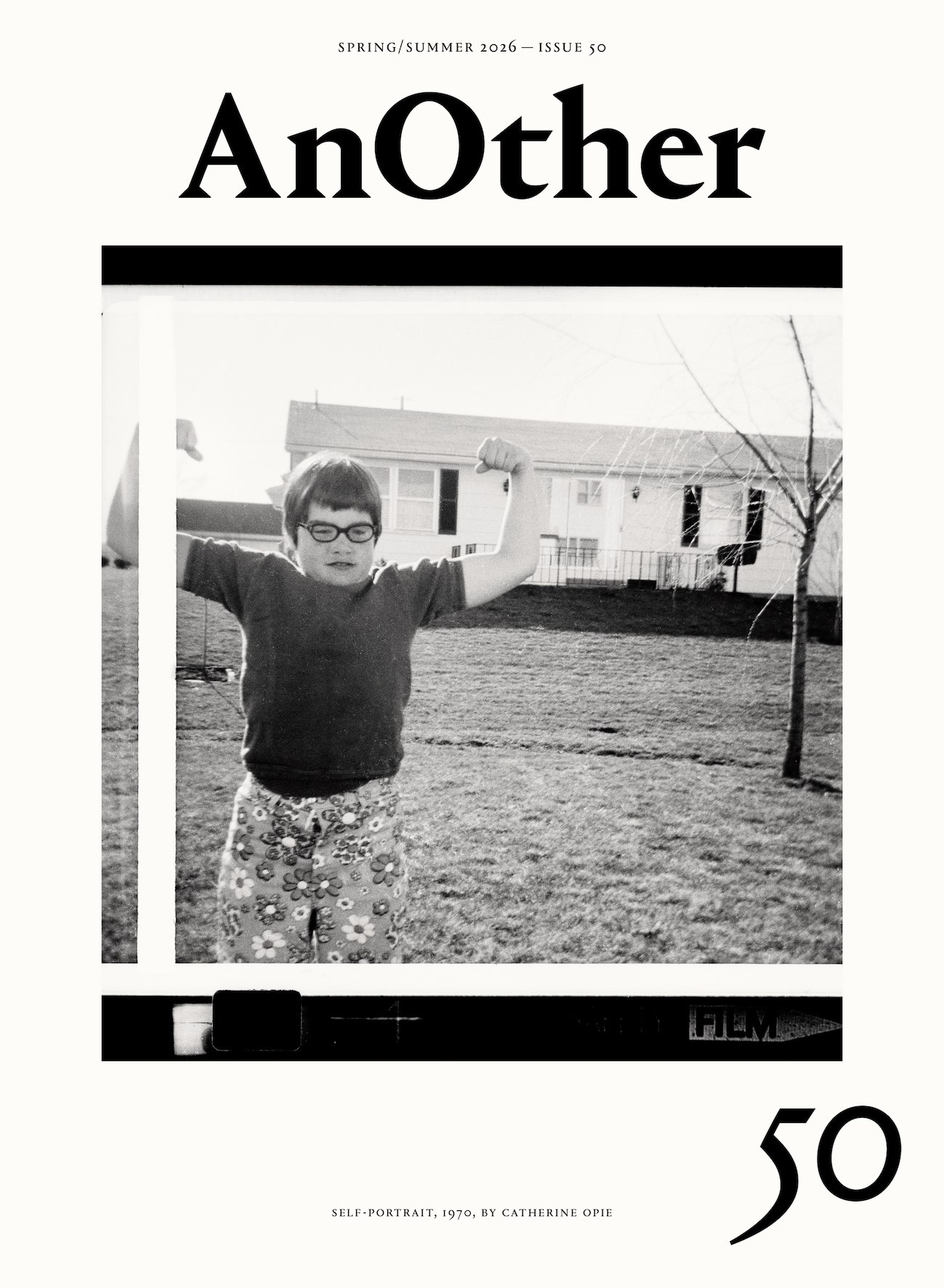
This story is taken from the Spring/Summer 2026 issue of AnOther Magazine:
On a beautiful November morning in Los Angeles, I found my way to the Brewery, where Catherine Opie keeps her studio. I’ve known her since I moved to LA 20 years ago – indeed, the very fact of Cathy’s presence here, as an LA-based artist, professor and queer householder, made the city feel more possible for me, when I was a bewildered exile from New York.
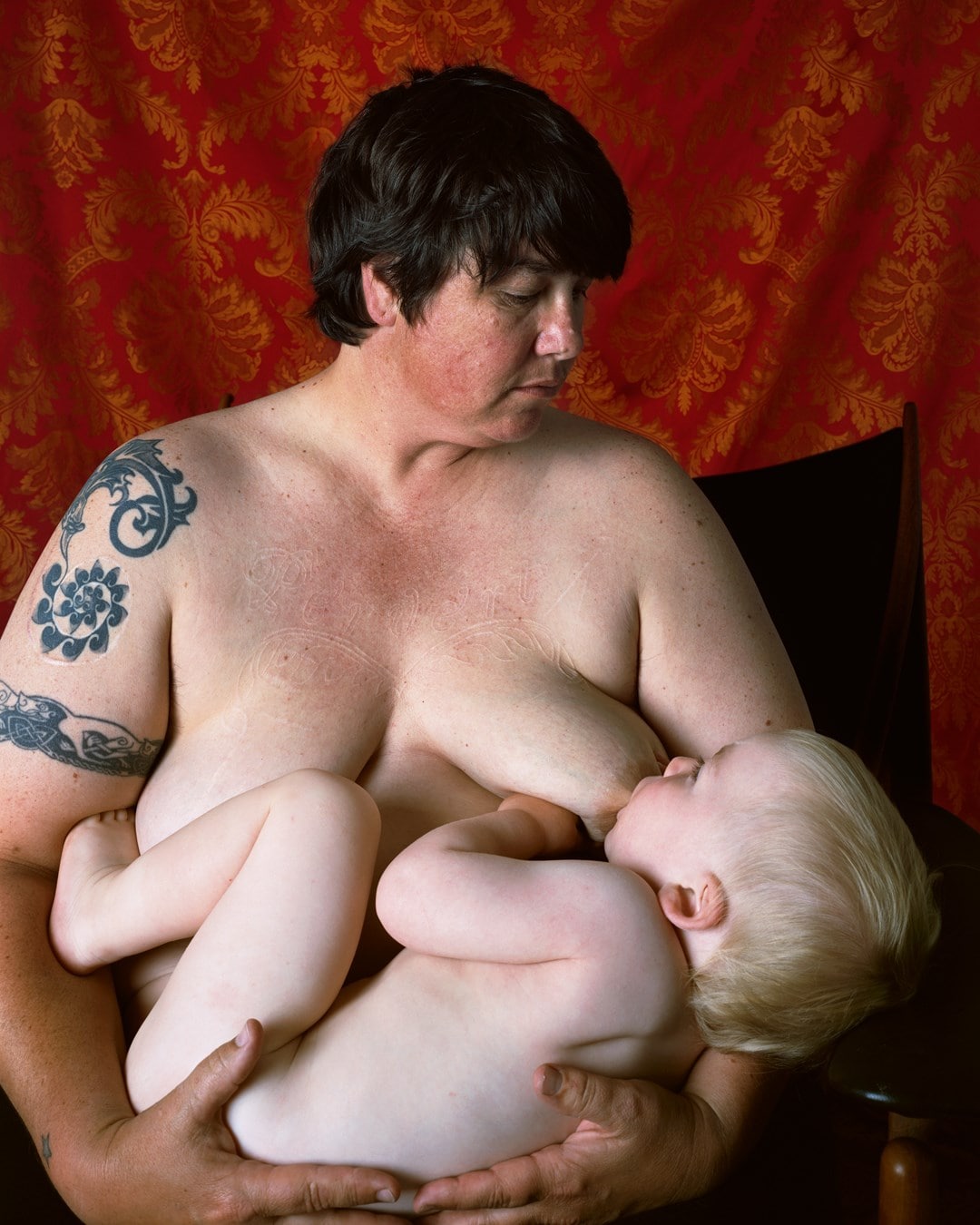
Cathy has known my partner, the artist Harry Dodge, for much longer; her portrait Flipper, Tanya, Chloe, & Harriet, San Francisco, California (1995, Domestic series) is one of my favourite pictures of him from the old days. (Cathy also photographed me once, for a 2021 profile in The New York Times.) After all this history, it was a meaningful pleasure to spend this time together to mark her exhibition at the National Portrait Gallery, London – Catherine Opie: To Be Seen – going deeper into some of the narratives I already knew and learning all kinds of new things about an icon and a friend.



MAGGIE NELSON: I presume we get to talk freely and we can edit if we need to.
CATHERINE OPIE: It’s a free talk and I am an open book. You can ask me whatever you want to ask me. Thank you, first of all, for interviewing me. You’re somebody that I’ve always wanted to have write about my work and I just appreciate you as a thinker.
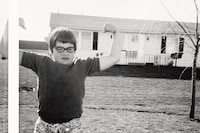
MN: Thank you, Cathy, I’m glad to do it. Maybe we can start at the very beginning – the self-portrait at age nine. I was really interested in your experience of taking pictures as a little kid. Because, as a writer, I can always see what I’ve made right away – there’s no delay. But I’m guessing that you had a delay …
CO: Yeah, because we would go to the grocery store and then they would develop the roll of film, and then I had to wait till my mom picked up the prints and brought them home to me.
MN: In the [National Portrait Gallery] catalogue for your new show, To Be Seen, it says that you liked photographing stop signs and cars and basically everything, so in my mind I was thinking of two parallel tracks of experience. One, the kid going out, having this experience, and then the person who gets the stuff back and looks at the fruits of all your looking and labour. Did you experience those two tracks as totally different activities? Did it feel like the camera, when you were little, was a way of looking at your environment where you were carving out your own individual space or take? Do you remember what it felt like?
CO: I’ve been thinking a lot about it, actually, because I’ve been looking with my mom at my very first album that my grandparents gave me on my birthday – they knew I was going to get a camera because that’s what I requested. I started bringing those pictures home and taping them in an album and making sense and order out of my story. I think that one of the things is that you grow up and you do a lot of therapy if you’ve had a difficult childhood, which I had – something of a difficult, compromised childhood. Now I look at those pictures in a really different way. I thought that maybe I was tracking my environment like I do now. I thought maybe every stop sign was because I was trying to figure out space and neighbourhood and everything I’ve tried to do as an adult …
MN: Like a mapping or something?
CO: … like a mapping. But then I took my mom on a road trip last year and we went to Seneca Falls, New York, where she grew up, for her 90th birthday. And I asked her, “Mom, when I was nine and I stopped wearing dresses, and I wanted to be a boy, did that all happen because I had already started being sexually abused?” I realised, going back and looking at everything, “Oh, that’s the stop sign that my brother handcuffed me to all day long,” and, “This is actually bearing witness to trauma.” I thought I was mapping, but I was also trying to make sense of where I belonged and what I was doing in the world after being handled very violently.
MN: That’s not something I’ve heard you talk about.
CO: No, it’s not public.


MN: Is that like a new lens for you?
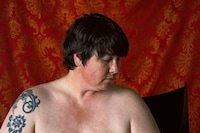
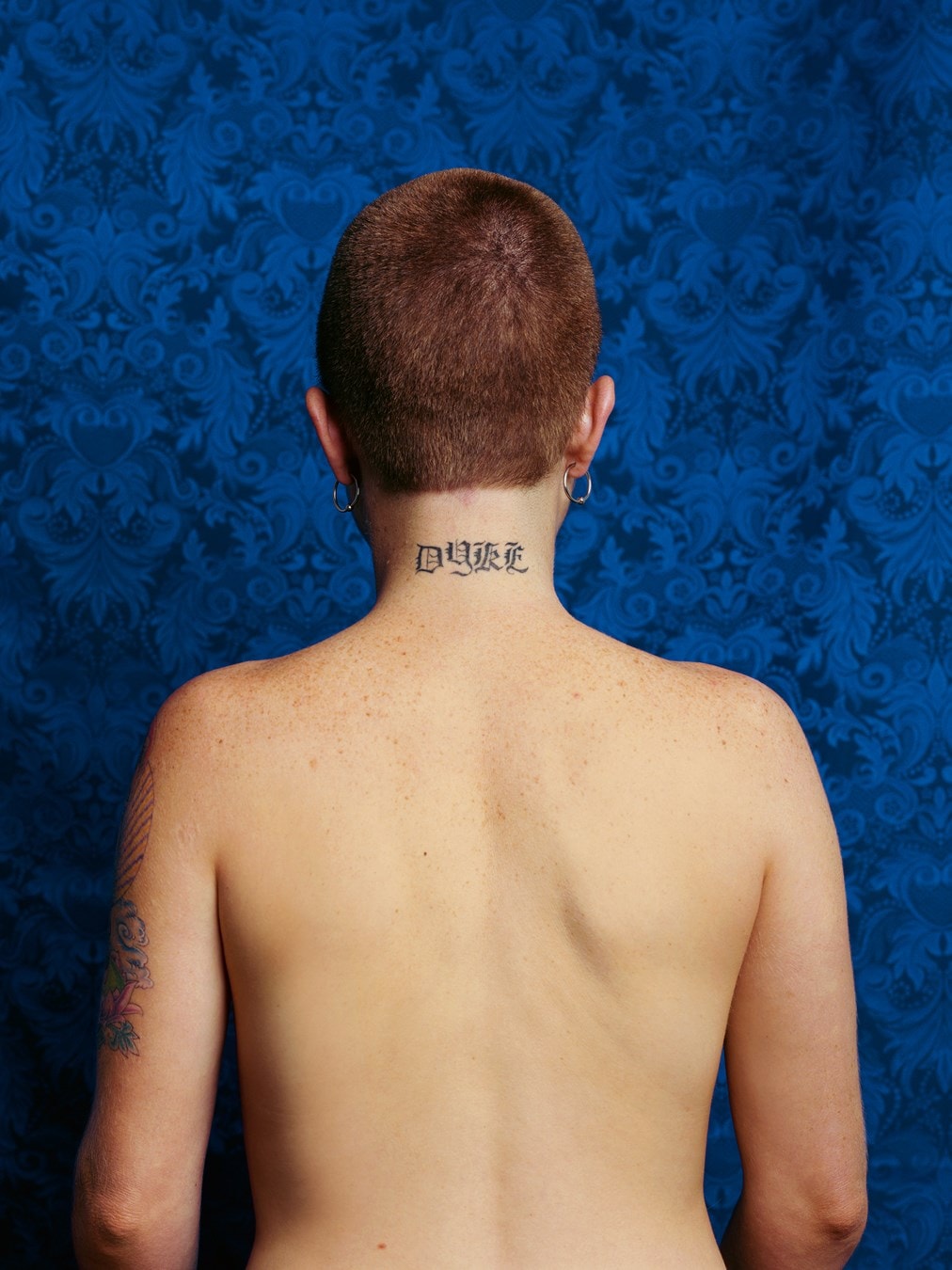
CO: It’s becoming a new public lens. I came out in my oral history on the Getty [the Getty Research Institute’s initiative to preserve the first-hand histories of important LA artists] about my sexual abuse. I have stayed really far away from allowing that to be in my narrative because of a very specific thing – as soon as somebody, such as a lesbian, does cuttings on their body [Self-Portrait/Cutting, 1993], people are going to automatically say that it’s out of trauma, and that’s not why that work was made. It was made out of blood and out of community because my friends were dying of Aids. It was the culture wars and we were all doing work that was pushing the envelope – Karen Finley’s performances, Annie Sprinkle, Ron Athey. I came out of a community that was expressing things at a very intense time. And then I realised that I wanted to start talking a little bit about what my childhood was like because I am in this place of being almost 65, and what is it for us to hold secrets? What are secrets? So I’ve always held it really tight, but now it’s being spoken.
MN: That’s interesting because I think by holding it tight – and I’m not saying that everyone should hold it tight – but by doing that, you have allowed for decades of writing and interpretation of your work that just didn’t use that.
CO: That didn’t have the personal, diaristic story.
MN: In some ways you’ve jammed the easiness of a trauma plot story. Even if someone wants to put that on it now, it can’t go as easily. I think about Louise Bourgeois and others … all the writing on the work that links things to childhood trauma – Bourgeois actually offered up this reading herself, though not until she was 71. But especially with anything that’s BDSM or that seems related to working things out sexually, tying it to any kind of sexual trauma or physical abuse is such an overdetermined space.
“If you’re a woman, you never get to be anything but the victim” – Catherine Opie
CO: Also, from a woman’s perspective it’s very different. If a male artist had made those earlier self-portraits, maybe they would have had a different kind of safety net because of what the world provides for men. If you’re a woman, you never get to be anything but the victim. I’ve been thinking about that a lot because I read [Virginia Giuffre’s memoir] Nobody’s Girl, because I was really curious to see how she would talk about this time – and this is work that you’ve done too within your own writing – but what has #MeToo done for feminism is a really big question for me. Has it empowered us? Yeah, to a certain extent very much so, but it’s still incredibly complicated, the way that it’s read in society and in the world.
MN: For sure. I think that to be a sexual subject not defined by victimhood is still such an underdeveloped role for women. You were able to do that, not just for yourself, but in picturing so many people as agents of a sexual life and exploration. I grew up in San Francisco but I left when I was 17 for the east coast. But a lot of queer women in the Bay Area at that time, especially in and around Harry [Dodge’s] Bearded Lady performance space – I’m thinking about Michelle Tea’s writing in particular – often celebrated this whole world kind of decontextualised, taking it on its own terms, where nobody had to come in with a history. Everyone could just meet and be where they were at, and their proclivities and interests could be what they were – no trauma plot required. But in some of Michelle’s more recent writing I’ve noticed another layer on top of it, which is recognising retroactively, “Wow, I think a lot of us were working out a lot of trauma that we were bringing to that scene.”
CO: I think there was, yeah.

MN: We didn’t really talk about it in those terms then.
CO: No, because we created a safe space differently through consensuality, where it wasn’t talking about what happened, it was talking about how we were going to do whatever scene or play that was about consensuality. It’s interesting that, often, consensuality doesn’t necessarily deal with post-trauma, but it is woven in there like a fine silk thread.
MN: I teach or talk about work from that era so much and many people I know really did feel like they could trust this community. I feel like now there’s more good talk about care in communities, but more distrust that communities will hold them. Whereas then, there wasn’t as much explicit talk about care but there was more trust that that was happening.
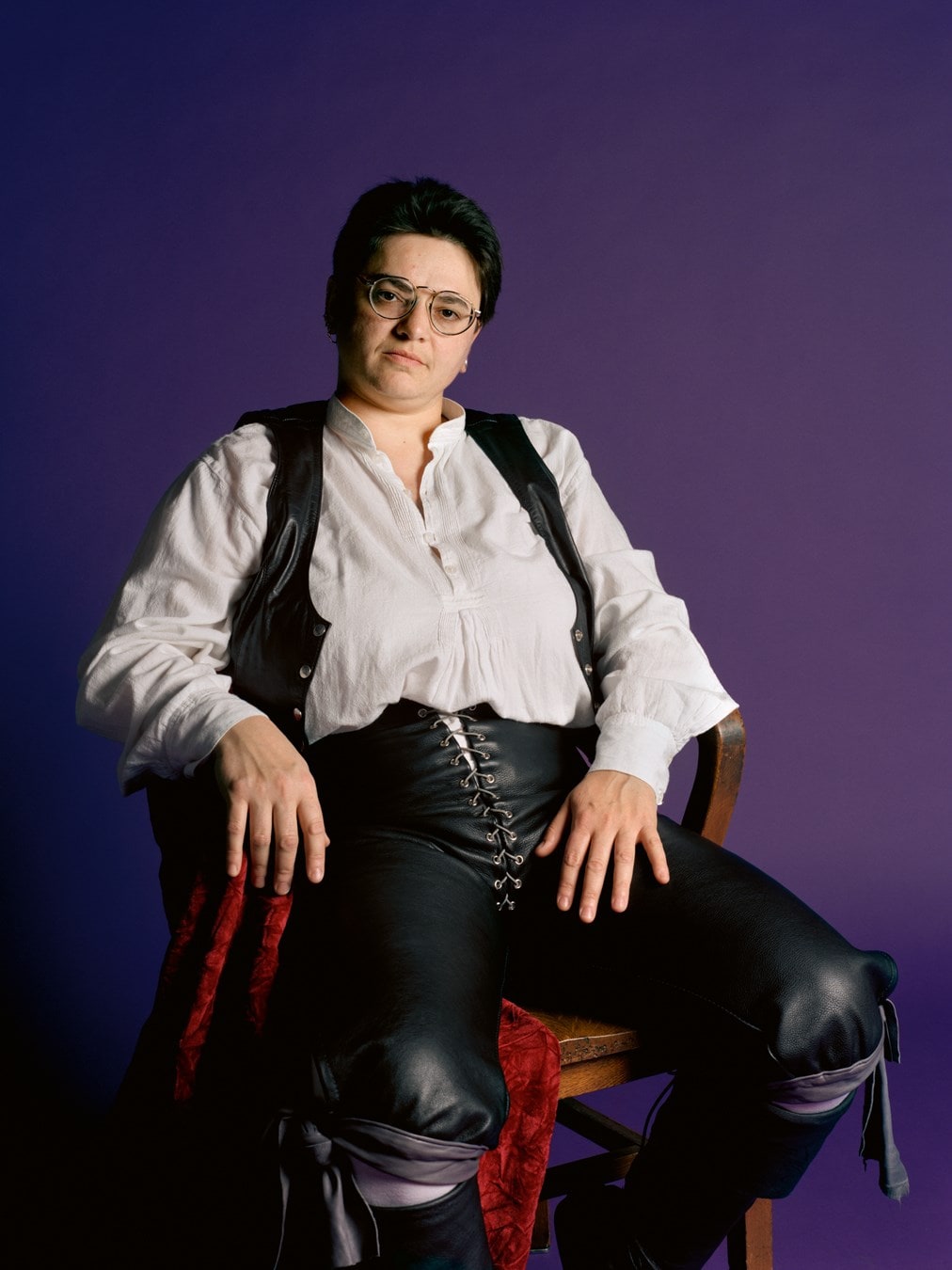
CO: There was. I have Pat [Califia’s] early S&M guide, the lesbian S&M guide too, where it talks about what consensuality is within the community. When I joined The Outcasts [an organisation established in San Francisco in 1984 for women interested in BDSM] in 1984, which was founded by Gayle [Rubin] and Pat and Dorothy Allison, that was my crew in San Francisco as I came out as a leatherdyke – they had literally already written the manuals around that. It did feel incredibly safe because there was this book that told me how to do it.
MN: For me coming of age in the early 1990s, I had a similar feeling, whereby everyone you’re mentioning had come just before me, and I felt like there could be a “both/and” about this. This is both shameless, blameless, all good activity, and we can also acknowledge that there’s all kinds of crazy shit that is in us and around us and has been in our past.
There’s this part in the National Portrait Gallery catalogue where it says, “Cathy Opie’s work has always been about care, whether as a teacher, a mother, a photographer … ” I thought it was interesting because I teach and I’ve always taught – but some people try to keep teaching out of their biography. You haven’t.
CO: No. Whether it was Allan Sekula deciding to rip up my photographs in front of critique class or even my high school photography teacher ripping up my photographs – I’ve had a lot of male teachers rip up my photographs. Very interesting that they think it will go away. Will ripping up a print in front of a group of people make your work go away? No.
MN: I can’t believe that happened. What was Sekula’s point?
CO: That I was a bad printer. I said, “You said for us to bring work prints into class. If you want me to bring in finished prints, then I would imagine you would say, ‘I want finished prints.’” He goes, “Well, these work prints are just too bad.”
MN: Do you feel like those experiences made you decide to be a different kind of teacher?
CO: Yeah. I never critique to take apart, only to build up. The critique is there but it’s never done without absolute care and hoping that I can reach what the students are trying to achieve and give them more information. That wasn’t the popular way to go about criticism. I feel like, in a weird way, it was those early years when I was a student at San Francisco Art Institute, and at CalArts, that it was the high critical discourse. I graduated from CalArts in 1988, so we’re talking Douglas Crimp, Catherine Lord, we’re talking October magazine up the wazoo. I wasn’t that kind of thinker, so I felt very beat up and very stupid – “I’m not intelligent enough to be in this group of people.”

MN: Did you feel like you were in the wrong place?
CO: I think that every place is the wrong place for me. It was for a really long time. I think to be settled as a human being is an incredibly hard thing. That’s what I’ve learnt at almost 65. Maybe all of the feelings of me being in the wrong place or not good enough or that I was disappointing everybody around me, maybe the lostness that I felt during my childhood and that I was community-less … I remember going to San Francisco Art Institute in 1981 and everybody was wearing black and I was still wearing polo shirts and came from suburban Poway, California, and Ohio. I liked to play golf and I liked to swim, and that wasn’t going to fly in 1981 in the San Francisco art world. So I went off and I played golf by myself and had a job by myself.
Idexa [Stern, the San Francisco-based tattoo artist] said to me just this past week, “What’s interesting about you, Cathy, and about lesbian poker night, is that I think you have more communities than anybody I know. You don’t stick with one group. You’re not a posse person. You don’t have to have a specific group of people around you to feel complete.”
MN: I’m really interested in you feeling like you didn’t belong, because people write about your work so often as –
CO: Community, community, community. I had a posse once, when I moved to New York. I was going out with Daphne Fitzpatrick, in 1998, 1999. I didn’t get the job at UCLA, so I thought, “Well, I’m going out with a woman from New York. Let me just go ahead and apply for the job at Yale.” And I got it, which was shocking. I moved to New York for a year and a half and that group are still my tight group of friends. They’ve all fractured in different ways, but it was the first time in my life that I had a posse. But I’m not really interested in that, to tell you the truth. I love friendship and I love history and if something’s not working for me within a friendship or within a history, I try to fix it. But I am also able to let go because I recognise, at almost 65, how important it is to let go of things that aren’t working.
MN: In the spirit of things that are often said about your work – like with the Domestic series [1995–98], people will say, “Cathy Opie was longing for a domestic space that she didn’t yet have.” Is that sentence a way that you would have conceptualised things to yourself at that time?
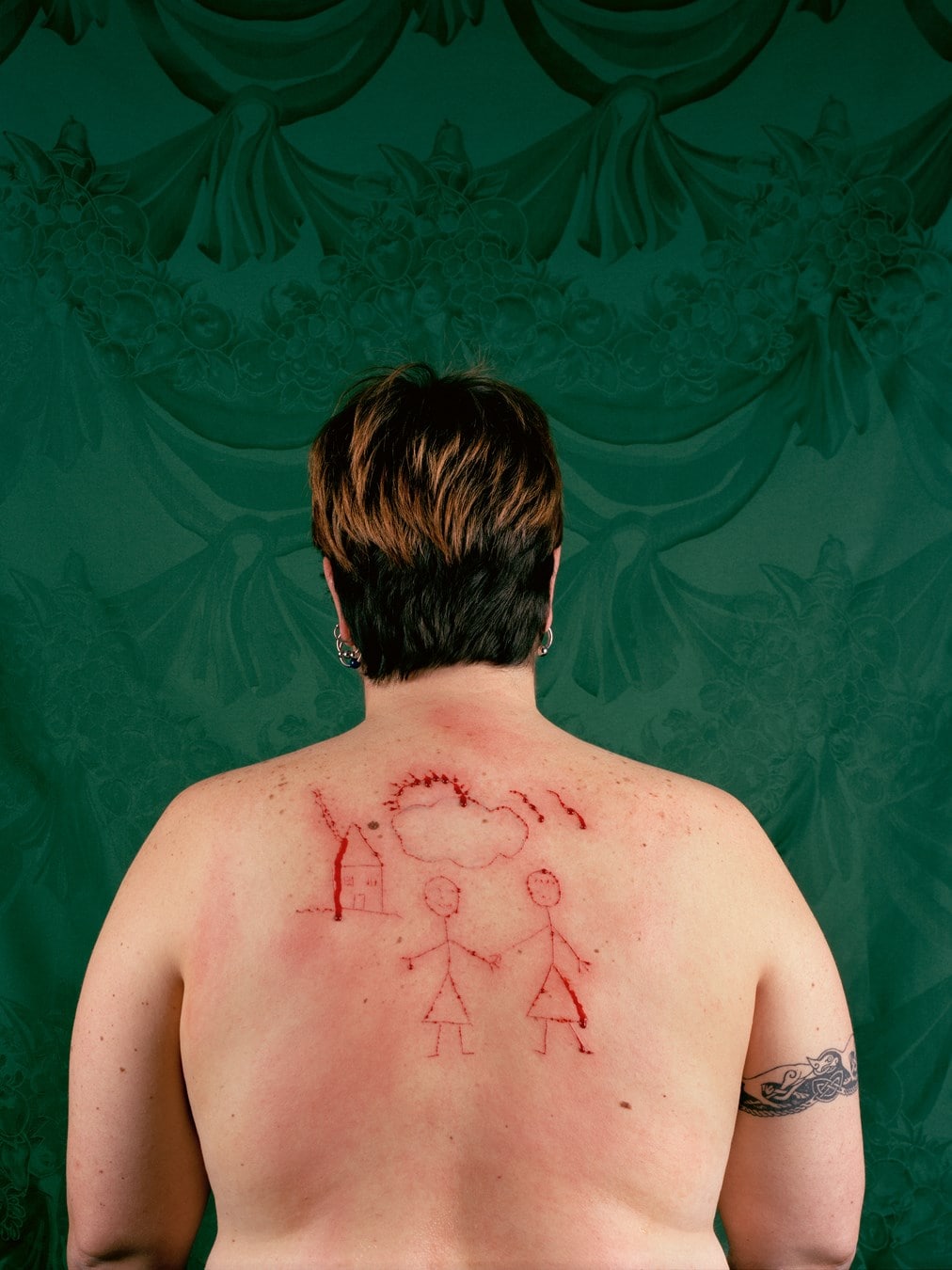
CO: Yes and no. The cutting of the stick-figure girls on my back was me definitely wanting domesticity, knowing that I wanted to be a mother, but there’s no child in that cutting. There’s not even a dog in the cutting. It’s just two stick-figure girls. We can read a lot into why I made that drawing. It was made after my first big break-up, after my first domestic break-up. And it was with Pam [Gregg, an artist and curator].
MN: The first person you lived with?
CO: The only person I lived with besides Julie [Burleigh, Opie’s ex-wife] in my entire life. Pam was for two years. She broke up with me and had an affair, and I sat there drawing those two stick-figure girls on my notepad – when phones were still attached to cords and you didn’t wander around the house, I would doodle the whole time. And then with the blood, my friends were dying of Aids and so my heart was broken. Tony Greene had just died. I was dealing with major heartbreak. When I asked Judie Bamber to do the cutting, because she had never done cuttings before, it was because I wanted the apprehension. I wanted as much apprehension about what domesticity meant to me.

MN: What did she do it with?
CO: A scalpel, always a scalpel. She practised on chicken breasts first because she had never cut into a body before, a live body.
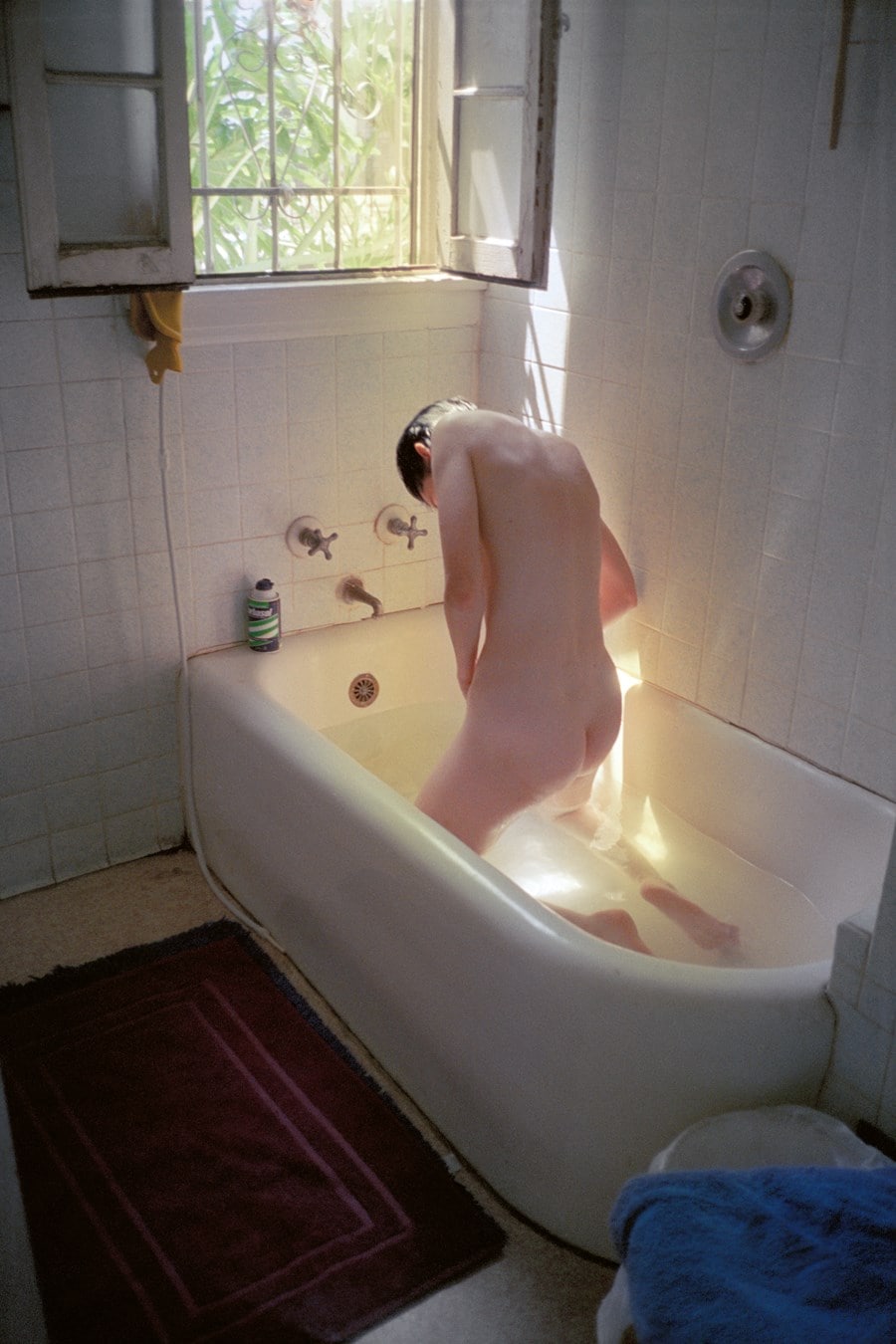
The reason I made that body of work and the reason it was so important was not because of my own desire for domesticity, it was because of the history of visual representation. Peter Galassi did that huge show at MoMA – Pleasures and Terrors of Domestic Comfort – and there were no queers in that. They were showing Greg Crewdson’s 8x10 work, Tina Barney’s 8x10 work, all this kind of photography, and I knew a dyke would never be included in that show. So I decided to make my own history within that history. That’s why I made it. Because without representation there is no visibility. That’s just the way it goes.
MN: I was surprised and excited to learn, reading this catalogue, that you have these illustrious, long-ago relatives who were painters.
CO: John Opie, Royal Academician.
MN: Yeah. I was thinking about this balancing act or double occupation that you’ve held for some time, both as photographer of the marginalised and “Catherine Opie: American Photographer”. Do you think that, having some kind of linkage, there was already a feeling of, “I do have a place in this mainstream story of art history”?
“I think that every place is the wrong place for me. It was for a really long time. I think to be settled as a human being is an incredibly hard thing” – Catherine Opie
CO: It was more about how history is constructed beyond art history. It’s about who gets to be seen, who doesn’t. Choosing Holbein to make my own royal portraits, and not do Nan Goldin work or Jack Pierson’s or Wolfgang Tillmans’ or the same kind of work that was being done alongside me, was to say, “Hey, we are royalty too. What is celebrity within this culture? Who gets to be imaged within this culture?” Maybe that goes back to the fact that I grew up with John Opie paintings in my house from the Royal Academy.
MN: I was thinking about Eileen Myles’s poem, An American Poem, where they say, my secret’s finally out – I was hiding as a poor dyke but the truth is I’m a Kennedy … in Eileen’s case, so far as I know, there is no John Opie or Kennedy in the background. But I was thinking of the bravado necessary to say, “These are the portraits that matter.”
CO: You wonder if it comes from privilege in that way. It’s an interesting question, and I’ve thought about it a lot because I come from a very old American family on both sides. My father owned the largest political-campaign collection in American history. I grew up understanding American politics through the representation of campaign materiality, including my O-P Craft box right over here, my dad’s box – this is Abraham Lincoln’s death ribbon.
MN: What? No.
CO: Yeah. This is the stuff that I grew up with as a kid. I had all the original Lincoln ferrotypes, I had George Washington’s original campaign button in my household. All of this gives you an enormous amount of material as a young child to think about what representation is, and you really begin to unpack it because you’re learning it through American history. My dad was obsessed with his campaign collection. He started it in high school. There was no eBay. Collectors would meet up around the country and go through things together.

MN: Well, everything makes a lot more sense. Forget John Opie. There’s your dad.
CO: There’s Bill Opie. Yeah, O-P Craft was a family company in Sandusky, Ohio. We also owned the American Crayon Company partly. My mother’s family from Seneca Falls goes all the way back to colonial days of being abolitionists. My father’s family were slaveholders. I come from 1690.
MN: No recent immigrants that you know of?
CO: Zero. I’m incredibly American, with an intense knowledge of American history. My work vacillates in all these ways, from the landscapes to the portraits to the way one would map out a campaign identity. Maybe I’ve just been campaigning this whole time for history, one could say. Not that I’ve ever said those words before. But I have this really interesting, rich history. John Opie of the Royal Academy, who was best friends with Sir Joshua Reynolds. My uncle, also John Opie, is a painter – that’s one of his paintings – and he’s married to my Aunt Sue, who’s the sculptor of all these bronzes you see. My dad did not want me to be an artist. He made me get my real estate licence when I was 18.
MN: That’s really funny. And you did?
CO: I did, yeah, and I probably would be pretty good at selling houses.
MN: I have no doubt.
CO: My dad would always tell my Uncle John, “The reason Cathy is successful as an artist is because I taught her business.”
MN: Right, because of that real estate licence. I was thinking, I love your football players series [High School Football, 2007–09]. It’s funny, I recently published this mini book that has to do with Taylor Swift – I’ll just back up a little to say that The New York Times ran an article about Swift and poetry when her album The Tortured Poets Department came out. They were interviewing poets and they interviewed Eileen Myles and I knew they probably reached out to Eileen thinking that because Taylor is this straight white femme icon Eileen would take her down.
CO: Well, they always pick the dyke to take down the billionaire straight girl.
MN: But the thing is that they missed, because Eileen was like, “I think she’s our people. I feel a lot of kinship here.” They missed in part, I think, because they presumed that the marginalised have the same stance toward the mainstream that the mainstream has toward the marginalised, which is one of non-understanding, non-kinship. In talking to people about my piece on Swift, some mainstream folks have been like, “Why would you, of all people, be writing about this?” And I felt in a weird way affronted, like, “All of it can belong to me. Why would this be off limits to me?” So – back to the football players! I don’t see any real departure when I look at your work between those and that and the other. I don’t feel you do either.
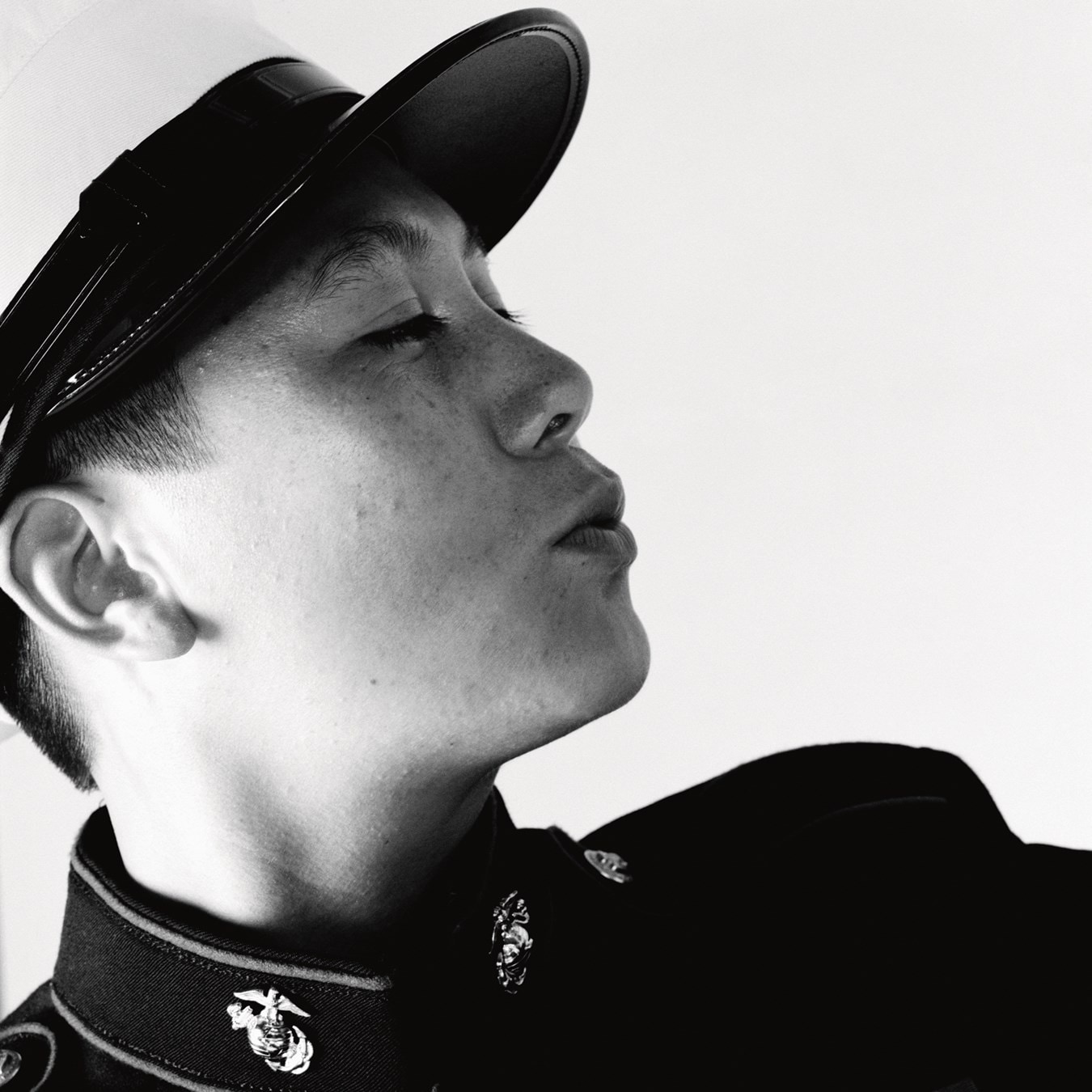
CO: No, and the question that freaks people out is why would I think that a high school football player is vulnerable? It’s like, you’ve picked something that is so secure, so profoundly iconic, wrapped up in ideas about masculinity. But we’re not talking about them as vulnerable when they’re going off to war, to Afghanistan and Iraq, and that’s a problem for us within our society. What is iconic and secure is not necessarily that secure, depending on how our government is using these bodies. In the same way that the queer party wasn’t safe when [Senator] Jesse Helms was holding up the Robert Mapplethorpe photographs [on the floor of the Senate in 1989], a 17-year-old who is about ready to graduate, who has no prospect for college and is from an impoverished family where his only choice is going into the military, why would I not think of that as a vulnerability? And also, just the awkwardness of their bodies – it ends up being human. If I can get everybody to understand a larger idea of how we segment our societies – “I can’t talk to this person,” or, “I don’t want to know that person because they’re like that.”
After I made High School Football I worked on Girlfriends, which your partner Harry was in. I just wanted to go back to dyke masculinity. I wanted to talk about butchness and butch desire. After three years of chasing around young high school boys I just needed to get back to myself.

MN: What’s your rule set for commissions these days?
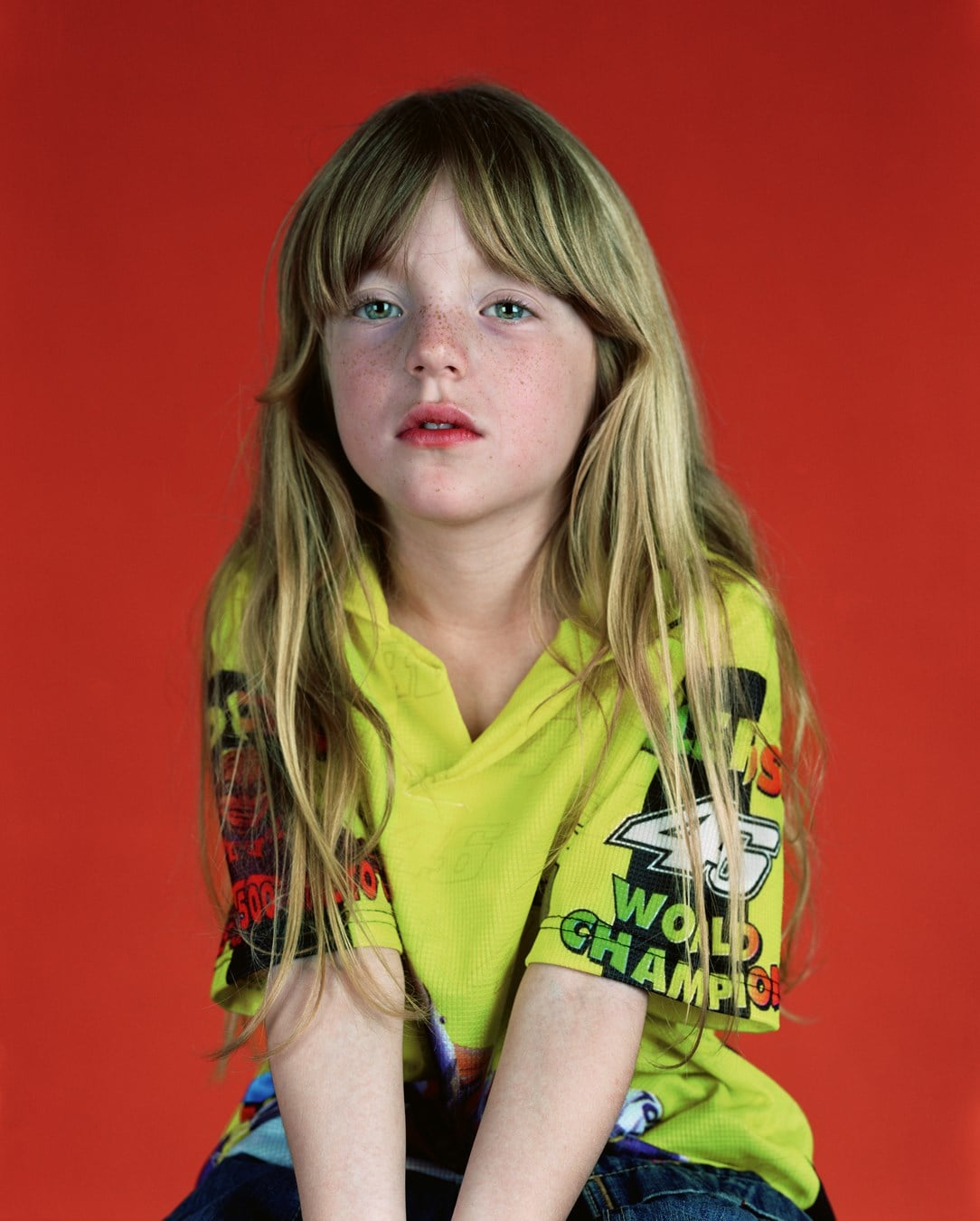
CO: A few times I’ve not taken commissioned portraits because I don’t believe in their political thoughts. In the editorial work, early on I realised I was being used as the dyke body to upset – kind of like you were saying about Eileen. But you’re not going to use my identity to get a portrait that won’t be humane. Because every single portrait of mine, no matter what, is going to be holding this kind of internal-external space.
MN: Why would people commission you thinking that you were going to be the upset or the mockery?
CO: That happened a lot in the 1990s. Spin magazine sent me to Matthew Hale’s house. He’s in prison now, but he was one of the major white supremacists. I ended up photographing him on the edge of his childhood bed, because he still had his twin bed in his family home. But I had to walk over the Star of David into the Hitler room, and I think that Spin thought, “She’ll take an Arbus portrait.” But the thing that people didn’t understand about me is I’m not Arbus.
MN: I was interested in the Joan Didion piece you included in the catalogue, On the Road. I wondered if you’d tell me about your feelings about Didion. Also there’s this refrain in the piece that’s being asked over and over again – “Where are we heading?” I’m sure with you, like myself, nearly every interview one does, people want to know, “What do you think of our moment and where are we heading?” I wanted to ask you about this imperative to take that temperature.
CO: Well, I started reading Didion in high school in California. I had amazing public school high school teachers. This one literature and poetry teacher by the name of Frank Barone at Poway High would have us all sit in a circle around this dead log that grew one little piece of life out of it … This is the 1970s in Southern California, but it’s cow country. You can ride a horse to school and put it in the stable behind the school, literally. It was a 600 graduating class in 1979, but nothing was built around there yet. It was just crazy. Barone had us reading Didion and all these amazing thinkers. The way that Didion wrote just sunk into me. What she mapped out with language for me was the concrete possibility of speaking one’s truth in any one given moment. But it wasn’t, “This is how you should be.” It was, “This is just how I’m presenting my observations” – and those observations are incredibly photographic in terms of how she writes. She writes in a way that you can feel, that you can see, and she became a hero of mine. Her written word was always my truth in a weird way.
MN: Did you follow it all the way through to the end?
CO: All the way through to the end. Didion’s the one portrait that I never got to make. It was the most important portrait I ever wanted to make. I know Susan Traylor [a longtime friend of Didion’s late daughter, Quintana] really well. Susan tried for years, gallerists tried for years. And then when Juergen Teller did that fashion ad with Didion, and it wasn’t me being able to photograph Didion, I was like, “Are you fucking kidding me?” Another one on my list for portraits was [the American artist] Roni Horn – Juergen did this amazing portrait of Roni with her shirt open, and I was like, “Fuck you, Juergen Teller!” It’s interesting, there are these people that once they’ve been photographed by another person in a certain way, then you’re out, you don’t chase after them.
MN: Do you make meaning out of people not doing it? Like when Didion’s not doing a portrait, do you make a narrative out of why?
CO: No. I have one portrait of Didion and it’s hilarious. We just happened to be at the Met at the same time for the Arbus show. All of a sudden, around the corner comes Didion in a wheelchair pushed by Susan, and I pull out my camera and get a picture of her. But meanwhile, the security guard at the Met is like this with his hand, so there’s this hand, with little frail Didion in the wheelchair. It will never be used. But there aren’t a lot of people that I’ve wanted to photograph that I haven’t been able to.

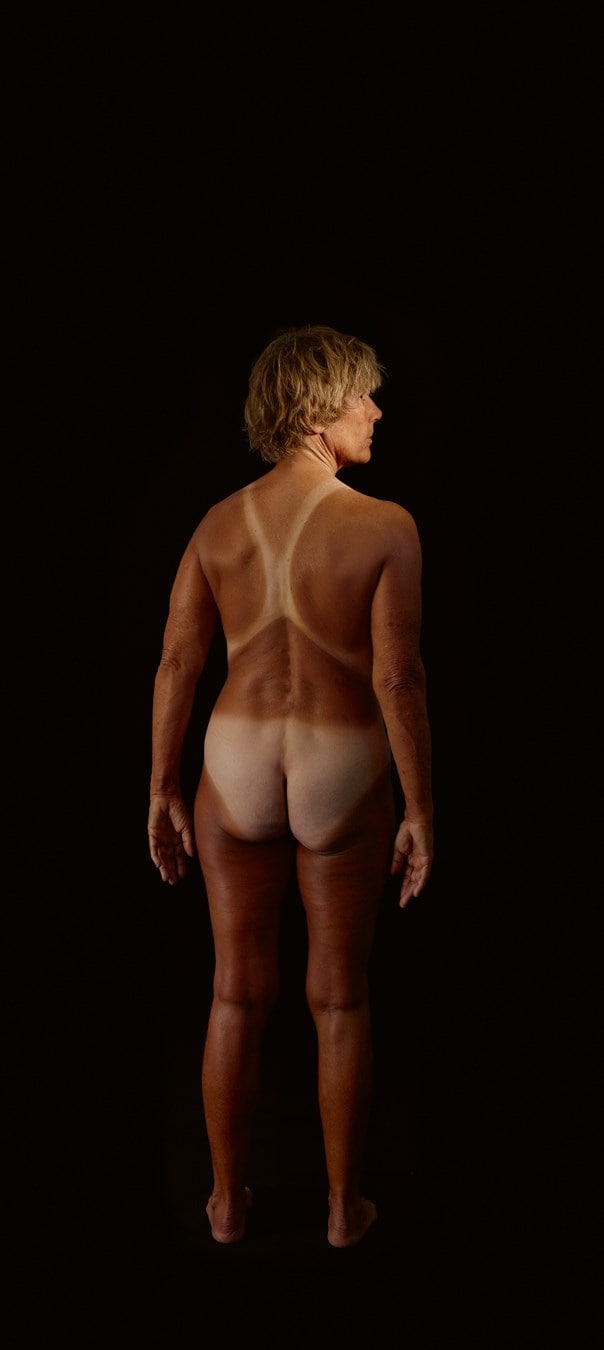
MN: I think so much happens in transmission from generation to generation. You need female, for lack of a better word, titans, who instruct you or point you towards different things. I was thinking about this when I was looking at your work … Now I’m feeling bizarrely teary. When I was coming up, the work of so many gay men was really important to me as a writer. Obviously, I was connecting to a lot of particular things that mattered. But it wasn’t until I met Eileen when I was 19 that I let in the whoosh of dykedom … And once it came in – and you were part of that – there was so much transmitted to me, like, “Hey, this all really matters. Cathy Opie really matters.” And then I was able to become a different kind of writer or feminist. You making these people famous in a way by photographing them, it does impute royalty to a whole scene.
CO: The touching thing is what has happened generationally now. Those early portraits were done in the early 90s. At MASP [São Paulo Museum of Art], when I have a young 14-year-old trans person come up to me with their mom and say, “Thank you so much for your history and for seeing, because I wouldn’t be as comfortable in the world without your imagery,” that does make you cry. You really do feel like you contributed something to somebody’s actual wellbeing.
MN: Do you get a lot of that? When I grew up we all hailed these people who made queer theory for us, who made queer life more visible and possible. And yet over the past few years I’ve noticed a very different tone – one that’s at times contemptuous of queer elders. At first it was very shocking to me. It took me a while to adjust to the difference in tone. I adjusted as any good teacher does and tried to understand where it was coming from. I think when people are around long enough to become institutions they become things to slay, and people often look to slay the tall poppies … and of course there’s all the precarity in academia and the generally ireful political climate …
CO: Well, that’s really fraught now. That’s partly why I named my last show at Regen, with the history of LA that I was doing, harmony is fraught. Because we have struggles and all this time we’re thinking that we moved the needle forward. And then it’s a huge scratch on the record, to use the analogy of analogue. It was interesting for me to navigate it in the past few years when I was at UCLA as chair [of the Department of Art], how much harm the Trump administration had done.
“I recognise, at almost 65, how important it is to let go of things that aren’t working” – Catherine Opie
MN: What year did you retire?
CO: Two years ago, right after the pandemic. I took a year off and did the body of work at the Vatican – Walls, Windows and Blood. And then I came back to chair the department for two years and retired straight after that. It was coming out of Covid, coming out of Trump, like, “OK. Well, was that a blip?” But I knew it wasn’t a blip because I had already been tracking all of this from photographing the early Tea Party march rallies. One of the things the National Portrait Gallery show does well is track the politics. You not only have the pope in the window, you also have the women from MichFest [Michigan Womyn’s Music Festival] with their cameras, talking about what it is to photograph butches. The whole show folds in this larger idea again of we’re not such a split society.
MN: So maybe this links back to the second part of the Didion question of where are we heading…?
CO: In the story [I included in the catalogue] she’s on a book tour with her daughter, but the wandering is very much how I think about my own life. As I traverse LA or anywhere, there’s a constant script going on in my head. So when I’m looking out the window and I see a building that’s lit a certain way, I might end up saying, “Well, the way that the light is on the windows is a metaphor for this,” and it’s very much in the way that Didion would look at the world, mapping out a sensibility of a larger structure of our society.

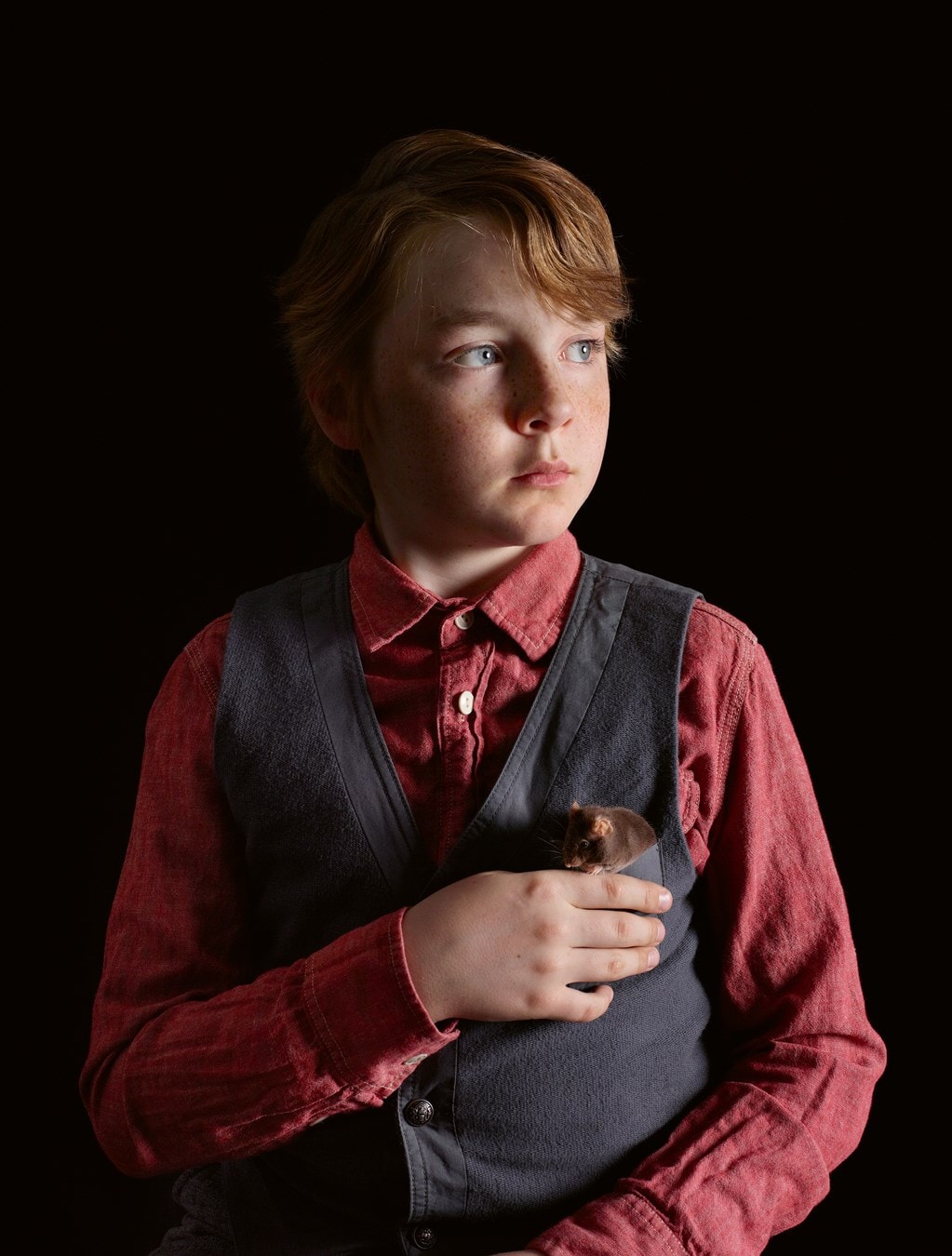
MN: Is reading a big part of your practice?
CO: Huge. I’m a voracious reader, always have been. It was a way that I could escape as a child. If everybody else in the house was watching TV, I’d be curled up with a book in another world. Books are safe for me.
MN: So, [Giuffre’s] Nobody’s Girl – that might indicate that you read widely.
CO: I read widely. I very rarely read theory any more. Well, I’m a huge Kim Stanley Robinson reader. I think he’s one of the more interesting writers about the future, and I’ve been reading him since 1982. As soon as a book comes out, I read it. Same with Octavia Butler. I am really interested in dystopia, but futurist dystopia that’s not sci-fi and planetary things. I want it to reflect on the world that we’re living in. Then I’m a big memoir reader. Charles Schulz’s biography was beautifully written, and Schulz was really important to me. Walt Disney’s biography helped me understand what it was visually he was making. These are a way for me to understand how they are as artists, where it’s not necessarily them telling me how I should think about their work, but it’s telling me about this interiority that I might not know about.
MN: Thinking about biography, you’ve said a couple of times during this conversation, “Now that I’m almost 65 … ” And we were talking out in your studio about how when you’re in the archive of your own work, you can’t make new work. I remember Eileen saying that the older they get, the more they feel like every introduction of them sounds like a scanning of the corpse, that they’re being archived for death.
CO: Well, those who have been written about heavily, the PhDs are made about your work, dissertations are written all over the world. People are interpreting you in all these different ways. I agree, it is like scanning the corpse in a certain way.
MN: Tell me, if you don’t mind … I feel like the more well known one might get, at least in my experience, the more obvious it is what has to be protected to make new work or have new thoughts … Do you feel like the whole of Cathy Opie needs to go away?
CO: No – actually she’s coming back out in a more powerful way. I was much more protective around the time I was raising Oliver and in my marriage with Julie, because Oliver had to be his own autonomous human being in the world. I remember asking him the other day, “Oliver, what did you think about the Facebook posts of the Lesbian Cowboy [Opie’s new project]?” He said, “Huh.” I said, “What?” And he goes, “How far are you taking this, Mom?” And I said, “I’m taking it really, really far.” Meaning that I will explore every aspect of what the Lesbian Cowboy means as a body of work. It’s not going to be a show until 2028. So, “You might get embarrassed by your mother.”
MN: Sadly, there’s probably no statute of limitations on being embarrassed by one’s mother. When we’re gone, our children will remain embarrassed by us.

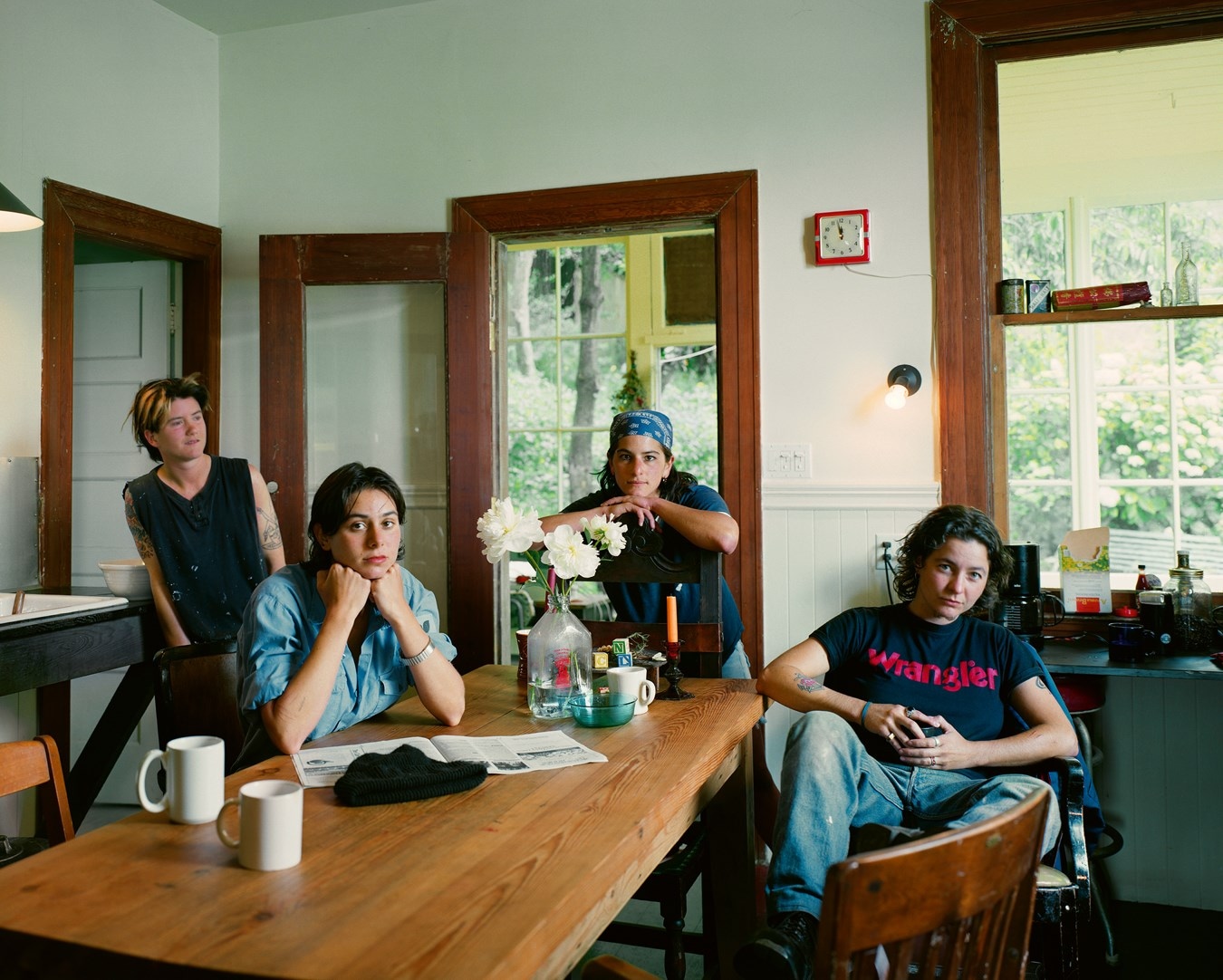
CO:Yeah, there are different things. One is when you’re making your work about your community and your friends and you aren’t shown in museums or anything yet – that’s a totally different way you’re operating. Then, all of a sudden, you become this other person and things are said about you, and you have to almost recalibrate because how are you your own true self within other people’s inventions of you? Because that’s what happens – they invent things about you. I’ve become friends with Jane Fonda – we play canasta together. She’s become my card-playing buddy and I love Jane. When I turned 60 we were having one of those really sweet teas at her house where she was emotional and I was emotional. I was like, “Jane, I really feel like I have to tell my story soon beyond my pictures because people don’t necessarily know who I am. I have this new thing that I want to be fully authentic within my life, and I don’t know what that means within this structure of who I am and what fame does. Can you guide me with that?”
MN: What did she say? I’m dying to know.
CO: Well, Jane said, “It’s time for you to write your memoir, Cathy, and it’s time for you to be completely truthful about everything in your life because, no matter what, things are going to be written about you. You need control over what you want to say and how you want to say it.”
MN: Is that on the barrelhead then?
CO: I think so. That’s why I’m reading Nobody’s Girl.
MN: Would you write it yourself entirely?
CO: No, I think I would have a ghostwriter. I’m too insecure as a dyslexic writer. Whenever I write short pieces I think people like my writing. But I have such a huge hang-up still over being the stupid girl, being the girl that was told to play board games in high school because I was thought of as not mentally capable. I think I still have too many hang-ups about that. A ghostwriter could also help the discombobulated nature that I would write it in – but I also think maybe that would be interesting, for my story to be about discombobulation. Because stories don’t have a beginning, a middle and an end necessarily.
MN: I just taught this Roland Barthes book called The Preparation of the Novel – lectures that he gave at the Collège de France. It’s a fantasy, but he’s kind of saying, “What if I were to embark upon writing a novel after all these years of doing this other kind of work? What would change me into a novelist?” What’s so moving about the first few lectures is that he’s talking about the notion of the “vita nova”, starting a new life. He says, “Now that I’m 60, I feel like the life I start now might be my last life. What’s my ‘vita nova’ going to be?”
CO: I should read that.
MN: It’s really beautiful. But what brought me to tears while I was teaching it is that, during the time he was giving these lectures, he gets hit by a laundry van in the streets of Paris – he was heading back to the college after lunch to check on some details of an upcoming seminar. His biographer says he was looking to secure a projector – it’s such a professorial thing to be, like, “I just want to double-check on the tech.” So he dies at 64 in the middle of this. But my first thought was 60 seems awfully young to say it’s your last life.
CO: No, I think you do think like that. Have you turned 60 yet?
MN: No, I haven’t.

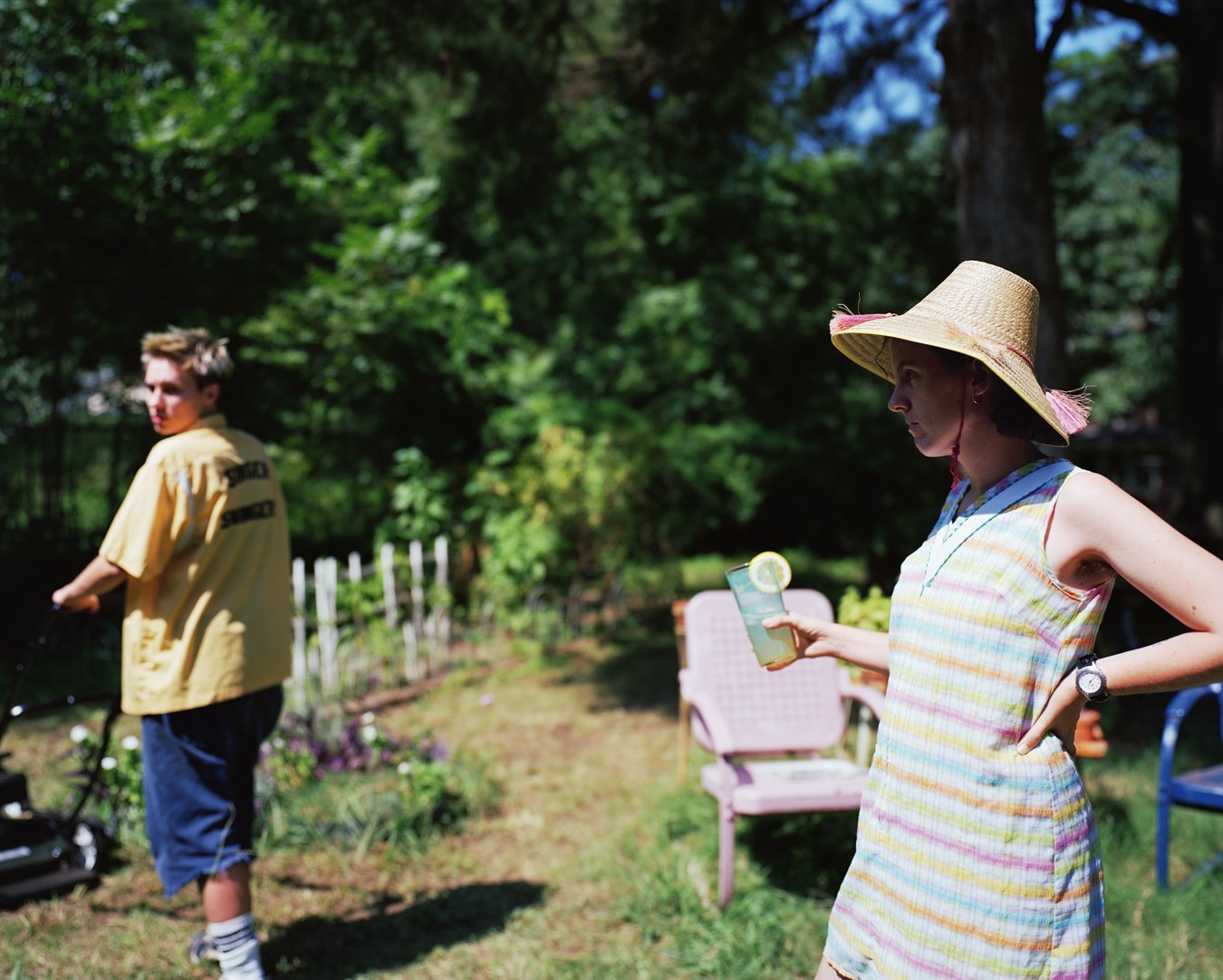
CO: Oh, it’s fascinating. I was shocked. I didn’t think that it was going to be a big thing. And then all of these things happened in my life when I was 60. I decided to end my marriage. I decided to kick my older brother, who was my abuser my whole life, out of my life. I said, “I’m never speaking to you again. You’re done now.” And after I did that I decided, four months later, to end my marriage. So 60 ended up being a lot – “Whoa, what is with 60?” I went to Jane. “Please elder me here because I don’t have a mother to talk to” – not that she’s dead, she has just never been that kind of mother. Sorry, Mom, I love you but you’re not that kind of mother. Jane said, “Cathy, you have to start writing it all down.” But it’s interesting because the thing for me, Maggie, is my work is my novels, my photographs are my novels. But it’s one of those clichéd moments where the picture doesn’t have a thousand words, actually. I never wanted to talk about my story because of how people remake your story. But I am feeling the need to start talking. I know it will start out with mowed grass. That’s what I’ve decided – that it’s about the smell of grass being mowed in the summer.
MN: I’m very excited about this for you. We could end here because it’s like your “vita nova” is beginning. As I told my students the other day, “Now, all I have to do is not get hit by a laundry van on my way home.” It’s funny because Barthes also talks about knowing what your talents are by the time you’re 60, and he says a phrase I can’t get out of my head – something to the effect of, “After that, your work becomes managed depletion.”
CO: Managed depletion. Wow.
MN: But not in a sad way.
CO: No, in a really profound way. Maybe you trust your work in a different way. Maybe that’s what I’m learning being almost 65, that the past four years have been an incredible reflection on what I tolerate and what I don’t tolerate any more, and what is the order of my life going forward. Because so many things have changed in the past four years, with my child being grown and not having the 21-year marriage that I had with Julie, and other things.
MN: Do you think LA remains a part of it?
CO: Very much, but Three Rivers [a village in the foothills of the Sierra Nevada] is more and more a part. I have that glass house of mine in Three Rivers … Have you ever been up there?
MN: I never went. I always wanted to go.
CO: Well, you’re welcome. I got a glass house on seven and a half acres. That’s where the Lesbian Cowboy lives, and she’s coming out. Her persona is coming out. And then there’s the other persona, which is the Witchiepoo lesbian nature photographer. I’ve decided I don’t necessarily know how to be Cathy Opie any more. In the same way that I was discovering who I was in the 1980s and 1990s through persona play, I’ve kind of decided to talk about the world through a persona.
MN: “The old Taylor can’t come to the phone right now – ”
CO: “Because she’s dead.”

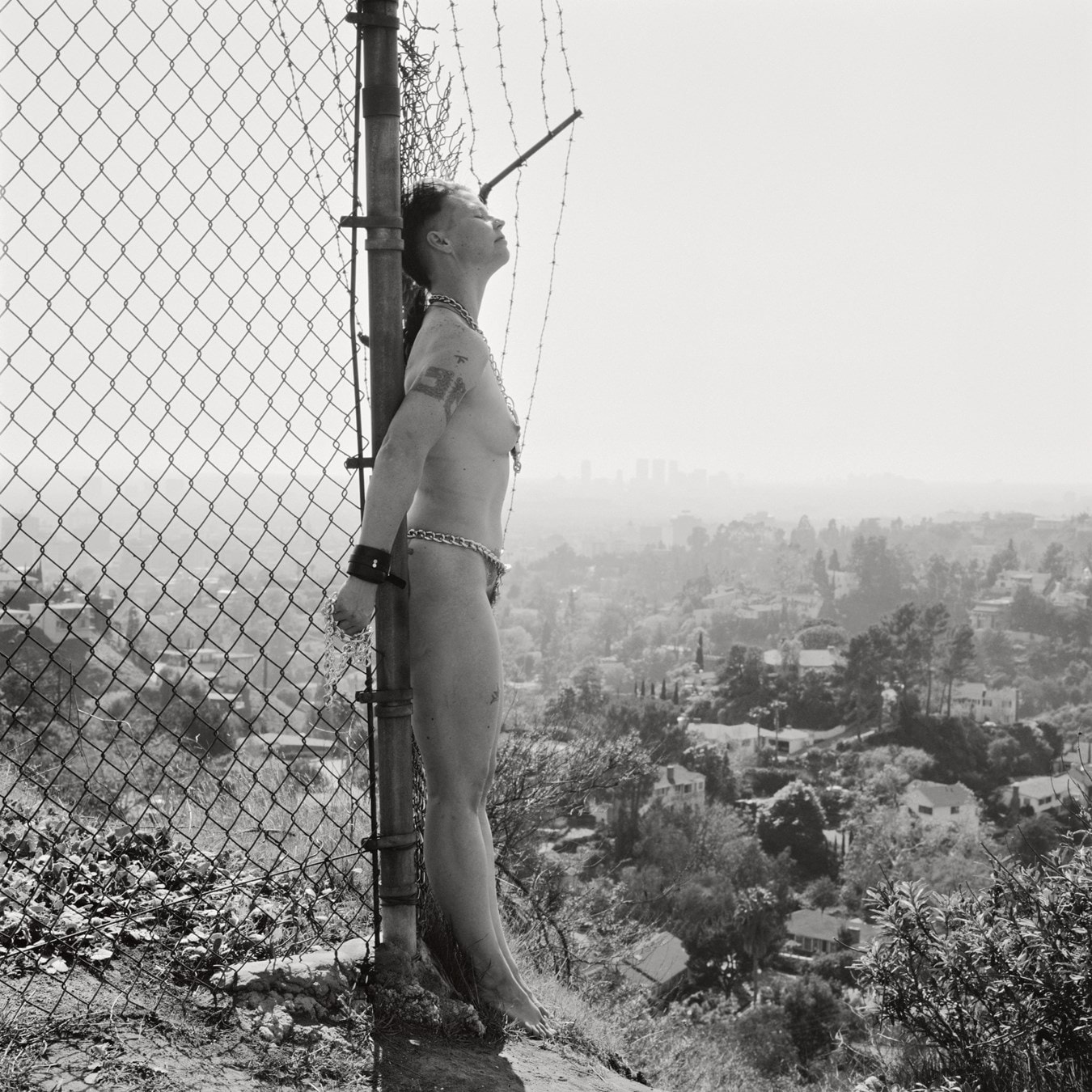
Catherine Opie: To Be Seen runs at the National Portrait Gallery, London, from 5 March to 31 May
All photographs © Catherine Opie, courtesy Regen Projects, Los Angeles; Lehmann Maupin, New York, Hong Kong, London and Seoul; and Thomas Dane Gallery, London
This story features in the Spring/Summer 2026 issue, marking 25 years of AnOther Magazine, on sale internationally on 12 March 2026.
