
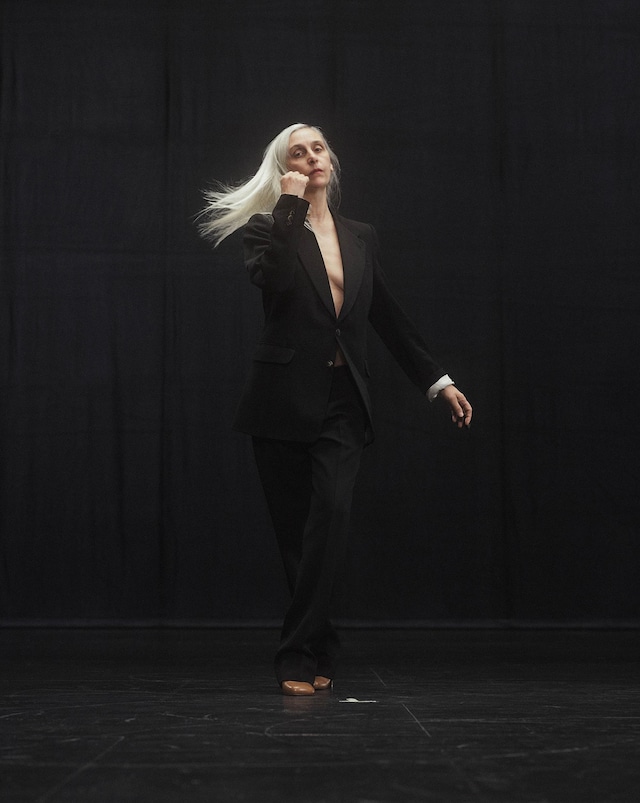
To mark the opening of her new exhibition, we offer a five-point guide to the pioneering Belgian choreographer who brought dance into the gallery space
Few choreographers have defined minimalist dance like Anne Teresa De Keersmaeker. Trained at Maurice Béjart’s Mudra School in Brussels and NYU’s Tisch School of the Arts, the Belgian pioneer burst onto the avant-garde scene in the early 1980s with a stark choreographic language built on repetition and precision. In 1983, she founded Rosas, her own dance company, and over the decades has created more than 40 pieces, from the seminal Rosas danst Rosas to daring later works like En Atendant and Cesena.
Today, De Keersmaeker’s influence extends far beyond the stage. She collaborates with contemporary composers, stages performances in unexpected venues and relentlessly challenges how audiences perceive movement. Coinciding with her new exhibition at Xavier Hufkens, Brussels, this guide will help you navigate De Keersmaeker’s austere yet captivating choreographies, unpack her headline-making controversies (Queen Bey, meet Baroness De Keersmaeker) and follow her ongoing mission to push dance into new artistic and social terrain.
1. De Keersmaeker pioneered minimalist dance
De Keersmaeker began work on her first major piece, Fase, Four Movements to the Music of Steve Reich, while living in New York in 1980, completing it upon her return to Brussels the following year. The full version premiered on 18 March, 1982, at Brussels’ Bourse Theatre. Set to four compositions by Steve Reich, Fase draws directly from the composer’s process of ‘phasing’, in which repeated musical patterns gradually fall in and out of synchronisation. The piece immediately established her signature style: minimalist, geometrically driven choreography in which repetition generates both structure and emotional intensity. In the second movement, Come Out, two dancers sit on stools beneath suspended lamps, endlessly duplicating angular arm gestures as the music loops a haunting vocal fragment: “I had to, like, open the bruise up and let some of the bruise blood come out to show them.” Here, as across De Keersmaeker’s oeuvre, repetition functions as a form of exposure and reckoning.
2. Her work became a cultural touchstone
With Rosas danst Rosas (1983), De Keersmaeker developed a lexicon of everyday gestures – walking, sitting, collapsing, adjusting clothing – and elevated it to the level of high art. Structured in four movements and a coda, the 95-minute work is performed by four women who remain onstage throughout. Its underlying premise is deceptively simple: the course of a day. Yet through rigorous repetition, the choreography transforms mundane actions into something hypnotic and defiant. The dancers move through exhaustion, boredom and aggression, making visible the rhythms and pressures that shape women’s bodies in daily life. Think of a Chantal Akerman film – durational, unsentimental, obsessively attentive to time and labour – and imagine if it were a dance.
The piece’s distinct choreographic language resonated far beyond the contemporary dance world. In 2011, viewers noticed striking similarities between Rosas danst Rosas and Beyoncé’s Countdown music video. De Keersmaeker responded gracefully but pointedly: Beyoncé “sings and dances very well,” she wrote, but in a pop context, the choreography loses its original force. “In the 1980s, this was a statement of girl power … Now, I find it pleasant, but I don’t see any edge. It’s seductive in an entertaining consumerist way.”
3. She expanded choreography through film and architecture
De Keersmaeker sought to expand dance beyond the stage, experimenting with film and architectural space in works such as Rosas danst Rosas (1997) and, before that, Hoppla! (1989). In Thierry De Mey’s film adaptation of Rosas danst Rosas, the eponymous 1983 piece is relocated to a former technical school in Leuven designed by Henry Van de Velde. As the dancers move through stairwells, corridors and classrooms, the choreography acquires a sharpened edge: these are schoolgirls gone awry, reclaiming a space once defined by discipline. A similar tension animates Hoppla!, directed by Wolfgang Kolb and filmed in the Ghent University Library to music by Béla Bartók. In the library’s austere reading room, four women in plain black dresses spin, lean against walls, stomp their feet and reveal fleeting glimpses of white underwear, relishing their defiance of the institutional structure.
Crucially, these films weren’t just for die-hard dance fans: broadcast on major European TV channels and screened in art-house cinemas, they reached audiences who might never step foot in a theatre. (Rosas danst Rosas now thrives online too, with Letterboxd users leaving reviews ranging from “women always so raw and playful” to the aptly succinct “cool asf”.)

4. De Keersmaeker created ambitious, large-scale works
Over the decades, De Keersmaeker has stretched her sparse choreographic language across ever-larger stages, testing how restraint and repetition can resonate at extremes. This ambition is perhaps most apparent in En Atendant (2010) and Cesena (2011), a diptych tracing the passage from day into night. En Atendant unfolds to a single voice accompanied by vielle and recorder, while Cesena draws on the intricate polyphonies of ars subtilior, a 14th-century musical style known as “the subtle art”. Created for the Avignon Festival, the two works were performed back-to-back over a single night in the vast courtyard of the Palais des Papes: En Atendant ended in near-total darkness with a lone naked figure pacing the space, and Cesena began before dawn, gradually refilling the void with sound, bodies and light. However, not all audiences were prepared for this degree of slowness and austerity. When the diptych travelled to the Brooklyn Academy of Music in 2013, reports circulated of restless New Yorkers walking out, frustrated by the dim lighting and glacial pacing. Perhaps a certain pop diva could give it a revamp?

5. She brought dance into museums and galleries
While some of De Keersmaeker’s stage works have been criticised as too demanding, she has consistently sought out new contexts for dance – museums and galleries included. For Work/Travail/Arbeid, an itinerant exhibition staged at WIELS in Brussels (2015), the Centre Pompidou and Tate Modern (2016), and MoMA (2017), she transformed her 2013 stage piece, Vortex Temporum, into a living installation. Visitors were invited to enter and exit the space as dancers rehearsed, disrupting conventional audience hierarchies and positioning spectators within a durational, spatial and bodily dialogue. Forêt (2022), created for the Denon Wing of the Louvre, furthered this work, examining how bodies engage with a space charged with history and authority.
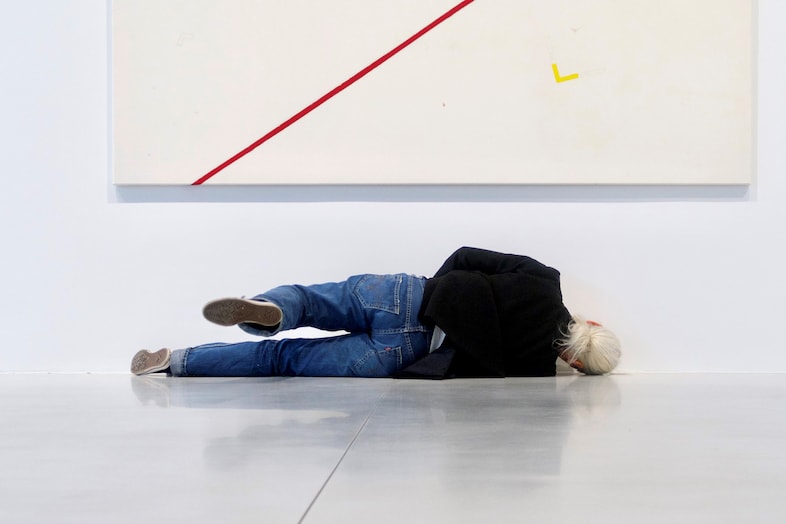
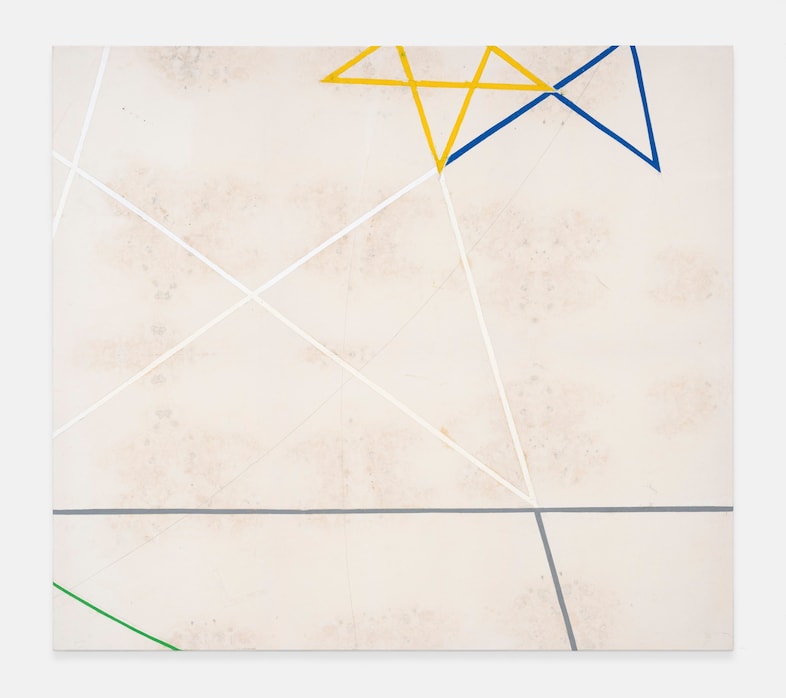
Building on these experiments, De Keersmaeker continues to rethink and expand the very conditions of her practice. This month, she’ll present As You Wish at Xavier Hufkens gallery in Brussels with visual artist Steven Fillet, blending joint paintings and works on paper with solo performances by the choreographer herself. The exhibition will also extend online, letting audiences witness how De Keersmaeker’s surroundings – from the intimacy of her vegetable garden to the visual language of beloved artists such as Egon Schiele, Ana Mendieta and Marisa Merz – inform her ever-evolving artistic process.
As You Wish is on show at Xavier Hufkens in Brussels from February 5-14, 2026 (see the online exhibition here). See more of De Keersmaeker’s work in AnOther’s feature on MoMU Antwerp’s 2023 exhibition, Echo.
