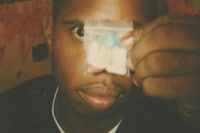
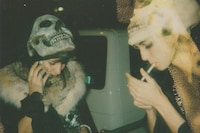
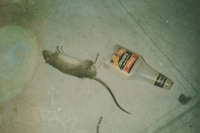
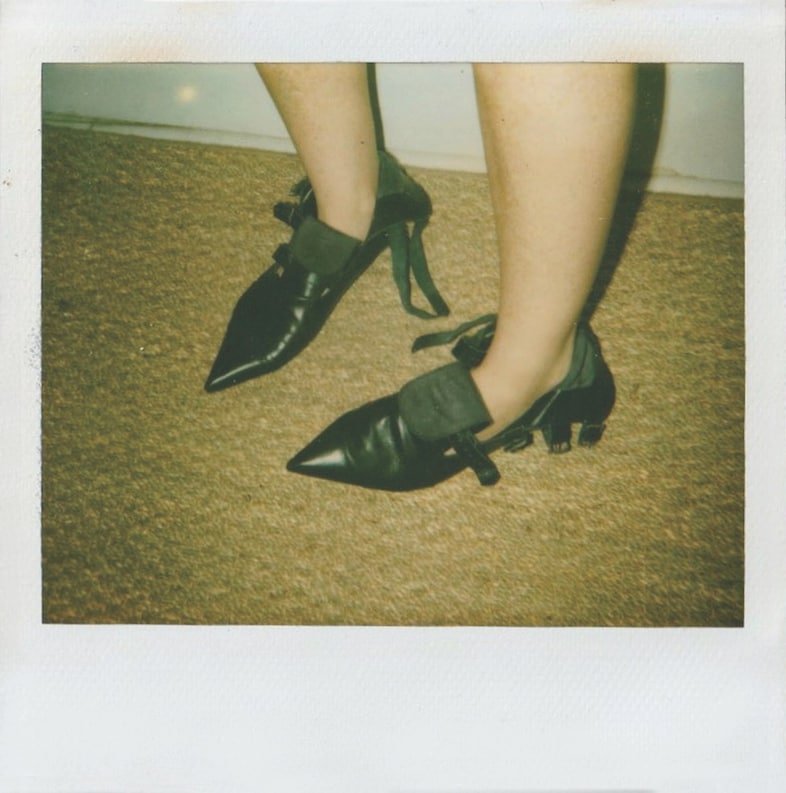
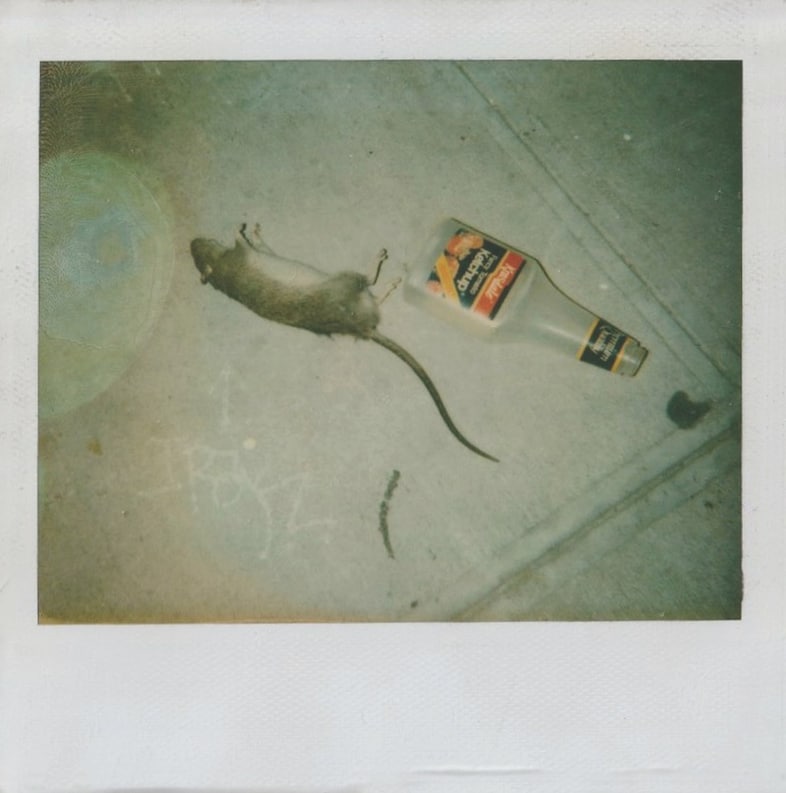
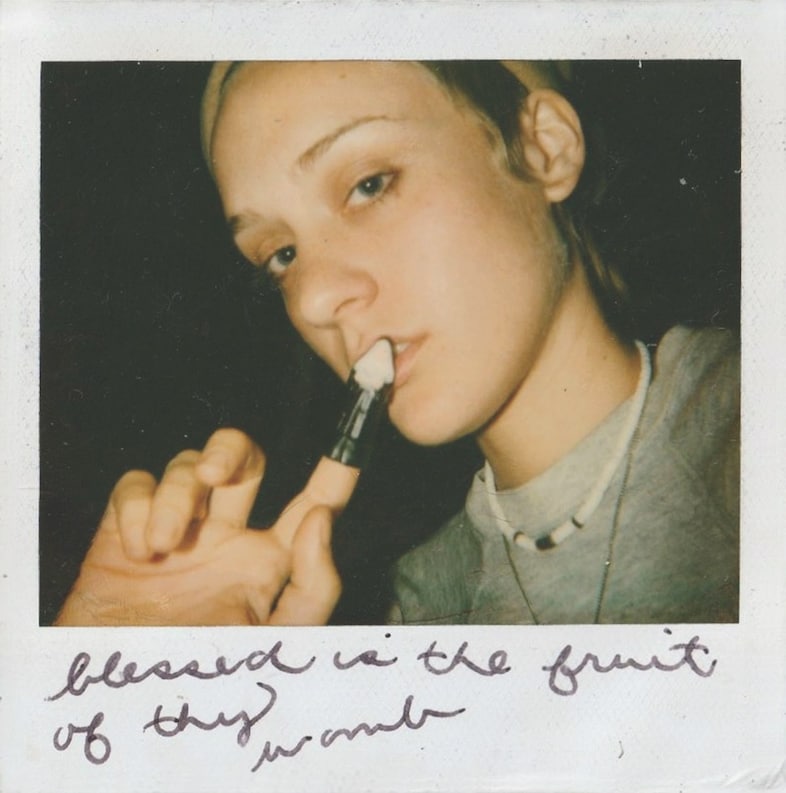
Dash Snow, Untitled, 2000-2009Courtesy of the Dash Snow Archive, NYC and Morán Morán. Featured in "Dash Snow: Carrion," curated by Jeppe Ugelvig. 21 October – 29 November, 2025. Morán Morán, Paris
Curated by Jeppe Ugelvig, a new show in Paris of the late photographer’s work is a study in the intoxicating pleasures of decadence
Just 27 at the time of his death, Dash Snow cut a dashing silhouette at the vanguard of the East Village art scene in fin de siècle New York. Hailing from the de Menil family, he abandoned the trappings of luxury for the street, joining the legendary IRAK graffiti crew. As the 1990s gave way to the 2000s, Snow pinballed around town with the effortless flair of a self-styled enfant terrible, blazing a singular path across photography, collage, zine making, and sculpture.
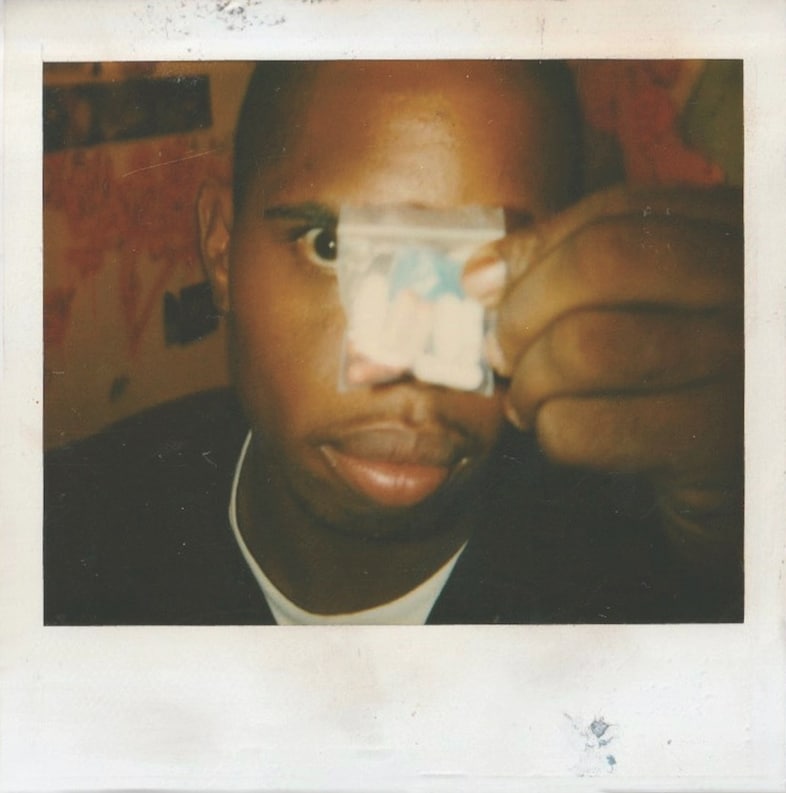
Polaroid camera in hand, Snow saw it all, crafting hypnotic images of New York at the dawn of a brave new world he would not live to see. Here, the artist is actor, collaborator and provocateur, striking a balance between public figure and enigma in the spirit of Marcel Duchamp and Andy Warhol. Snow famously posed for Dave Schubert in a bathtub filled with his Polaroids, every picture containing a story as delectable as the image itself. His photographs stand as artefacts of a disappearing New York, a poetry of people and place where the visceral thrills of sex, drugs and violence become a gateway into the endless cycle of life, death and rebirth.
With Dash Snow: Carrion, the inaugural exhibition at Morán Morán in Paris, curator Jeppe Ugelvig brings together nearly 50 Polaroid photographs that situate the artist in the long arc of history. Taking its title from Charles Baudelaire’s 1857 poem, Une Chargone (A Carcass), Carrion is a study in the intoxicating pleasures of decadence seen through the eyes of a star born to endless night.
Dash Snow, Untitled, 2000-2009Courtesy of the Dash Snow Archive, NYC and Morán Morán. Featured in "Dash Snow: Carrion," curated by Jeppe Ugelvig. 21 October – 29 November, 2025. Morán Morán, Paris
“This was the time of grunge, of Chloë Sevigny and films like Kids that shows this dirty, crumbling last bastion of Manhattan before it was developed and sanitised,” says Ugelvig. “There is that moment where Dash, Ryan McGinley and Dan Colen are on the cover of New York magazine [Warhol’s Children, 5 January 2007] as these creative babies who have a foot in art but are largely cult famous because of their street cred. That is something the art world wasn’t ready for, and he remained a divisive name in his life despite the support of people like Jeffrey Deitch. Even after his passing, the art world wouldn’t give Dash the legitimacy he deserved because he was too hot. His name was too resonant in other spheres.”
With the passage of time, Snow’s life and work can be seen within the long continuum of art history while prefiguring the present day. Alongside photographers Brassaï, André Kertész, August Sander, and Eugène Atget, who mapped the semiotics of modern life as it played out on the city streets, Snow held the Polaroid camera like a spray can, finding the spot and marking it as his. “It was a new age of America in decline,” says Ugelvig. “Dash’s take was not a countercultural response to the middle class; it was a take on the decay of American society, the decline of great cities, and how one navigates that space.”
Dash Snow, Untitled, 2000-2009Courtesy of the Dash Snow Archive, NYC and Morán Morán. Featured in "Dash Snow: Carrion," curated by Jeppe Ugelvig. 21 October – 29 November, 2025. Morán Morán, Paris
Looking through thousands of Polaroids in the archive, Ugelvig saw the world as it unfolded before Snow, and the ways in which the camera could become an extension of his character and personality. “Since Dash’s death, we’ve become used to this double position; and in the age of social media, artists today almost have to have a larger dominion than just making art objects,” Ugelvig says. This was Snow’s secret sauce: authentic, immediate and raw – the id unleashed with debauched flourish. Here, there is bare flesh, be it Jade Berreau pregnant with their baby Secret and luxuriating in the fantastical scraps of Nest (2007), or a topless Ryan McGinley, vomiting into a toilet.
“Dash had a flow of images produced running around on nights out or around the house that would often end up in a magazine,” says Ugelvig. “There was the myth of unfiltered youth culture that was similar to the Warhol economy of an earlier period in New York, where you have this particularly brilliant, intense, and iconic social world which is in the business of depicting itself and disseminating images of itself. It’s a powerful tactic we’ve all become accustomed to today.”
Dash Snow, Untitled, 2000-2009Courtesy of the Dash Snow Archive, NYC and Morán Morán. Featured in "Dash Snow: Carrion," curated by Jeppe Ugelvig. 21 October – 29 November, 2025. Morán Morán, Paris
Like Jean-Michel Basquiat, who would also pass at 27 after setting the New York art world aflame, Snow understood that myth-making was an integral part of the work. At the same time, it was a double-edged sword that could cut both ways. “My mission is to distil Dash’s legacy from the social lore that held it hostage,” he says. “He anticipated a media landscape dominated by seemingly instant and authentic imagery that is nonetheless hyper-staged, hyper-stylised, and very carefully curated. This is something Dash was aware of and attuned to 20 years ago – a mode of visual culture that has now become completely ubiquitous.”
Dash Snow: Carrion is on show at Morán Morán in Paris until 29 November 2025.