
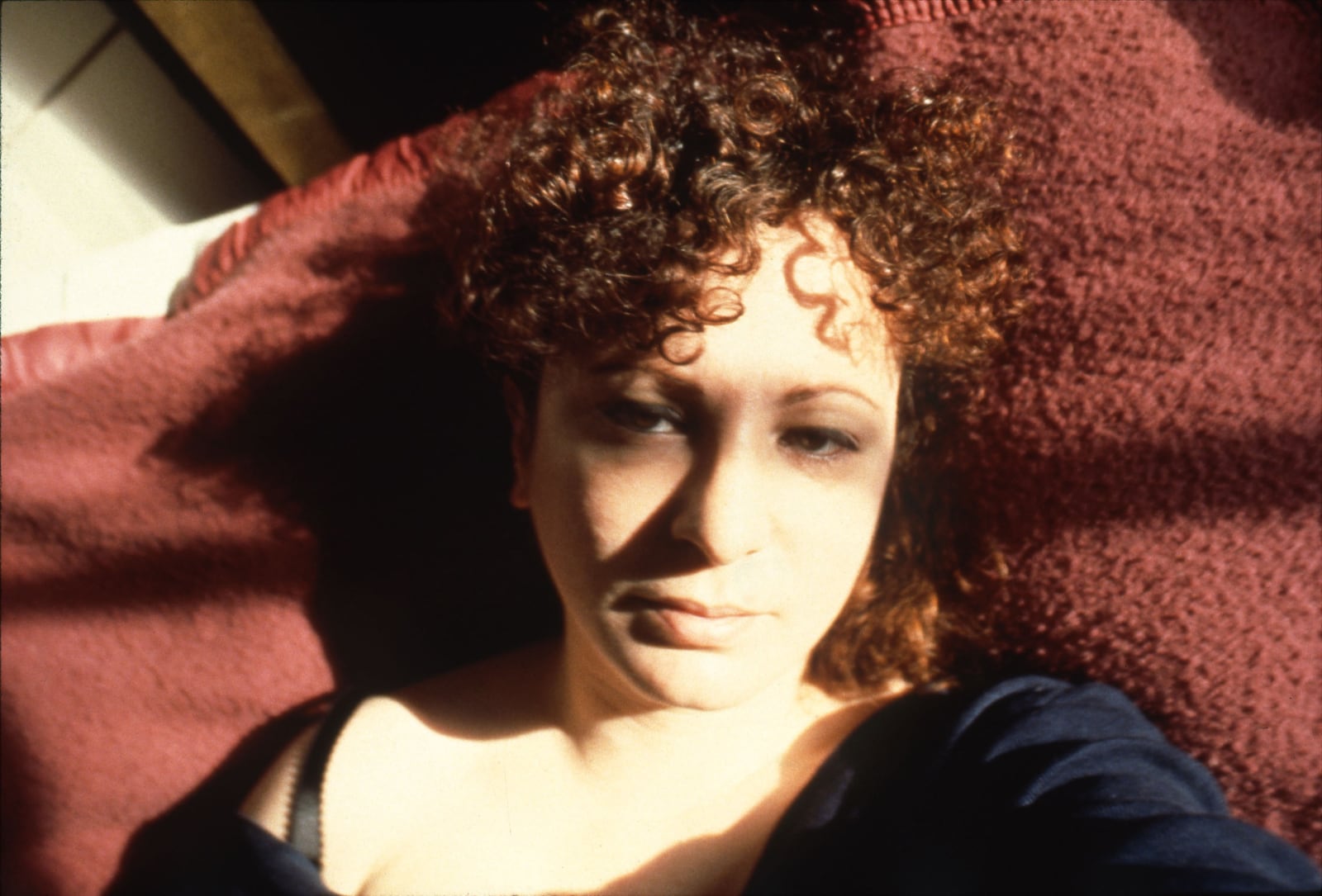
To enter Nan Goldin’s new exhibition is to delve deep into the photographer’s subconscious mind and potent emotional world. Titled This Will Not End Well – a foreboding warning of the intensity in store – the show takes Goldin, one of the most famous living photographers, and repositions her as a full-blown filmmaker. “I never cared about photography too much … whereas film has been my number one medium all my life,” says Goldin, who cites the “eroticism and glamour” of Antonioni’s cult 1960s film Blow-Up as the reason she first picked up a camera at age 16.



Transforming the cavernous, industrial space of Pirelli Hangar Bicocca in Milan into a low-lit, ethereal black void, with an unnerving ambient sound installation ‘Bleeding’ setting the dreamlike tone and emotional depth of the show, This Will Not End Well takes all the rules of the photography retrospective and throws them out of the window. There is not a single image hung on a wall here; instead, the show features eight of Goldin’s ‘slideshows’, with runtimes ranging from 14 to 41 minutes. Projected on screen within individually designed material ‘buildings’, these films combine music, photography, moving image and narrative voiceover to convey tales of love, drug addiction, innocence, suicide and more. The effects are extraordinarily immersive; with many of the films scored to original music by Mica Levi – the British composer behind film soundtracks Under the Skin and The Zone of Interest – it’s as if Goldin has pioneered the ultimate way of looking at photography, especially in our age of starved attention spans. Her slideshows demand unequivocal attention, such is their emotional intensity and exploration of universal human themes of love and loss. For days after, they are difficult to dislodge from the mind.
As early as 1980, Goldin was presenting her work in slideshow form in clubs and underground cinemas with The Ballad of Sexual Dependency, her seminal series capturing friends and lovers across Provincetown, New York, London and Berlin in the 1970s and 80s. Lauded for its startling depictions of emotion, tenderness, and violence, Goldin’s diaristic work breathed new life into the documentary photography genre, inspiring a new generation of photographers like Ryan McGinley, Corinne Day, and Ethan James Green to document their own lives. “When I started taking pictures, I realised that it was a way to make a real record of what I had actually seen and done,” Goldin has said. “It came from a very deep place, this need to record. It was all about keeping myself alive, keeping myself sane, and grounded. And being able to trust my own experience.”

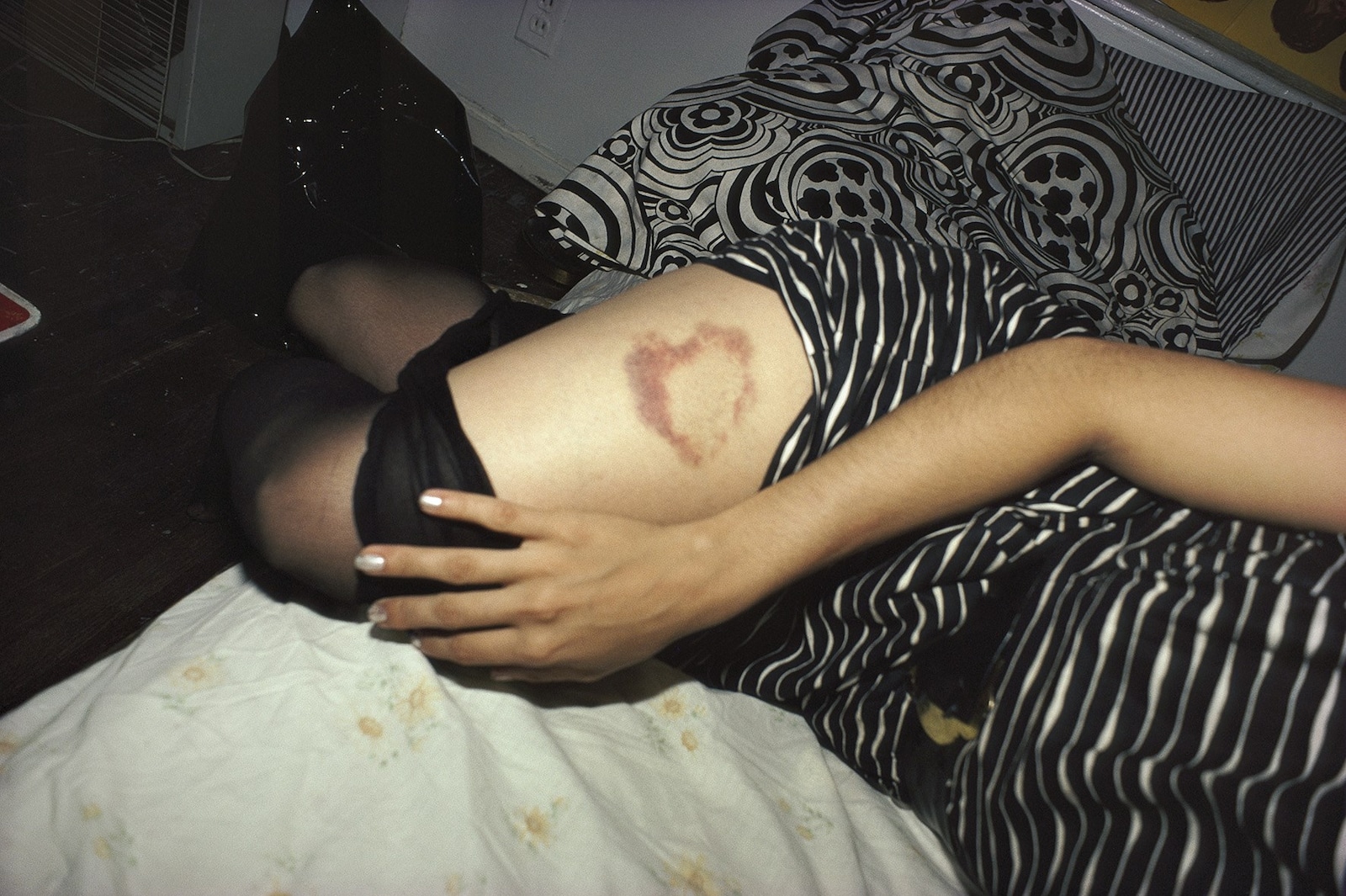
“It came from a very deep place, this need to record. It was all about keeping myself alive, keeping myself sane, and grounded” – Nan Goldin
A travelling European exhibition (opening next at the Grand Palais in Paris in March 2026), This Will Not End Well features Goldin’s iconic, older works like The Ballad of Sexual Dependency (1981–2022) and The Other Side (1992–2021), a vibrant portrait of her trans friends whom she started living with in Boston during the 1970s, alongside newer works exploring art, Greek mythology, the animal kingdom, children, and more, all with Goldin’s signature, mesmerising candour. “For me, it’s not a detachment to take a picture,” Goldin has said of her work. “It’s a way of touching somebody – it’s a caress.”
At the show’s press conference, Goldin, now age 72, arrives to unveil an additional surprise work. Simply titled Gaza, this harrowing silent film layers videos lifted from social media capturing the Palestinian city before and during the devastation of war. “The last two years of my life, I’ve been watching this and not being able to stop it,” Goldin says, referencing the war in Gaza. “That makes people sick. I just want to say, don’t look away. This should never have happened.” Gaza continues Goldin’s trailblazing work as an activist; in 2017, following her own struggle with OxyContin addiction after being prescribed the drug for a wrist injury, she began protesting and campaignning against the Sackler family, demaning that museums and galleries refuse donations (her activism and broader life are captured in detail in the Oscar-nominated 2023 documentary All The Beauty And The Bloodshed).

Much of the works on show here deal with the topic of drug addiction too, making for difficult viewing. Memory Lost (2019–2021), which Goldin considers her most important piece since The Ballad of Sexual Dependency, is a dark lament on the horrors of drug addiction, withdrawal, and memory loss, featuring blurred landscapes and self-portraits of Goldin recovering in the Priory Hospital in London. A foreboding voiceover extols the virtues of drug use: “[It] gives me a sense of connection, sense of control, sense of power, soothes the pain, relieves the stress, makes me feel less isolated, makes me feel more excited, less bored with life.” The film’s companion piece, Sirens (2019–2020), is a video montage capturing women in varying states of ecstasy – nodding to the euphoria of a drug-induced high – with footage lifted from films by Visconti, Fellini, Andy Warhol and more.
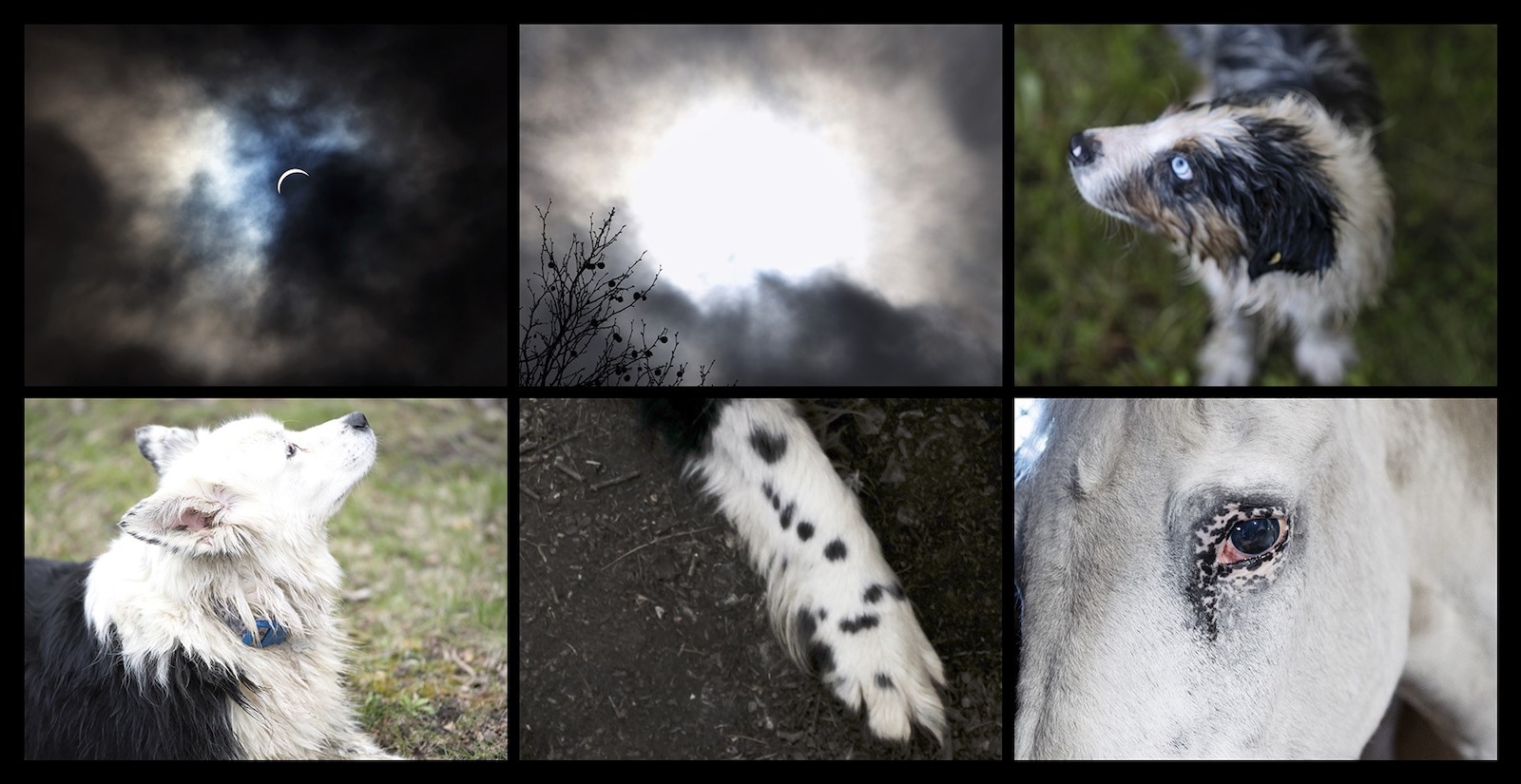
Goldin turns away from the pain and sorrow of adult life with two poignant slideshows exploring innocence. Fire Leap (2010–2022) captures the world of children – “Children are born knowing everything and as they become socialised, they forget it,” says Goldin – while You Never Did Anything Wrong (2024) is a haunting exploration of the innocence of animals, based on an ancient myth that a solar eclipse is caused by animals stealing the sun. Lifting its name from a gravestone devoted to a deceased pet, when the cats, dogs and horses in this film lock eyes with Goldin’s camera, it’s as if she can see deep into their soul. Speaking at the press conference, Goldin says, “It’s about a world without people, which is actually what I wish for in the future.”

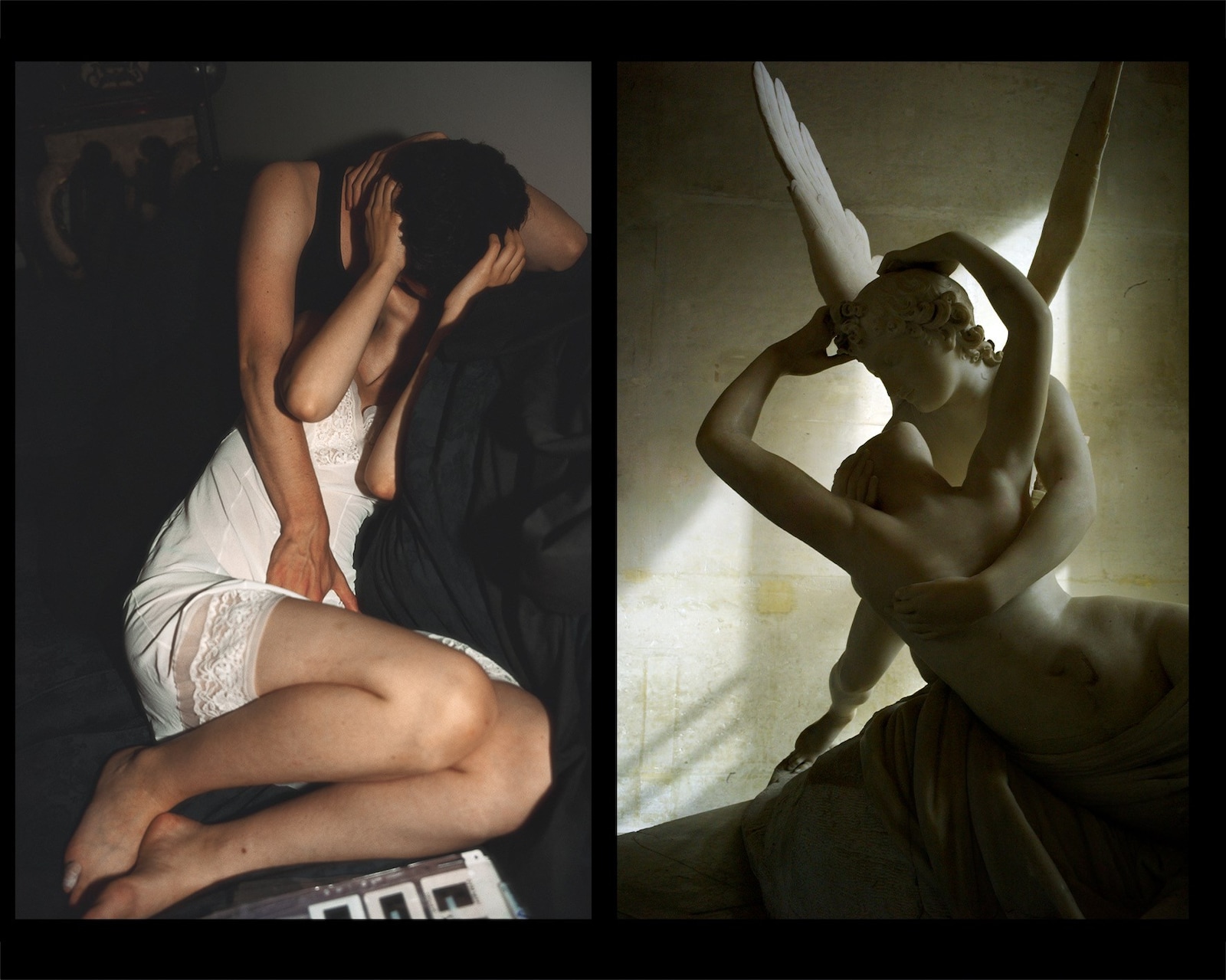
Goldin’s obsession with mythology crops up again in Stendhal Syndrome (2024), a film based on myths from Ovid’s Metamorphosis and the experience of looking at art in museums, and in Sisters, Saints, Sibyls (2004–2022), a highly personal film where Goldin tells the story of her sister Barbara’s suicide at age 18, reimaging her as a Christian martyr. This film is key in understanding Goldin’s origin story as both a person and as an artist; her parents repressed Barbara’s spirit, leading to tragedy. Goldin, on the other hand, promises she will never look away, however dark or intense things may get; for her, there is beauty in bleak times, and an inherent power in witnessing. Goldin’s world is one of radical empathy. “It’s about trying to feel what another person is feeling,” she says, of her photography. “There’s a glass wall between people, and I want to break it.”
This Will Not End Well by Nan Goldin is on show at Pirelli Hangar Bicocca in Milan until 15 February 2026.
