
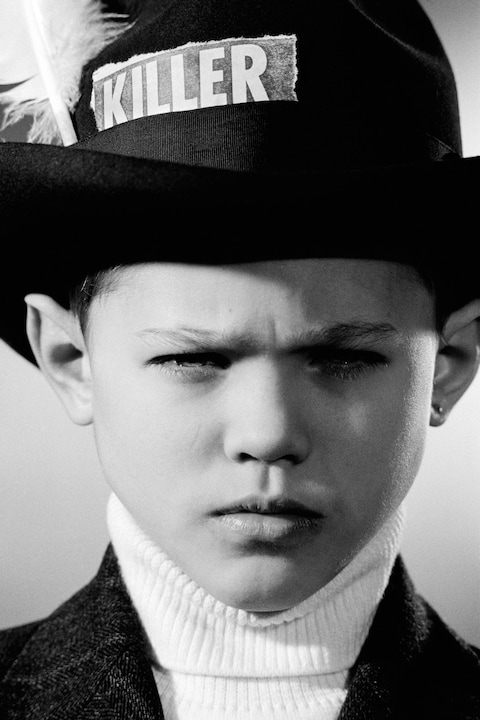
Photographer Jamie Morgan looks back on the year the Buffalo movement stormed the world in his new photo book, 1985 Buffalo
Buffalo. The name alone conjures a near-mythical creature whose presence commands respect. Moving as part of a group with a distinctive blend of power and grace, the buffalo was nearly driven to extinction by the US government in order to subjugate Native Americans. It would ultimately prevail and become a symbol of freedom, inspiring visionaries like Bob Marley, Malcolm McLaren – and Ray Petri, the man widely considered to be the first modern fashion stylist.
Although Petri’s name may be unfamiliar, and his life was cut short by AIDS in 1989 at the age of 41, his work has become a blueprint for our present age. More than a look, Buffalo was a movement across fashion, music, art, magazines and nightlife that took root in early 1980s London among a collective of young photographers, models, stylists and designers, and was later popularised by Neneh Cherry’s hit song, Buffalo Stance.


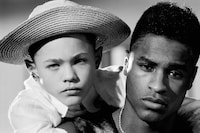
Buffalo, Petri explained, was “a Caribbean expression to describe people who are rude boys or rebels. Not necessarily tough, but hard style taken from the street ... a functional and stylish look; non-fashion with a hard attitude.” Blending sportswear, fine tailoring, street casting, inclusivity and gender fluidity to reimagine the modern dandy as street aristocrat, Buffalo was ten-year-old Felix Howard staring down the public from the cover of the March 1985 issue of The Face magazine, the legend “KILLER” emblazoned on his black hat – a babyfaced gangster who exemplified the spirit of the times.
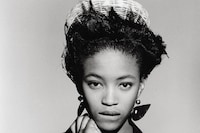
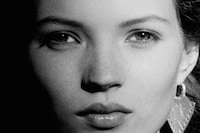
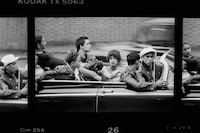
This month, photographer Jamie Morgan looks back at the year the movement stormed the world in a new book, 1985 Buffalo (published by Idea). Art directed by Buffalo member Neville Brody, the book brings together works that Morgan unearthed in a box labelled ‘1985’, filled with photographs shot for The Face that year. Amid the marked-up contact sheets and finished prints lay a wealth of never before seen images from four groundbreaking cover stories (‘Killer’, ‘Hot’ (aka ‘Winter Sports’), ‘Men in Skirts’, and ‘Cowboys and Indians’), featuring models Nick and Barry Kamen, Simon de Montfort and Howard Napper, and new faces Naomi Campbell and Kate Moss.


The discovery was a revelation for Morgan, who remembers, “There were all of the shoots I had been doing where I’d only ever used one picture and never went back to it. I look at one set of contacts, which is 36 frames; I got three or four looks because we didn’t have any money. As soon as I got the shot, I moved off. And it was film so you couldn’t see anything. You had to trust your instincts.”
A decade older than the others in his circle, Petri instilled a sense of confidence, acting as an older brother and mentor who inspired them to forge their own path, just as he did. Born Ray Petrie in Dundee, Scotland, in 1948, he moved with his family to Brisbane when he was 15. Soon after, he dropped the “e” and Australia, landing in Swinging London in 1969 and setting up a stall in the Camden Passage antiques market. His eye for style lead him to collaborate with young photographers like Morgan, who had just finished assisting legendary fashion photographer Terence Donovan.


At the time, Morgan had been photographing street kids like Boy George and Haysi Fantayzee who were emerging at the vanguard of the UK’s post punk, New Romantic underground. He remembers Petri’s arrival at his photo studio/squat, a singular vision in a pork pie hat, brogues and black jeans. “Ray was so elegant and poised but at the same time still quite street and cool,” Morgan says. ”He was very soft spoken and gentle, and just had this air about him, something I had never come across before. I was immediately attracted to him and we just got on straight away.”
Petri’s inimitable sense of style required a new set of rules, one that could only be conceived by an insider looking out. What began as a few images for The Face soon blossomed into a new template for fashion photography that relied on street casting, be it at the local boxing gym or grocery shop. “It was a very organic process,” Morgan remembers. “We asked a model agent, do you have any Black models and they sent us Nick Kamen, who was Lebanese and Scottish. So we decided to cast around us, and over a few years, it slowly started to build. We didn’t quite know what we were doing. We were experimenting. We would have inspiration from all over the place and mix it up.”


Looks were sourced, rather than called in, drawn from a wealth of indie shops and New York army surplus stores, elevating the MA1 flight jacket to the global stage. Sportswear was paired with tailored suits, Petri always at the ready to reshape the silhouette with scissors and safety pins. Drawing from an earlier experience in the Paris office of Magnum Photos, Morgan combined a classic documentary approach with 50s Hollywood glamour photography to glorious effect, and the images in 1985 feel as fresh as the day they were made.
“It’s only become iconic through time and the authenticity of what it is,” Morgan says. “It never set out to be that. That’s why, when you look at the book, all the negatives are scratched. We never kept anything. It was just life in the moment.”
1985 Buffalo by Jamie Morgan is published by Idea and is out now.
