)
From Joel Meyerowitz’s 1960s travels through Europe to Felipe Romero Beltrán’s award-winning series Bravo, here are a trio of highlights from Spain’s largest and liveliest photo festival
This year’s Photo España features more than 80 exhibitions scattered across all corners of Madrid. Venues span from the lavish – the Royal Palace and the chandelier-heavy home of a 19th-century Marquis – to a repurposed water tower, a brutalist sawmill, and even a handful of the city’s trucks, recruited as travelling galleries for the summer. From the Loewe Foundation’s show of 1930s surrealist (and Picasso muse) Dora Maar to Sandra Blow’s present-day chronicling of Mexico City’s nocturnal LGBTQ+ scene, this edition’s image-makers were chosen for their desire to confront reality in order to dream an alternative one.
Here, we choose a trio of highlights from Spain’s largest and liveliest photo festival.

)
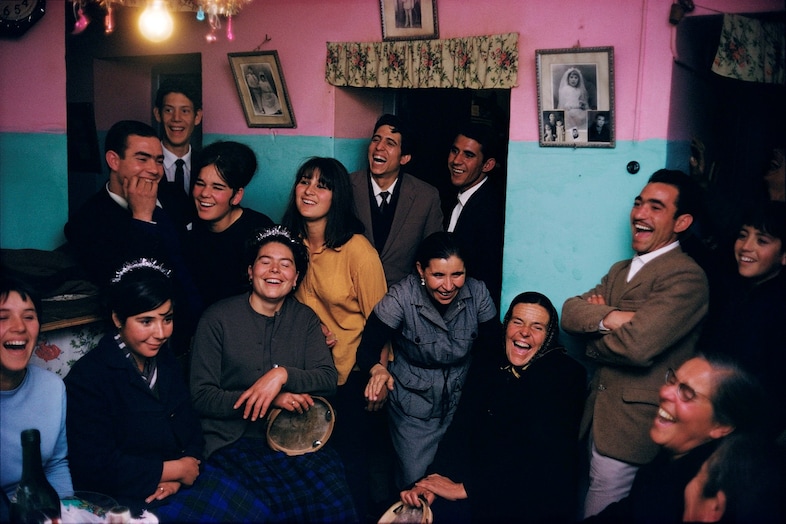
Joel Meyerowitz: Europa 1966-1967
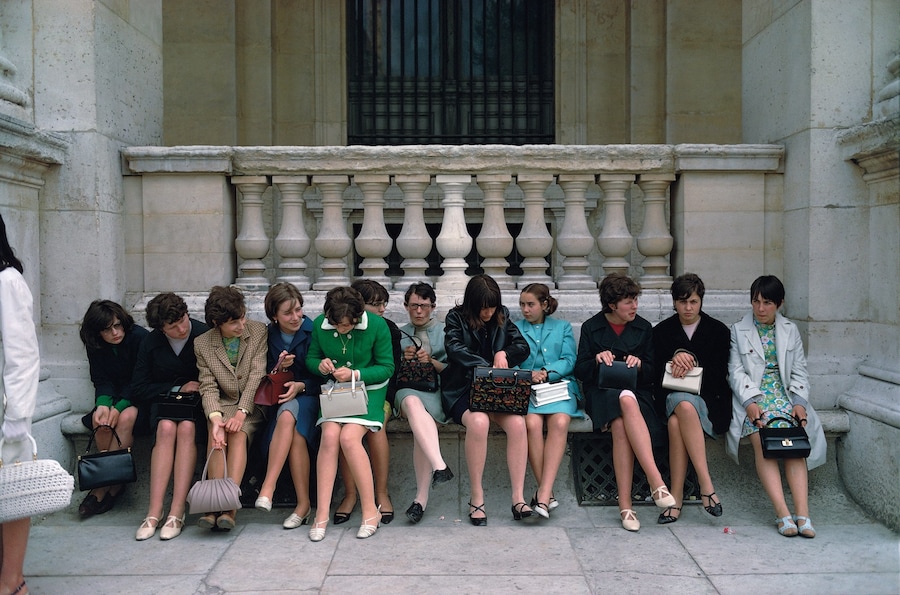
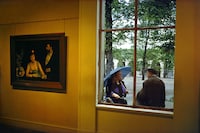
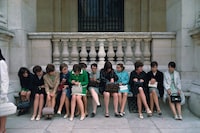
In 1966, Bronx-born photographer Joel Meyerowitz packed two Leicas and boarded an ocean liner bound for Europe. One year, 30,000 km, and 25,000 photographs later, he had planted the seeds of his pioneering, seven-decade career, his revolutionary approach to colour and one-of-a-kind gift for capturing an unfolding moment. Photo España’s Europa 1966-1967 is an expansive immersion in that roving, restless year, which acted as the photographer’s coming-of-age.
Shooting on the streets and on the fly, Meyerowitz traced a meandering path across ten countries, his magpie eye picking out flashes of the absurd and the tragic, the humorous and the startling: an Oxford Street shopper with drawn-on eyebrows and gravity-defying waves of candyfloss hair; a Greek couple glimpsed in a blur from his car window; a toppled horse flanked by a solemn, sunlit crowd. Some images play out like a miniature fable – one of Meyerowitz’s favourites depicts a fallen man stared at by a kaleidoscope of Parisian street life, none inclined to help. But it was in Spain that the photographer found a jubilant temperament that matched his own, particularly among an irrepressible family of musicians in Malaga – he ended up spending six months documenting their lives.
A few years prior to his trip, Meyerowitz had spontaneously quit his New York ad agency job after accompanying Robert Frank on a commercial shoot – he resolved to become a photographer before he’d even bought a camera, borrowing his former employer’s to capture the staccato street energy of Manhattan. Returning from his European vacation, though, he had found the essence that shaped his work going forward. “I know that the experience of making photographs in Europe changed me and gave me the perspective I needed to see myself, and then, when I returned home, to see America in a different way,” he says.
Joel Meyerowitz: Europa 1966-1967 is on show at Fernán Gómez Centro Cultural de la Villa in Madrid until 13 July 2025.

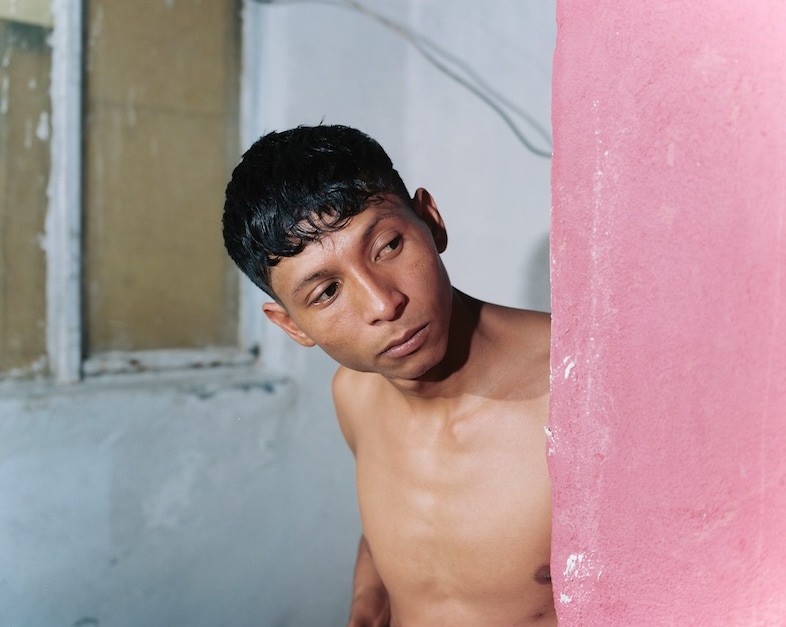
Felipe Romero Beltrán: Bravo
Colombian photographer Felipe Romero Beltrán’s intimate images were built out of the friendships he forged along a stretch of the Rio Bravo that edges the line between Mexico and the United States – the last point of an often punishing, perilous journey to cross the border. His portraits of the lives that intersect there – of people hailing from Colombia, Honduras, El Salvador and Guatemala – capture an uncanny state of limbo, marked by months or years of waiting in the forcefield of a river that is both an obstacle and a gateway, a vessel for hope or disillusionment. Alongside his poetic photographic essay of 52 portraits, interiors and landscapes, are a series of films focusing on the Rio Bravo itself: “I wanted to show cases where the river has been used in different ways than as a political borderline – in one, a pastor goes to the middle of the river, trespassing this borderline, to baptise people who will later attempt to cross at night. It shows how ambiguous this political border is, even though it’s probably the strongest and most powerful borderline in the world,” he says. “We’re used to seeing it through media images in the press, and it was really important for me to widen the spectrum of identities and possibilities at the frontier.” Bravo is the winning project of this year’s KBr Photo Award.
Felipe Romero Beltrán: Bravo is on show at MAPFRE Foundation in Madrid until 25 August 2025.
 )
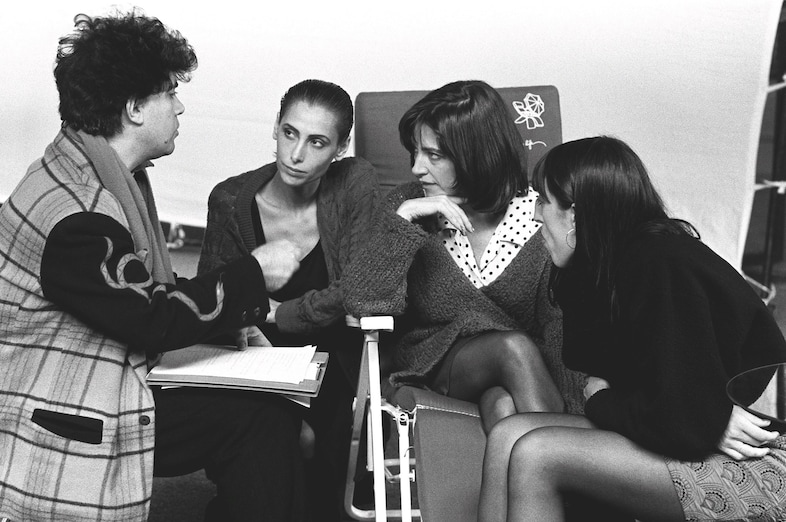
Marisa Flórez: A Time to Look
Housed in a vertiginous circular water tower built in the early 1900s and repurposed today as a gallery reaching up multiple levels, this exhibition spans five decades of reportage by intrepid Spanish photojournalist Marisa Flórez. Cutting her teeth at El País newspaper in the 1970s, Flórez covered and immortalised the history of her country, from coup d’etats to protests for abortion rights to ETA attacks. Together, they tell a layered story of social and political convulsion at a time when she was one of very few women in the newsroom. Flórez also turned her lens on the country’s cultural stars, from Pedro Almodóvar and his Movida Madrileña circle of accomplices to Ágata Lys, icon of Spain’s erotic, post-Franco “destape” (uncovered) cinema movement.
Marisa Flórez: A Time to Look (1970-2020) is on show at Sala Canal de Isabel II in Madrid until 20 July 2025.
