, 2001-2018)
His first major retrospective, Paul Pfeiffer’s new exhibition at Guggenheim Bilbao uses sculpture, installation, photography and video to address mass spectacle
Prologue to the Story of the Birth of Freedom, currently being held at Guggenheim Bilbao, is Paul Pfeiffer’s first major retrospective. With its looping videos, proto-GIFs, immersive installations and manipulated celebrity footage, walking through it feels as giddily stimulating as scrolling through TikTok, albeit a lot more substantial.
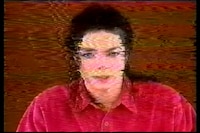
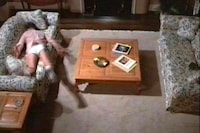
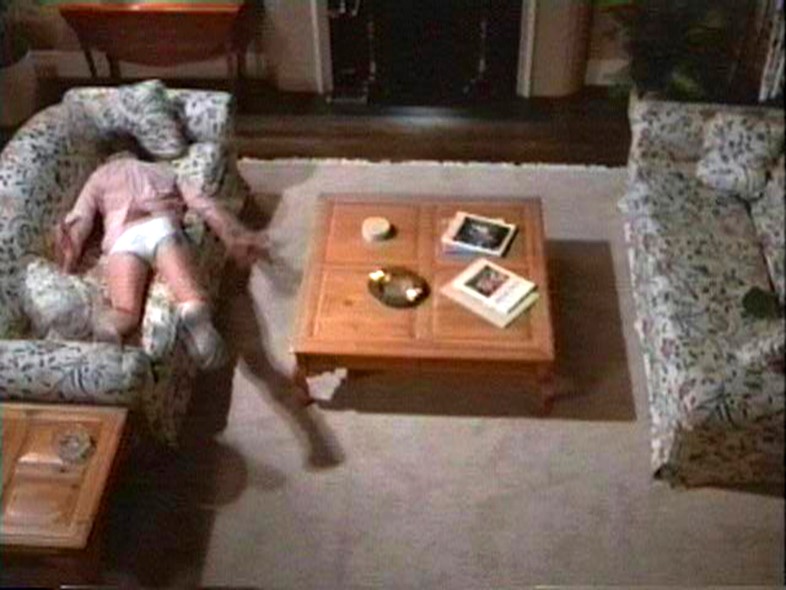
Across his 25-year career, Pfeiffer has deconstructed celebrity culture, mass spectacle and the manipulation of the collective consciousness through image-making. He uses a wide range of mediums, including sculpture, installation, photography and video. The first room of the exhibition displays Live Evil (2002), a series of videos of Michael Jackson which are projected onto almost comically tiny screens against a vast white backdrop and edited so that the singer is a headless figure, his limbs shifting and blurring, his dance moves turned into an abstract, mandala-like pattern. The Pure Products Go Crazy (1998) loops a second-long clip of Tom Cruise convulsing face-down on a sofa, taking a light-hearted scene from the film Risky Business and weighting it with a sense of unease, making it appear more like a medical emergency or existential crisis.

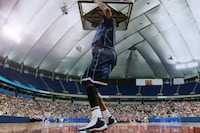
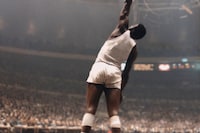
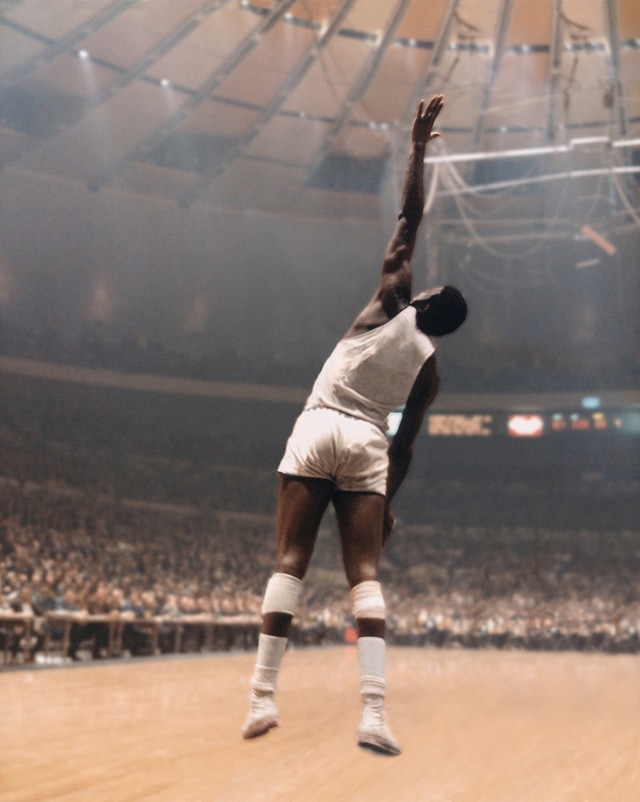
Much of Pfeiffer’s practice is subtractive, rather than additive, involving cutting, erasing, camouflaging and editing out. The effect is often surreal and slightly humorous: one instalment of his series Caryatid (2003) shows a hockey trophy floating alone in the air, the players erased; another shows a boxer battling a phantom opponent, ducking and weaving at nothing, lashing out at the air. We still see the violence being inflicted upon them, even though there’s no one else there. Similarly, Pfeiffer’s sequence Four Horsemen of the Apocalypse (ongoing) takes photos of basketball matches from the NBA archives and edits out everything but the audience and a single player. Recalling religious iconography (one player is suspended in the air in the exact shape of the cross), these images succeed in capturing the often ecstatic quality of professional sports, where top athletes become the subject of genuine awe, reverence and worship.
The religious quality of celebrity culture is drawn out more explicitly in a newer piece, Incarnator (2018). Pfeiffer collaborated with ‘incarnardors’ – artisans who make Catholic religious figures – to create a wooden sculpture of Justin Bieber in composite, disembodied parts. “I think of the kinds of euphoria that can be produced [by spectacle] as akin to religious experience – to go from the everyday into an altered state of consciousness entails a departure from the everyday and seeing things from a new perspective, in a way that humans have created rituals to do since time immemorial,” he says.
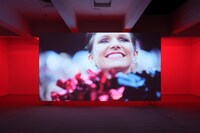
As Pfeiffer sees it, the modern spectacle falls short because it tends to be aligned with outdated ideas, and because it functions as a distraction. “It’s a way of people keeping in their place, and in a place where they can be monetised or kept passive while the action is happening somewhere else.” But while he clearly takes a critical view towards spectacles, his work also understands – and even replicates – why they are so alluring. Red, Green and Blue (2022), a video piece about a ridiculously baroque half-time show at a college football match, alternates between showing the behind-the-scenes production of this spectacle and the intense emotional effect it has on the spectators. Watching people in the crowd almost welling up with joy, it’s easy to be taken in and to think of these communal experiences as having an intrinsic value, even as you see them being manipulated in real time.

To make The Saints (2007), Pfeiffer hired thousands of people in the Philippines to watch a recording of the 1966 World Cup Final between Britain and Germany. The installation consists of a recording of their reaction to the game – the chanting, cheering, jeering and singing – being played at great volume in a vast white room. I found walking around it, and experiencing the seismic energy and intensity of the crowd divorced from any visual counterpart, to be a truly rapturous experience.
For Pfeiffer, spectacles are useful not because they are joyous, but because they lay bare the production of affect. “They don’t hide what they’re doing, and so present an opportunity to examine not just the production of images, but how subjectivity works, how collectivity works, and the ways in which seemingly human experiences are entangled in the processes of mechanical reproduction,” he says. “We tend to think of our emotions as something self-generated, and something that we have individual authority and ownership over, when this isn’t always the case.”
At its core, Pfeiffer’s work is concerned with how we interact with and consume images. “What that looks like to me is a profoundly discontinuous, non-linear construction of space and time – I’ll be drinking my coffee, and then a moment later, transported into a scene of environmental disaster, then in a snap, pulled out of that back into a seemingly peaceful state of normality, and then once again, turn the channel and see scenes of genocide, before turning the channel again and being told that everything is OK,” he says. “The simultaneity of extreme violence and mundane experience is something that we live with constantly.”
, 1998)
As the exhibition reveals, Pfeiffer has been an early adopter of several technologies, from gifs to 3D printing, which have now become widespread. The editing techniques which he deployed in the 80s and 90s were incomparably more labour-intensive than they are today, when anyone with a TikTok account can produce all kinds of elaborate effects. Pfeiffer welcomes the democratisation of the practices which made his career. “I think of it in relation to printmaking, specifically,” he says. “Printmaking is a very simple and familiar set of tools, but then I think of somebody like Richard Hamilton, who in the 60s and 70s was playing with printmaking in a far more conceptual vein, mixing different categories of imagery from advertising to the history of art to pop culture. I like this mix. I don’t want to operate in an exclusive conversation and I like the idea of playing with the everyday as a material.”
But on the other hand, he does believe that social media has had the effect of dumbing culture down. “At the same time there’s a democratisation, there’s a drastic simplification – it’s like junk food,” he says. “For me, the goal is the most layered, sophisticated and playful use of language, whether that’s visual, verbal or auditory. Social media represents an amazing toolbox but at the same time, it’s not neutral.” Thanks to algorithms and the incentives of the attention economy, people are led to create certain kinds of content. But there will always be an element of contingency, unpredictability and spontaneity to visual culture. “However much these platforms might wish it were otherwise, nobody has final control,” says Pfeiffer.
Prologue to the Story of the Birth of Freedom by Paul Pfeiffer is on show at Guggenheim Bilbao until 16 March 2025.
