
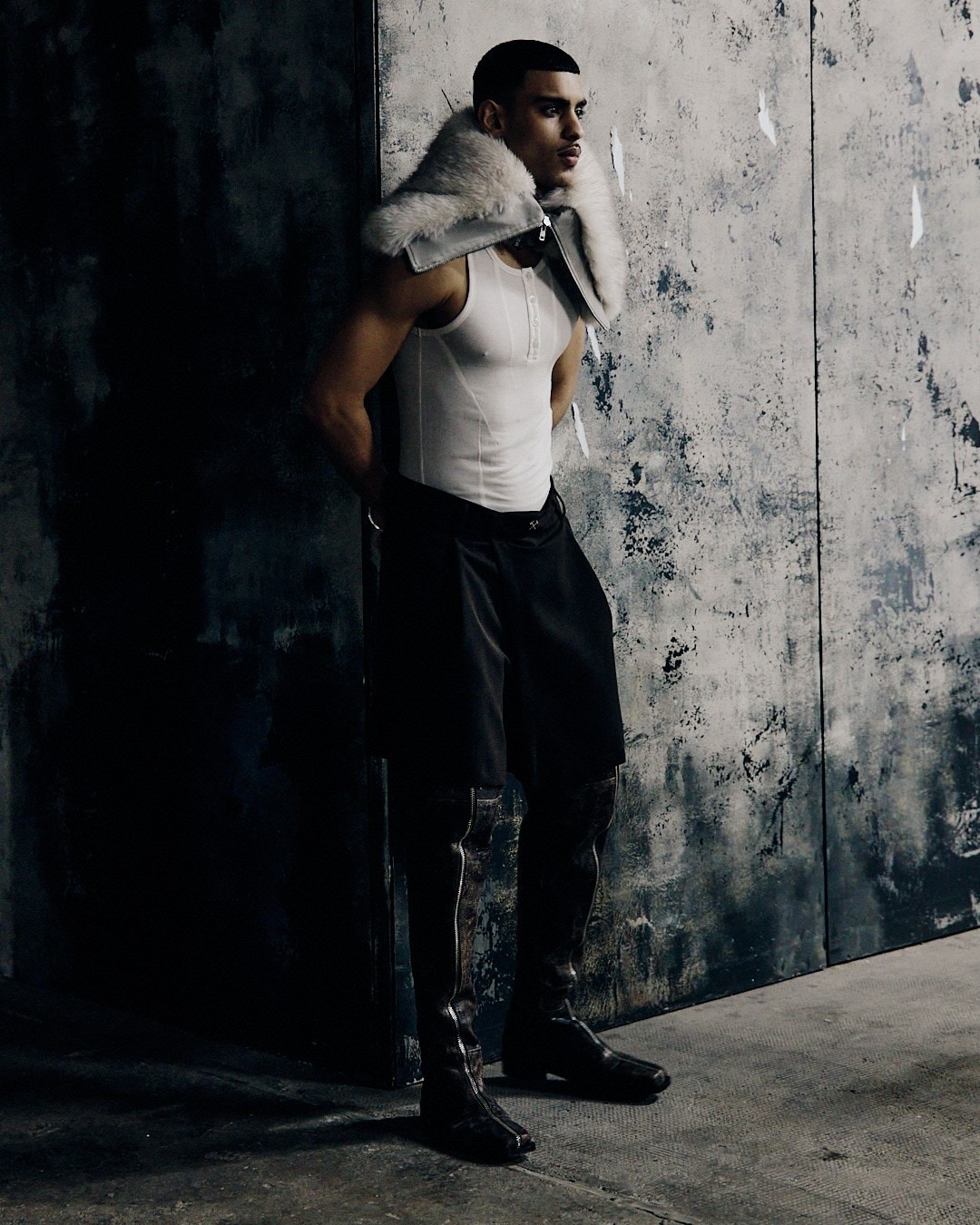
The word came first. Friedensangst – a compound that recently surfaced in German headlines, describing the anxiety inside the boardrooms of arms manufacturers at the prospect of an end to war. For Benjamin Alexander Huseby and Serhat Işık, the designers behind GmbH, it became a trigger for Autumn/Winter 2026, shown inside Berlin’s vast, concrete Kraftwerk. Backstage at their show, Huseby had the word emblazoned on his T-shirt.
“It means ‘fear of peace’,” he says. In newspapers it has been used in reference to Germany’s largest weapons company worrying that peace in Ukraine might hurt its share price. “It was a very cruel reminder that the people in power, the people that rule this world, have not our best interest at heart. They are only interested in forever wars and the continued extraction of as much as they can.” The press, he notes, focused on the novelty of the term, rather than “the actual horror of people kind of sitting and having this fear”.

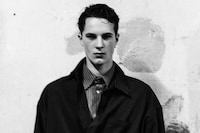
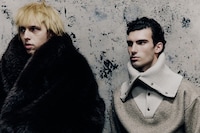
GmbH has never shied away from politics, and here the critique was echoing and inescapable. The show was titled Doppelgänger, a suggestion of recurrence and historical rhyme. “It’s the idea of seeing something repeating,” Huseby said. “Maybe time is repeating. Is this the same as what happened 100 years ago in Germany?” Among the texts anchoring the collection were poems printed like press releases at each guest’s seat, including one by Bertolt Brecht from 1934: “If you don’t share the fight, you will share the defeats,” reads a translation. “That’s very much how we feel,” shares Işık.
“[We’ve lived through] the most insane periods of our history, particularly in Berlin, where we obviously live and create,” says Işık. Like last season, they sought reconnection with moments of freedom, this time through memory. “This season was a lot about looking at club culture or the time where we felt free,” he says, “or lived in a city that represented the values that we believe in.” Those values, they suggest, are under pressure from “greed and repression” – a phrase that lands differently inside a former power plant.


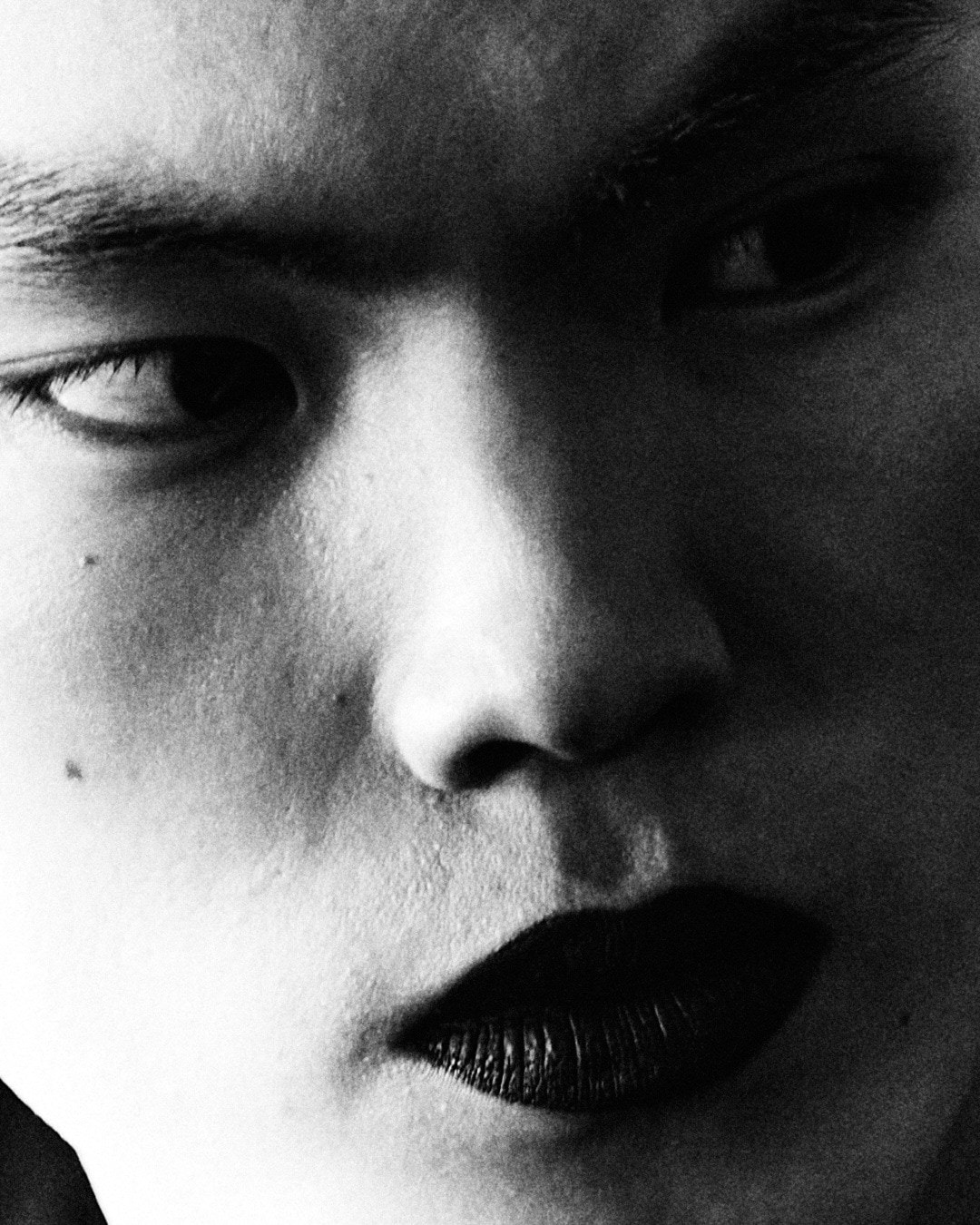
This season also marks roughly a decade since GmbH began – an independent Berlin label built from club culture, diasporic identity and a refusal to neutralise its voice. “Every season is a struggle to exist,” Huseby said plainly. Independence is not romantic here; it is abrasive and often exhausting. Still, the defiance remains deliberate. “The reason why we started GmbH as a project is to talk about these things, to use fashion, because that’s what we do best, to amplify those stories,” Işık says. “To stay true to our integrity.”
Integrity came wrapped in black leather, strict tailoring and a ghost of 1980s Berlin. The designers looked back to the city’s experimental music scene – industrial, confrontational – drawing on groups such as DAF and Einstürzende Neubauten, and the looming presence of Blixa Bargeld. It is a Berlin mythos before startup campuses, luxury retail and commercial greed, when counterculture still felt structurally possible. “We looked at another time where we drew inspiration from,” says Huseby, “particularly the music scene in the 80s which came out of Berlin, and was incredibly progressive.” To those ideas, the designers mixed them with “typical GmbH codes”.

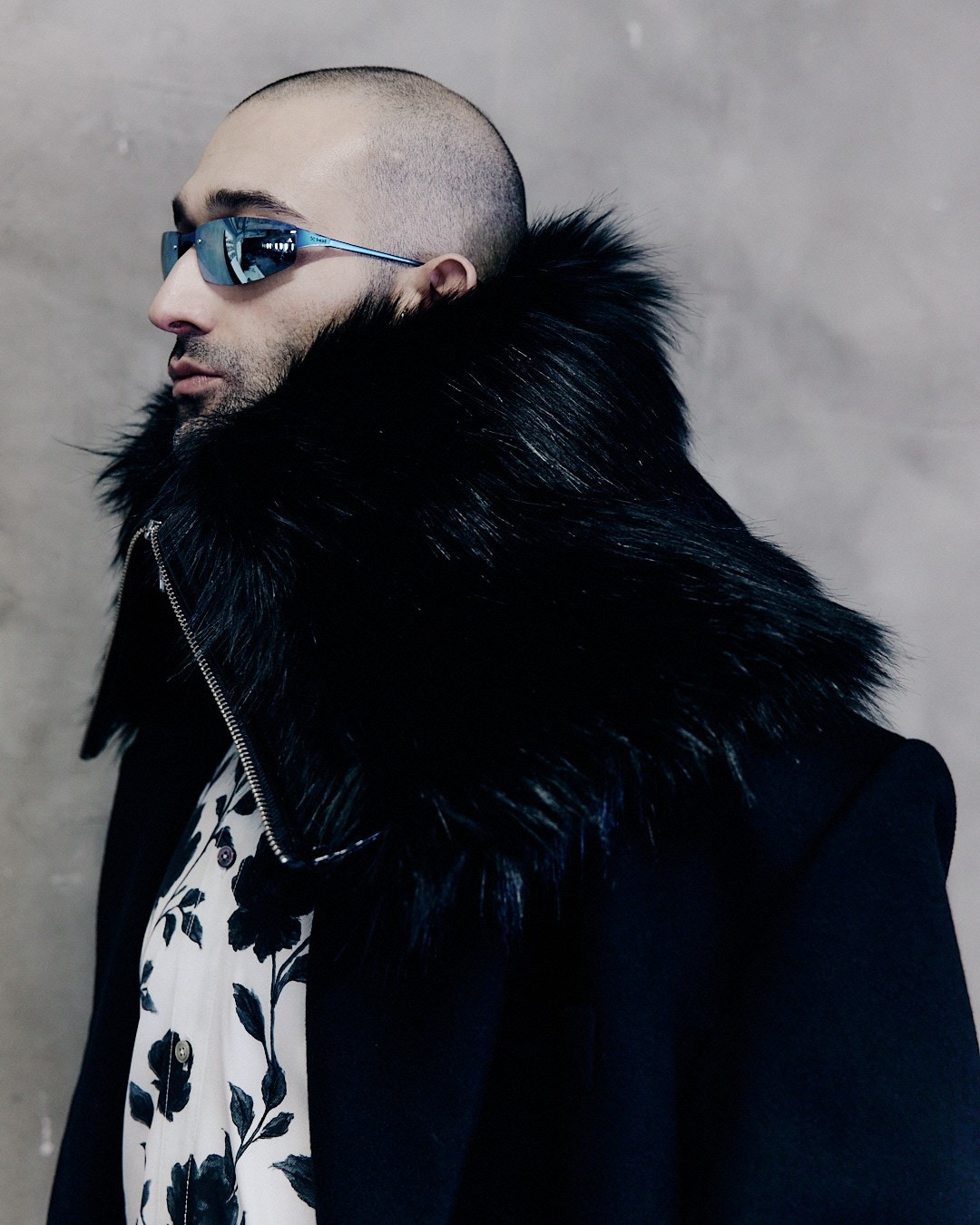

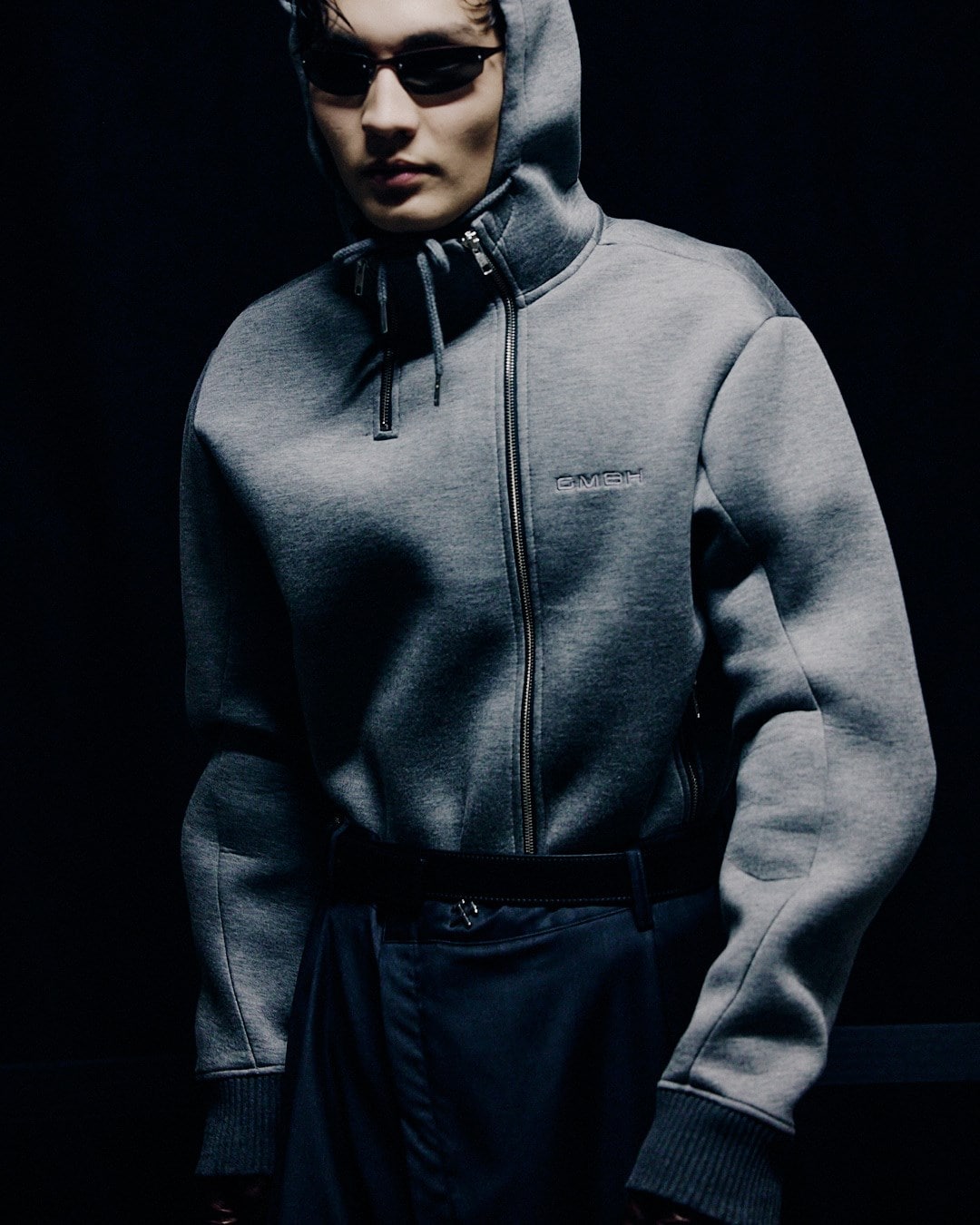
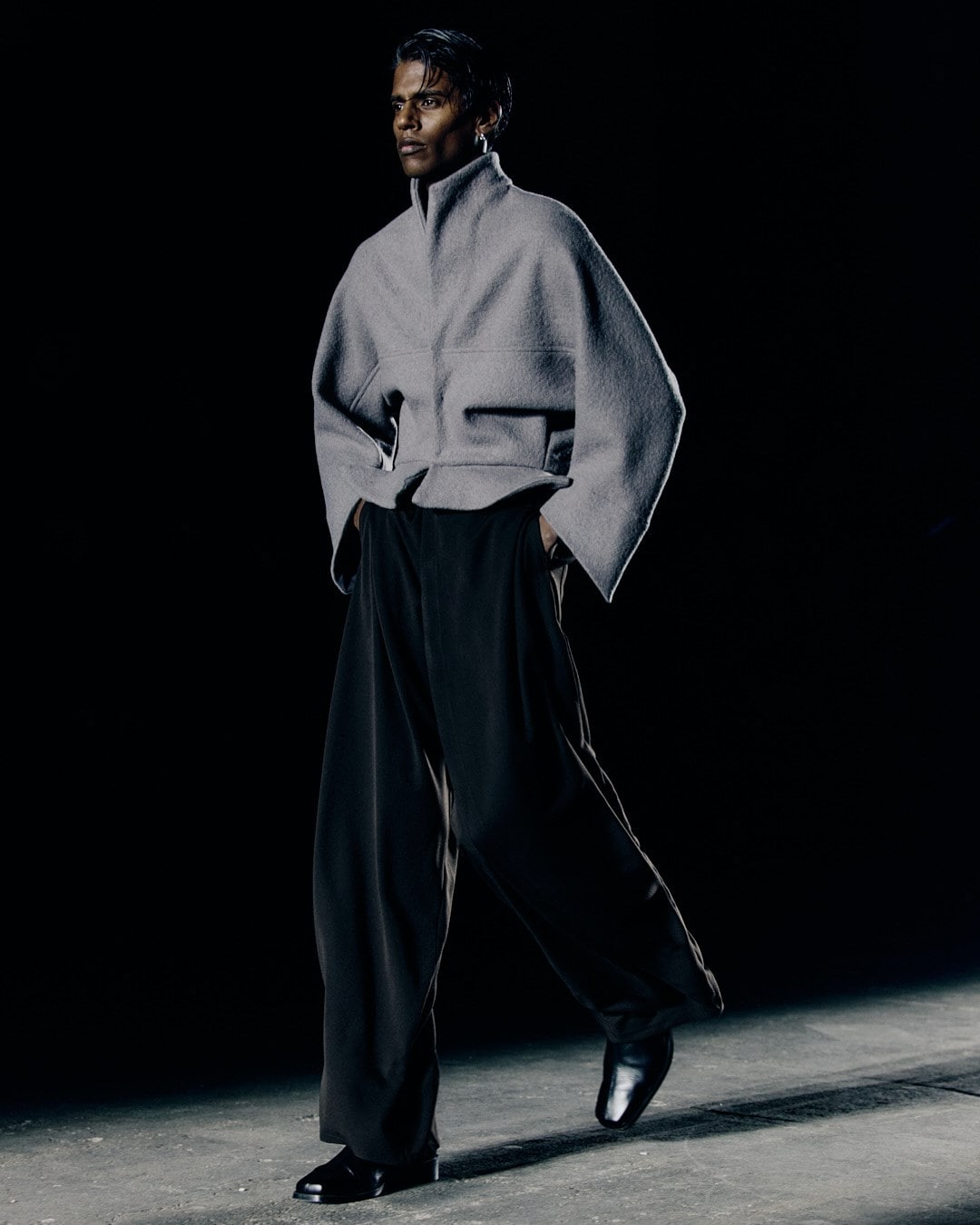
Styled by Another Man’s Ellie Grace Cumming, those codes were all present: fetish-adjacent elements, precise suiting and plenty of devotional black. Thigh-high boots come sharpened. Bodies cut close and elastic like a second skin. Tailoring swung between banker severity and nightclub liquidity – long coats flaring behind the body, trousers hugging the hip before breaking wide. One repeated motif – black and white florals – disrupted the severity. Uniform-like shirting, narrow ties and disciplined coats nodded to order and authority, then were undercut by latex flashes, exposed torsos, stocking-like layers and kinked silhouettes. Layers revealed themselves as models pounded through Kraftwerk to a finale song of Chains of Love by Charli xcx.
Music and poetry acted as stabilisers during the design process. “We’re going through all these emotions of anger, mourning, frustrations,” Huseby says. “So that’s why we printed out the poems for the guests to see, because we felt these words were evocative, they’re beautiful, but they’re also heartbreaking. And I think that kind of sums up the time.” Doppelgänger asks what it means when violence becomes profitable, when history feels cyclic, when subculture is paved over. GmbH’s answer confrontation – to make beauty anyway, and make it sharp enough to cut through the noise.
