
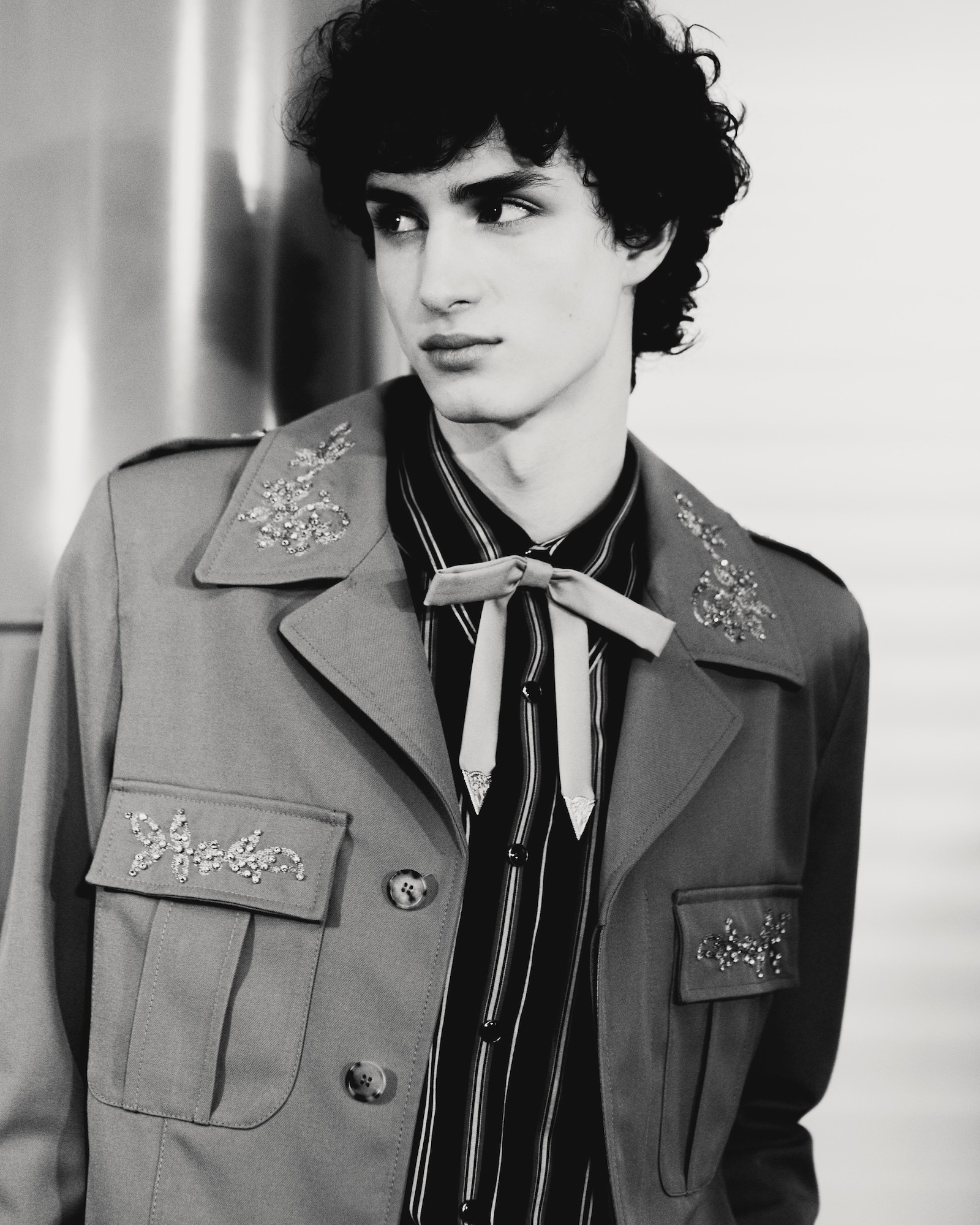
Much has been mythologised about Laurel Canyon in the 1970s, the loose hillside network of rented houses, recording studios, informal salons and open doors hidden in the Hollywood Hills. Musicians, artists and writers moving between kitchens, gardens and living rooms – stars like Joni Mitchell, The Byrds, The Doors, Frank Zappa are said to have played songs for one another, partied, took drugs and slept with each other, living freely while writing the music we still listen to today. Creativity folded into daily life and identity was collectively shaped by the chaos and calm the neighbourhood offered. Amiri’s Autumn/Winter 2026 collection situates itself at the centre of this geography. “I wasn’t interested in recreating that era,” designer Mike Amiri tells AnOther ahead of the show, “but in capturing a spirit of creativity as a way of life.”





And much like those winding, porous streets of Laurel Canyon, the collection unfolds as a series of connections between craft, identity and daily life that embraces multiplicity. Mike Amiri still trades in some sartorial experimentation, but like many designers working today, he focuses less on charting new territory and instead on fortifying the world he’s already built, consolidating the language into something more coherent, proposing refinement as its means for progression.
As such, meaning is carried through craft and material rather than overt symbolism. “The emotion comes through when you get close,” Amiri says referring to the handwork and the presence of human labour in the garments – techniques that accrue value through time, wear and touch; each something to cherish. That logic extends into the show environment, staged as an imagined Laurel Canyon interior: guests are seated in leather armchairs on patchworked Persian rugs, under warm pools of lamplight, with walls stacked with bookshelves, as if entering a private home rather than a runway.

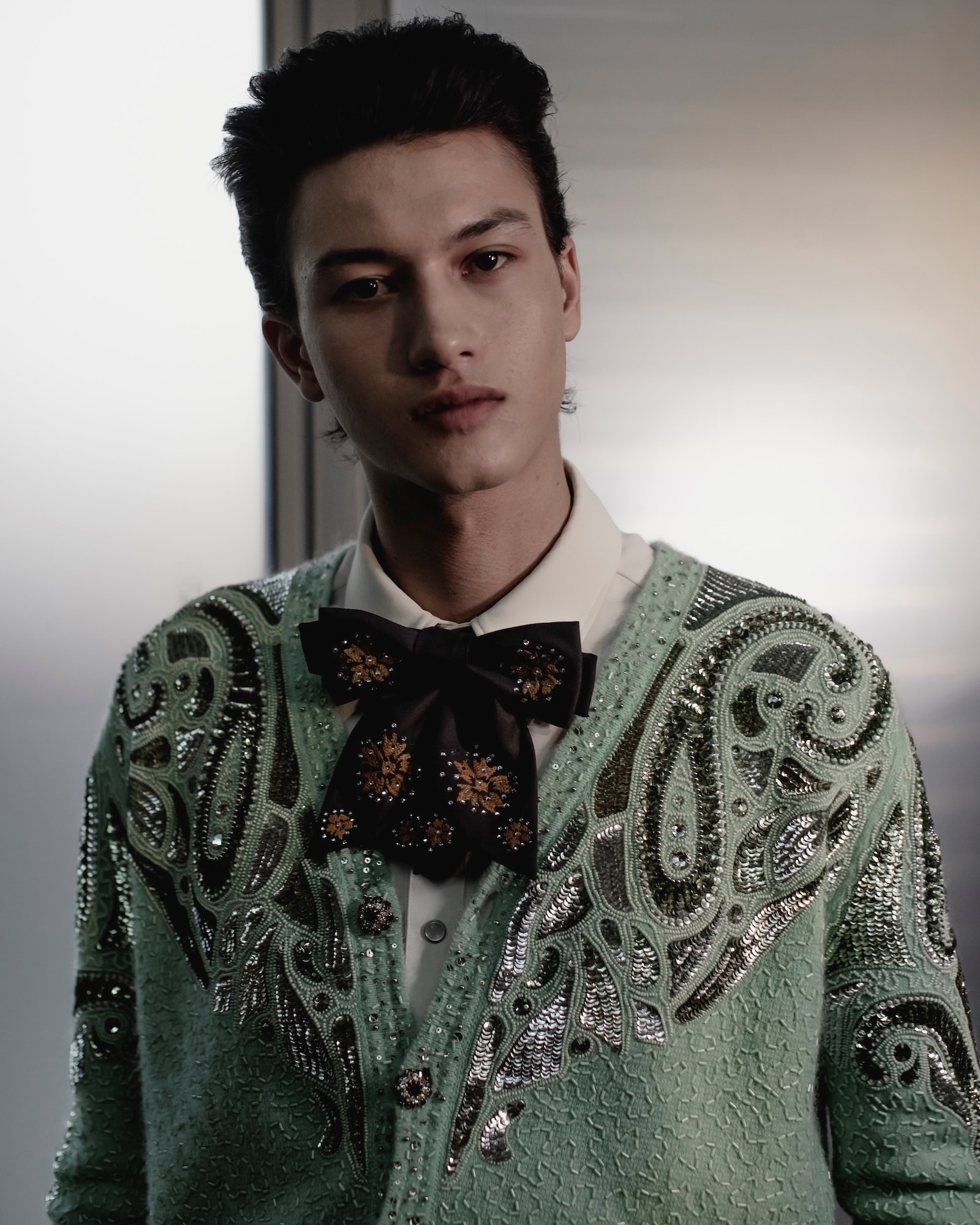

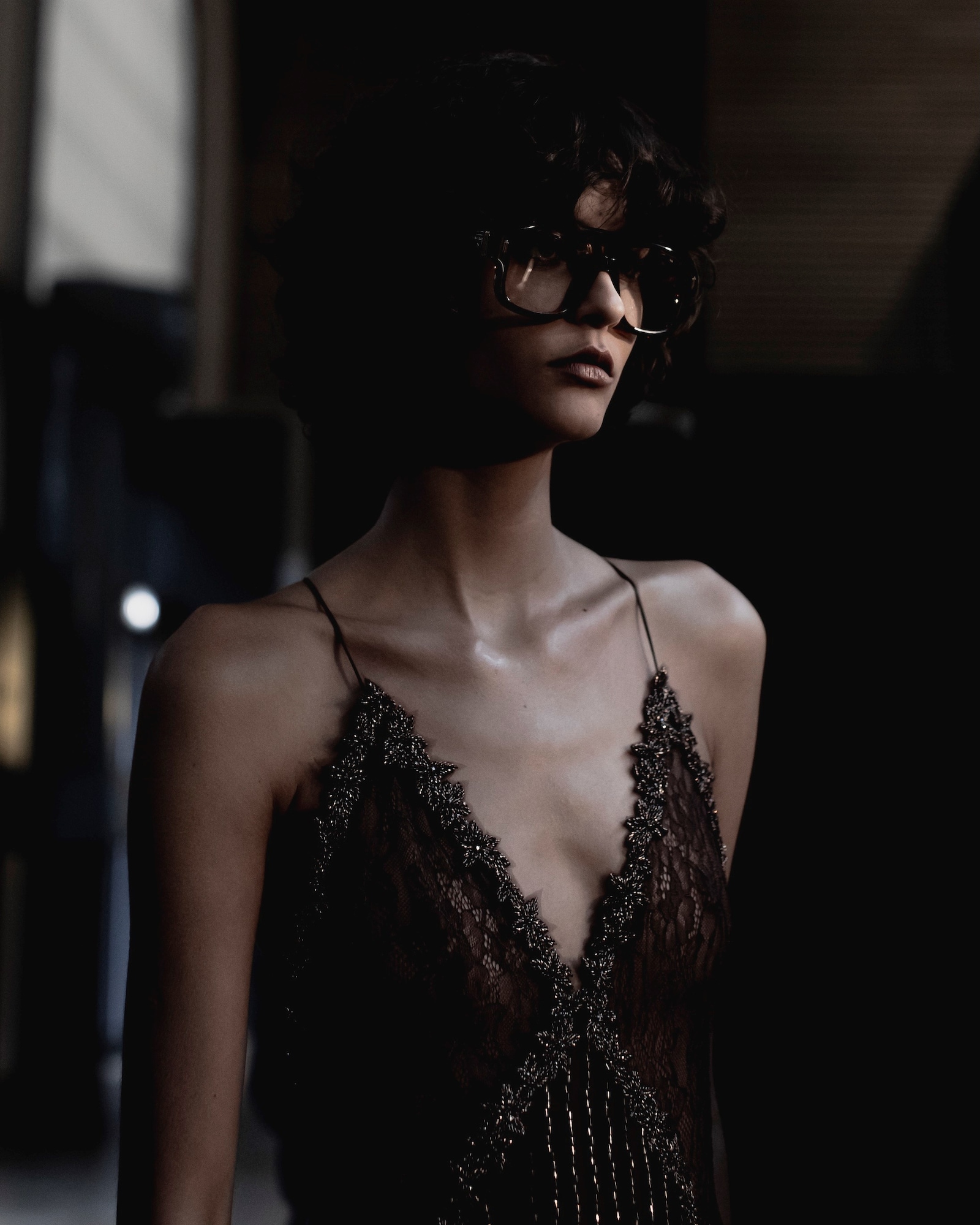
The scene was set from that first look: a handsome young Jackson Browne lookalike in a deep burgundy tailored suit, cut long and lean through the jacket and trousers, relaxed with a soft 70s line, caught halfway between bourgeois intellectual and romantic bohemian. Styled for the runway by Another Man editor-in-chief Ellie Grace Cumming, the wardrobe is built from recognisable American archetypes – western wear, officer jackets, leather, denim – filtered through Amiri’s transatlantic language. The palette, softened through nostalgia, reinforced the continuity: merlot and burgundy, sage and mint, bright blues dulled by haze. Signature elements like tailoring, boots and accessories were all refined and updated. “It’s about growing the language without losing the soul,” Amiri says.
Formalwear operates as the collection’s central language, but re-coded through everyday use. Amiri returns to artists’ wardrobes with tailoring worn informally and stage clothes migrating into daily life, no doubt peeled off the back of a chair in the morning after the night before. “That idea of stage wear becoming everyday wear – formalwear becoming effortless and personal – really unlocked something for me,” he says. The resulting silhouettes prioritise ease and mobility: blazers over Henley tees, loose open shirting, boots replacing dress shoes, denim integrated into evening wardrobes – all very Americana, updated for today.

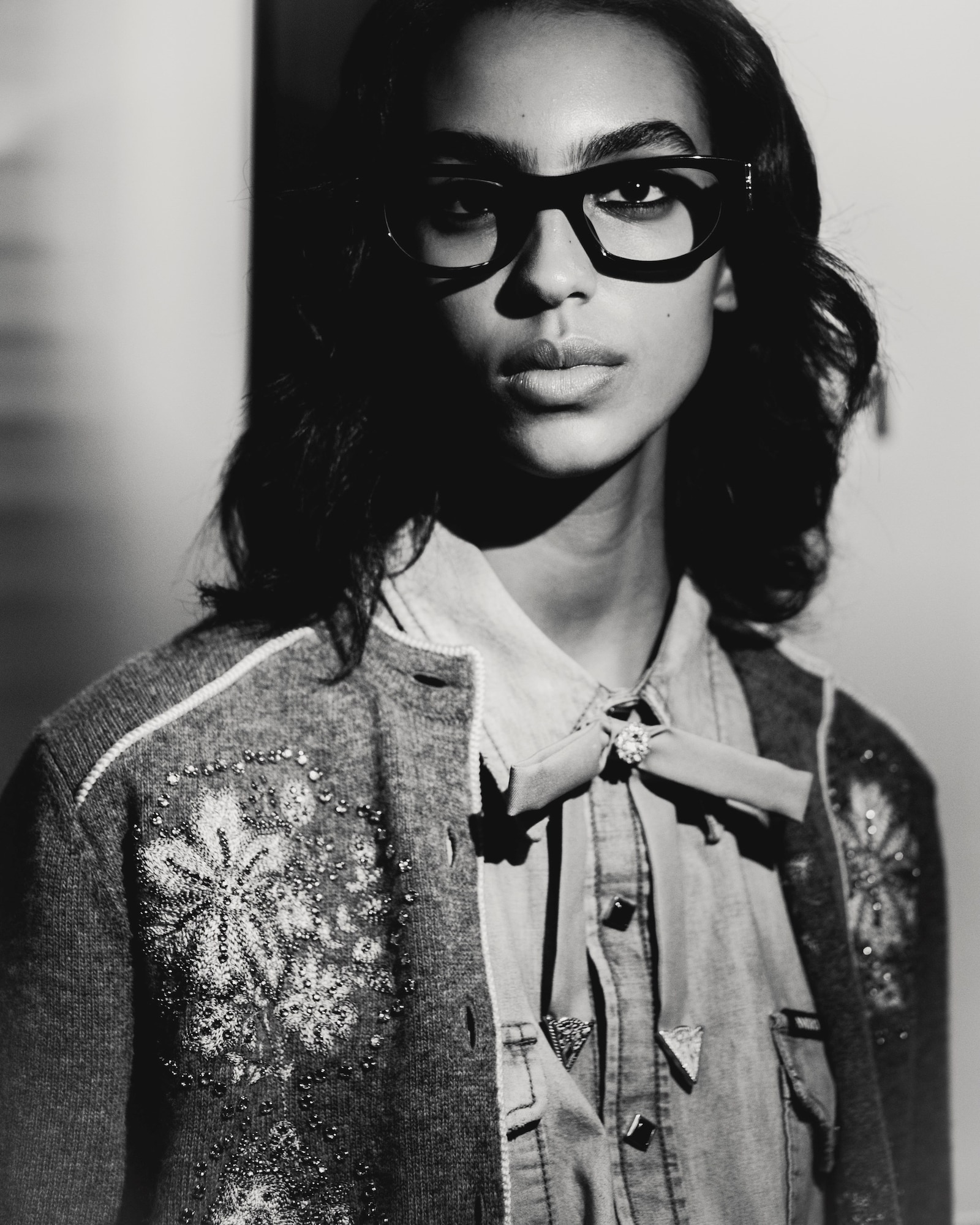

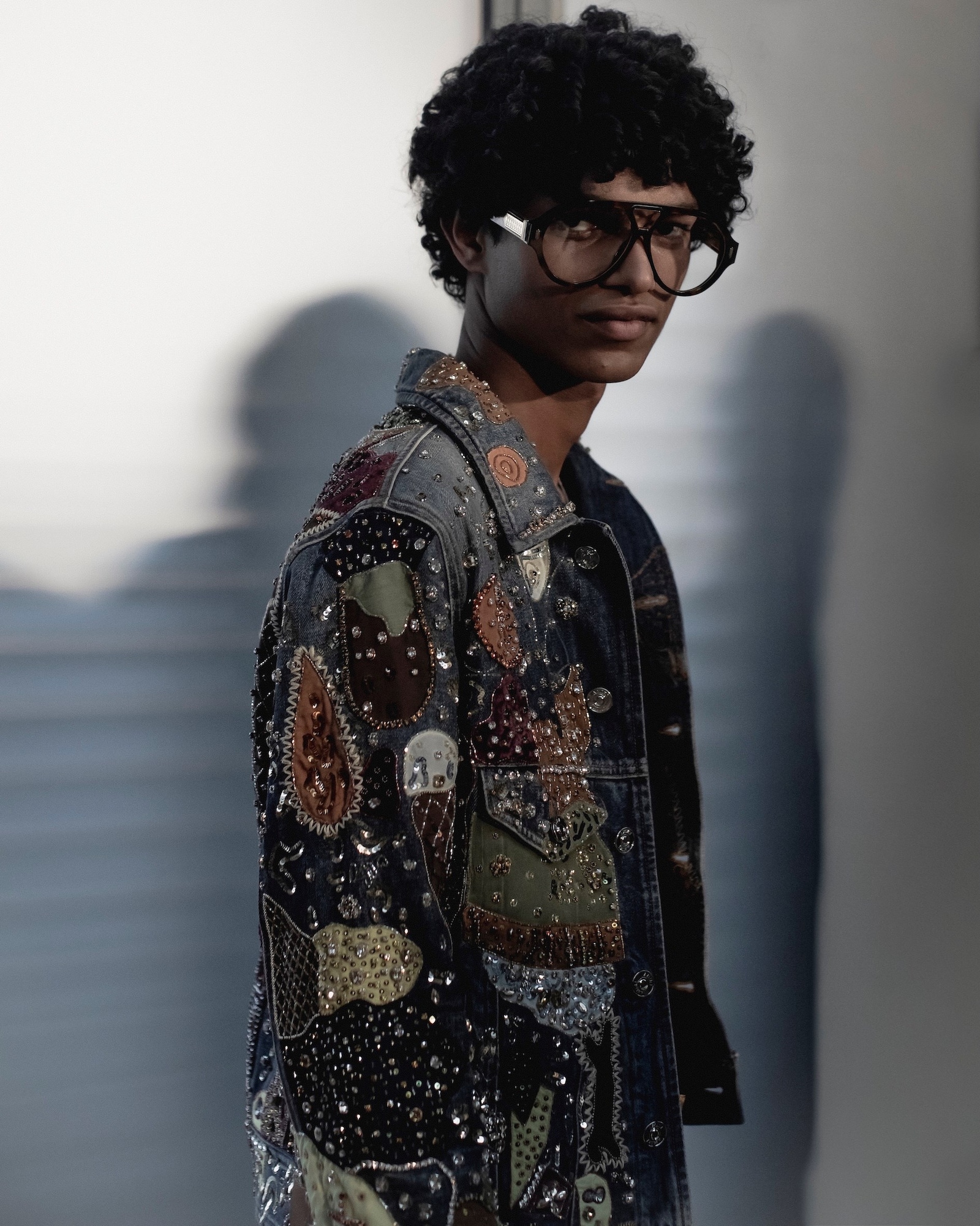
Material development carries much of the collection’s conceptual weight. Velvet-flocked denim, textured leathers, hand-dyeing, chain-stitch embroidery and layered beading operate as slow surfaces – techniques that accumulate meaning through wear rather than immediate visual impact. “They all carry memory,” Amiri says. “The more you wear them, the more they reveal themselves.” It’s a romantic idea, and it’s hard to imagine those early Laurel Canyon residents tending to frayed denim or reaching for the lint roller.
All those early impulses that shaped Amiri’s identity – the music culture, LA spirit, individuality, craft – remain present yet articulated with greater clarity and control. “The instinct hasn’t gone away,” Amiri reflects. “It’s just been honed into a more confident, precise language. Amiri has become a world.” The variety in that world is only making the medley all the sweeter. “The language [of Amiri] feels defined, but there’s still so much space to explore within it,” he says. “After years of exploration, we’ve hit a sweet spot, and from here, everything builds naturally forward.”
