
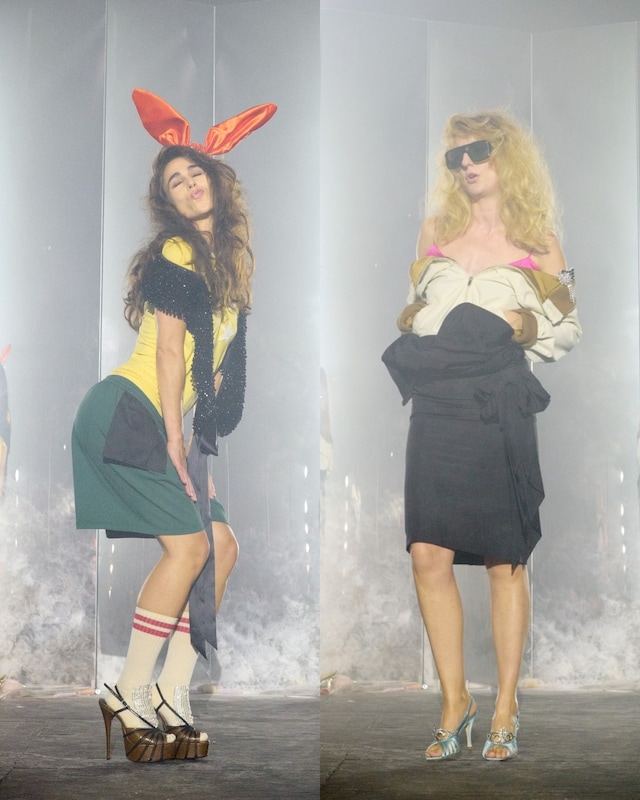
Smerz has soundtracked August Barron’s twisted world for six years. For Spring/Summer 2027, they stepped into it
As lights dim in a small theatre in Pigalle, a crowd erupts in roars and whistles. In the dark, a spotlight appears on the draped velvet curtain. As it moves through its folds, the cheers get rowdier. It’s a long way from the usual fashion show hush that descends as soon as the music starts, but this is the unveiling of August Barron’s latest collection. The label founded by Benjamin Barron and Bror August Vestbø stages its show off-schedule once a year, its scarcity breeding a particular anticipation. “Clothing is what we’re here for, but the performance is what we’re trying to achieve,” says Vestbø. Ever since their debut, the show soundtrack has always been created by Smerz. The Norwegian musicians, comprising Catharina Stoltenberg and Henriette Motzfeldt have become almost as much a part of the August Barron universe as the clothes themselves. “Music is how they start building a world, so our starting point is always their playlist,” says Motzfeldt.

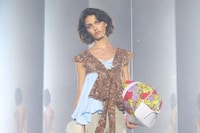
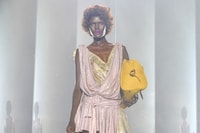

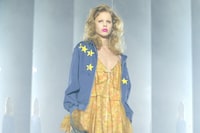

A synth-heavy remix of Uffie’s ADD SUV blasts through the speakers as the first model walks out in glittery pleaser platforms and a short dress spliced from two distinct silhouettes. For Spring/Summer 2027, the designers tackled the Hollywood dream. “A lot of the direct inspiration for the collection came from Franz Waxman’s Sunset Boulevard prelude,” says Barron.
Since the mid-2010s, the Norwegian band has been blending different genres to create emotionally charged pop. With only a description of what Barron and Vestbø are yet to design and a list of songs, the musicians create a world of their own. “We don’t know what the clothes will look like and they don’t know what the music will sound like, all we have is a common goal and a bumpy road ahead,” says Stoltenberg. The process is not too dissimilar to how Smerz usually works. “Henri and I sometimes work separately on the same part of a song: one does the chord progression and the other the drums in isolation. Putting them together creates something neither of us could’ve imagined.”

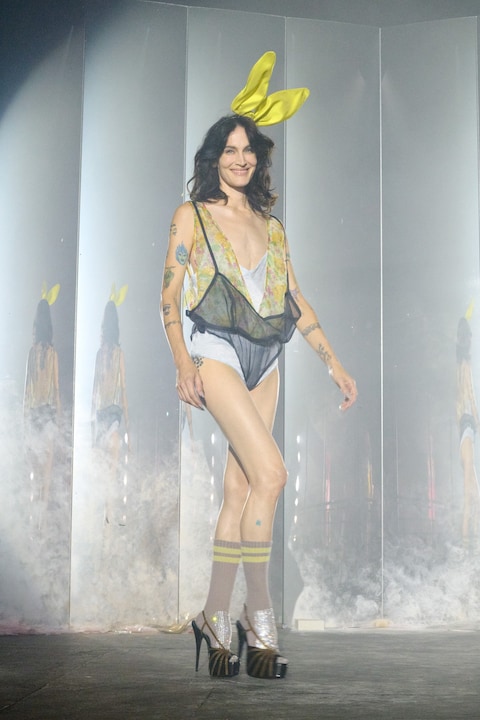
The designers prefer it that way. “What makes it exciting for us is the release of ownership – we get to be spectators in a joint experiment,” says Vestbø. August Barron grew out of the magazine All-In, launched in 2015, before its first collection arrived in 2019. Even if their playlist acts as a base, Smerz are given considerable artistic freedom. As the last synths reverberate off Uffie’s distorted voice, different acceptance speeches interrupt each other. “I have been so incredibly blessed … I can’t believe it, I’m not a winner … The winner is … ” Barron and Vestbø didn’t know about the spoken-word segment until they heard the finished soundtrack, which they played so loudly they blew their speakers. “We had their words in the back of our heads and thought of Hollywood as a place where greatness can quickly fall into nothingness, we wanted to include that vulnerability,” says Motzfeldt. Three models with distorted Playboy bunny ears wear bodices that juxtapose a satin inner shell with a deflated bra whose cups drape over the waist. “These are a great example of what we’re representing, the inflated expectation of an unreal chest and then the contrast with harsh reality,” says Barron.
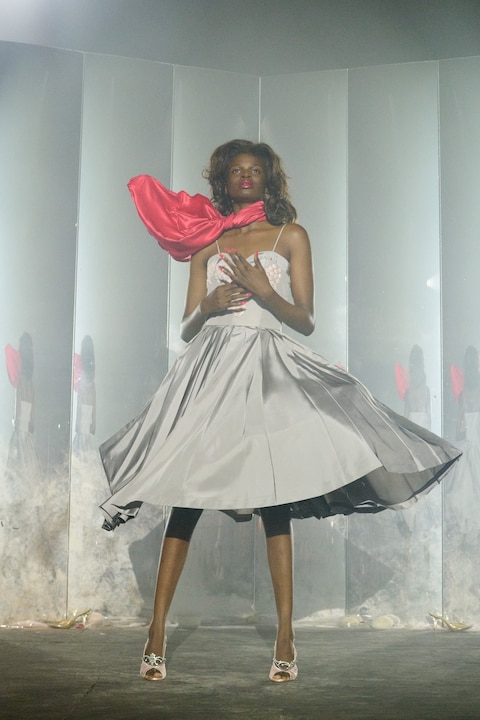
Following a drill-rap remix of Sunset Boulevard’s prelude, Madonna’s Hollywood and the theme song for Charlie’s Angels, an a capella cover of Diamonds Are a Girl’s Best Friend quiets the room. “Men grow cold as girls grow old, and we all lose our charms in the end.” Hollywood iconography becomes a metaphor for manic desire in the shape of its most distinctive symbol. Here, Marilyn Monroe’s windblown dress is grey and silky, frozen in place through oddly shaped panniers. “Because the idea of Hollywood can be represented by so many decades, we ended up collaging them together, in a way that is more similar to how we did our early collections,” says Vestbø.

For the past three years, each August Barron collection has revolved around a single archetype – the uptown girl, the popstar, the housewife – while their earlier work reshaped existing material into a new vocabulary. Motzfeldt sees that process as central to their creative affinity. “From the very beginning, we could relate to each other’s process in a way we hadn’t related to anyone else’s before, even in music,” she says. “The way they designed was similar to how we used samples, having the starting point for creation as something that exists outside of us.” Though Smerz have since moved away from a sample-based approach, their connection with August Barron has only deepened.
During the Covid-19 pandemic, the four chose each other as their bubble. They became close enough to eventually live together in Oslo and now, even in different cities, they plan frequent trips – one of which, to California, helped spark the idea of a Hollywood theme collection. “They’re even staying with us [here in Paris], we still have to clean our place before they get here tomorrow,” says Vestbø four days before the show. That intimacy has found its way back into the clothes. Smerz are more than the people August Barron call when a collection needs a soundtrack – they have become references in the designers’ visual vocabulary. The influence is particularly visible in their newest collection. “The idea of freezing the moment of the blowing wind in scarves is, of course, a Marilyn reference, but it’s also because Catharina and Henriette have been adding blowing wind elements in their live performances,” says Vestbø.

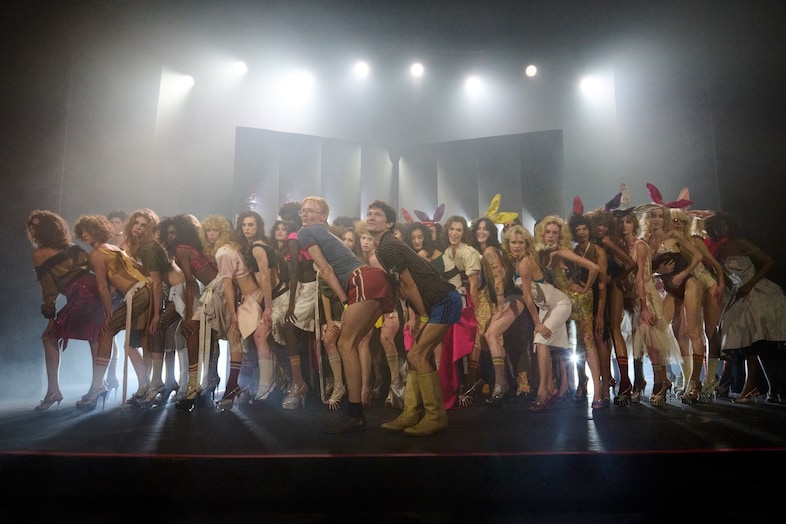
Their muse status was formalised this season, as the designers invited Smerz to walk the show. Speaking three days before their catwalk debut, Motzfeldt is still considering the type of walk she should do. “There are all of these ups and downs in the soundtrack, so it’s going to affect how I walk … A model’s work is intense.” They figured it out by showtime. Both were as charismatic as an August Barron show demands, each biting the tip of a finger as they stopped to pose. In lieu of a final walk, models, including Smerz, stood on stage with their hips pushed back and one hand resting on the bent knee. When Barron and Vestbø joined them, bending in the same shape, screams were so loud that Smerz’s remix of Florence + The Machine’s You’ve Got the Love was barely audible.