
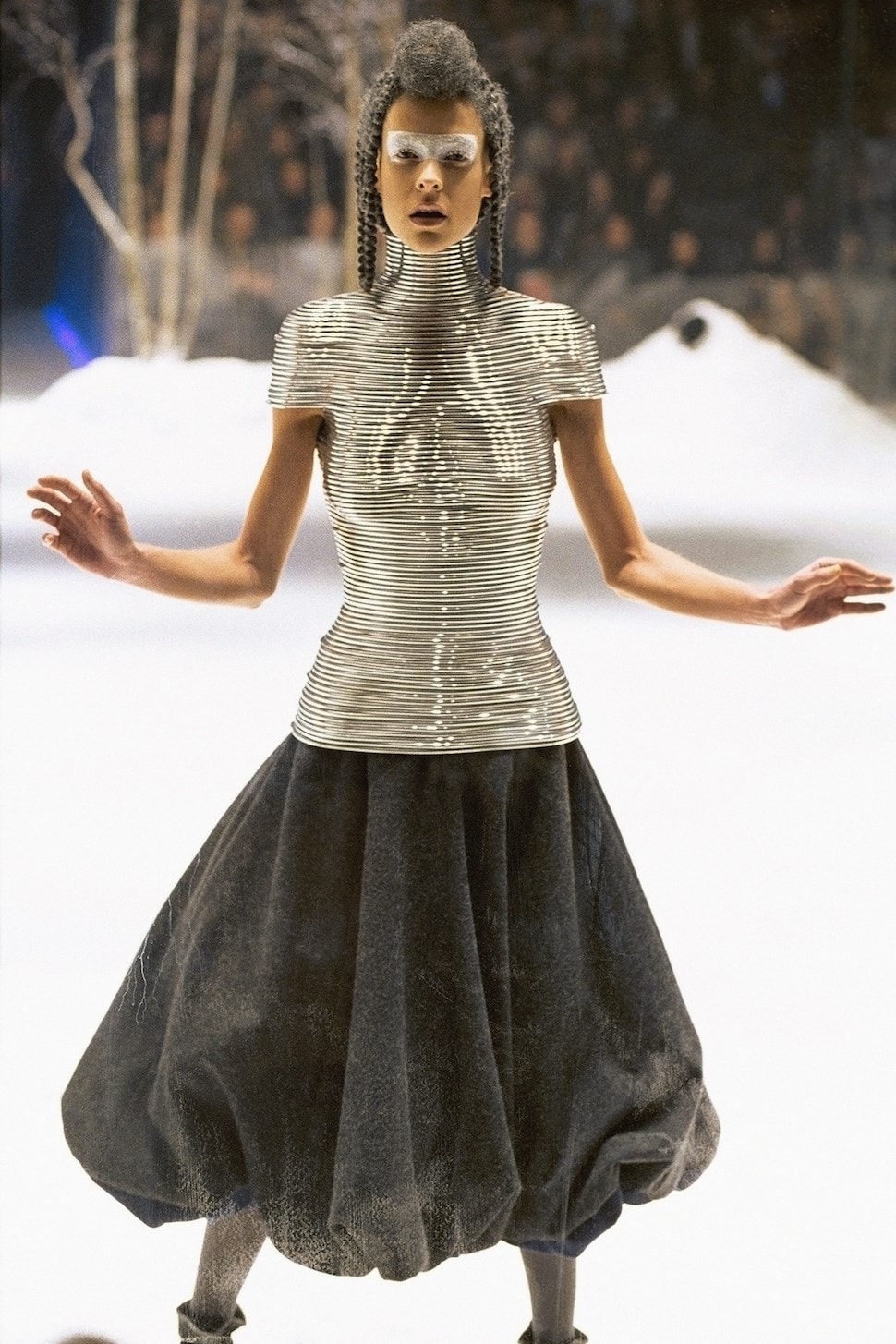
Shaun Leane is arguably the jeweller who has had the greatest impact on fashion over the past three decades. And by fashion, I mean fashion – specifically, Leane’s partnerships with Lee Alexander McQueen where ground was broken and boundaries pushed to reshape the delineations between clothing and jewellery. Leane himself calls these pieces visionary, and he isn’t wrong.
Crossing boundaries is something of a signature for Leane. While there are plenty of jewellery pieces in his 30+ year back-catalogue, he’s also devised architectural façades and headstones – “applying my language to many different disciplines,” he says. That resolute refusal of limits – the lack of discipline over disciplines – is also defining quality of his new endeavour, titled 12, in every manner, that is, except the volume of pieces. As the name suggests, after stepping back from his eponymous label two years ago, Leane is now consciously limiting himself to inventing just 12 pieces a year. He also splits his time between his studio in North London and Kerry in Ireland, where his father’s family is from.
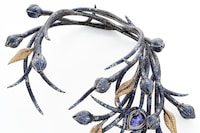
“A shared pursuit of creating something beautiful” is how Leane defines 12, drawing inspiration from the multifaceted output of René Lalique and the artists of the turn-of-the-century Weiner Werkstätte in the span of both their ambitions and output. And his works under this new name already run a wide gamut – his first piece was a headstone created for his father’s grave; the third a neckpiece for long-term friend and collector Daphne Guinness. ‘Collector’ is the term Leane uses for his clients, more akin to art than jewellery. They are individuals with whom he sees himself in a vital and reaffirming exchange, pieces born from ceaseless and constant conversation. “Some of my collectors sit with me for hours,” Leane says. “They sometimes say, ‘I feel like I've had a therapy session.’” Often, his work can plumb extreme emotions – he created engagement rings and wedding bands for one client couple, but also designed headstones for two of their children killed in a tragic accident. “That’s why I think [collectors] always come back to me, because I seem to touch, I touch their emotions, a part of them.”
Leane’s team is – no pun – lean. However, it includes people who have worked alongside him for more than 17 years, as well as London-based specialists in the jewellery heartland of Hatton garden, where Leane learned the trade as a 15-year-old apprentice. Today, Leane is involved in every step in these new pieces, from CAD design through crafting, to even the construction of the boxes for the final items. “My true passion actually is the process of making,” he says. “I didn’t even put my name to the atelier. Because I want it to be about the 12 works. It’s not about me – it’s about them.”
With that in mind, here is a selection of some of Leane’s favourite pieces from his award-winning back catalogue – his works, in his own words.
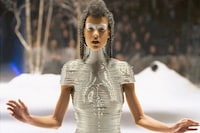
Coil corset, created for Lee Alexander McQueen, 1999 (lead image)
“This piece means a lot to me: it was the only piece signed by myself and McQueen, we engraved our signatures on that piece. I had only left my very traditional job in 1997. I’d been exploring stuff with McQueen, creating the Tusk earring (Spring/Summer 1996) and bigger pieces – the Skeleton Corset (Spring/Summer 1998) I had already made. And I’d made the Björk necklace [for Homogenic, 1997], from It’s A Jungle Out There (Autumn/Winter 1997, worn by Alek Wek). Lee and I were talking about that piece, and he said, ‘Why don’t we take it down to the chest?’ So I went away, started thinking about it. We cast the body of the model, Laura Morgan, and I started working. I said, ‘My God, we should take this further. To the waist.’ So we did.
“For me, this is really personal. I was still exploring. I wasn’t in fashion. I came from a very traditional classical jewellery world – I was working for the Royal Family. All of a sudden I was dropped in the middle of this world of fashion. I had imposter syndrome. I didn’t feel like I belonged. I was making all this stuff for Lee, which was getting a lot of recognition and a lot of acclaim, but I still was very insecure.
“I was so worried about this piece. It was a feat to make, a phenomenal piece. It took 16 weeks, working 16, 17 hours a day. I slept in the workshop. I lived in the workshop. It was a labour of love. And I was really worried about the model wearing it – would she fall? Would it break? But it was a success.
“At the end of the show, Lee was then bombarded by press, as always. I was taking Laura out of the corset and putting it back in its box. And through all the mayhem, Lee pushed the journalists aside, ran to me, and said, ‘I just want you to know that your piece blew me away.’
Even though Lee was my closest friend, for him to say that to me was the turning point. Not only technically did it push me – it enabled me to believe in myself. I have my hands and with an open mind and an openness to different mediums and approaches to different disciplines, I can make anything, because I have a skill.”

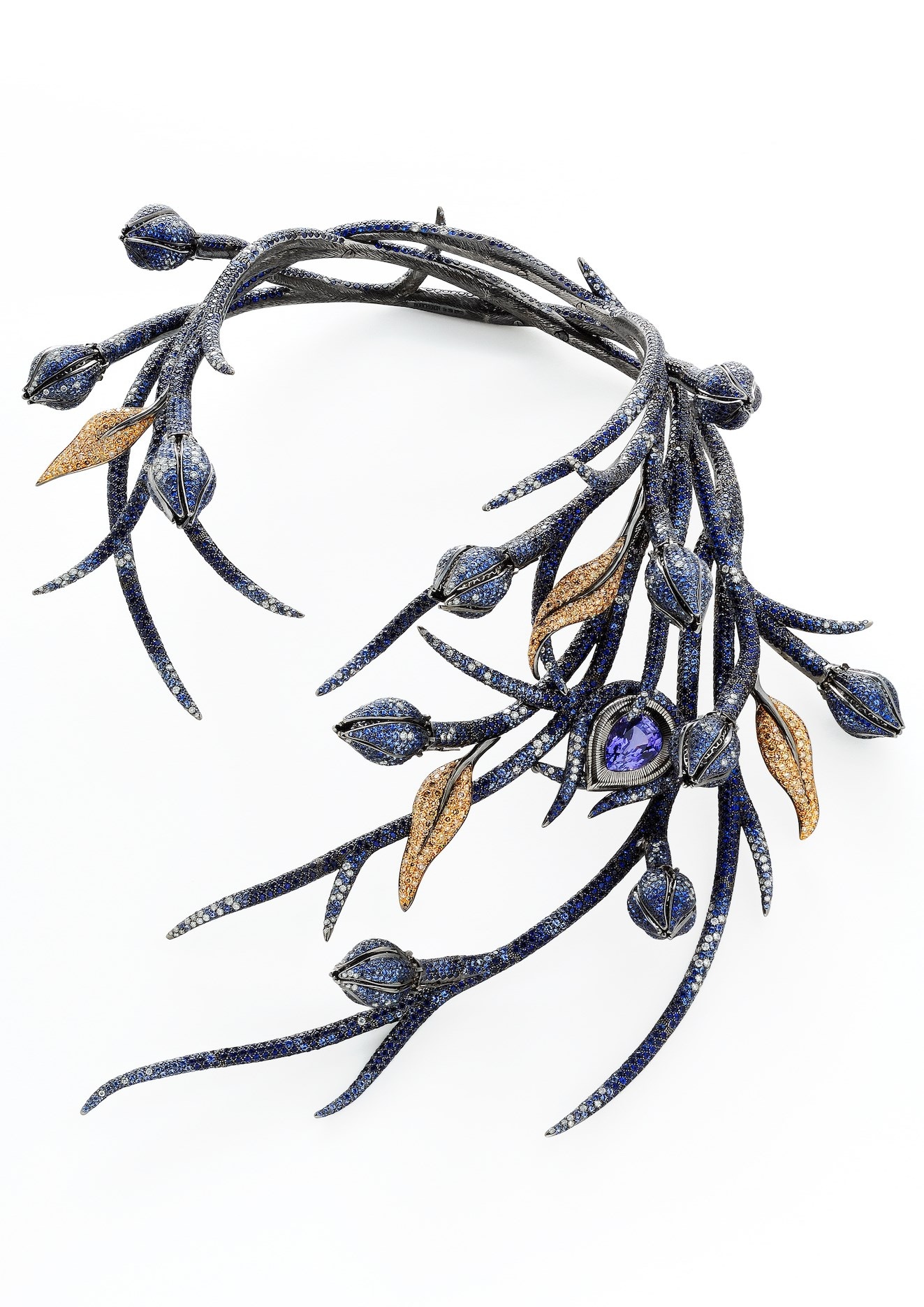
Queen of the Night, necklace created for Boucheron, 2008
“I love creating one off pieces, because you can really create a story. Boucheron approached me – they had seen the work I was doing with Alexander McQueen on the runways – that was still early days. I thought it was so brave, for a house on Place Vendôme to do that. They invited me to Paris, and I asked them, what is the brief? There wasn’t one. I said, what’s the budget? There wasn’t one. I said, can I look at the archives? And they said, no – we don’t want what you do to be inspired by old pieces.
“But as we were leaving their headquarters on Place Vendôme, there was a black and white photograph, a 19th-century photograph, of the Comtesse de Castiglione, who lived there. I researched her and her story and she was divine. She reminded me of Isabella Blow in a funny way. She was called the divine beauty of her time, she had an affair with Emperor Napoleon III and she became a recluse because she was banished from the courts. She lived in that apartment, painted the walls black. And she would only go out at night into the streets after dark – you’d get a glimpse of her at night, if you were lucky. And that was where the concept came from – the piece had to be for her.
“So I wanted to find a flower that blossomed at night – I researched and I found a flower called Queen of the Night in South Africa, that blossoms in the moonlight. So that was the concept – all in dark gold, sapphires and you could press a button to open the flowers. The necklace mechanism I made – because of my training, I had restored Victorian jewellery with spring mechanisms. I taught my atelier, my goldsmith, how to make it. And I paid homage to the house with the ‘question mark’ necklace shape.
“It’s respect. Whoever I work with, I’ll pay homage to them, respect them, but in my way.”

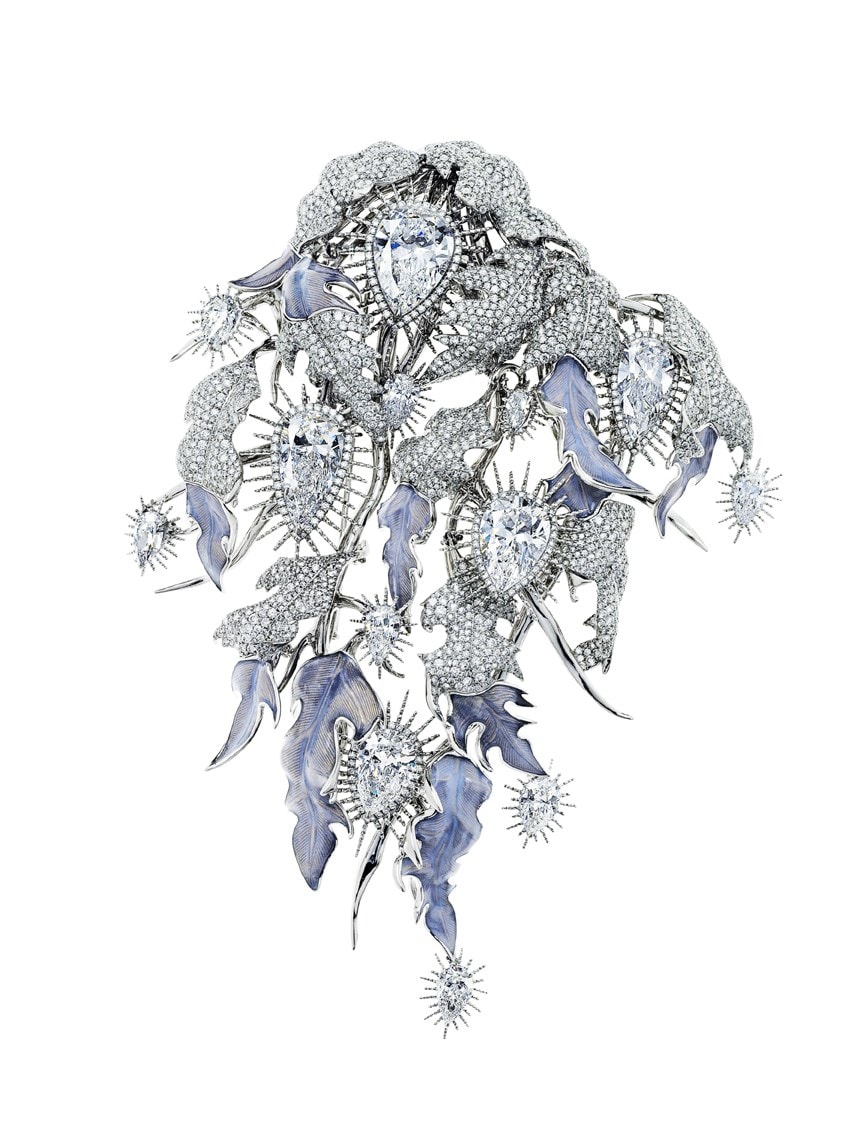
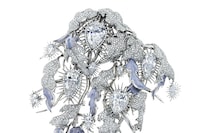
White Light, brooch for DeBeers, 2009
“I was given these beautiful, deep, flawless, Forevermark [subsidiary of De Beers Group] stones, from 5 carats up to 8 carats. This was High Jewellery. It was full circle – my old world of fine jewellery. I was inspired by From Love’s First Fever to Her Plague, a poem by Dylan Thomas. The line ‘The sun and moon shed one white light.’ What I wanted to do is capture that beautiful, fleeting moment of snow. That purity – how snow can cover the ugliest of objects, and they can look so beautiful.
“Nature is my mother inspiration – because of its fragility and strength. So this piece is about snow, icicles, fragility, something that’s going to melt away. But the strength behind it – thorns, the prickly branch underneath. Something so beautiful, but yet it can be so dark. You can’t have light without shadows.
“This is a beautiful high fine piece of jewellery, but there is an edge. Even when I make high fine pieces of jewellery, they have a formidable structure.
“They may be decorated with the finest materials in the world. But if you look past that, you’ll see they’re in a formation that is menacing and hard and strong and protective. There are thorns.”

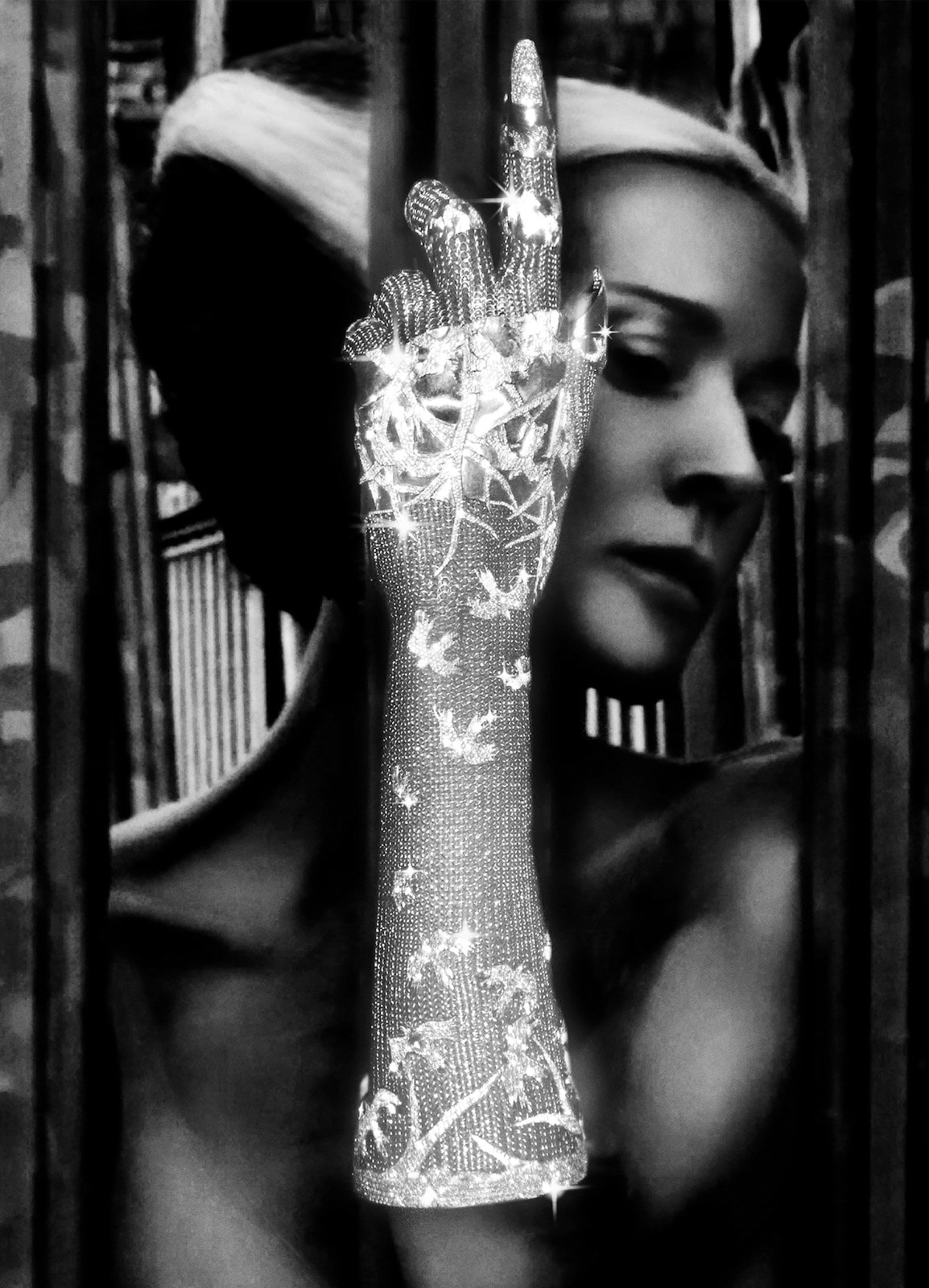
Contra Mundum, glove created for Daphne Guinness, 2011
“I was at the opening of the 2004 Vivienne Westwood exhibition at the V&A – me, Lee McQueen, Daphne Guinness and Isabella Blow. It was mayhem. And Daphne said, ‘I need armour. I need protecting. Shaun, you need to make me some.’ So we began this conversation. She talked about a glove, like a gauntlet. I said, let’s go up to the shoulder; then Lee said, God, if you do that, I’ll make the dress. Issie joined the conversation as well – she started reciting different poets. That’s the connection I love – how the art begins, the form begins.
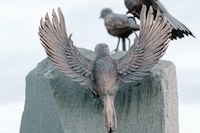
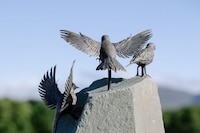
“I had recently been away with Lee – we were in India, and I saw a swarm of hundreds of birds. There was an eagle nearby – they were doing it to protect their young, joining in unity to scare off predators. So that’s why I designed the birds flying around the arm on the gauntlet. Protection, for Daphne.
“This piece took six years to make. Originally that piece was meant to be silver, with one fingernail set with diamonds. And a couple of birds. But because silver is softer than gold, it started to buckle and bend. So I went back to Daphne, said ‘Daphne, I think we’re going to have to make this in gold’. Then I made a nail – Daphne saw it, and said ‘We need to do all the nails.’ It became an art project. A thousand grams of 18-karat white gold, and more than 5,000 diamonds.
Issie had passed away by then, and I remember Daphne saying to me, ‘We need to do this for Issie.’ To push this as far as we can. Lee was going to make the dress, and then Lee died. So this piece was a labour of love – for me and Daphne, it was in honour of Issie and in honour of Lee. We took it further than any piece I had made – to the point that Cartier wrote to me and congratulated me on the piece, for taking high jewellery somewhere it had never gone before.”