
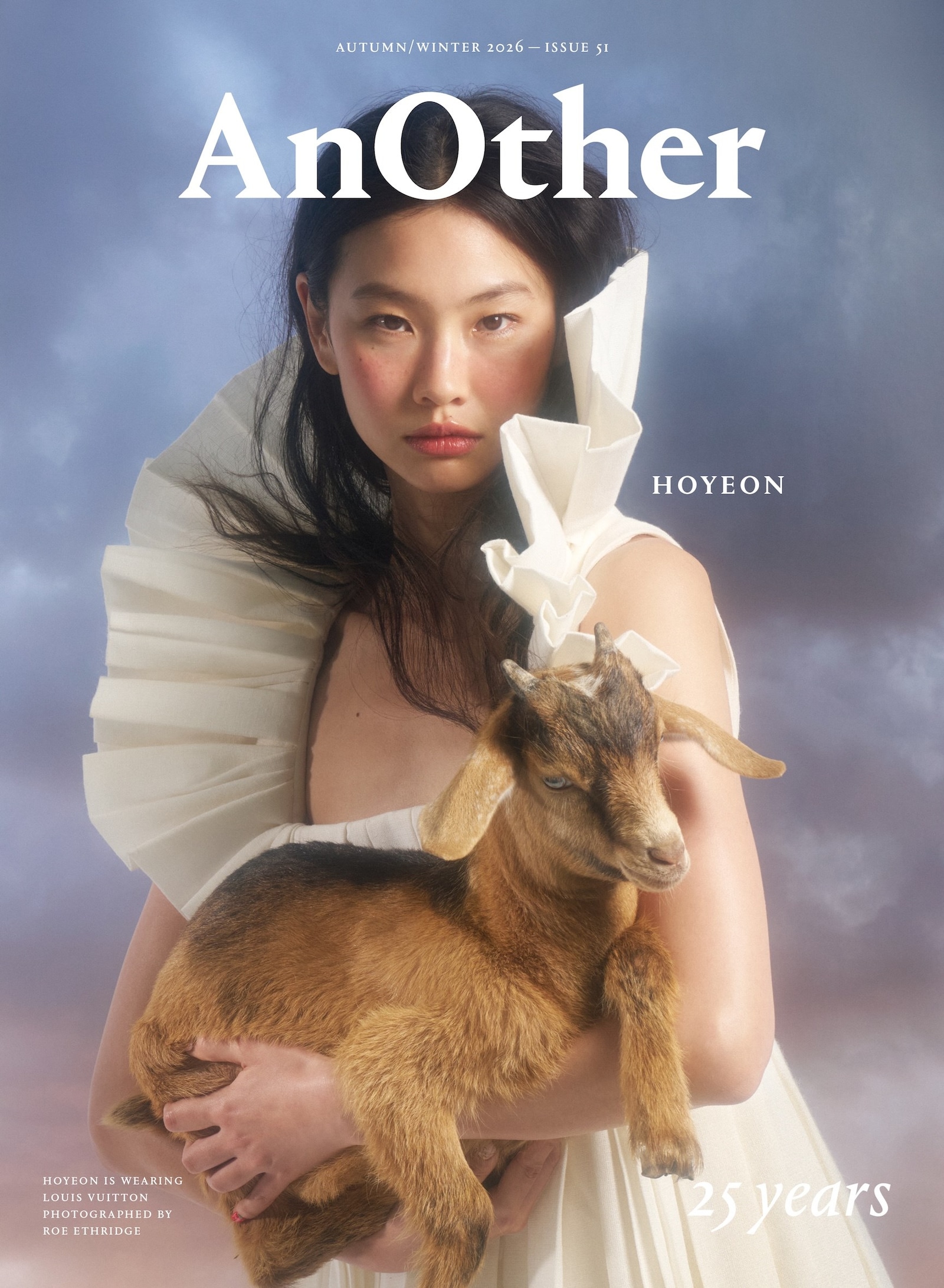
This story is taken from the Autumn/Winter 2026 issue of AnOther Magazine:
“You crossed the line,” the policewoman shouts out the window of her speeding car at the oncoming alien. “Rotten bastard!”
And with that, she leaps out, loads her machine gun and fires it maniacally, narrowly missing the chief of police who is cowering in the monster’s path. This is Hoyeon’s first appearance in the film Hope, the latest work by the South Korean director Na Hong-jin, famous for his tense, genre-bending action movies. There’s his jarringly violent and subversive debut feature, the serial-killer thriller The Chaser, from 2008 and the maximalist smalltown horror mystery The Wailing, which opened to acclaim at Cannes in 2016. Hope is a glorious mash-up of all of the above – cops, aliens, suspicious villagers, dense forests on the edge of a rundown frontier town in South Korea – that first presents and then upends all the classic tropes of a gory rural sci-fi. In it, every cartoonish stunt and calamitous discovery is underpinned by a flare of empathy, emotionality and, somehow, hilarity, confounding all expectations. Against a backdrop of beauty and destruction, Hoyeon, Emmy-nominated for her star turn in Squid Game, rivets. In a performance crackling with paradoxical physical prowess and black comedy, her character, Sung-ae, serves as the film’s crux, seemingly the only capable human to be found on said frontier town’s police force. It’s a surprisingly tender portrayal amid rocket launchers and high-speed pursuits.






In contrast to Hoyeon’s brooding appearances in Squid Game and Alfonso Cuarón’s psychological miniseries Disclaimer (alongside Cate Blanchett), in Hope the actor is seen shouting, screaming and panting on a rusty bicycle for almost three hours. Na, known for his demanding and exacting breed of directing, expected her to perform her own stunts – including driving, J-turns and all – which required six months of training. The only thing she didn’t have to train for, Hoyeon deadpans, was riding that squeaky bicycle up a hill. She glowers with indignation through blood and grime, bristling with outrage at the indignity of this extraterrestrial invasion.
Hoyeon also just glows. Even at 11pm her time, over FaceTime from the back of a car in Seoul. She’s en route to the airport when we speak – two days later she is due to unveil the trophy, along with the tennis champion Carlos Alcaraz, at the Fifa World Cup final. Despite her talent, Hoyeon is modest and unassuming, which she attributes to her relatively short five years as an actor, following a decade as a model. For this issue, she’s both.
Jack Sunnucks Hope touched me greatly. It speaks to the absurdity of the human experience through the alien experience. Everyone in the film just wanted to protect the people they love. I was wondering what you felt Na Hong-jin was trying to say with the film and what you were saying with your performance.
Hoyeon I think this movie is about different perspectives, different points of view, especially for my character. The director shared that in the early meetings and table reads. He wanted the core of my character to be an expression of the goodwill of human nature. It’s a very pure form of goodwill, even though that has the potential to destroy someone else’s life. And that is the case even when a person believes that whatever they do is right. Does that make sense?
JS They’re trying to do their best, but they might impact other people negatively.
“We should be mindful – and it’s good to doubt, to challenge your own sense of justice” – Hoyeon
H In Disclaimer my character also has a strong sense of justice. She does something motivated by her beliefs but eventually that destroys someone else. That happens a lot, especially now, online. There are so many different or diverse perspectives, good and bad opinions – and they are increasingly extreme, in every part of our lives. I think that Director Na was trying to say that human nature is diverse and even in one tragedy or celebration, there is always a different perspective. We should be mindful – and it’s good to doubt, to challenge your own sense of justice.
JS We should second-guess ourselves.
H But that doesn’t mean that you have to lose your goodwill. We have to maintain our beliefs but always second-guess how that will impact different people.
JS From the first moment we meet Sung-ae, she keeps saying, “You crossed the line. How dare you do this?” She has this sense of morality, the feeling that the alien is doing something terrible to the town.
H The director intended for the emotional focus of the audience to shift to that of the aliens the further the narrative progressed. With the extraterrestrials, you see their baby, you even see their pet. However, when it comes to the human characters, you don’t have as much backstory or detail in terms of the character dynamics, which are usually the things that allow you to form emotional attachments. That is intentional – the director wanted to give the aliens more depth in terms of who these beings are. By doing so, he wanted to shed light on them in a more noble and emotionally complex way versus the human characters. The humans appear to be a little silly, sometimes foolish. However, they also have to be likeable. They have to be endearing for the audience.
Sung-ae is intuitive. She has a sense of innocence. She’s also in charge of the black-comedy element. And I say black comedy because it’s quite simple, she has a single goal, [to stop the aliens]. The way she moves towards that goal is linear – you wouldn’t say she’s complex. However, if this character was portrayed in too serious a manner, then she wouldn’t be as endearing. It’s a fine balance. You need to find the sweet spot where even if her actions – from the perspective of the aliens – are destructive or aggressive, she’s still loveable.

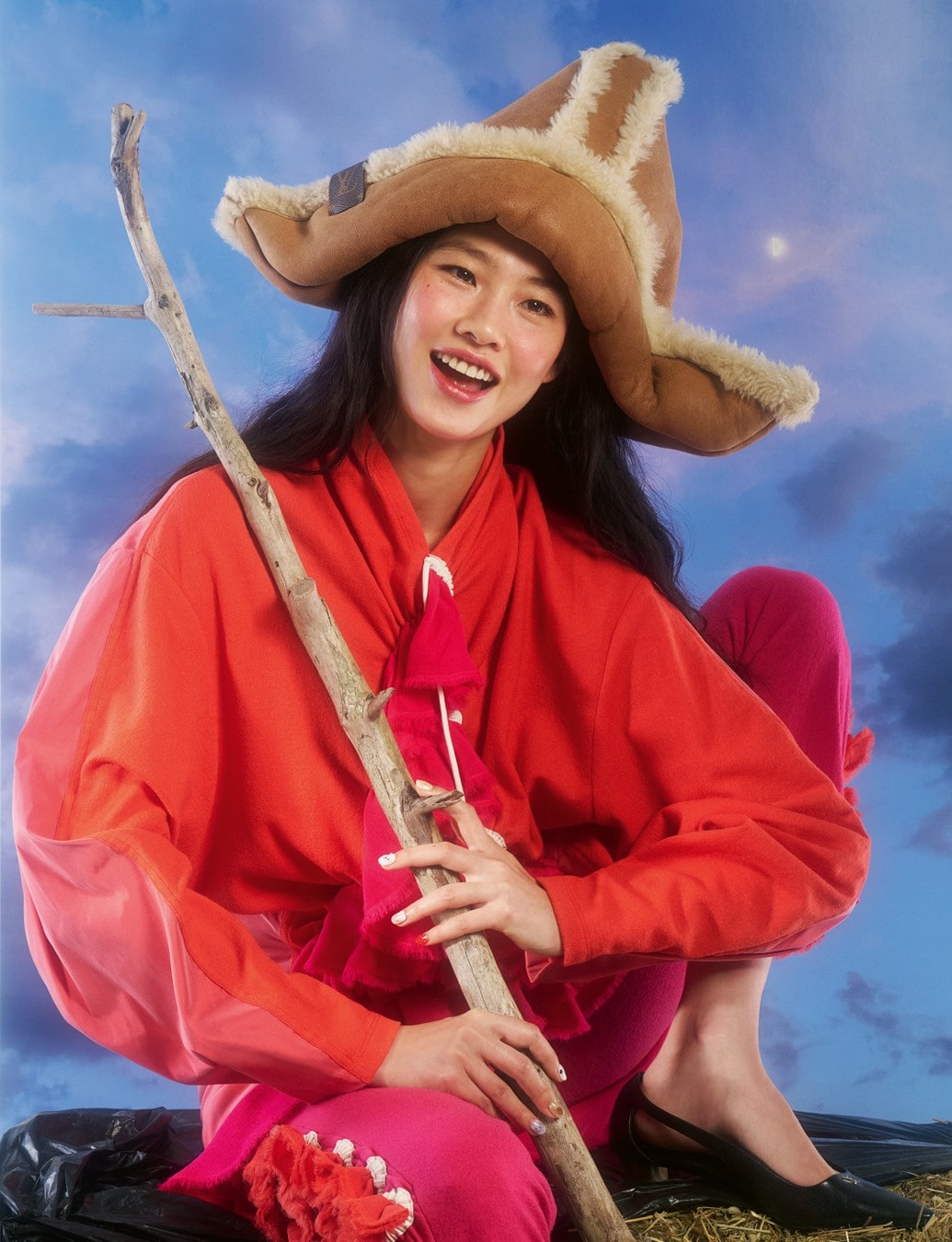
JS This film is unique, in that it’s an art film, a comedy, an alien film. It’s experimental – all the projects you’ve done are groundbreaking. Is that important to you when considering them, that it’s going to be something new, something innovative?
H That’s honestly not why I choose projects. My intention is always to work on something with filmmakers or creators that I admire. I was seeking a learning experience, to be a part of a production where I could learn from people, whether that’s directors or fellow actors. When I read the script there was an undeniable charm, I was immediately drawn to it. A lot of people have told me that I appear in innovative or boundary-breaking roles or projects. Maybe that is my taste. When it comes to taking on a challenge, something that is innovative or new, it always entails risk. Risk is something that makes my heart beat. I’ve always been someone who’s curious and drawn to adventure. I think that’s why I was able to be a model in New York and also take on the new challenge of acting after ten years of doing that. I’m definitely drawn to adventure.
JS This is a real adventure film, set out in the Korean wilderness in an era I couldn’t define – was it the Nineties, the Seventies or now? What was it like for you, being out, presumably in the middle of nowhere, showing such a different vision of Korean cinema?
H The fact that Director Na decided to tell the story about these extraterrestrial beings appearing, it’s a story that doesn’t make sense. When it comes to his choices about the backdrop, the physical space or the time period, everything is fictional – we have never specified which time period the story belongs to, everything is about what is most cinematically effective. That was the goal.
For example, in Korea, there’s talk about how the police uniforms we’re wearing in the film – the way Sung-ae and the guys are all dressed – seem too American. But honestly, that is not something we referenced. Instead, everything hints at this being sometime in the past in Korea. I’m wearing a high waist and Hwang Jung-min, [who plays] Beom-seok, is wearing a low-rise silhouette. It was all about the look. And that’s also why we landed on navy blue for the police officers’ uniforms – we were looking at what looks best under sunlight, what’s going to look the best when there’s blood all over it. During our fittings we tried a lot of different colours – black, grey, bright blue and sky blue.
The one thing we did focus on was that we wanted this to be an era before smartphones, because that’s how you’re going to completely isolate the small village from the rest of the world.
JS The costume, the set design and the themes – aliens, cops, disaster – it felt like watching a film about cinematography, subverting the classics. Is that true?
H Director Na’s previous films are very classic. The Chaser and The Yellow Sea are based more on realism, I would say, but not The Wailing. For that, there is such a great balance between realism and fiction. Director Na is incredibly adept at subverting the audience’s preconceptions, which is one of the reasons I’ve always been such a huge fan of The Wailing. I think, with Hope as well, if you look at the elements one by one, at the realism, things don’t necessarily go together. However, there are these moments where things that don’t seem to go together all come together beautifully.
JS How was it preparing for the action, the physicality? As a model, you’re in touch with your body. Squid Game was pretty harrowing, very physical, but in Hope you’re either screaming, shooting a machine gun or on a bicycle.

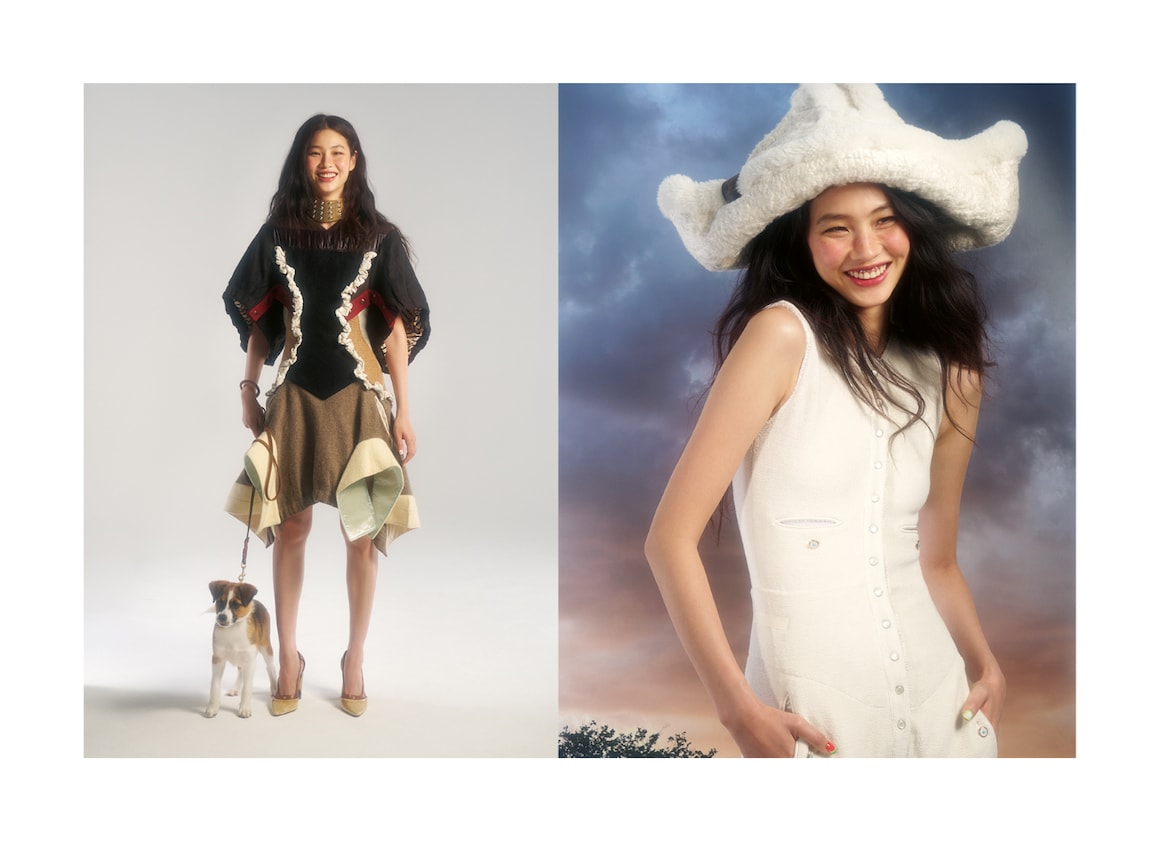
H We went through about six months of pre-production. Director Na is famous in Korea for being uncompromising. He is a perfectionist. I knew from the get-go that I needed to do most of my stunts and action myself. From training with firearms to weight training, I gained four kilograms of muscle mass. And for the car-chase scene as well – I used to only drive automatic, but I had to get a licence to drive a manual car. I did race training, drifting, learnt how to do a J-turn. In the beginning it was very scary. But as I went through it, I realised I was having fun. Thanks to the long pre-production period, when we were filming and we did really wonderful takes, the sense of achievement I felt, just how rewarding all of it was, has been unforgettable.
As for the bicycle, I didn’t need any extra training. I already knew how to ride a bike. Director Na purposely gave me a really old, broken bicycle, so it was tough. The facial expressions that you see in that sequence, I’m not acting.
JS Are there other film genres you are interested in?
H I was looking for some romance after Hope, for things I’ve never tried before, roles I’ve never played. I want a new environment and not to be typecast. Maybe because I’m trying new, challenging things, they’re not always going to work, but that’s what makes me feel alive. I’m going to keep challenging myself.
JS Does acting come naturally to you?
H I wouldn’t say it’s natural. I like reading things. I really practise. I do a lot of prep – I never go to set without preparing.
“Maybe because I’m trying new, challenging things, they’re not always going to work, but that’s what makes me feel alive” – Hoyeon
JS When you met Director Na, was it a similar level of attention to detail?
H He was more detailed than I am. There is a gap between the level of what I can prepare – the imagination, what could happen on set – and Director Na’s imagination. He has much more experience on set. He gave me a lot of ideas and inspiration and I learnt a lot from him. But I think the energy and passion we have for our work and career are maybe similar. Now, because I’m working with amazing directors and actors, I can start to believe that I might have a talent inside me, that I should not deny this part of me. I’m still going to work hard preparing as much as I can, but I try to give myself space – “Hoyeon, you can trust yourself, you can trust your talent.” Before, I was quite tough on myself. I’m learning how to enjoy it, let it flow.
JS Your performances are very naturalistic, which can be the hardest thing.
H I prepare and I think of all the possibilities so that, on set, I can be very clear. I like to be very instinctual.
JS How would you describe the Korean film and TV industry? It has a level of global recognition now. For fans of cinema, it’s always had that reputation for incredible filmmaking. How is it for you working within the system?
H Honestly, I’m so new to the game of the Korean cinema or film industry. I’ve only been acting for about five years now, so it’s hard for me to say. Obviously the Korean film industry is not comparable to Hollywood in terms of the system or the budget, but I will say that Korean people are so hardworking. All of the cultural success or achievements that you see coming from Korea are based on building blocks of labour that we have laid for many years. And for that, I think it’s everybody in the industry I have to thank for this recent phenomenon. I feel incredibly lucky to have been born at the right time, to be able to enjoy the benefits of those efforts. I always want to remember to be grateful. I want to try to maintain, if not expand, that.

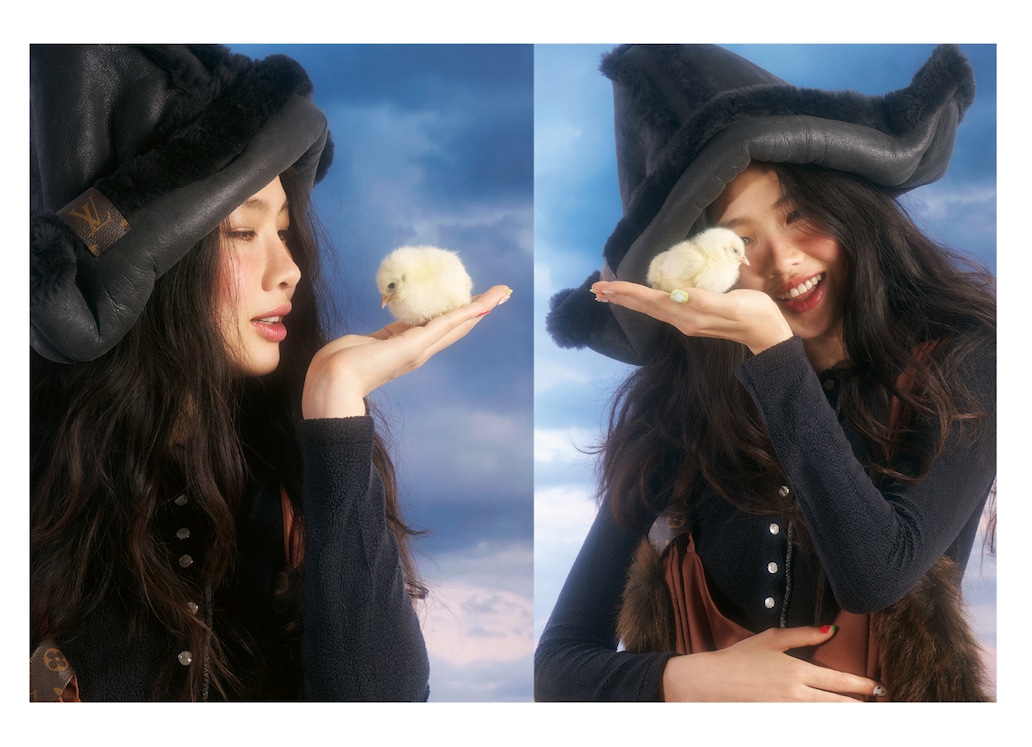
Hair: Akki Shirakawa at Art Partner using KÉRASTASE. Make-up: Yumi Lee at Streeters using LA BEAUTÉ LOUIS VUITTON. Manicure: Mei Kawajiri at Red Represents using PLEASING. Set design: Megan Kiantos at East. Digital technician: Jonathan Nesteruk. Lighting: John Law. Styling assistants: Precious Greham and Alexa Levine. Hair assistant: Christina Rendall. Set-design assistant: Sam Pepere. Animal talent: Dognerd. Production: Hen’s Tooth Productions. Executive producer: Mary-Clancey Pace. Producer: Brenna Smit. Production assistant: Gregory Gabb. Post-production: Two Three Two. Special thanks to Smashbox Studios
This story features in the Autumn/Winter 2026 issue, marking 25 years of AnOther Magazine, on sale internationally from 17 September 2026. Pre-order here.