
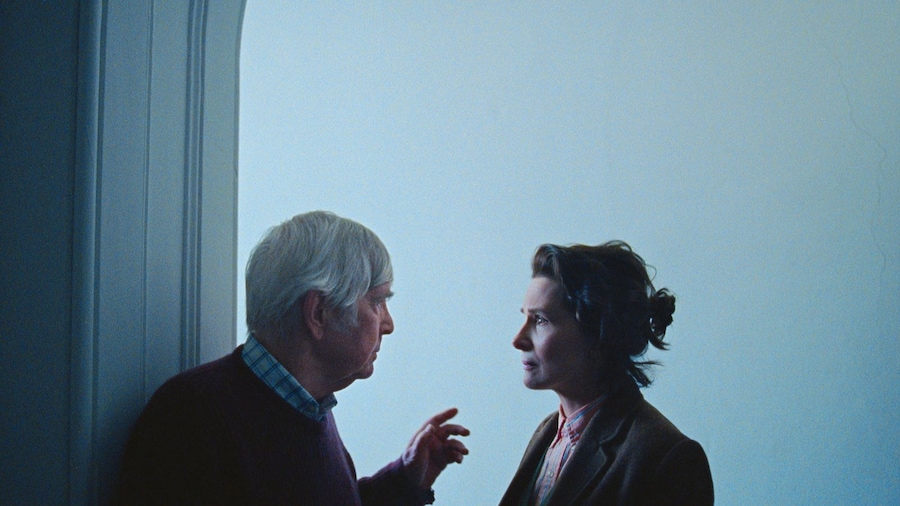
The director opens up on the painful taboos surrounding his Berlin prizewinning drama, starring Juliette Binoche and Tom Courtenay
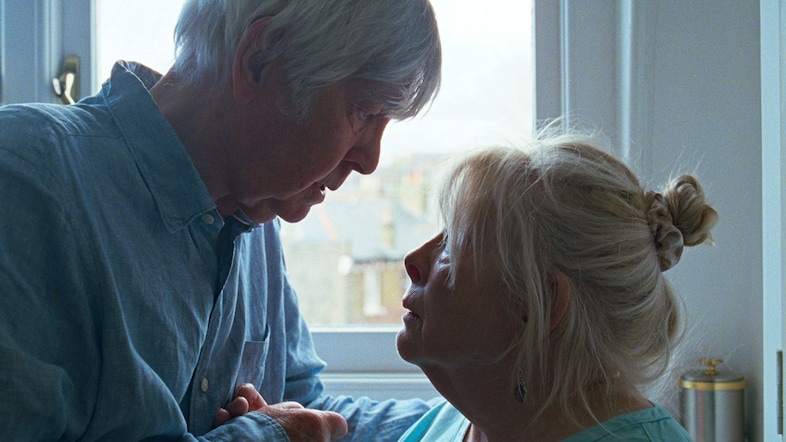
Queen at Sea starts with a sex scene that’s unexpected on multiple levels. Only three minutes into Lance Hammer’s first film in 18 years, the camera lingers on the sight of Martin and Leslie, an elderly couple played by Tom Courtenay, 89, and Anna Calder-Marshall, 79, having intercourse in their bedroom. Moments later, Leslie’s daughter, Amanda (Juliette Binoche), enters and, in a panic, calls the police: it’s revealed that Leslie has dementia.
“I knew it would be shocking to watch two old people having sex,” says Hammer, the film’s 58-year-old American writer and director, speaking to AnOther in London. “There’s a taboo. I’m guilty of it, too. It forces us to think about death. Sex is the ultimate creative act – it creates life, and belongs with the young. When you see the elderly doing it, it feels discordant. I found that terribly sad and wrong.” To prove a point, Hammer sought to steer clear of outright titillation or provocation. “I wanted the most boring sexual act you can film – two people in profile, in the missionary position – and the fact they’re old would be shocking. That turned out to be true. And then you don’t immediately know why Amanda is responding so badly to it.”
)
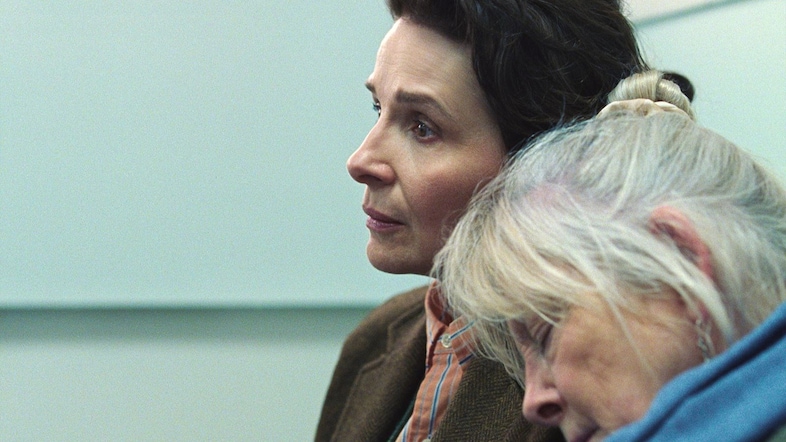
As Queen at Sea unfolds, further complications materialise when Martin refuses to leave Leslie alone, and later, through police intervention, she’s taken into a care home where a fellow resident has sex with her. At the Berlinale, the thorny drama won the Silver Bear Jury Prize; acting trophies went to Courtenay and Calder-Marshall. “Anna’s the one who’s truly acting, because she has to be something she’s not,” says Hammer. “What I don’t like in films with dementia is the melodramatic, theatrical presentation of dementia. I told Anna it had to be subtle. I had a code word: ‘More Anna.’ I wanted her nature – she’s herself, but with dementia.”
In 2008, Hammer received acclaim and awards (including a directing prize at Sundance) for his debut feature, Ballast. A minimalist drama about a Black family surviving poverty in the Mississippi Delta, Ballast announced Hammer as a promising auteur. It was also, in his words, “financially disastrous”. Realising he couldn’t make a living directing indies like Ballast, Hammer quit filmmaking to work in architecture and investment. It’s why with Queen at Sea, only his second feature, he could take creative risks: he isn’t reliant on moviemaking to pay the rent. “The only reason I make films is for the pure, creative process,” he says. “It frees you.”
Hammer himself doesn’t have direct ties to dementia. He did, though, read articles and hear stories involving his father’s friends about consent. In Queen at Sea, Martin’s counterargument is that the sex, which is usually instigated by Leslie, is a tool for bringing back her old memories. Moreover, Martin’s devotion to Leslie is never in question. “At first, I felt ashamed for feeling confused about the issue,” says Hammer. “Then I realised it’s probably a good film to make, as long as I keep my neutrality through it.”
)
However, he admits his personal beliefs align closer to Amanda’s character. “She’s right. He needs to stop having sex with her: If there’s any chance she could be harmed and she can’t communicate it, it has to stop. I can see that Martin had a beautiful, loving relationship, and the consent in their marriage was established a long time ago. But she’s increasingly unable to communicate her inner life. There’s a line where you have to stop.” The director believes there’s denial involved. “When you’re in it, you don’t see it happening, because it’s happening very slowly. I can sympathise with how a loving, well-intentioned spouse can lose track of it, because it keeps him connected to life with her. All these things are forgivable. It’s dangerous for me to say that, probably. But I can understand it.”
Before the shoot, Hammer held a month-long workshop with Binoche, Courtenay, Calder-Marshall and Florence Hunt, who plays Amanda’s daughter, Sara. Hammer, a Los Angeles resident shooting in London, encouraged the cast to reword their dialogue. “I write the story, but I don’t really direct. I bring real humans who are actors, and I encourage them to find truth in the script. I’m not telling Juliette Binoche what to do.” He refers to Binoche and Courtenay as his all-time favourite actors. “They can’t help but bring their own soul and nature to every character.”
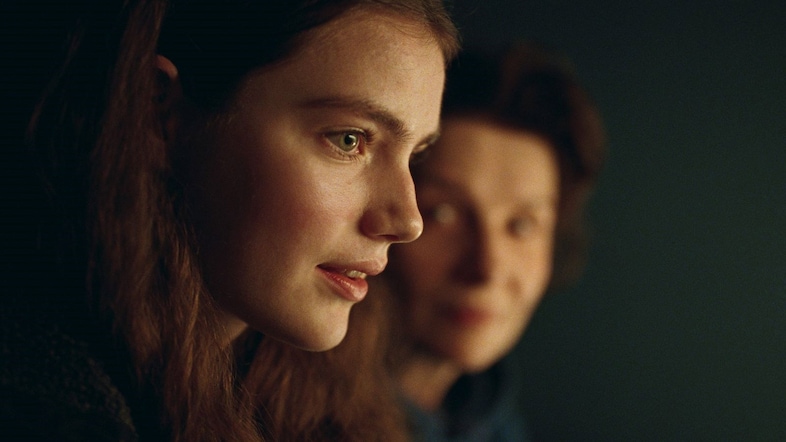
In a parallel storyline, Sara lives out her own coming-of-age arc: school stress, a new boyfriend and losing her virginity. In a sly, darkly humorous gag, Sara considers her grandmother’s dementia to be a distraction from her teenage angst. “Isn’t that the way a 16-year-old is?” says Hammer. “Their frontal lobes aren’t developed enough to have a full empathy capacity. You’re just focused selfishly and myopically on your own teenage life. That was my experience.” Even so, Hammer knew there were limitations to his understanding of Gen Z. “What Flo and the teenagers did was entirely improvised. I knew I couldn’t write that stuff.”
)
Hammer admits to reading Letterboxd, and considers himself “pleasantly surprised” by how viewers so far have been mostly non-judgmental. However, he reiterates that he’s truly not bothered by audience feedback – his sole interest is in the creative process. He also separates himself from Michael Haneke and Gaspar Noé, two provocateurs who explored dementia through Amour and Vortex. “They’re known taboo-breakers who like to poke a stick in the hornet’s nest. I don’t think I was doing that. My draw was, I was moved and shocked by not knowing how to respond to it.”
The film was shot on 35mm by Adolpho Veloso, a cinematographer who was recently Oscar-nominated for Train Dreams. The restrained, often still framing captures the serene surroundings when Martin assists Leslie on strolls through the park, and the ironic calmness of Sara’s teenage adventures. It also starkly documents the helplessness of the adult characters, whether it’s the exasperation on Amanda’s face or Leslie’s inability to wash herself. “This film is an attempt to say there’s meaning in this experience, even if it’s hard for the people living it,” says Hammer. “The visual beauty was something we aspired to, to hold the heavy shit. Life, if you zoom out to the perspective of the cosmos, is beautiful. We’re going to extinguish our race and our species – but it will still be beautiful after us.”
Queen at Sea is in UK cinemas on 18 September.