
Blockbuster thrills from a genre master and a surprising new biopic on a jazz great are among the films you need to see this month
Hope
25 September
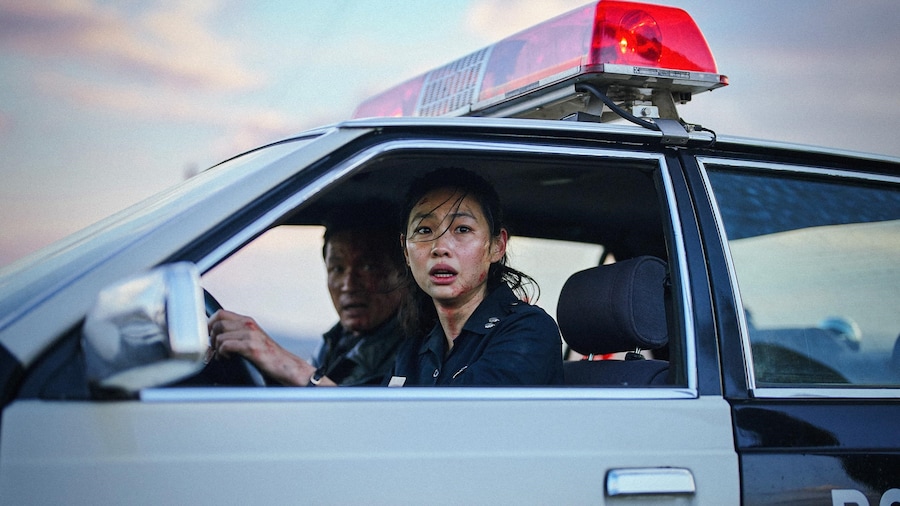
Hope is reportedly the most expensive Korean film ever produced, arriving on the back of a splashy premiere in competition at Cannes, with Squid Game superstar (Hoyeon) and assorted Hollywood A-listers (Michael Fassbender! Alicia Vikander! Taylor Russell!) among the cast. It’s a ten-year labour of love from Na Jong-hin, a rare genre filmmaking talent who achieved full flow state with The Wailing, his bravura satanic-panic shocker of 2016. And for the first hour of its 145-minute runtime, at least, Hope absolutely rips, serving up ferocious blockbuster thrills on the level of George Miller’s Fury Road.
Hope takes us to the rural outpost of Hope Harbour, deep in the forested hills of Korea’s Demilitarised Zone. Police chief Bum-seok (Hwang Jung-min) is summoned to the outskirts of town by a group of hunters, who have found a cow with outsized claw marks in its hide lying in the middle of the road. With backup in short supply, Bum-seok and the hunters take off in search of the culprit, which they decide must be a tiger (they stray in from over the border in the North, the men all agree.) Of course, what’s coming for the town is far, far weirder than that, and Jong-hin ratchets up through the gears for the film’s masterful first hour, teasing the creature through the trail of destruction left in its wake. When we finally clap eyes on the monster and Bum-seok’s luck seems about to run out, Hoyeon rides to the rescue as bazooka-toting colleague Sung-ae – a proper hero’s entrance – and the chase resumes on four wheels.
The film’s creature design split critics at Cannes, but possesses a gnarly physicality missing from so many CGI films from the genre. Still, Hong Kyung-pyo's cinematography is outstanding, staying close to the action with over-the-shoulder POV shots and car-chase scenes shot impossibly low to the Tarmac. He also does some great work capturing the frontier beauty of the setting, which proves key to the film’s progression as it turns its monster-movie logic back in on itself.
In the film’s chaotic second hour, a standoff ensues when the hunters make a shocking discovery in the woods. (Without saying too much, this is where the Hollywood big guns make their entrance.) Meanwhile Bum-seok and Sung-ae do some sleuthing of their own before the group converges for an extended car-and-horse chase that’s a thing of absolute beauty. At the climax, Hong-jin brings the shock and awe before teasing a sequel where things promise to get very strange indeed. Hope reaches heights most blockbusters can only dream of; surrender to its madness, and it’s the best time you’ll have at the cinema all year.

Late Fame
4 September
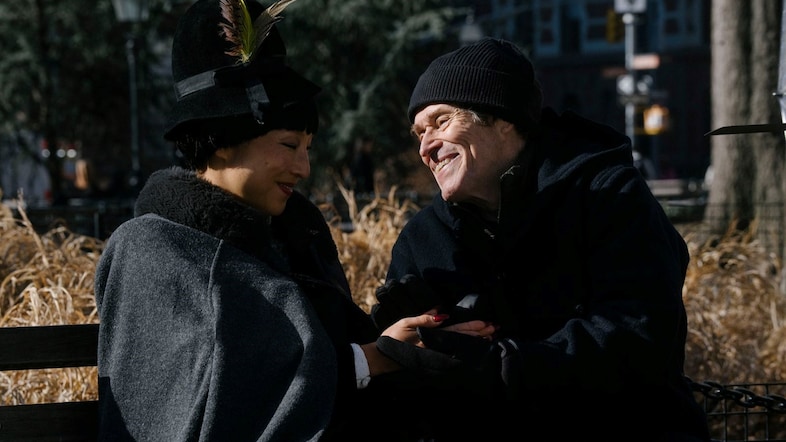
Taking time off from his day job as a kind of twisted carnival barker for the Robert Eggers cinematic universe (“You’re fond of me lobster, ain’t ye?”), Willem Dafoe gives one of his more engagingly downbeat performances in Late Fame, a breakout hit for director Kent Jones at Venice Film Festival last year. With an excellent script from Samy Burch, who wrote the equally sly May December for Todd Haynes, it’s a spiky and unsentimental drama about a New York postal worker, Ed Saxberger, drawn back to the poetry of his youth when a clique of would-be writers and intellectuals profess their love for his work. Like Dafoe, who cut his teeth working with the city’s experimental troupe the Wooster Group, Saxberger is a veteran of a vanished New York now revered by his young admirers, whom he soon discovers all come from money. The odd one out in the group is Gloria (Past Lives’ Greta Lee), an actress and burlesque performer whose glamorous facade masks a hard-scrabble daily existence her peers aren’t curious enough to ask about; Saxberger is naturally drawn to her but, as with his poetry which he takes up again at the group’s insistence, he can’t begin to imagine where all of this might be heading.

Everybody Digs Bill Evans
11 September
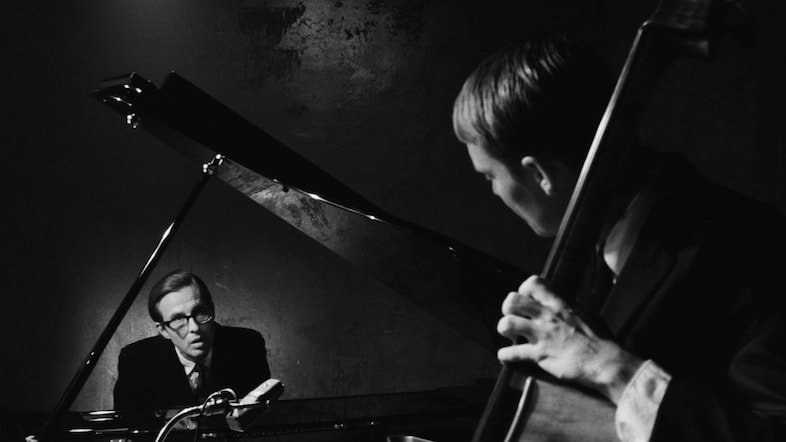
Bill Evans was an American jazz pianist and bandleader for whom triumph and tragedy were intertwined. A heroin addict by the age of 30, he recorded his masterwork, Sunday at the Village Vanguard, in 1961, just 11 days before his bassist Scott LaFaro was killed in a car crash. His death sent Evans into a deep depression during which he refused to touch his piano, a period that forms the backbone of Grant Gee’s biopic, adapted from the novel Intermission by Owen Martell and shot in rich black and white. The film is anchored by the angular and brooding presence of Anders Danielsen Lie, a risky bit of casting that the Norwegian rewards with a typically sensitive turn. But it’s all but stolen from him by Bill Pullman, doing career-best work as Evans’s dad, whose comfy retirement in Florida can’t mask a gnawing sense of resentment at the way his life’s played out. It’s a darkly comic turn that threatens to send Gee’s films off the rails completely, until you realise it’s as much a film about the suffocating bonds of family life as it is about the sainted loneliness of genius – and all the richer for it.

Remake
25 September
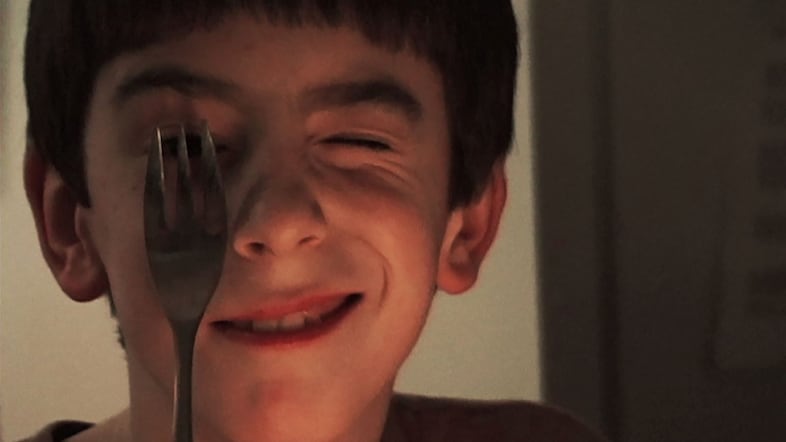
Through Ross McElwee’s acclaimed career in documentary filmmaking, family life was “the lens through which I tried to understand the world around me”. But when his son Adrian died from a drug overdose in 2016, that world fell apart, prompting the Sherman’s March director to examine his own habit of turning his lens on those closest to him. Remake emerges from this terrible chapter in his life, drawing on years of footage to create a dialogue with his absent son, who we see grow from an intelligent young boy sharing his father’s curiosity about the world to a troubled teenager with bipolar disorder and a spiralling drug habit. It’s an electrifying meditation on time, memory and unfathomable grief that seems to keep going almost in spite of itself, as McElwee probes at his loss the only way he knows how, with a camera and an awestruck sense of the passing of all things.